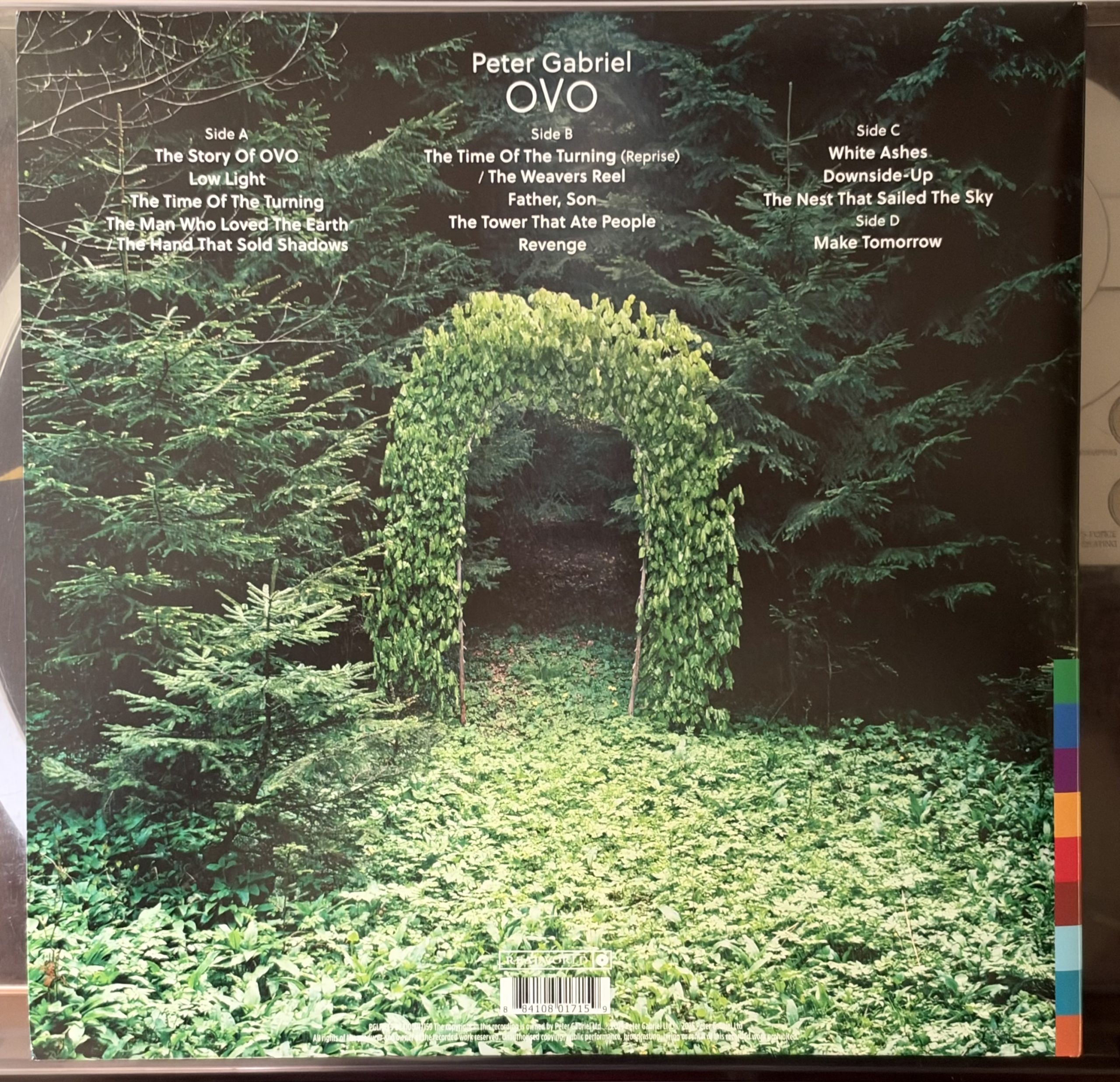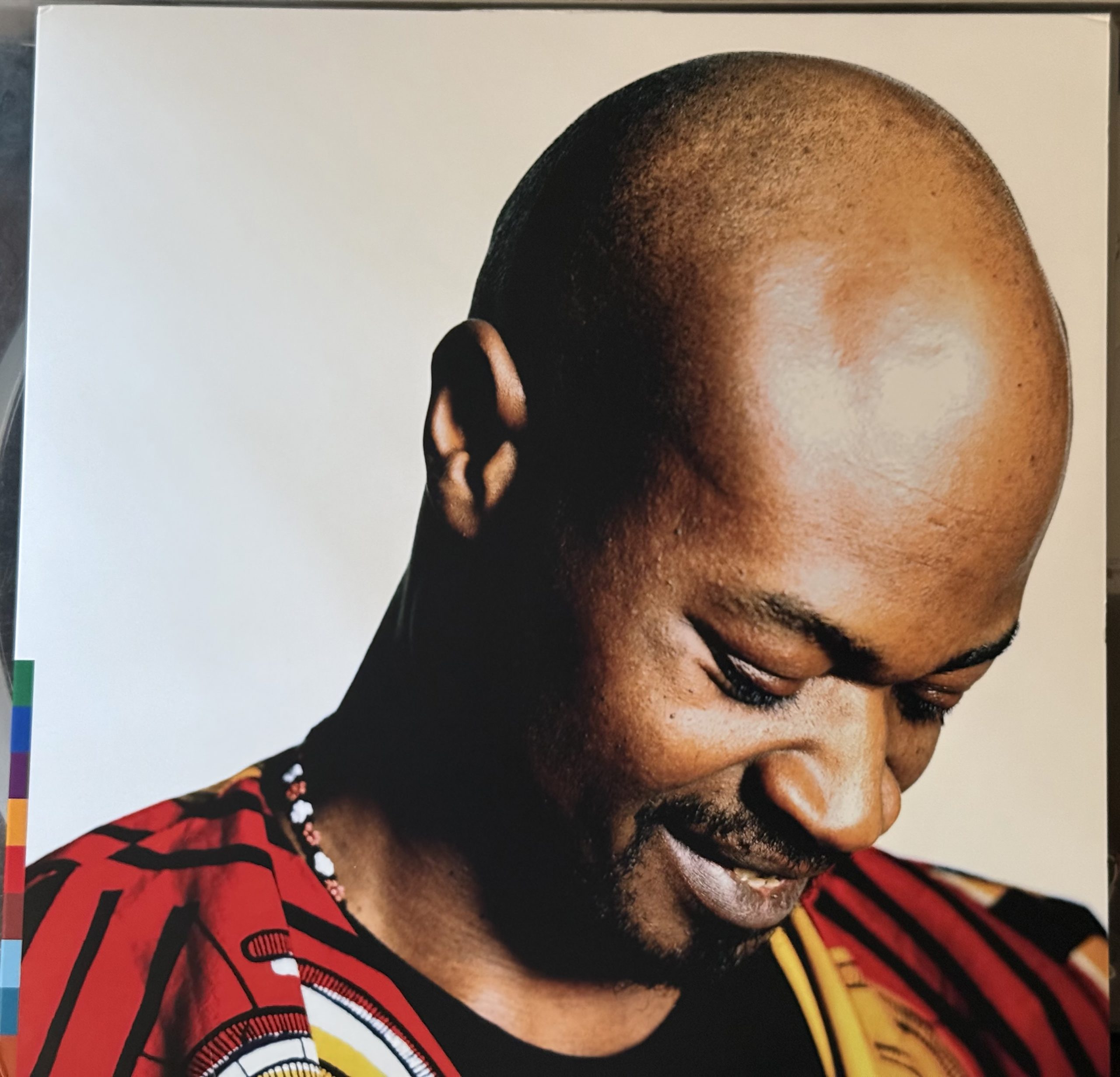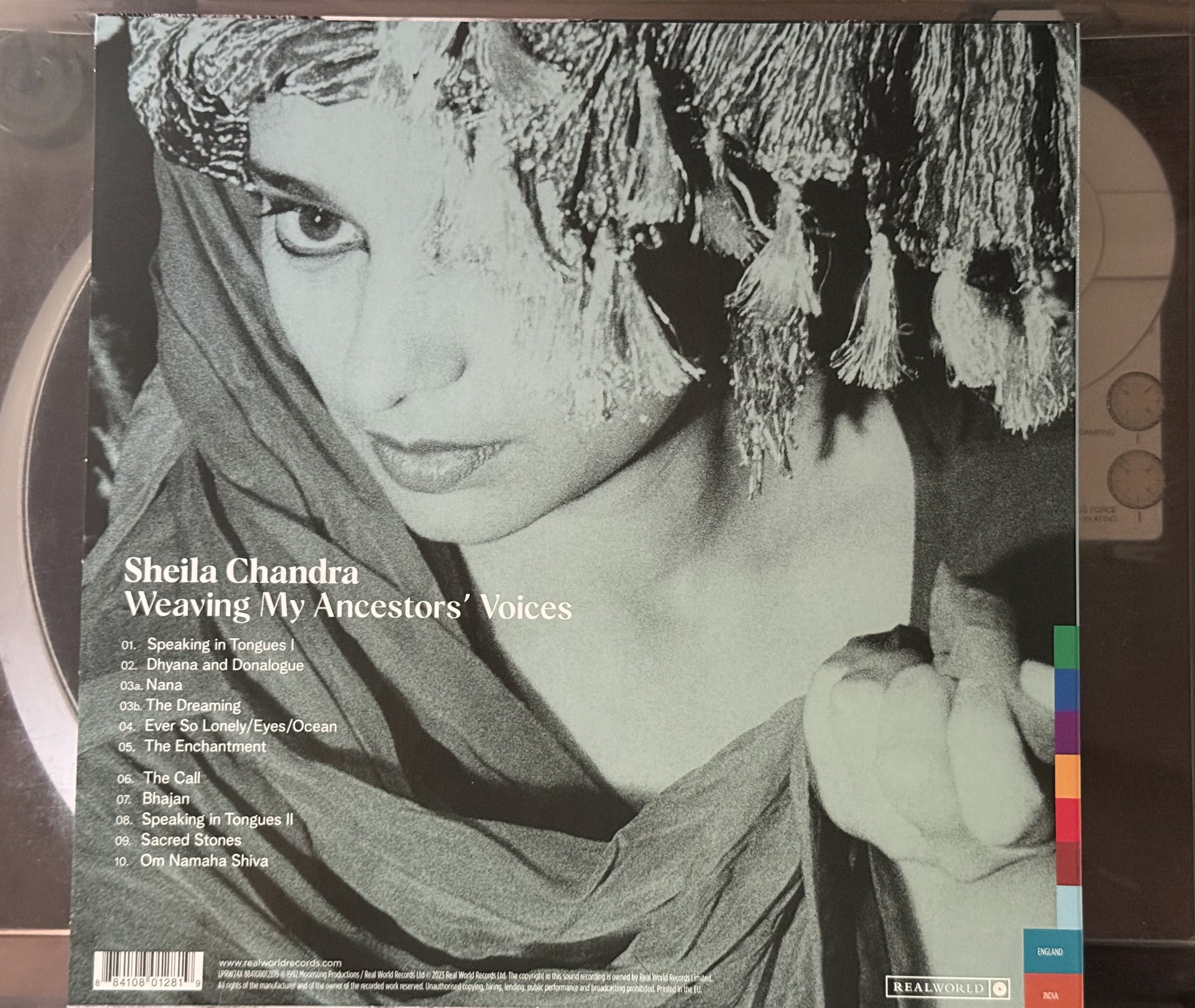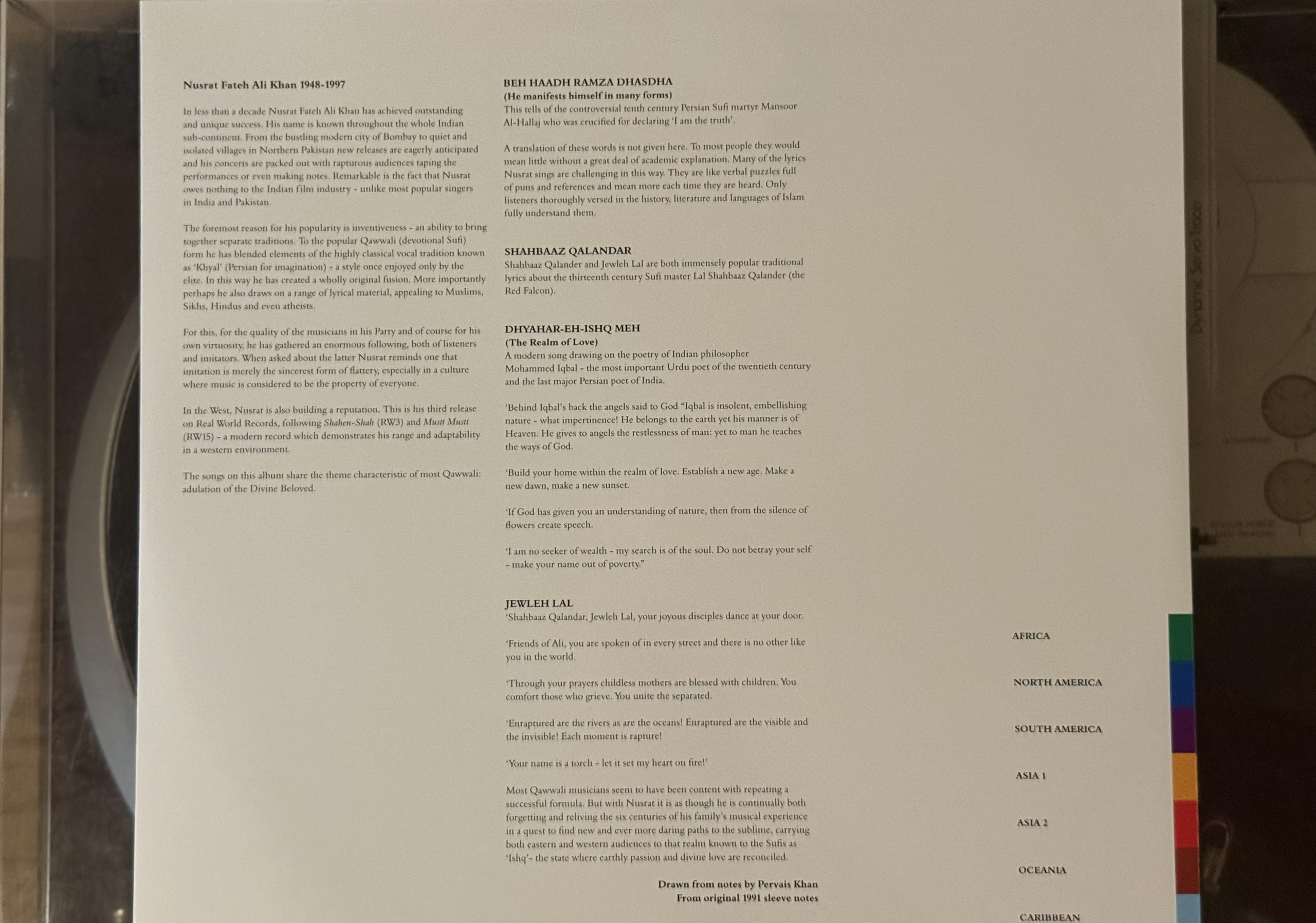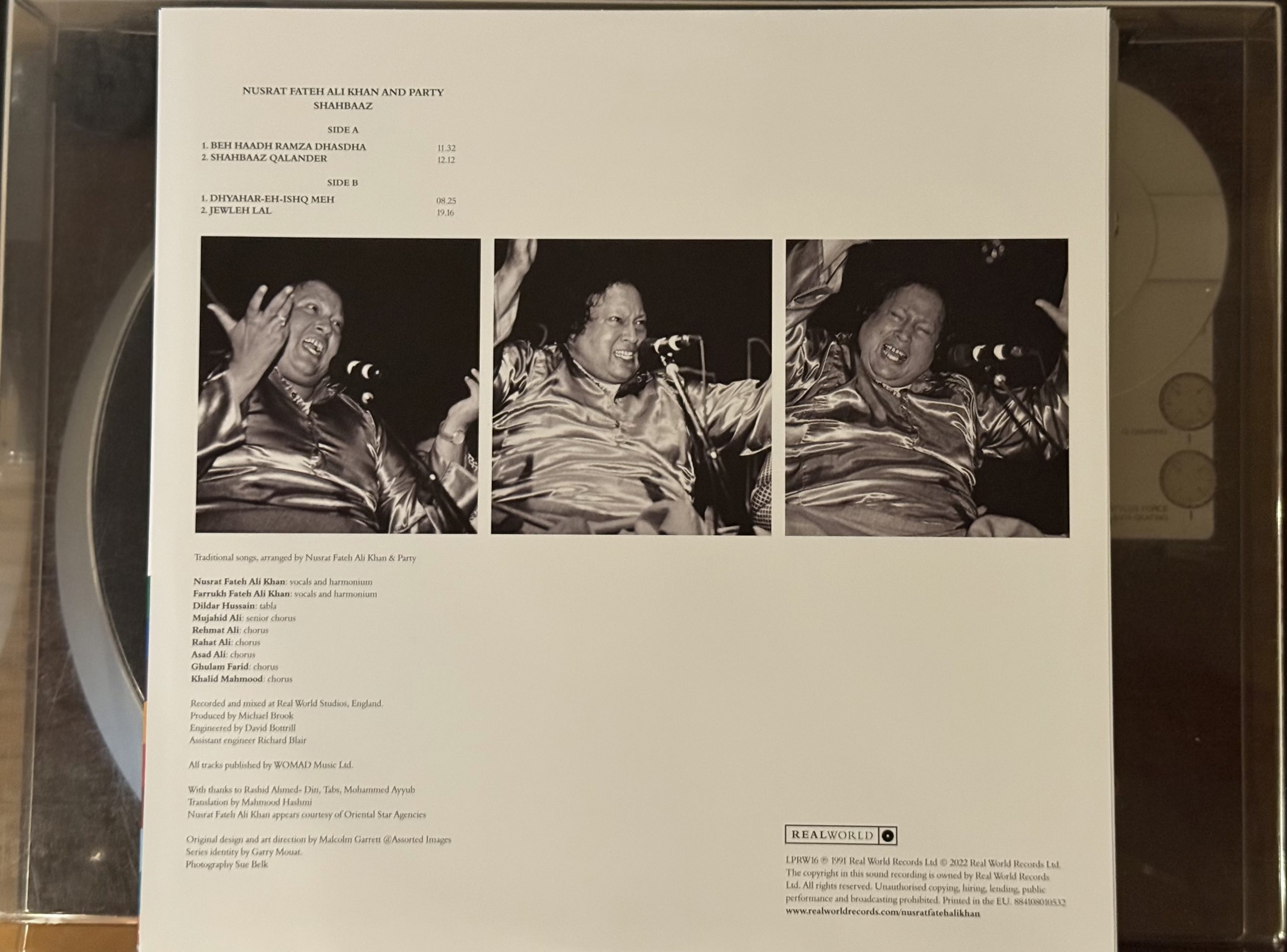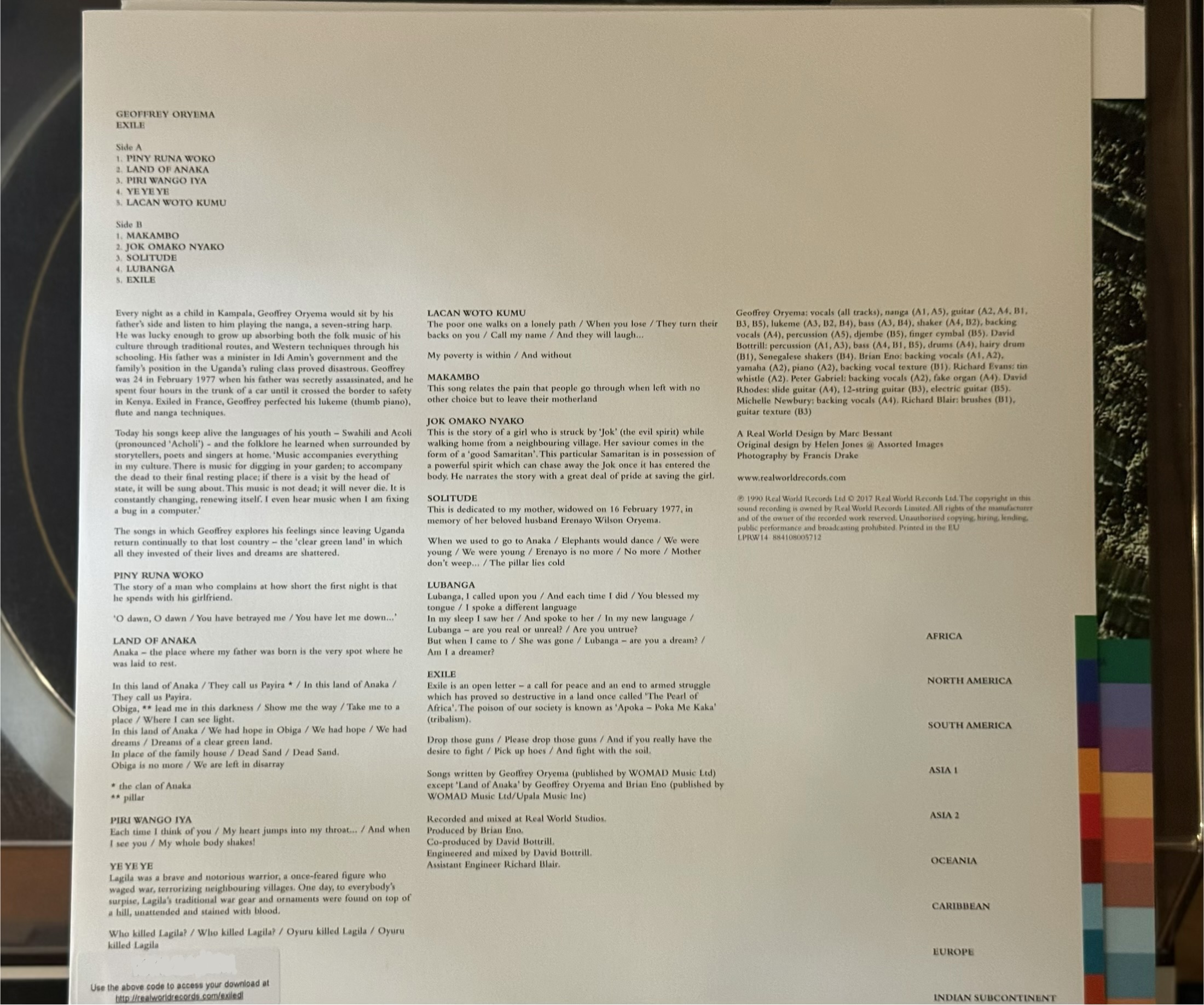
Geoffrey Oryema, Exile

An album mixing traditional music from Uganda and modern reflections, by turns joyous and sober, from a musician in exile.

Album of the Week, August 1, 2026

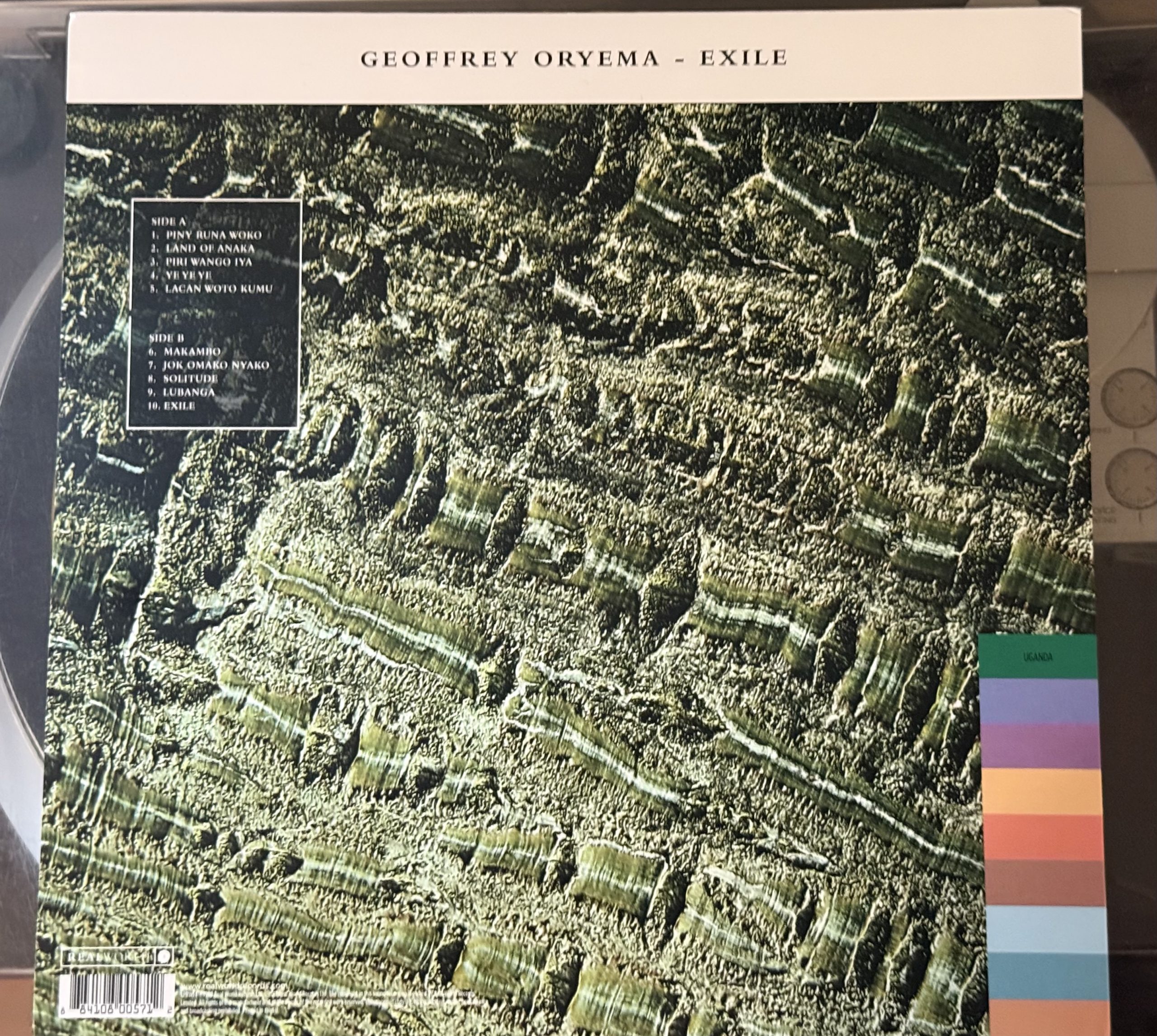
Imagine you’re a music student, and your father is a senior government minister who gets assassinated when you are 24 years old. Your family is part of an ethnic minority in Uganda, the Acholi people, who are economically marginalized and systematically targeted by Uganda’s dictatorial leader Idi Amin. It’s a crazy situation and you’re afraid for your life, so you get smuggled out of the country in the trunk of a car. You seek asylum in Paris, taking odd jobs and teaching yourself guitar. And then imagine you get invited to play at Peter Gabriel’s WOMAD Festival. This was the path to fame followed by Geoffrey Oryema, an Ugandan exile who became one of the most well known East African musicians of his generation.

Oryema was a songwriter and multi-instrumentalist who played the nanga, an African harp, as well as guitar and many percussion instruments. Most of his early performances were solos, but he had a few memorable collaborations with Gabriel, including appearing with him at WOMAD and performing together with Gabriel and Suzanne Vega on the One World, One Voice compilation.

It’s the nanga you hear first on the album to open “Piny Runa Woko,” as Oryema plays a complex circular pattern that reveals itself to be in common time as his voice enters, singing in Acholi. Sometimes the greatest moments on these Real World recordings are where the musicians just get to be themselves, and this is definitely one of them as Oryema’s voice phrases in and out against the rhythm. He layers additional vocals over the repetitive song bemoaning the arrival of dawn after the first night spent with a new lover; the lowest vocals create a murmuring atmosphere of mystery like a dawn chorus. Some of those vocals are from an unexpected backup singer, ambient pioneer Brian Eno.

Oryema switches to guitar for “Land of Anaka,” and the arrangement as a whole is more Western but not more conventional. This is largely thanks to the hands on the keys; Eno contributes both melodies and textures from the Yamaha and is joined on backing vocals by Peter Gabriel. A high tin whistle by Richard Evans, whom we last heard on Passion, underscores the melancholy of the song, which mourns Oryema’s exile from his homeland: “We had hope/ We had dreams/ Dreams of a clear green land/ In place of the family home/ Dead sand, dead sand.” This song of exile is one of Oryema’s most acclaimed and it’s easy to see why.

Piri Wango Iya” is another love song, this time played on the lukeme, a northern Ugandan “thumb piano” like the mbira of Zimbabwe. Oryema is mostly on his own here on the lukeme and bass, with a little percussion from engineer David Bottrill, accompanying his voice which seamlessly swings from a high falsetto to a low bass line. “Each time I think of you / My heart jumps into my throat…” It’s a gorgeous miniature of a piece.

Ye Ye Ye” is a more traditional bluesy rocker, and here the band features David Rhodes on slide guitar, with Gabriel contributing “fake organ” on the synthesizer and David Bottrill adding bass and drums. It has the feel of an in-the-studio improvisation with whoever happened to be around the Real World Big Room at the time, but the lyric is serious, telling the legend of the Ugandan warrior Lagila and his death at the hands of Oyuru after a long time of terrorizing the villages. It’s followed by “Lacan Woto Kumu,” which returns to the sound-world of the nanga as it creates complex patterns under Oryema’s vocals and whistling. It’s a hypnotic end to the first side.

Makambo” is entirely different, mostly driven by Oryema’s guitar with a heavy reverb applied, backed by Bottrill on bass and Eno on “vocal textures.” The liner notes don’t supply any lyrics, only saying, “This song relates the pain that people go through when left with no other choice but to leave their motherland.” Oryema’s vulnerable whistle seems to carry the pain all on its own.

Oryema returns to the lukeme for “Jok Omako Nyako,” the story of a girl possessed by an evil spirit as she walks home from the neighboring village; she is saved by a passerby who has a more powerful spirit that drives the evil one away. Though sung entirely in Acholi, Oryema’s voice carries the story, dipping into his lower range to convey the battle of the spirits. By contrast, “Solitude” is built around a 6/8 pattern on David Rhodes’ 12-string guitar alongside Oryema’s own, as he sings a song dedicated to his mother, a memorial to his assassinated father. “When we used to go to Anaka / Elephants would dance / We were young / We were young/ Erenayo is no more / No more / Mother don’t weep…”

It’s back to the lukeme for “Lubanga” as Oryema sings about his uncertainty about whether Lubanga, who blessed his tongue to learn new languages, is real or unreal. In pre-Christian Uganda, Lubanga was understood to be a spirit of disease and death, but the arriving Christian missionaries identified it with the creator God, which needless to say creates some ambiguity about the interpretation of the lyrics.

Oryema closes with “Exile,” accompanying himself on guitar and djembe and joined by Rhodes on electric guitar and Bottrill on bass, as he sings a prayer for peace and the end of tribalism: “Drop those guns … And if you really have the desire to fight / Pick up a hoe and fight with the soil.”

Oryema’s debut was embraced as both a new voice in “world music” and a powerful humanitarian, and human, statement in the face of exile. It’s an unusual record in the early Real World catalog, featuring almost no percussion and very minimal added instrumentation and mostly letting Oryema’s deep voice and rhythmic playing drive the sound forward. Oryema made two more records on Real World following the success of Exile and “Land of Anaka”; his 1993 Beat the Border was his biggest hit for the label, followed by 1996’s Night to Night. He moved labels to Sony International, releasing four more albums between 2000 and 2010, including Words, a collaboration with Peter’s daughter Melanie. He died of cancer in Lorient, a commune in Brittany, in 2018.

We’ll explore the Real World catalog a little more next week, with another record that dives deep into musical traditions from other parts of the world.

You can listen to this week’s album here:

BONUS: When WOMAD came to the United States for the first time in 1994, Oryema joined Peter Gabriel in an interview and performance on the Today show. Here’s Matt Lauer interviewing them, followed by a performance of “The River” from Beat the Border:

BONUS BONUS: Oryema continued to perform “Land of Anaka” throughout his career; here’s a 2005 performance with Peter Gabriel on backing vocals from the Africa Calling festival:

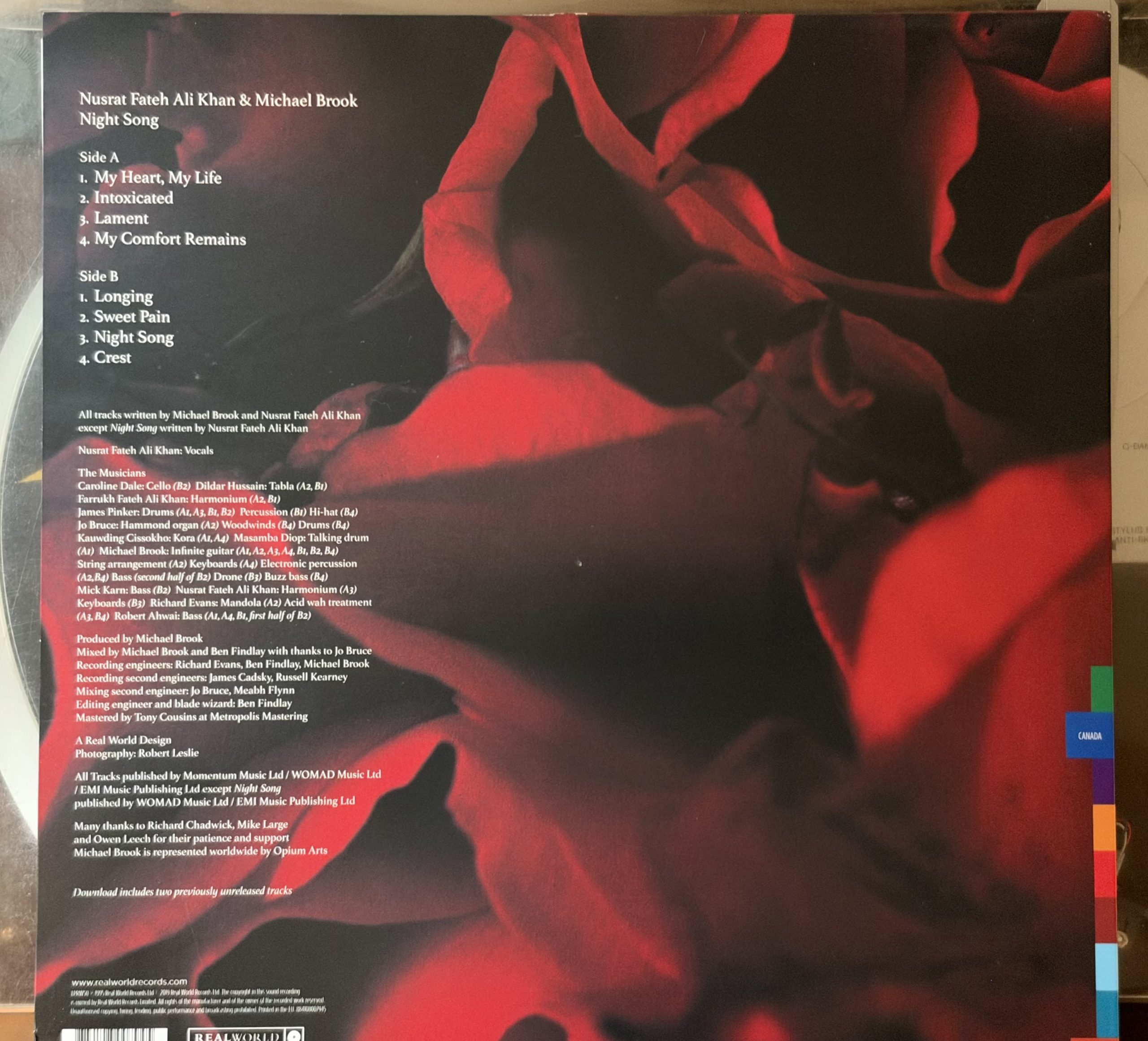
Nusrat Fateh Ali Khan, Mustt Mustt

A legendary collaboration between the great singer and ambient artist Michael Brook that gave traditional qawwali music a new beat.

Album of the Week, July 26, 2026

We’ve heard several albums by the great Pakistani singer Nusrat Fateh Ali Khan, featuring the hallmarks of the qawwali tradition: accompanied by harmonium and tabla plus a chorus, extended introductions, vocal improvisation, performances stretching anywhere from eight minutes to half an hour. We’ve also heard him in modern contexts collaborating with Peter Gabriel and others. But we haven’t heard his traditional work directly adapted for a wider Western audience. That’s where producer Michael Brook came in.

We met Brook last week, as the producer on Youssou N’Dour’s Set. But the Canadian guitarist had been in the music industry for years previously, working as an engineer at Daniel and Bob Lanois’ Grant Avenue Studio, where he worked with musical polymath Brian Eno, composer Harold Budd, and U2 guitarist The Edge, among others. It was during this period that Brook invented a kind of infinite sustain device that allowed an electric guitar to hold a continuously sustained note.1 Brook had a background in ambient music through his collaborations with Eno, Budd and Lanois, and his ideas for this collaboration with Nusrat were twofold: bring some hallmarks of modern music to Nusrat’s sound, and explore what happened if you slowed down the pace and allowed Nusrat to just explore sound rather than perform with his customary vocal pyrotechnics. At both, Mustt Mustt succeeds admirably.

Brook brought a handful of Western musicians to the session, including bassist Darryl Johnson (Neville Brothers, Lanois, Bob Dylan’s Oh Mercy), engineer David Bottrill (Peter Gabriel), and percussionist James Pinker (Dead Can Dance), but members of Nusrat’s party including Farrukh Fateh Ali Khan (harmonium) and Dildar Hussein (tabla) were there as well.

Mustt Mustt (Lost in His Work)” is a song of praise to the Sufi saints (“Upon my breath and in my intoxication is the great Qalandar…my worship and upon my breath is the great name Ali”) that is westernized with the interplay of Johnson’s bass and Brook’s guitar over the tabla and harmonium. What emerges is a mix of devotion and groove. It’s still fully recognizable as qawwali; Nusrat sets up the chorus, improvises vocally with the harmonium, unleashes strings of sangam syllables. But there’s that fat bass line throughout, interplaying with the tabla and harmonium to create something completely new. It’s also more concise than a traditional qawwali performance, thanks to Brook’s careful editing (though the liner notes indicate that Brook and Nusrat had to compromise on some of the edits so as not to affect the meaning of the traditional syllables).

Nothing Without You (Tery Bina)” starts with percussion first, then harmonium, again bringing rhythm to the traditional Qawwali forms. There’s more of Nusrat’s chorus here, and the tune is slower and more deliberate than it might be in a qawwali performance. Brook’s guitar is used to add small amounts of harmonic complexity while still keeping the song anchored in its traditional form.

Tracery” is where the ambient starts, with Brook and Johnson laying a gentle foundation upon which Nusrat builds up sound in dialog with himself just as the guitar builds up patterns on patterns in a hypnotic swirl. The liner notes observe that the form is complex, building on one cycle that has nine beats and another with eleven. Here Nusrat embraces the challenge, issuing vocal runs across the patterns. It’s a gorgeous collage of sound as Nusrat finds ways to bring more and more expressive vocal sounds into the mix.

The Game” begins with sustained guitar tones that yield to a Western rhythm courtesy of a drum machine pattern that Peter Gabriel contributed. Darryl Johnson lays down a bass line on the Moog and plays piano to build the melodic core of the backing track. Across all of this is Nusrat’s improvised vocal, combining runs of syllables with soaring vocal lines.

Taa Deem” is built from the interchange between Nusrat and his party on vocals over the harmonium, then with a complex rhythmic backing with Dildar Hussein on tabla, Michael Brook on the surdu, and James Pinker and Darryl Johnson on djembe. Brook also contributes some low searing guitar lines and the whole thing becomes a dark explosion of melodic interchange.

Brook and Johnson create a synthesized soundscape to open “Sea of Vapours,” against which Nusrat vocalizes low in his range. There’s no percussion, just multiple layers of drone. By contrast, “Fault Lines” builds from a hypnotic low vocal introduction into a rhythmic back and forth between a multitracked Nusrat and members of the party thanks to James Pinker’s percussion. There’s a wonderful bit at the end where all the percussion falls away and it’s just a gentle hint of Nusrat’s voice. “Tana Dery Na” feels like a continuation of “Fault Lines” on a simpler percussion line and with a more prominent guitar part, and with only Nusrat’s voice over the top.

Shadow” is just Nusrat and harmonium, an extended sangam improvisation. It serves as a sort of extended prelude to “Avenue,” a group live-in-studio jam with Brook’s guitar, Johnson on clay drums, Pinker on djembe joining the harmonium and tabla. The three percussionists lock in on a groove while Nusrat and Farrukh reinforce each other and the guitar adds ecstatic high notes. It fades out just as Nusrat finds a new vocal pattern to throw into the mix. Someday there’ll be an extended anniversary edition of this album that restores some of the longer bits from this session that were edited out; I’ll be first in line.

Unusually for 1990, the album ends with a remix track. “Mustt Mustt (Massive Attack Remix)” is a dub-style remix that suspends bits of the original track in reverb, heavy percussion and synthesized bass, courtesy of the legendary Bristol collective a year before they released their debut album.

No one had combined East and West in quite this way prior to the release of Mustt Mustt, and the use of tablas with western sounds became a pivotal moment for British music, opening doors for many more musicians to mix Asian inspiration with the dance floor. It also raised Nusrat’s profile even further and gave him a wider base of fans and admirers. We’ll talk about some of the folks he influenced in the future and hear more music from him. Next week, though, we’ll hear from another artist who got his first exposure to Western audiences through Gabriel’s Real World label.

You can listen to this week’s album here:

BONUS: Here’s a more traditional rendition of “Mustt Mustt” from WOMAD Yokohama in 1992. This is how I heard the work when I saw Nusrat and party perform in Washington DC in 1996:

Footnotes

  1. Brook made three Infinite Guitars: one for himself and one each for Daniel Lanois and the Edge. You’ve heard the sound of the Infinite Guitar on U2’s The Joshua Tree, including on “With or Without You.” ↩︎

Various, Passion – Sources

A musical journey around the world with the collaborators and inspirations for the sounds of Peter Gabriel’s groundbreaking soundtrack.

Album of the Week, June 27, 2026

In the late 1980s, there was an upwelling of interest in world music. We had Paul Simon working with South African musicians on Graceland, Sting incorporating Latin sounds on …Nothing Like the Sun, Talking Heads incorporating Brazilian rhythms and sounds on Naked (followed by an even more direct partnership by frontman David Byrne on his first solo album, Rei Momo), and of course Peter Gabriel working with the likes of Youssou N’Dour and others on So and Passion. For some onlookers it started to have the whiff of exploitation; I distinctly remember a 1990 article in one of the college papers I wrote for that called out the musicians above as “carpetbaggers,” stealing world sounds for pop.

But as we’ve seen, for Peter Gabriel at least the connection to world rhythms and sounds went back further—as far back as 1982, at least, where on the strength of his song “Biko” he started the WOMAD festival to bring these artists to the public, and featured musicians like the Ekome Dance Company, L. Shankar, Manu Katché, and of course Youssou and Nusrat Fateh Ali Khan. He also, notably, launched Passion as the first record on his Real World label and gave many of these musicians record deals that allowed them to get their music in front of Western audiences. And he put out a label sampler, of a sort, in the form of Passion – Sources, a compilation album that gave space for both the musicians who had collaborated live in the studio on the making of Passion, and for some of the archival tracks that served as the foundation for the sonic explorations on the soundtrack.

We’ve written extensively about Nusrat Fateh Ali Khan’s “Shamas-Ud-Doha Bader-Ud-Doja,” from his first Real World album Shahen-Shah; it opens this compilation in edited form, running just a touch over five minutes and fading out in the middle reprise of the verse. It leads into “Call to Prayer,” by Baaba Maal. Like Youssou N’Dour, Maal, who appeared on the Passion track “Of These, Hope (Reprise),” is an incredible vocalist from Senegal; unlike N’Dour, he is a griot, deeply steeped in the traditions of the Pulaar people, who were among the earliest African peoples to embrace Islam. Here he performs a traditional call to prayer as improvised over accompaniment from Lakshminarayana (L.) Shankar and a low drone; the work appeared in the movie The Last Temptation of Christ during its depiction of the Last Supper.

Shankar performs the next track, “Sankarabaranam Pancha Nadai Pallavi,” with his group the Epidemics, consisting of Zakir Hussain on tabla, Viku Vinayakram on ghatam, and British composer and musician Caroline Morgan on tanbura. Here, as in most of his 1980s work, Shankar plays the double violin, also known as the LSD (L. Shankar Double Violin), an electric string instrument of his own design that covers a wide chromatic range. The music here is a traditional southern Indian Carnatic raga.

Turkish master of the ney flute Kudsi Erguner performs the track “Ulvi,” a brief solo work in the Mevlevi Sufi tradition. If you suspect, based on the brief excerpt here, that a longer selection of ney music would be both hypnotic and slightly soporific, you would be correct, at least judging from the excellent German CD of his work I found in college. But this track is delightful and mysterious to listen to, and about as understated an expression of Sufi spirituality as Nusrat’s qawwali is extroverted.

Master Egyptian percussionist Hossam Ramzy multitracks the tabla, dufi, doholla, and tambourine on “Fallahi,” alongside the mazhar tambourine played by Joseph Alexander, building a tight polyrhythmic pattern that is both dance-worthy and trance-inducing. This is followed by two excerpts from earlier compilations, a “Sabahiya” or traditional morning nuptial serenade from an anthology, The Folk Music of Egypt, produced by Tiberiu Alexandra and credited to “Banga (Tanta-Suaag),” and a dervishlike “Tejbeit” by unknown Egyptian musicians, taken from an Ocora Records compilation with overdubbed percussion by Hossam Ramzy and tin whistle by Richard Evans. Here you can feel the slightly frantic atmosphere of the bar in which the original was recorded.

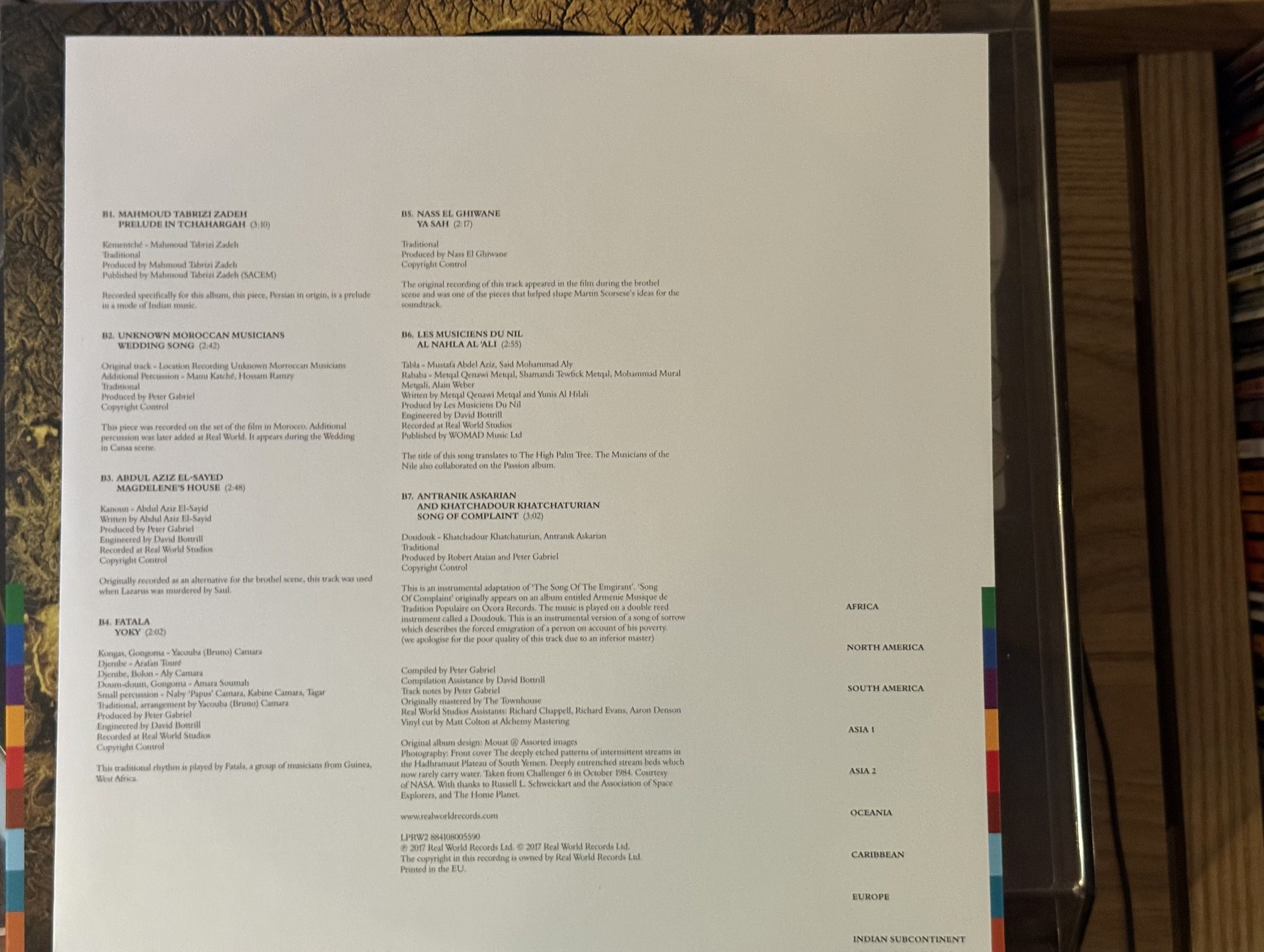
Prelude in Tchahargah,” recorded by Mahmoud Tabrizi Zadeh on the kementché with tabla accompaniment, is a traditional Persian piece that displays some of the underlying affinities between Persian and Indian music. There’s very much a hybrid of dance and spiritual focus here, particularly in the unaccompanied improvisation that ends the work.

Wedding Song” is a location recording of unknown Moroccan musicians from the set of the film, with percussion added by Ramzy and Manu Katché, that soundtracks the film’s recreation of the Wedding at Cana. It’s appropriately celebratory and hypnotic, with a repeated ten-bar call and response phrase.

Magdalene’s House” gives us a listen to a musician whose work did not appear on Passion but did appear on the soundtrack of the movie. Abdul Aziz El-Sayed plays unaccompanied kanoun, a large zither-like instrument that allows the player to sound microtones. Here he plays flourishes and rapid runs in octaves along a modal scale, mostly sticking to a recognizable western mode but here and there throwing in some unusual tones for emphasis. The effect is spellbinding; one regrets the track’s short length, as it seems to end just as he finds a theme that could have made a magnificent Bach fugue.

An all-percussion track from the Guinean drum and dance troupe Fatala, “Yoky,” follows. Led by Yacouba (Bruno) Camara on congas and the gongoma drum (made from saw blades attached to a calabash gourd), the ensemble adds a pair of djembes and more gongoma for a hypnotic polyrhythm. Sadly, the ensemble only seems to have recorded one full album, a self-titled release in 1988.

Ya Sah” is a trancelike number from Moroccan ensemble Nass El Ghiwane, which uses a Western banjo to produce an unusually disorienting cross-cultural effect — just as you think you’re in a foreign place entirely, suddenly the ring of the banjo places the sound squarely in an Appalachian string band tradition. Another number that doesn’t appear in Passion but does appear in the soundtrack, Gabriel says that its sound, which appears in a brothel scene in the movie, was one of the influences on his and Scorcese’s decision about the sound world of the movie.

Les Musiciens du Nil, who appeared on the Passion album in the track “Wall of Breath,” here play a more traditional Egyptian sound on “Al Nahla Al’Ali,” which features percussion and microtonal melodies in a rondo-like dance form that gradually accelerates into a crescendo then slows to a coda, leading to the slow “Song of Complaint” which is played on the Armenian doudouk by Antranik Askarian and Khatchadour Khatchaturian. Askarian appeared on the original recording on the Ocora Records label that was sampled for the opening track of Passion, “The Feeling Begins.” Without the massive drum hit, the traditional Armenian tune is a meditative reverie that completes the transition to another sound world.

As a “thank you” to the musicians whose work was incorporated into the Passion soundtrack, Passion – Sources can be read as a magnificent gesture. That it also functions as a sort of sampler for the mission of Gabriel’s new Real World label, opening ears to new sounds and new artists, is an intended second mission. As a seventeen-year-old listener newly moving beyond the relatively constrained sound worlds of my upbringing, it was revelatory. We’ll continue to explore the sounds of the world through the lens of Real World in the future. But over the next few weeks we’ll check in on some of Peter’s other collaborators as they make music through the end of the 1980s.

You can listen to this week’s album here:

BONUS: Here’s a live performance, with vocals, from Les Musiciens du Nil which gives you an idea of the traditional instrumentation used.

BONUS BONUS: Here’s a 1983 broadcast of Nass El Ghiwane in concert in Paris, playing for a very enthusiastic dancing crowd.

BONUS BONUS BONUS: Baaba Maal has had a long and fruitful career. Here’s his band from an astonishing 2024 performance that combines traditional and modern instrumentation to bring the crowd into a rhythmic trance:

BONUS x4: Kudsi Erguner has also had a long and vital career. Here’s a performance from 2013 that showcases the hypnotic power of the ney flute:

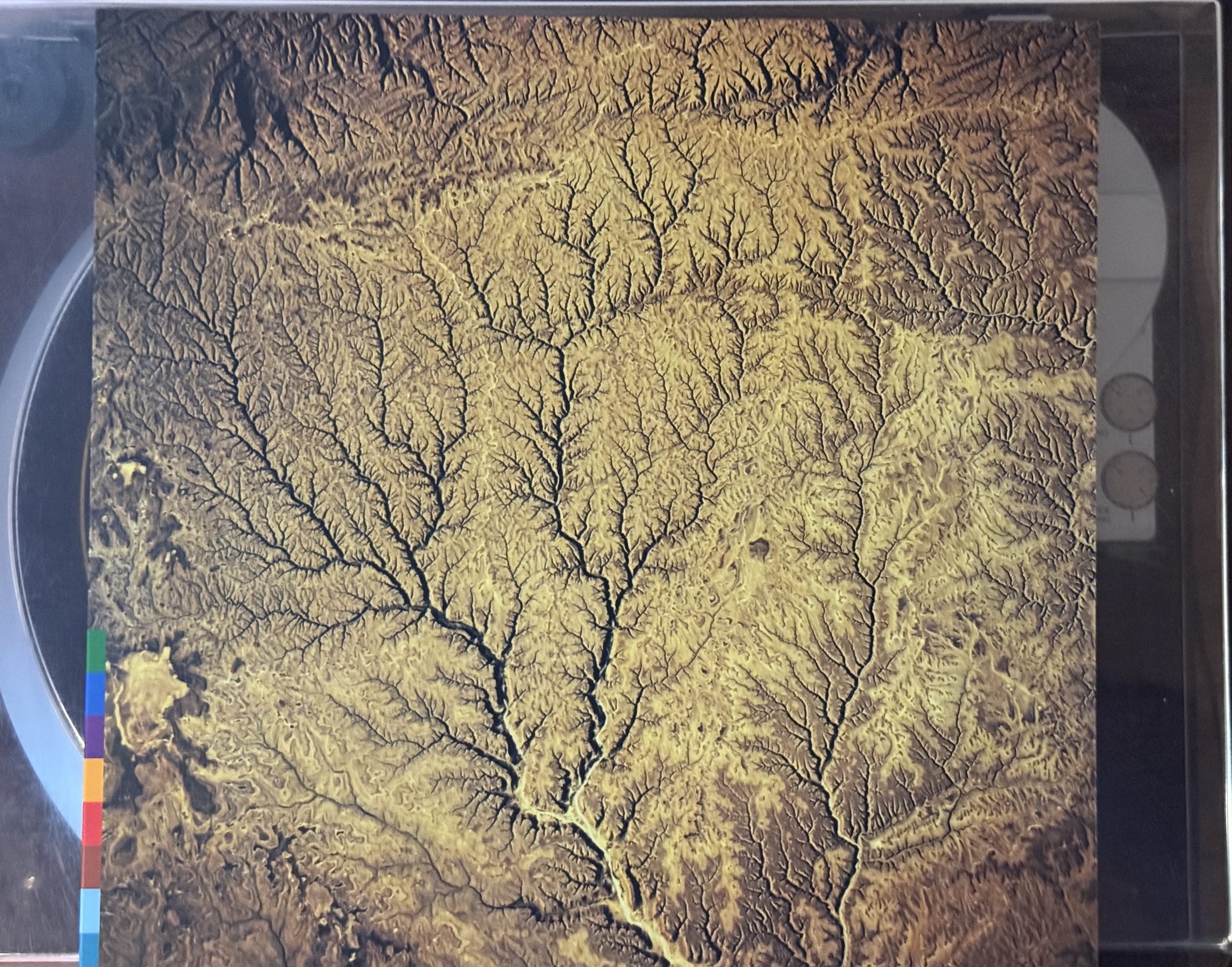
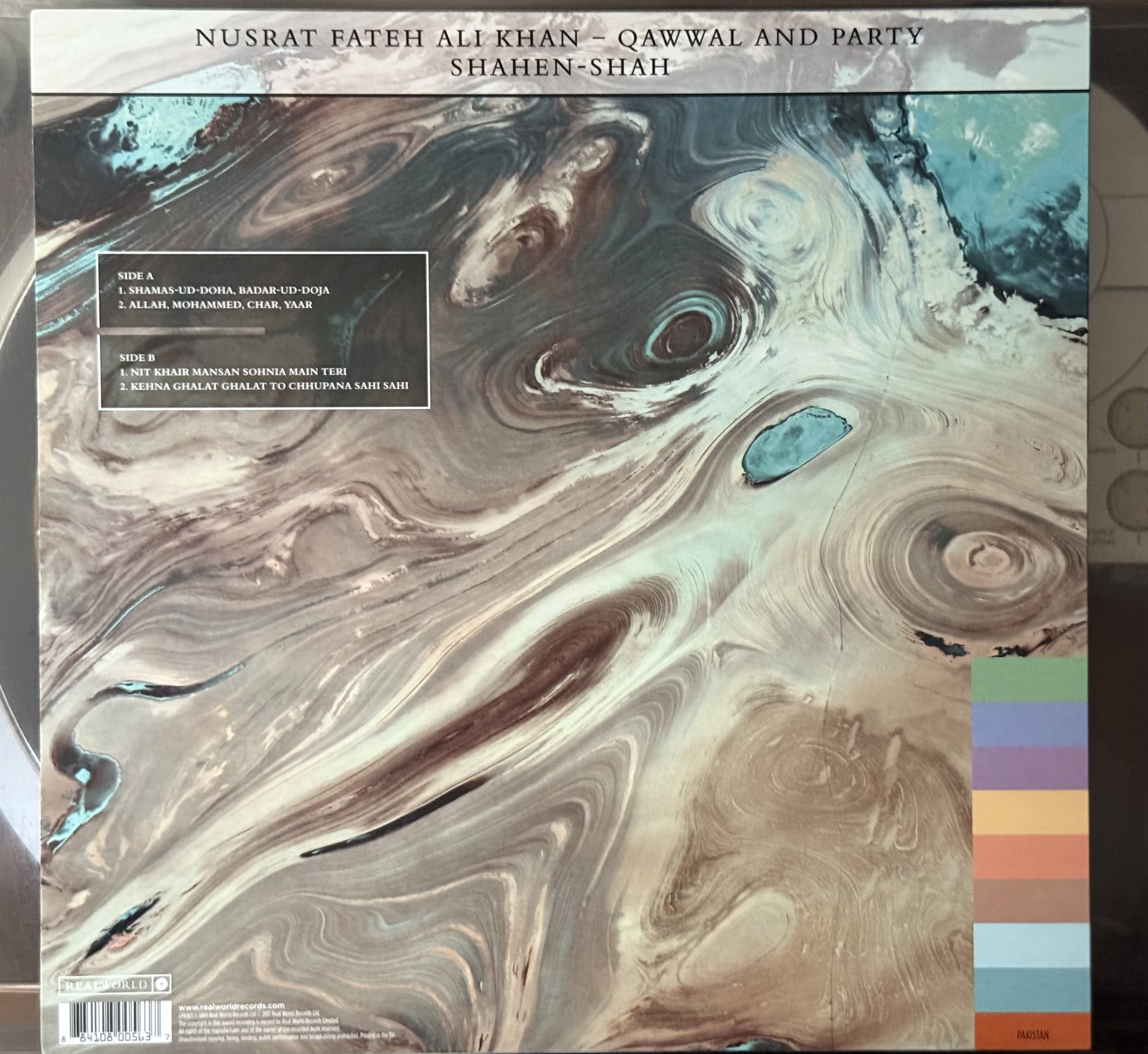
Nusrat Fateh Ali Khan, Shahen-Shah

Nusrat’s first Western album is an ideal representation of the sacred and secular art of qawwali singing.

Album of the Week, June 13, 2026

When it came time for Nusrat Fateh Ali Khan to record his first album for Peter Gabriel’s nascent Real World Records, he could have Westernized his sound—after all, he had just spent time in the studio with Gabriel on the Passion project. Instead, he and his party produced an album that was as accurate a representation of qawwali tradition that had ever been released, opening the door for Westerners to discover the tradition.

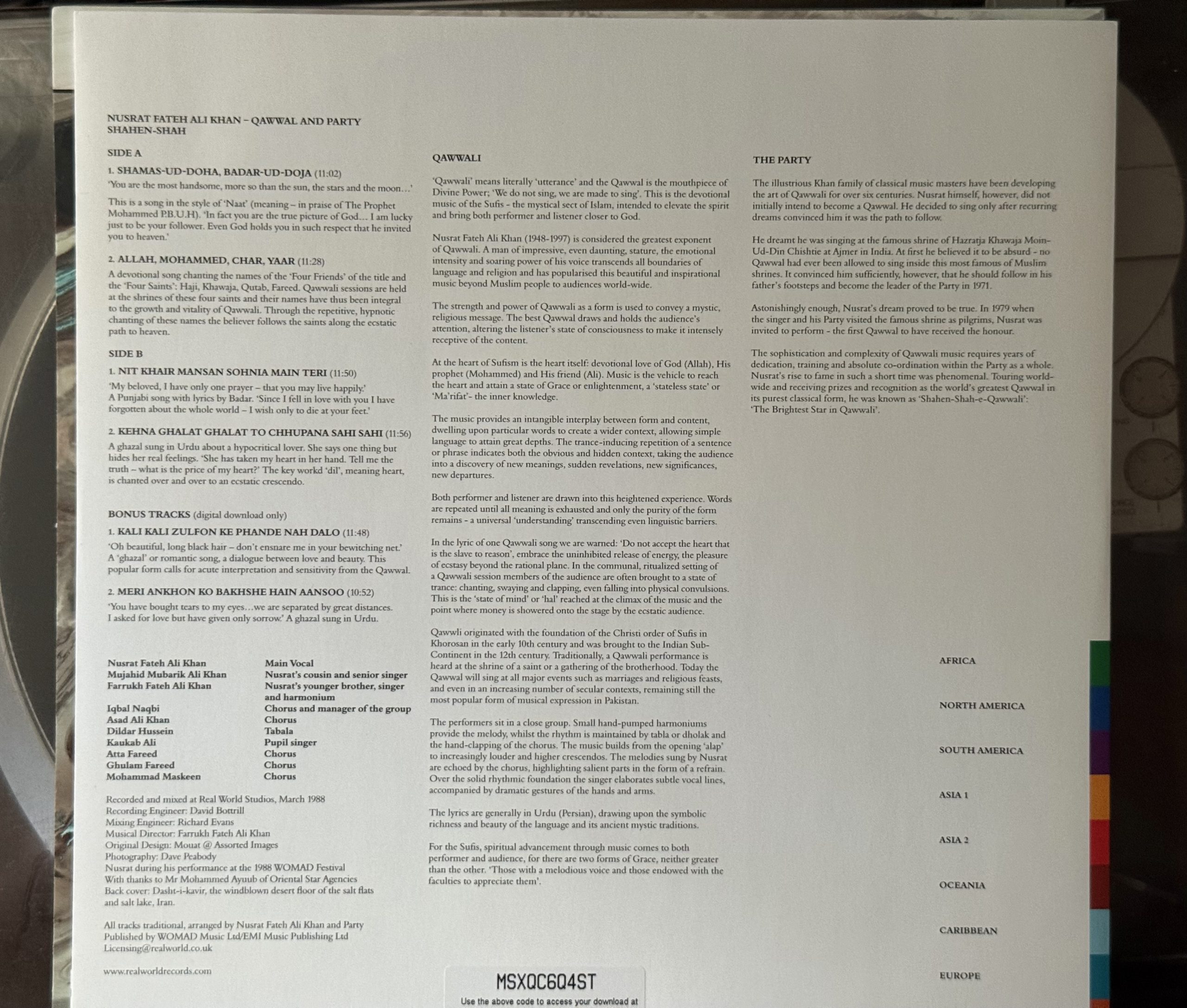
Nusrat was not new to being recorded; prior to 1989 and this session he had already released some twenty-eight albums, a few for EMI but most for small local labels, or for the French world music label Ocora. But listeners noted that “studio-recorded Nusrat [could] often feel rushed, as if the party was singing qawwali for the sake of the recording rather than for the sake of religious praise.” No such limitation existed here; this was full-throttle qawwali, with the group providing authentic examples of devotional songs as well as ghazals (romantic songs).

Part of the secret of the recording was the timing. The original Real World recordings were not limited by the running times of vinyl; by 1989 most releases were CD-first, and a project containing six tracks each stretching more than ten minutes was no longer out of the question. Unfortunately this led to some choices when releasing these recordings on vinyl, mostly at the time for the European market which continued to demand vinyl releases through the early 1990s. Today’s record is the 2017 reissue of the 1989 European vinyl release, and it omits two tracks, “Meri Ankhon Ko Bakhshe Hain Aansoo” and “Kali Kali Zulfon Ke Phande Nah Dalo.” The latter is probably my favorite Nusrat track of all time, so I was irked to find it omitted from this release; we’re going to talk about it in the bonus tracks.

Shamas-Ud-Doha, Badar-Ud-Doja” opens with the instrumentalists: harmonium playing the melody of the hymn in praise to Mohammed, hand claps. Then Nusrat leads the party in a gathering tone, wordlessly outlining the tonic, the third and the fourth in an introductory vocalese before singing a rhythmic verse that loosely follows the main tune, followed by everyone entering on the chorus. Nusrat lets us know how it’s going to go when, at the end of the second chorus repetition, he easily rips a vocal improvisation an octave up. At the end of the fourth chorus, he lays down a series of 32nd-note runs. The other singers in the party contribute too; one of them adds a run around the fifth, another at the octave, and there are numerous places where Nusrat improvises in the middle range while one of the other singers provides a high obbligato above. (This record features vocals from Nusrat’s cousin Mujahid Mubarak Ali Khan and his brother Farrukh, as well as his pupil Kaukab Ali, as well as other singers in a chorus; the youngest pupil heard on Live at WOMAD 1985, Rahat, is not heard here.) About halfway through, Nusrat engages in some stepwise sangam improvisation and some rhythmic improvised vocal syllables, which are closely followed by the tabla and harmonium. The closing series of runs where Nusrat rips a series of 32nd-note patterns up the scale are simply awe inspiring.

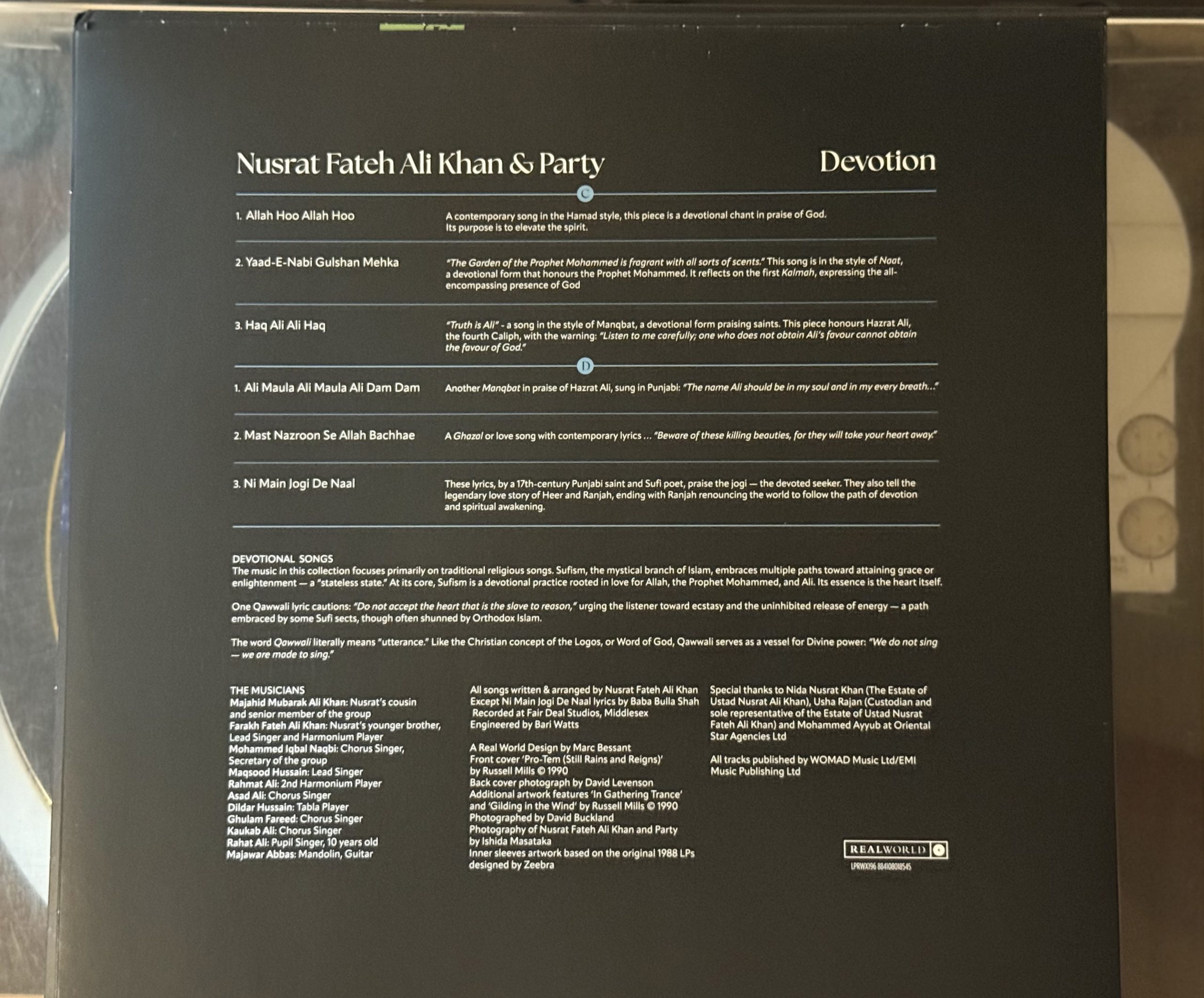
Allah, Mohammed, Char, Yaar” is a devotional chant to God, the Prophet, and the “four friends”—four Sufi saints whose graves are the site of pilgrimages and qawwali sessions. It’s also gnarly as hell. The melody syncopates from the second note and recovers the non-syncopated beat with three eighth notes, and those off-beats in the middle have me leaning forward into the beat all the way. It’s in the raga marwa, something like the Locrian western mode, meaning that it sits unstably between a major and minor feeling, and also meaning that the qawwal singer can explore both tonalities in the solo, a fact of which Nusrat takes full advantage. There is less for the party to do in this song, aside from some high obbligato late in the song; mostly they groove on the chant. And there’s a lot to groove on; Nusrat’s sense of the beat is impeccable, and he’ll seemingly fly off at random only to have an improvisation circle right back to the tonic at the start of the chant again, over and over again.

Nit Khair Mansan Sohnia Main Teri” is a Punjabi love song: “My beloved, I have only one prayer, that you may live happily…Since I fell in love with you, I have forgotten about the whole world; I wish only to die at your feet.” You can hear a little more of the traditional raga sound in this one, as Nusrat and the party sing the introduction and then get to the chorus. Here you can hear the roles of the other singers in the party, as one specializes in singing descending wordless lines in a thin clear voice from the octave while another, with a stronger voice, provides more of a high tenor line above the proceedings. Nusrat’s incredibly resonant and vibrato-rich instrument essays rhythmic running lines throughout. This one is trancelike, perhaps because of the raga foundation combined with the relentless major key feeling.

Another love song, in this case a ghazal in Urdu, “Kehna Ghalat Ghalat To Chhupana Sahi Sahi” is a song of complaint about a lover who says one thing and does another. Even here Nusrat steps into moments of ecstatic crescendo; rather than sounding angry or exasperated this too is a moment to celebrate the musical world of qawwali. The extended series of solos on the syllable dil (heart) are a magnificent punctuation of the overall arc of the song. At the end of the song, we get the only decelerando in the whole album as the party slows to the final repetitions of the love song.

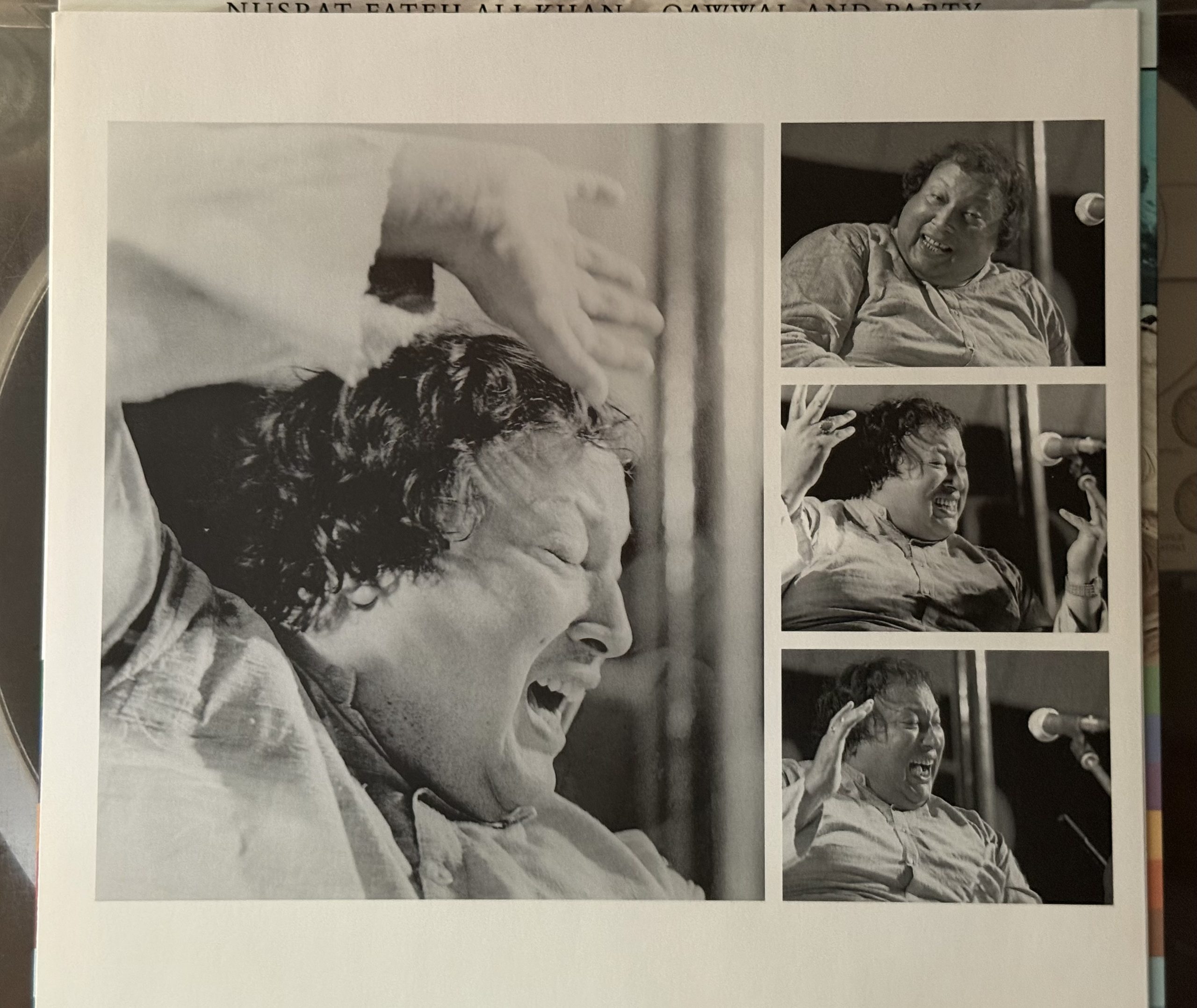
With his first album for Real World, it was clear why Nusrat Fateh Ali Khan had chosen this title: “Shahen-shah” means brightest star, and this was clearly a performance of a leading light in the qawwali tradition. The record opened the door for Western listeners to immerse themselves in an entirely new cultural sound world. Some, like Jeff Buckley, were awestruck by Nusrat’s vocal ability and sought to learn from him. Some heard exotic sounds and sought ways to bring them into Western music; we’ll hear examples of that later. And some took it as a cue to explore more varieties of non-European music. We’ll hear from another great musician who opened some of these same doors next time.

You can listen to the full version of this week’s album, including the tracks that didn’t make the LP version, here:

BONUS: Let’s talk about “Kali Kali Zulfon Ke Phande Nah Dalo.” I have always liked the track a lot; it appears on a mix I made just out of college and was likely one of the tracks I played the afternoon I met my wife (though it was Tuvan throat singing that was blasting from my stereo when I actually opened the door and met her). The tune of this Urdu love song is stated in the harmonium, which gets its own elaborate improvisation until Nusrat and the party join with sustained gathering tones. When Nusrat starts the chorus, we get an initial statement, a repetition tagged with an octave high emphatic tone, a third with a high obbligato, a fourth with Nusrat ripping a descending vocal line from the third above the octave. Then the party alternates singing the chorus statement with more obbligato from the other singers and elaborate improvisations from Nusrat. Starting about three minutes in he starts to essay some call-and-response verses. I learned a lot as a college just sitting and listening to all the ways he interrupted the flow of the chorus with solos, how his vocal lines reinforced or altered the tonality, and especially how he played with the meter of the lines. The stretch from around 5:45 to 6:20 is a masterclass in how to fluidly slip in and out of metrical alignment with the groove, particularly the triple sets of triplets which shift out of and into phase flawlessly. I can still put it on and listen to it all these years later, and discover something I’ve never heard before.

BONUS BONUS: Here’s “Nit Khair Mansan Sohnia Main Teri” live from the 1988 WOMAD festival, about the time that Nusrat was headed into the newly constructed Real World studio to record this album.

Peter Gabriel, Passion

A landmark collaboration with a seemingly inexhaustible parade of master musicians creates one of the strongest offerings in Gabriel’s catalog.

Album of the Week, June 6, 2026

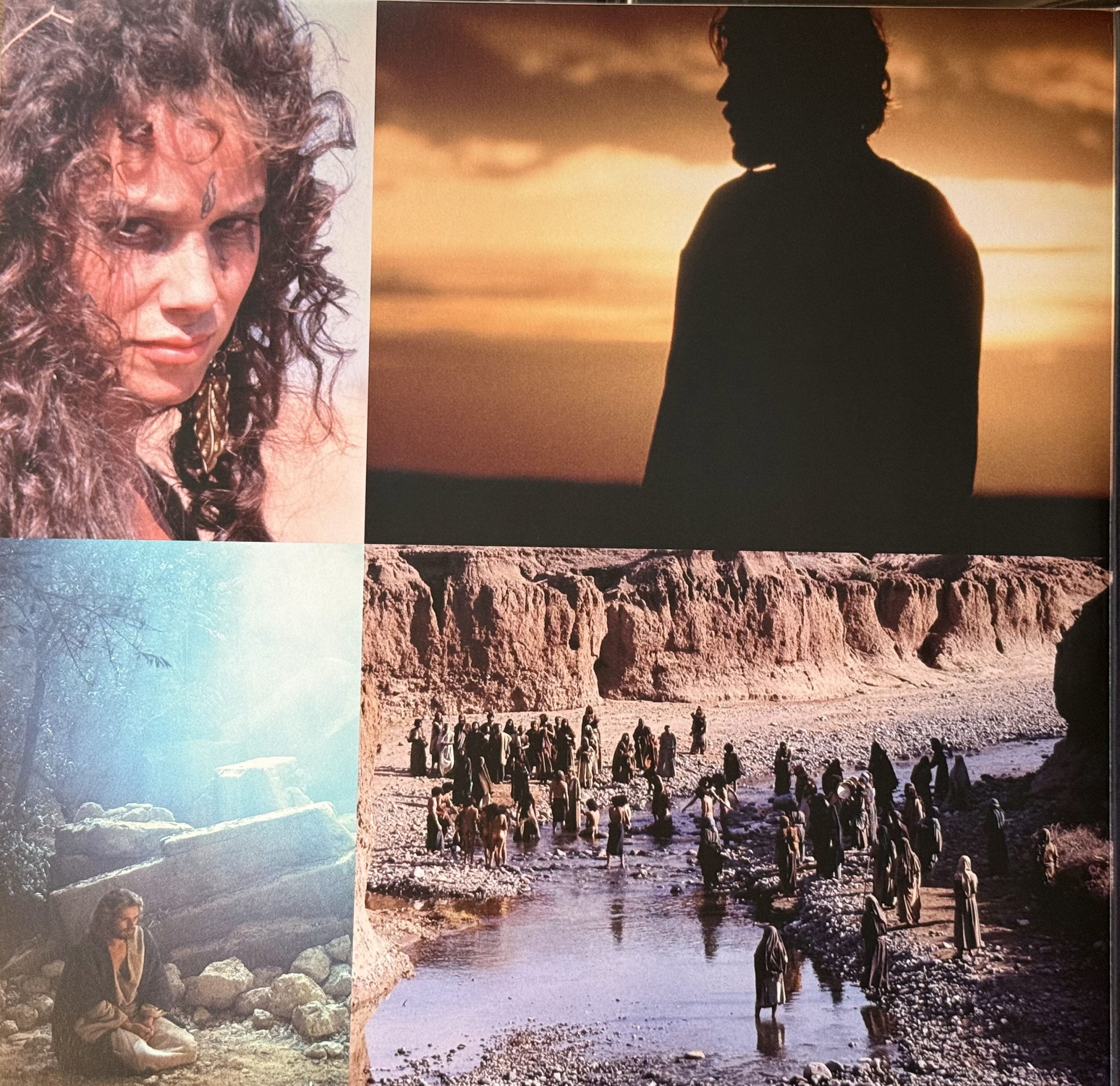
Peter Gabriel spent the months following So touring the world; the concert film Live in Athens gives a good idea of what that experience was like. But he was still writing music, and the next thing that came from him was a one-two punch: a soundtrack album to the most controversial film of the late 1980s, and a brand new record label to release it. And Peter being Peter, he released the album in June 1989, almost a full nine months after the theatrical release of the film that inspired it.

The energy that today animates reactionary groups like the Promise Keepers and Christian Nationalist groups was alive and well in the 1980s, in the form of groups like the Moral Majority, TV evangelist fans, and other similar gatherings of extremists. They weren’t happy with Martin Scorsese’s film (though few formed an opinion informed by actually having seen it), which dared to imagine that Jesus might have been human enough to have been tempted by the possibility of family life into abandoning his mission; the idea that Jesus might have in particular entertained sexual thoughts was particularly threatening.1 Some of those who felt so threatened lost the plot badly enough that they firebombed cinemas and made death threats against Scorsese. Plus ça change, plus c’est la même chose

Gabriel seems to have escaped the threats, possibly because his album came out so much later than the movie’s release and the height of the controversy. Though a version of the music appears in the film, he kept working on it, trying to find the right sounds and textures, through March of 1989. And, thanks to his ongoing work with WOMAD and his previous collaborations, he had the right musicians to work with, many of whom would go on to release albums of their own on his new label, Real World Records. The list was long and included Egyptian percussionist Hossam Ramzy; Indian violinist L. Shankar; Senegalese vocalists Baaba Maal and Youssou N’Dour; Pakistani qawwali singer Nusrat Fateh Ali Khan; Senegalese drummer Doudou N’Daiye Rose; percussionists and string players Massamba Diop, Mahmoud Tabrizi Zadeh, and Fatala; Turkish ney flute master Kudsi Erguner; Brazilian percussionist Djalma Corrêa; Americans Jon Hassell, David Sancious, Billy Cobham, Nathan East and Manny Elias; and Peter’s long-term collaborators David Rhodes and David Bottrill.

All that said, the most notable music performance on the first track is a sample. “The Feeling Begins” opens with a traditional Armenian melody played on doudouks by Vatche Housepian and Antranik Askarian, from a collection of traditional Armenian music released on Ocora Records years before. The doudouk melody forms the backbone of the arrangement, but the massive percussion attack from Manny Elias with Hossam Ramzy is also fairly magnificent and provides our first clue that we’re in for a genre-bending ride throughout the album. As the doudouk melody comes to an end, the drums roar in a crescendo, using the same trick that Peter so memorably deployed in “The Rhythm of the Heat.”

One thing I discovered as a teenager listening to this album (I bought it the first summer I ever lived for myself, during a monthlong science Governor’s School experience at Virginia Tech, so I listened to it a lot) was that I was less engaged by the tracks that featured fewer live instruments. “Gethsemane” is one of those tracks, constructed by Gabriel from samples of flute and voices. But it’s appropriately ominous and ghostly, and does the job of foreshadowing that it’s meant to do.

It’s followed by one of the more spectacular sequences on the album. “Of These, Hope” opens with a fanfare of sorts on the arghul, an ancient reed instrument that here contributes a swirl of crowd noise over an insistent talking drum courtesy of Massamba Diop. Peter has said of So that the groove was the thing that made that album so special; “Of These, Hope” is a classical composition with groove. It also has strong textural interest thanks to the arghul, and from the combination of drone, flute whistle, talking drum, guitar and synths. This leads into “Lazarus Raised” without break via an anticipatory shiver of synths as another doudouk sample — this time an uncredited Kurdish player from a UNESCO collection — gives us a mysterious melody signifying the expression of power leading to the raising of Lazarus from the dead. Peter’s flute whistle leads us into “Of These, Hope (Reprise),” which plays like a further elaboration of the melody. It misses the shock and awe of the arghul chorus from the first repetition, but gains a different sort of shock and awe thanks to the presence of Baaba Maal, a Senegalese vocalist whose speciality was the traditional music of the Pulaar-speaking peoples of the Futa Tooro region of Senegal.

In Doubt” is another synth-forward groove, given depth by the uncanny sound of the kementché, an Iranian bowed string instrument here played by Mahmoud Tabrizi Zadeh. Peter doesn’t let this groove build for very long before a bigger one takes over , a massive percussion onslaught from Doudou N’Daiye Rose and Fatala signals the arrival of “A Different Drum.” I can almost hear Peter telling Geffen Records, “This is the single.” Between the strong rhythmic intensity, the insistently repetitive melodic theme, the wordless chorus, and above all the presence of the spectacular voice of Youssou N’Dour, this is one of the most accessible and memorable tracks on the album. It has the feeling of one of Peter’s songs-in-progress that never received a proper lyric, but the feeling is there, a stirringly heroic track.

What did get life as an independent single, somewhat surprisingly, is the next track,“Zaar.” A complex track built around a slowed- and pitched-down drum sample, the band, here featuring Hossam Ramzy on percussion, Mahmoud Tabrizi Zadeh‘s kementché, wordless vocals, and an intense series of interjections from L. Shankar’s violin, constructs a striking mood piece whose free interchange of musical ideas and sounds seems to sum up the whole project. “Zaar” was the track Peter chose to represent this project on his first greatest hits album, which would be released two years later, and it feels like a universe of its own.

Troubled” is built around a mean groove built out of layered drums and percussion, all played by the great Billy Cobham. After we heard him on Champions and on a whole slew of CTI albums, Cobham joined John McLaughlin’s legendary jazz-world-fusion project Mahavishnu Orchestra, and it’s that polyrhythmic intensity that he brings here over a backing of snarling synths and a wordless vocals chorus loop. “Open” breathes more freely, a duet between Peter on the Prophet and Akai S900 and vocals, and L. Shankar’s violin and vocals. It suspends time and, with the echoes of ragas in Shankar’s improvisation, lends an unexpected emotional resonance to the simple melody Concluding the trio of pieces, “Before Night Falls” is a three-way collaboration between Hossam Ramzy, Shankar, and the great Turkish Sufi ney flute legend Kudsi Erguner, with added depth courtesy of one of engineer David Bottrill’s legendary drones. The plaintive melody and fade-out lend the feeling of a sunset over the gates of a desert city.

We leave groove behind for more traditional composition with “With This Love,” a haunting melody played by Robin Canter on the cor Anglais. The melody is gorgeous but the layers of synths detract somewhat from the emotional power of the work. The theme bookends a trio of pieces dealing with the actual crucifixion of Christ, starting with “Sandstorm,” in which Hossam Ramzy, Mahmoud Tabrizi Zadeh, Manu Katché and Shankar build an atmospheric groove over a location recording of Moroccan percussion and vocals. The synths add a blurriness to the overall effect, so when the Moroccan musicians cut through it’s startling and intense.

Stigmata” is a joint improvisation by Mahmoud Tabrizi Zadeh, Shankar and Gabriel. The instrumental texture is deep and mysterious, but ultimately the tension ebbs away into the fade-out before “Passion.” The redoubtable Shankar, Jon Hassel, and Peter’s Fairlight are the supporting players here for the astonishing vocal improvisations of Youssou N’Dour and Nusrat Fateh Ali Khan, here signifying the suffering of Christ on the cross. Here there is no ebbing of intensity; Nusrat masterfully builds suspense through his sangam improvisation, as Youssou’s interjections cut through to intensify the emotional impact. A devastatingly pure high melody from choirboy Julian Wilkins2 punctuates the rising emotional tide. At the end, everything cuts away but Youssou’s cries and Djalma Corrêa’s percussion.

The choral reprise of “With This Love” is introduced by the cor Anglais melody, but Gabriel wisely leaves the Wells Cathedral Boys Choir (recorded by Richard Evans) totally unaccompanied as they perform a heartwrenching four-part arrangement of the melody. The acoustic of the performance space can be heard—there’s an audible footfall or noise at one point that sounds a bit as though someone has stepped onto an echoing stone floor in one of the transepts and been hastily waved away—adding to the overall timeless resonance of the moment. It’s one of the most stunningly beautiful musical expressions on an album full of remarkable sounds. It’s also one of the most fraught; originally intended to accompany the scene where a devil in the form of a little girl tells Christ that he doesn’t have to suffer, removes the nails from his body, and leads him off the cross, it was nixed from the final film. Scorsese pointed out that the use of a Christian religious signifier like a boys’ choir would further underscore the blasphemy of the moment and pour fuel on the outrage that was already mounting even before the film was released.

Wall of Breath” leads us into uncertain territory as Christ is tempted to abandon his destiny, with Kudsi Erguner, Shankar, and the Musicians du Nil building an atmosphere based around a shifting tonality. “The Promise of Shadows” takes us to a dark place with Billy Cobham’s drums and a rising chorus contributing to the feeling that something isn’t right. Despite the title, “Disturbed” seems to lead us into a brighter moment, as Shankar’s violin introduces an intense percussion groove built up from Hossam Ramzy’s tabla, African percussion from Fatala, and looped percussion from Mustafa Abdel Aziz and Said Mohammad Aly. Peter’s Prophet and Fairlight provide a simple melodic line to anchor the groove as the percussion fades out.

It Is Accomplished” is signaled by a fanfare on the arghul followed by an uncanny shimmer of a vocal yell (uncredited on the album, the original location recording has surfaced which is amazing to listen to on its own. You can hear it in one of my Exfiltration Radio mixes). A triumphant melody built around a simple descending four-note pattern gains depth from Billy Cobham’s drumming, David Rhodes’ guitar, and David Sancious’s Hammond organ as the music celebrates Christ overcoming his last temptation and fulfilling his mission. “Bread and Wine” builds a new melody from the echoes of the old, creating something new in remembrance courtesy of a tin whistle performance by Richard Evans.

I cannot overstate the role this album played in furthering my personal musical development and encouraging me to listen to the world with open ears. And Passion marks a significant moment in Peter’s career, as a culmination of his work with WOMAD during the 1980s and a seamless blending of his explorations of synth textures with collaborative compositions from some of the finest non-Western musicians of the moment. It earned a Grammy Award for Best New Age Album3, and helped to further popularize “world music” as a genre in its own right.

It also helped create a vehicle to fuel the demand; as the first release on Gabriel’s new Real World label, it included advertisements for a series of individual recordings from many of the musicians on the record, plus more of Gabriel’s WOMAD collaborators. Real World is still going strong and has reissued many of those pivotal early recordings, some appearing on vinyl for the first time; we’ll check in on those, among other things, starting next week.

You can listen to this week’s album here:

BONUS: This 2021 performance by the Francesco Albano Open Ensemble of the Passion score is impressive. With all the layers in the original recording, it’s hard to imagine someone pulling off one of the songs live; to do the entire thing in a single concert is kind of mind-blowing.

BONUS BONUS: Speaking of live performances, Peter performed “Of These, Hope” live at the 1988 WOMAD Festival in St. Austell, with Nusrat Fateh Ali Khan and Youssou N’Dour. Sadly there’s no video but the audio in this bootleg clip isn’t half bad:

Footnotes

  1. It’s a good thing he didn’t imagine himself dancing. ↩︎
  2. Wilkins is now the conductor of the City of Birmingham Symphony Orchestra’s Youth Chorus. ↩︎
  3. Proof positive that this was something new, as the album bears as much resemblance to “New Age” music as it does to Metal Machine Music. ↩︎

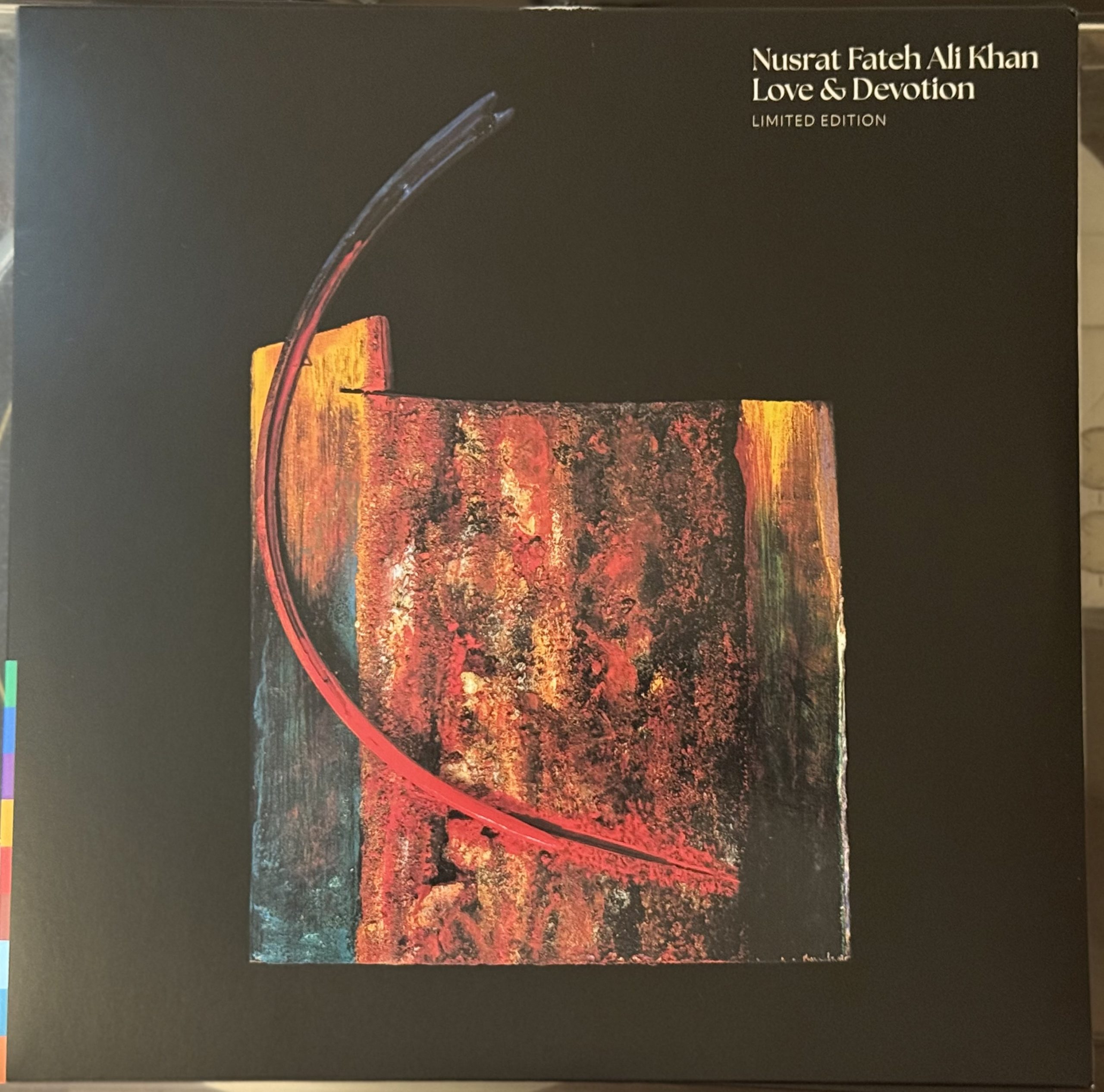
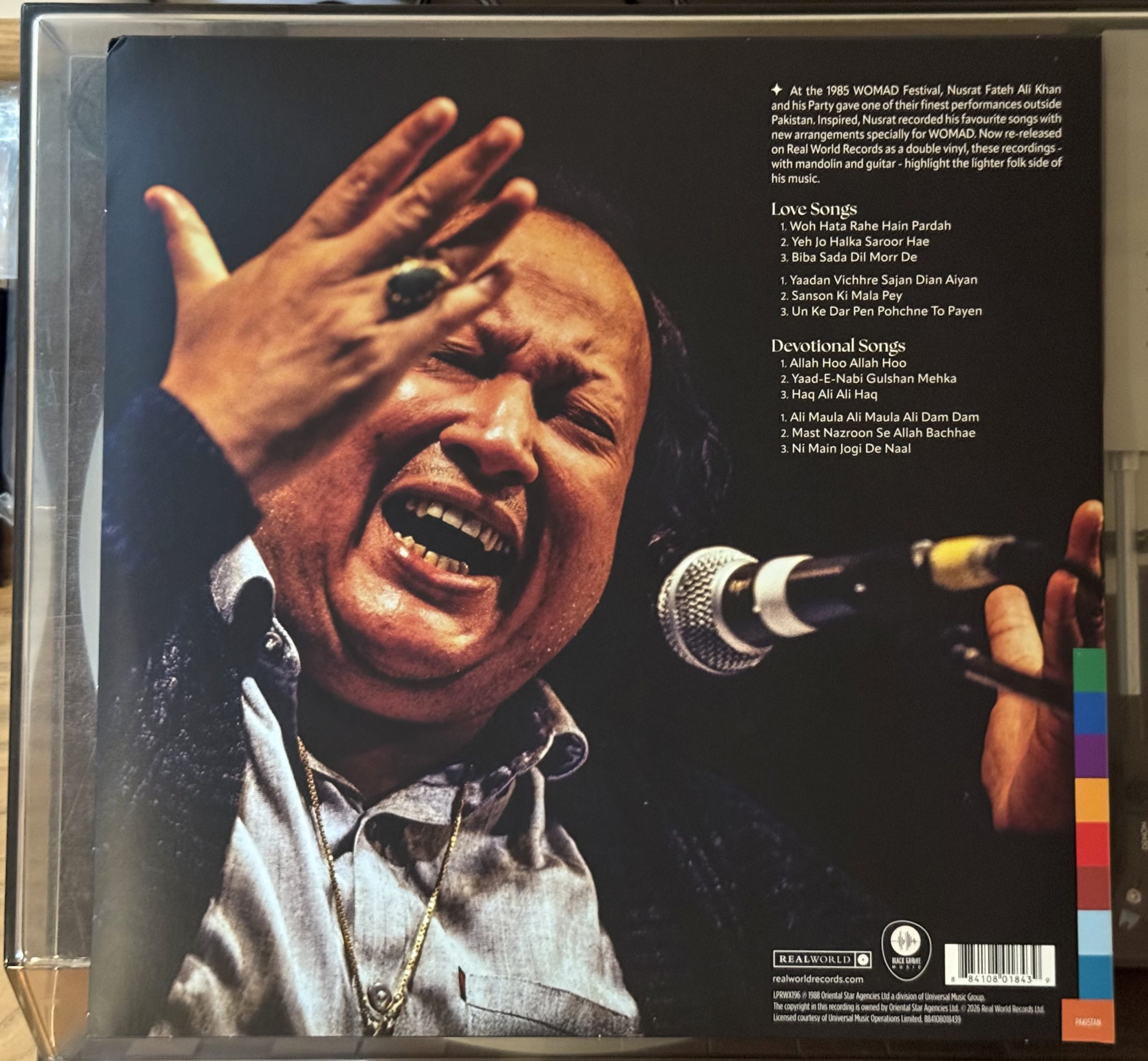
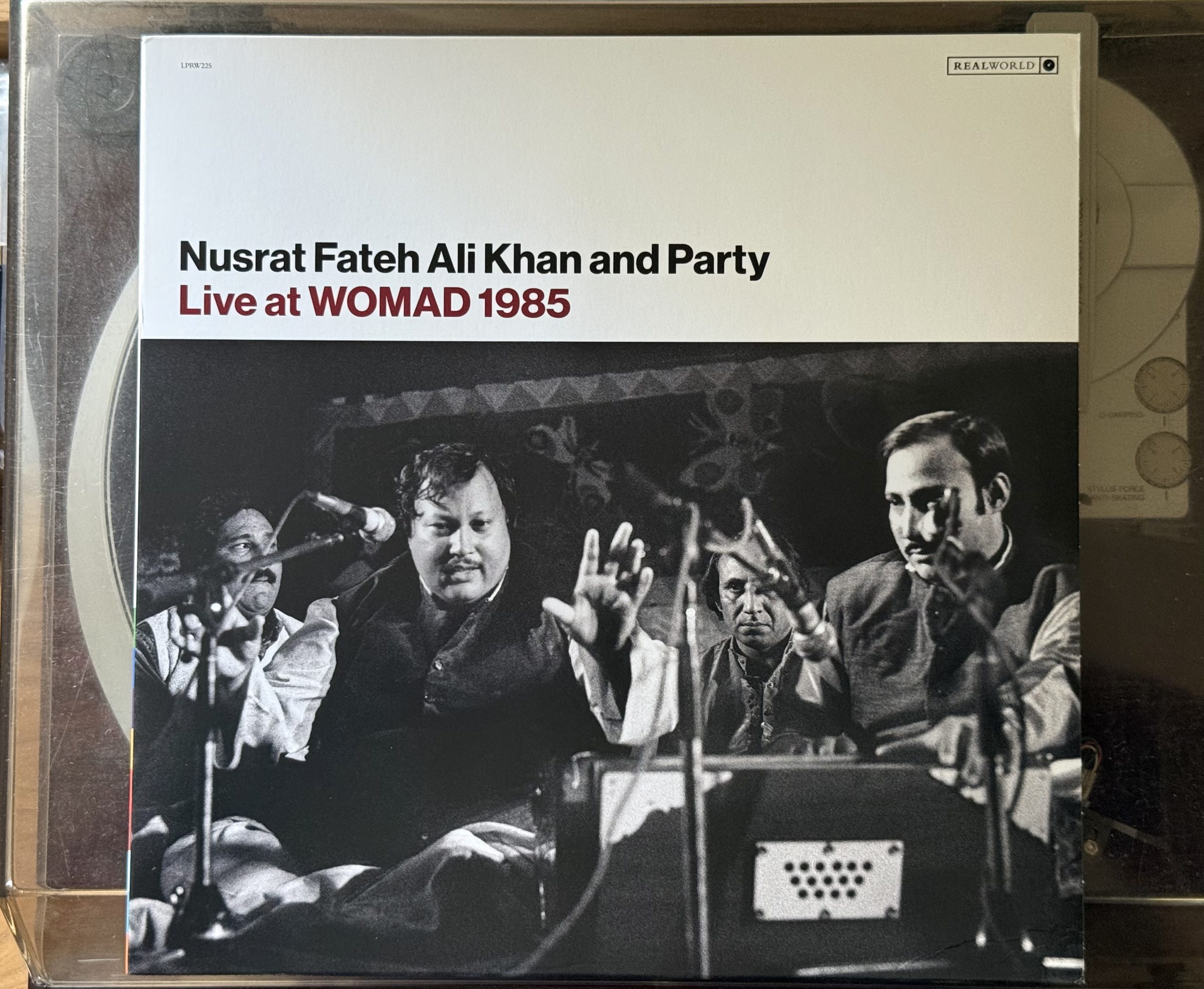
Nusrat Fateh Ali Khan and Party, Live at WOMAD 1985

A recently released archival recording documenting the moment when the great qawwali burst onto the world stage.

Album of the Week, May 2, 2026

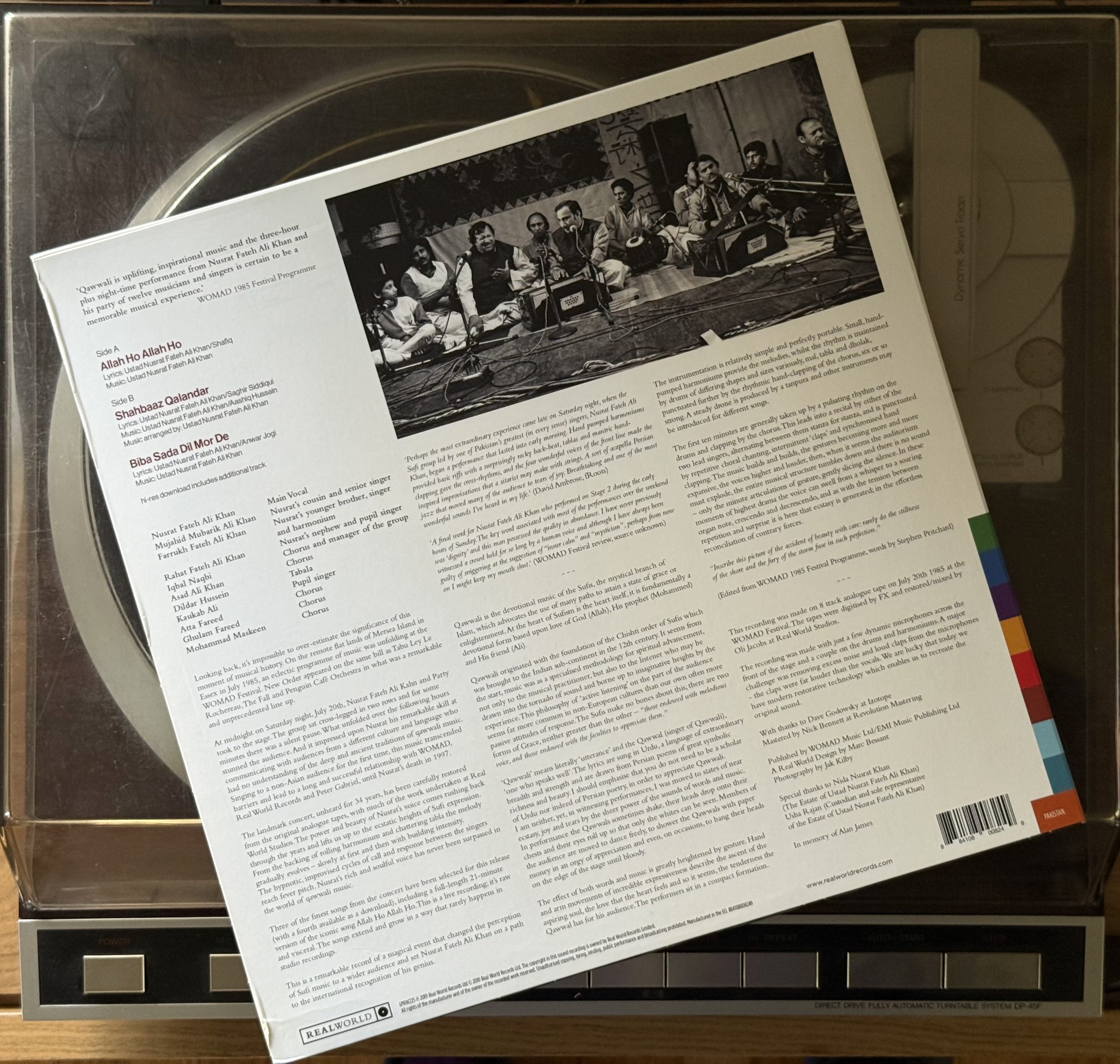
A traditional religious singer from Pakistan who performed with a harmonium player, percussionists, and a group of singers that included two students, one of whom was his nephew, would seem an unlikely choice for a superstar. The rise of Nusrat Fateh Ali Khan, about whom Jeff Buckley once famously remarked “Nusrat, he’s my Elvis,” is the story of a musician who was already acknowledged to be the greatest artist in his field before most Western listeners ever heard of him. And that journey to worldwide fame began with a midnight concert 41 years ago this year, at Peter Gabriel’s 1985 WOMAD festival, on a bill that also featured New Order, the Pogues, Toots and the Maytals, and The Fall.

Ustad Nusrat Fateh Ali Khan (“Ustad” means “master” or “craftsman” in Urdu, Persian and a host of other languages) was born in 1948 in western Pakistan. His family were practitioners of the art of qawwali, or Sufi devotional music, with their musical heritage going back at least 600 years. Nusrat’s father Fateh Ali Khan wanted Nusrat to follow a more reputable profession like engineering or medicine, but the young musician’s playing on the tabla earned praise from master qawwali artists and convinced his father to let his son follow in his footsteps. At age 16, following the death of his father, Nusrat became the lead singer of his father’s party alongside his uncle Mubarik Ali Khan; in 1971 his uncle died and he rose to leadership of the party at age 23.

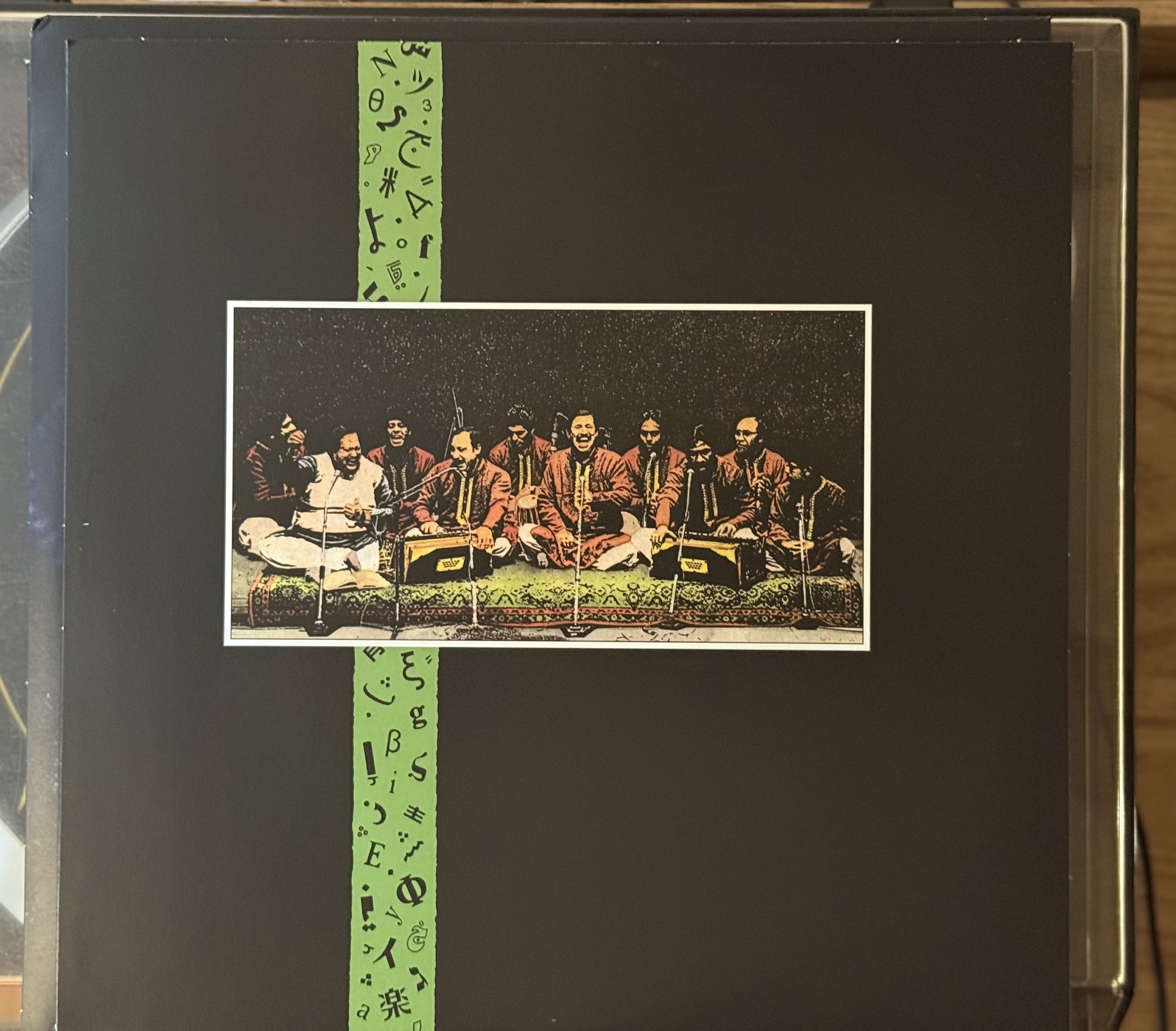
A qawwali party is a band optimized for traveling performances. The instrumentation is light—tabla or other percussion instruments and a harmonium—and is primarily there to support the singers. In Nusrat’s party this included Mujarad Mubarik Ali Khan (son of Nusrat’s uncle), Farrukh Fateh Ali Khan (younger brother), two pupils, Kaukab Ali and Rahat Fateh Ali Khan (Nusrat’s nephew) and a five-voice chorus. This group of musicians crowded onto a stage on Mersea Island in Essex for an audience that at first sat politely, but by the end of the first song were on their feet, clapping and chanting along.

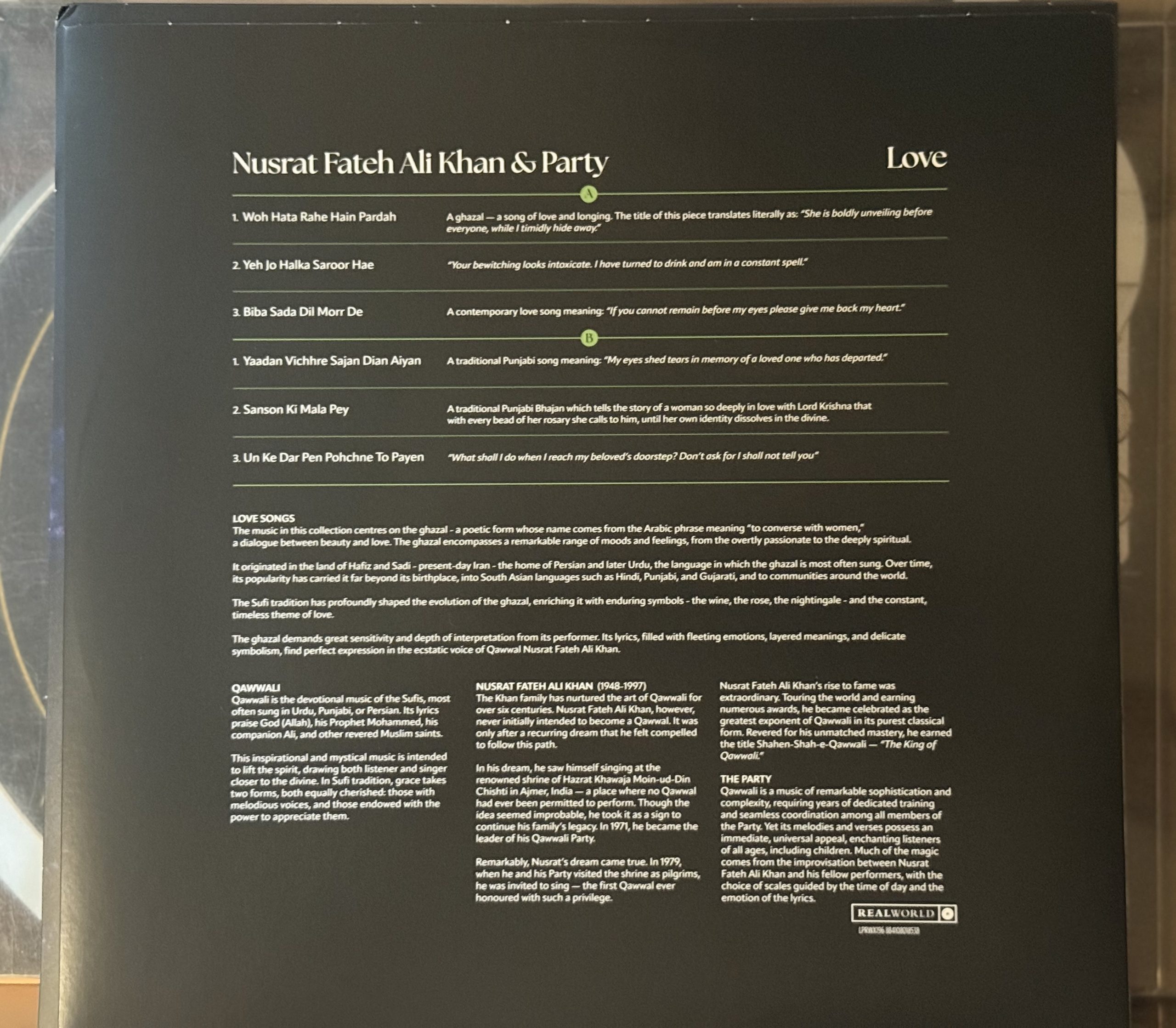
Allah Hoo, Allah Hoo” begins with a several-minutes long instrumental solo with the harmonium and the tabla as the group settles in, then Nusrat intones the initial verse melody in something like a plainchant style, alternating with the other vocalists of the party in higher and higher vocal lines, and finally segueing into the chorus with its repeated exhortations of “Allah Hoo, Allah Hoo” after over six minutes of introductory material. From this point forward the party improvises over several main melodic lines: the “Allah Hoo” melody, the verse melody “Ye zamee’n jab na thi, ye jahaa’n jab na tha,” and a stretch of free improvisation in which each of the singers takes turns ascending and descending octaves, a practice called sargam. This section is particularly notable for the interchanges between Nusrat and his young nephew Rahat (now Ustad Rahat Fateh Ali Khan), who was young enough in this record that his voice had not yet attained his adult range. The overall song is a hymn of praise: “O God, O God… When the earth was not, when this world was not / When the moon and the sun had not been created / When even the secret of Truth was hidden from all / There was nothing here / But still, You alone existed.” The overall performance runs for more than twenty minutes.

Nusrat introduces the next song for the festival audience after the instrumental introduction, saying “This is very famous tune—very famous tune ‘Shahbaaz Qalandar laalmeri pat rakhiyo bal’.” The tune, a hymn to the Sufi mystic “Hazrat Lal Shahbaz Qalendar” (literally “Prophet of God, Red-Robed, Falcon King, Sufi Saint”) who sought to bring peace between the Hindi and Muslim populations in Pakistan and who was regarded by the Hindi people as as an incarnation of God. He was also known as “Jhulelal,” and both the Shahbaaz and Jhulelal names recur in many of Nusrat’s songs of praise. The song itself features a strong melodic pattern that circles between the fifth and tenth tones of the scale. There are fewer sangam passages in this performance, but an extended instrumental break on harmonium and tabla brings cheers and whistles from the crowd. By the end the singers of the party are singing the chorus in overlapping waves, ultimately stopping only as one of the singers suffers an audible coughing fit.

Biba Sada Dil Mor De” is the sole non-religious song on the album, a ghazal, or love song, that can be translated as “Darling, give me my heart back” or, in the liner notes to one of Nusrat’s later albums, “If you cannot remain before my eyes please give me back my heart.” For the most part the party repeats the refrain over and over again, but after about six minutes they start a series of vocal improvisations, ranging from high obbligato to highly rhythmic sangam utterances from Nusrat. The record ends in a fade out on the cheers of the crowd.

This performance was legendary but not broadly circulated until 2025, when improvements in digital technology made it possible to adjust the levels in a way that permitted the vocals to be appropriately prominent; on the original tapes the sound of the handclaps of the chorus dominated the sound. The release reopens an old question: would Nusrat have found his way to world prominence without the 1985 WOMAD appearance? We will never know, but this first experience led to many later collaborations with Peter Gabriel and a bigger platform for his solo works. We’ll listen to some of those later, but next week we’ll hear from a different Peter Gabriel collaborator on an album that was itself a breakthrough.

You can listen to this week’s album here, including a bonus performance of Nusrat’s famous “Haq Ali Ali”:

BONUS: The recording, amazing though it is, doesn’t fully convey what this band could do. This crowd video of “Shahbaaz Qalandar” shows it all: the polite listening, then the rhythm starts to grab them, then everyone is on their feet. That’s more or less exactly how it happened to me when I saw Nusrat in the mid-1990s in Washington, DC: