
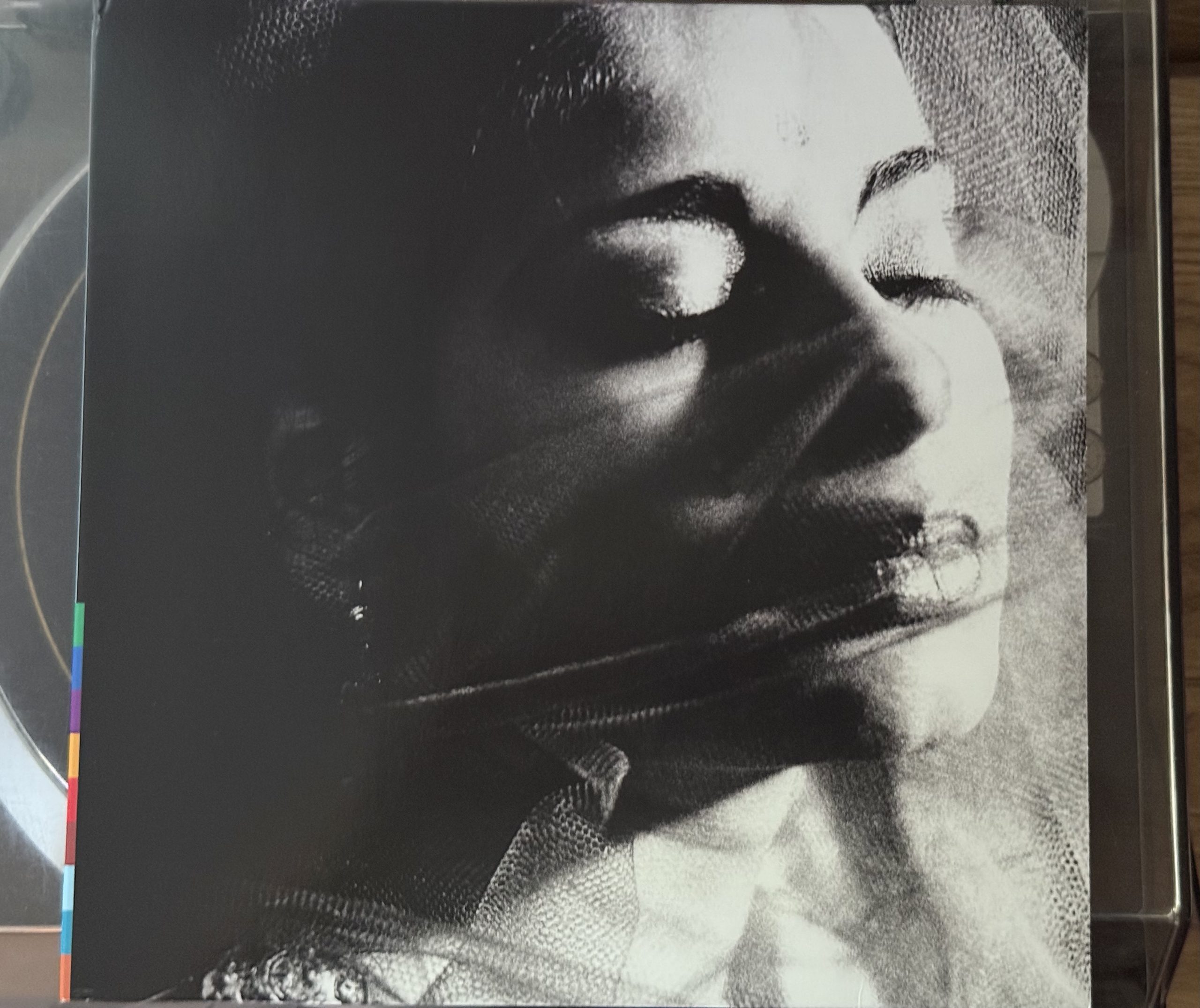
Album of the Week, August 22, 2026
Sheila Chandra had a career arc: actress on the BBC drama series Grange Hill, lead singer in the band Monsoon, top 20 UK hit with “Ever So Lonely.” Then her label wanted her band to drop its Indian influences. She quit the band, went deep into traditional music until she came out the other side, blending influences from traditional British folk music—or, as she notes, “many of the vocal ornaments that are used in British folk are also used in Indian music… And I became interested in the crossover point between those influences.”
She made records in isolation, having retreated from live performing, until she decided it was time to return, and spent time at Real World Studios during a recording week in 1991. That experience may have helped her decide to take the new record she had just made, with just her voice and a drone—so she could perform the material live, completely by herself—and license it to Real World Records for distribution. The approach led to a trio of albums on Real World that she, and critics, still view as her best work, starting with the release of 1992’s Weaving My Ancestors’ Voices.

“Speaking in Tongues I” plunges us off the deep end from the beginning. The performance features Indian vocal percussion, a style called konnakol, which translates to “reciting the rhythmic syllables.” But where traditional konnakol performance is rhythmic within the context of a larger performance, Chandra’s performance here varies rhythm, meter and vocal register to create entire sound worlds. She’s remarked that she wanted the title to invoke the concept of possession, to reflect the degree to which the performance takes flight, and the ending, with its three repetitions of an incredibly tongue-twisting syllabary, reflects the theme of stepping off the edge into something big and new.
Chandra has said that the “ancestors” here are not blood ancestors, but rather all of humanity—or at least the part that sings. “Dhyana and Donalogue” gives us a taste of this approach, with an 11th century Irish ballad juxtaposed against a meditative vocalization (dhyana means “meditation” or “profound reflection”) inspired by Muslim practice. The performance is so quiet and uncluttered that you can hear Chandra shift her vocal resonance from a lower register into a sharper tone within the same breath.
“Nana/The Dreaming” incorporates the music of another ancestral culture, in this case a traditional Spanish lullaby as adapted by the twentieth century composer Manuel de Falla. Set over a drone, it foregrounds the Islamic influences of medieval Spanish culture, even more so as Chandra combines it with a North Indian style improvisation in the same tone row (raga).
“Ever So Lonely / Eyes / Ocean” embraces the idea of combining multiple works that use the same raga, but in this case it takes the form of a greatest-hits medley. “Ever So Lonely” was the first Asian Fusion hit in the British pop charts, and “Eyes” comes from the same debut album; “Ocean” was a later song written by Chandra’s producer and former Monsoon bandmate Steve Coe for her. The combination works like a single utterance of loneliness, desire and reflection. The first side ends with “The Enchantment,” a traditional British folk song broken up in the same way that an Indian ghat might be expanded and improvised upon in Indian classical music.
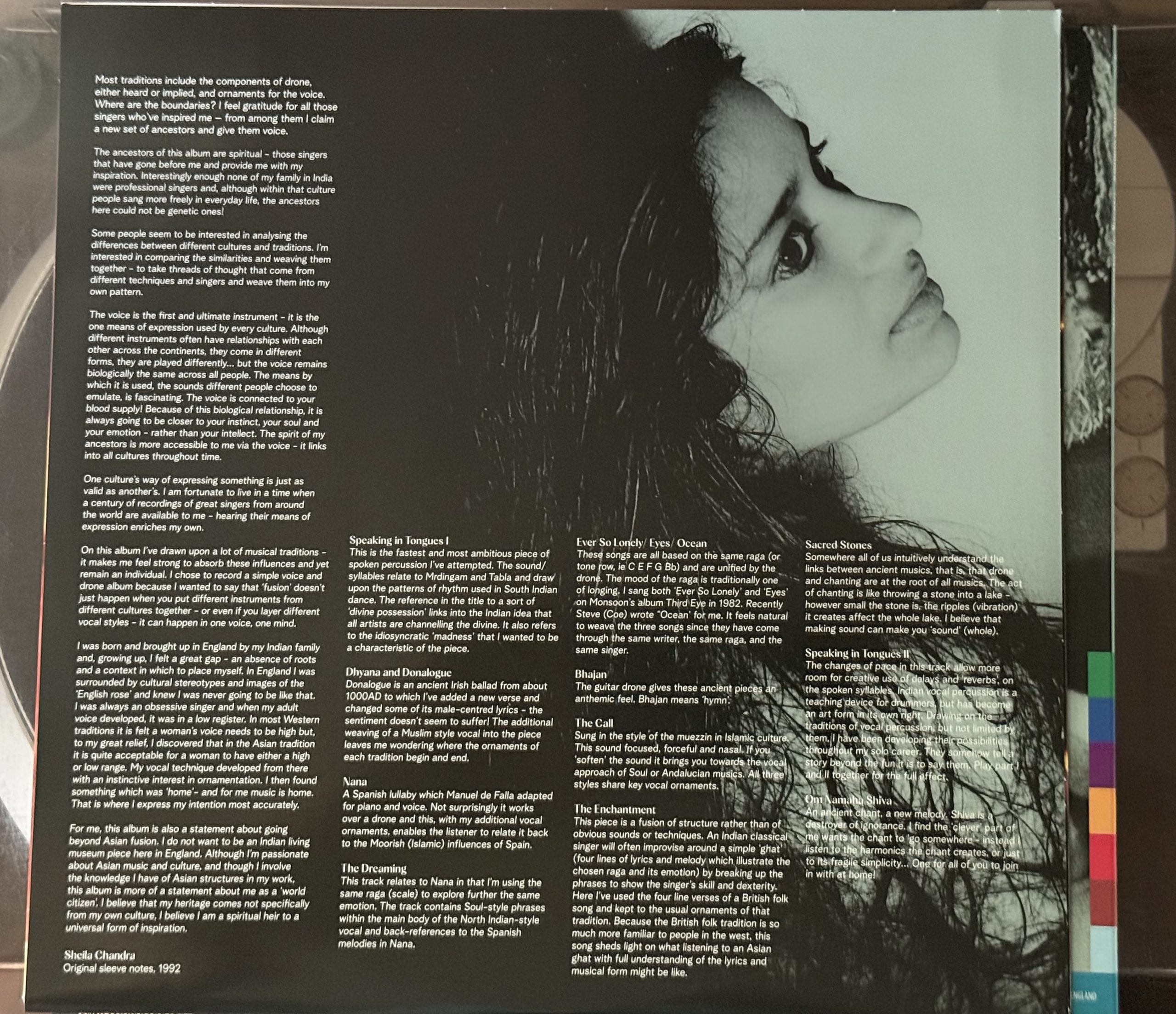
“The Call” is intended to evoke the Islamic “call to prayer” tradition, which we heard Baaba Maal perform in a Senegalese interpretation on Passion – Sources. Chandra points out the difference in vocal placement, with more resonance in the facial mask (often called a “nasal” sound) as a key difference in the style, which otherwise leverages the vocal improvisation on a a single raga that we’ve heard in other works here.
“Bhajan” is a performance of ancient texts over a guitar drone, which makes them feel more powerful and a little less intimate. Unlike some of the other works here, the single musical anchor is the drone; each fragment uses a different raga. The intensity of the spiritual reflection provides the unifying factor through all the works.
And speaking of intensity, “Speaking in Tongues II” revisits the konnakol practice of the first track and ramps it up to eleven, applying multiple production techniques (reverb vs. dry, sonic manipulation of the vocal, etc.) to make it sound as though the continuous performance is composed of multiple segments edited together. Chandra says this was a deliberate choice, as she perceived she was being dismissed as a “studio artist” who couldn’t perform live; for this record she created deliberately difficult vocal percussion exercises with the sole purpose of being able to recreate them exactly live to silence the doubters!
“Sacred Stones” opens with an improvisation on the drone, here an open fifth that leaves a wide amount of room for melodic exploration. Textually, Chandra combines Indian prayers, Latin prayers, and alleluias into a single invocation of the sacred. The tune flows into the closing track, “Om Namaha Shiva,” a mantra invoking the god that Chandra names “the destroyer of ignorance.” To my ears the performance invokes both the South Asian musical forms and the British folk melodies that she weaves through the rest of the record. It ends as a meditation on divinity and the nature of destruction… and creation.
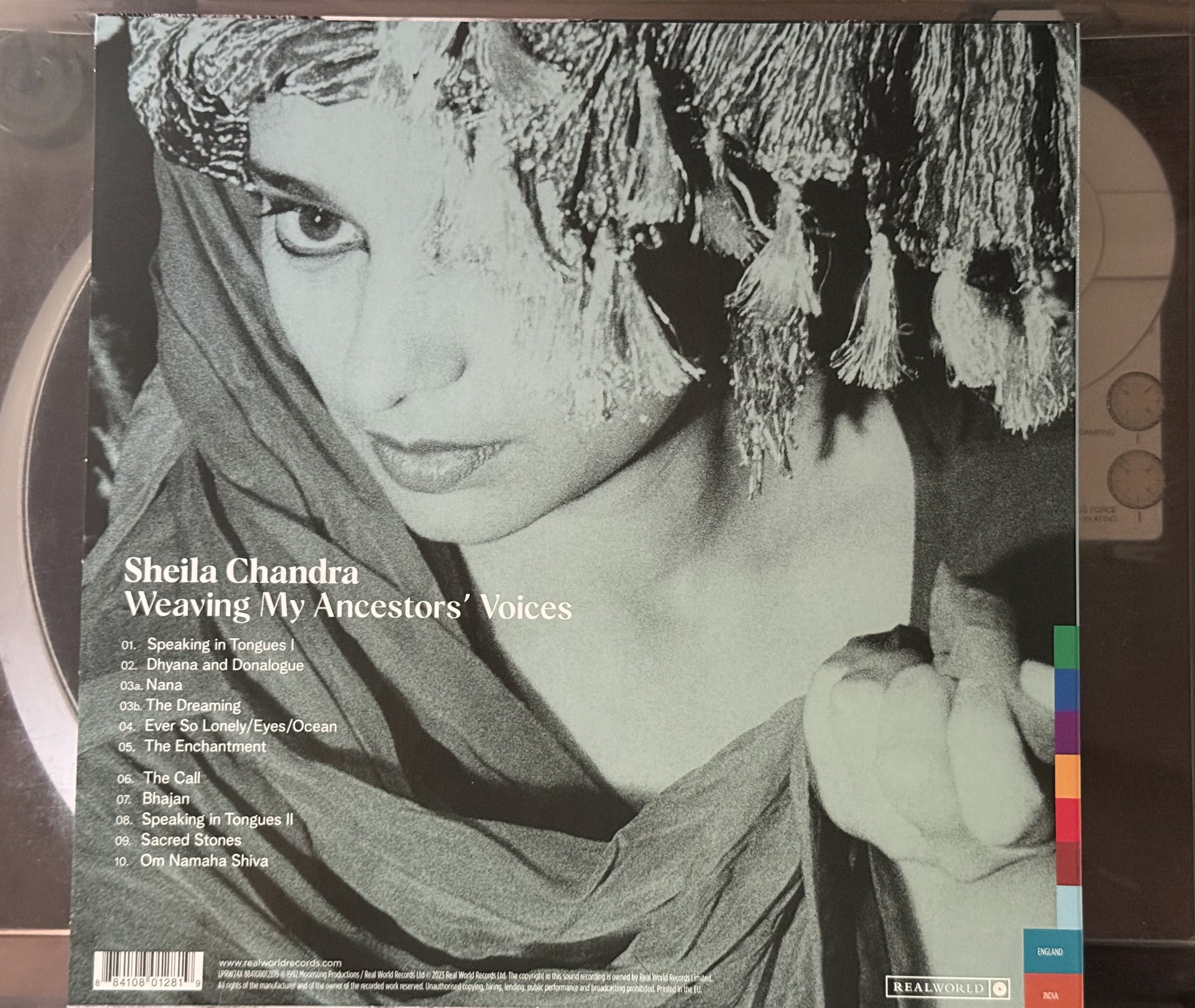
Weaving My Ancestors’ Voices cemented Chandra’s reputation as an innovating musical thinker, and her subsequent live performances at WOMAD and elsewhere established her as a confident musician. She would take things even further, as we’ll hear soon. But next week we’ll hear some more traditional South Asian music in a massive collection that was released through Real World a few months after this album.
You can listen to this week’s album here:
BONUS: Chandra’s work translated directly to the stage, and there are a lot of live performances to draw from. Here’s “Ever So Lonely / Eyes / The Ocean” in a 1992 performance at World in the Park:
BONUS BONUS: An interview with Chandra from 1992’s WOMAD Festival in Finland leads into a short performance segment of her “Speaking in Tongues” material:
2 thoughts on “Sheila Chandra, Weaving My Ancestors’ Voices”