
Album of the Week, September 12, 2026
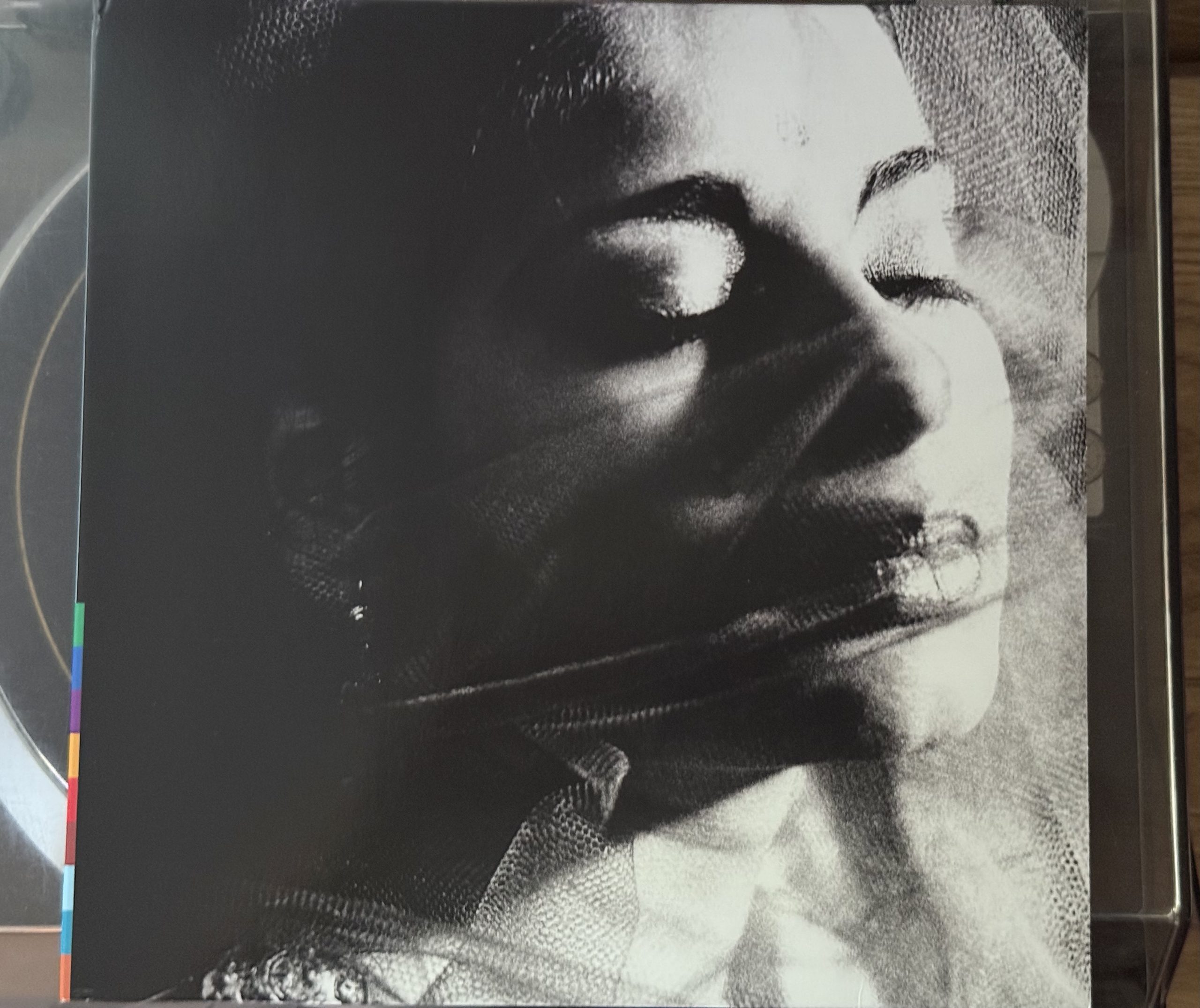
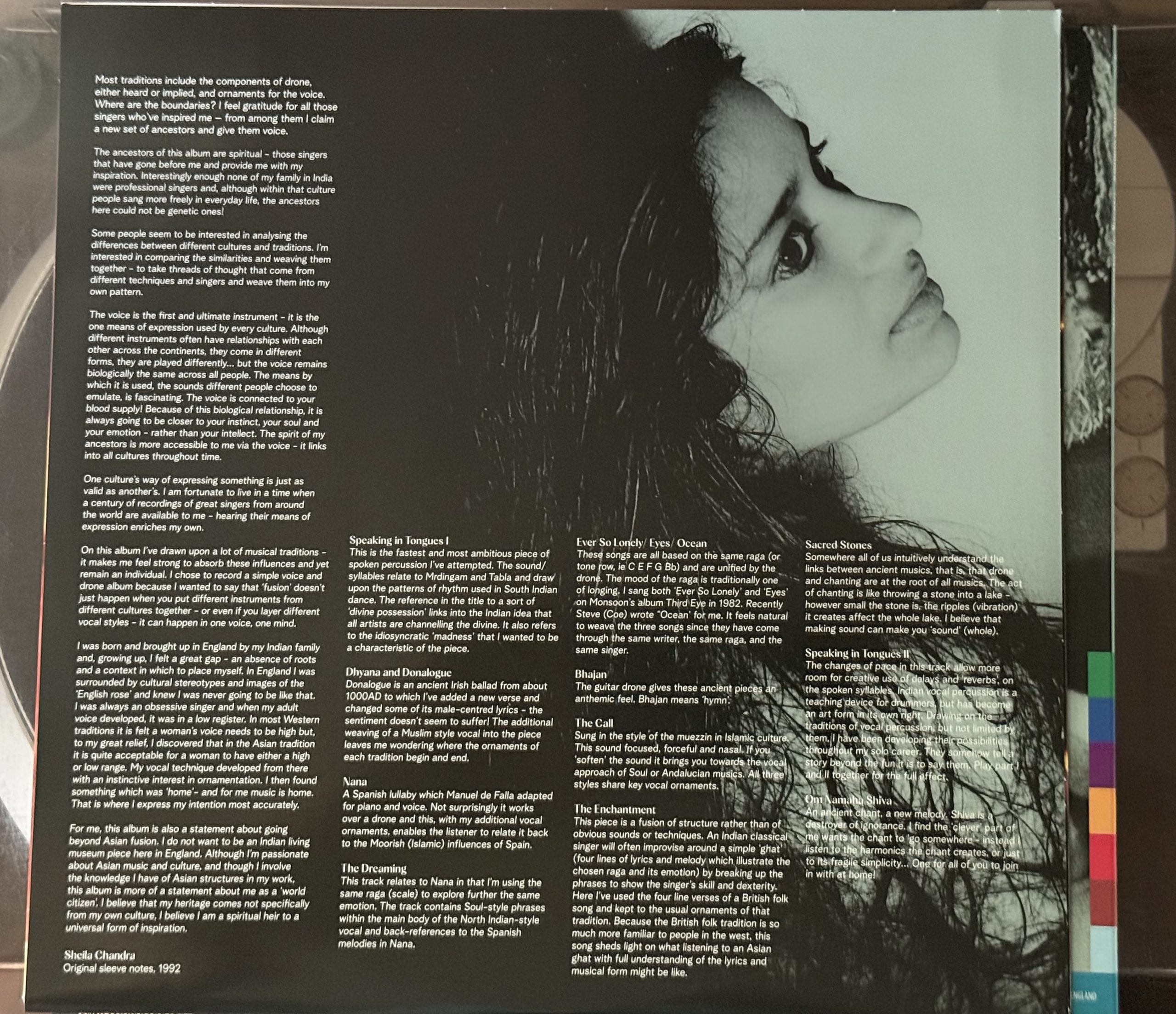
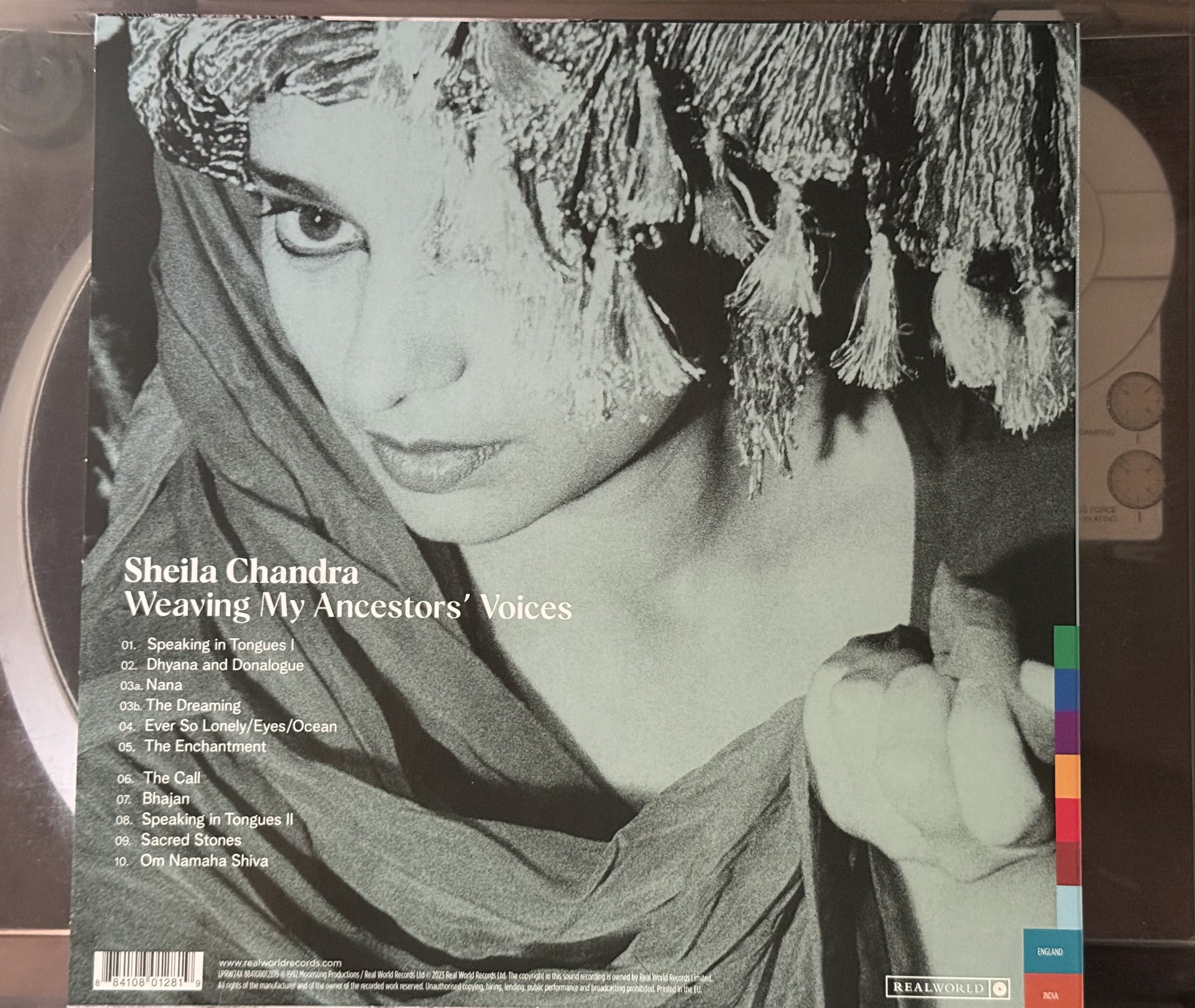
Following Weaving My Ancestors’ Voices, Sheila Chandra continued her exploration of voice and drone, of the interconnections between breath and thought, of voice and listener. She noted in the original liner notes to The Zen Kiss, “My last album … illustrates crossing between different musics within a single vocal line. The Zen Kiss has moved on. The structure of my songs have become more challenging now that those connections have been absorbed into my sub-conscious.” What results on this 1994 album is a set of vocal performances that range from meditative drones to traditional songs to vocal experiments, that range from British folk song to Indian raga to soul music to kannakol vocal percussion, sometimes all in the same performance.
Even more than Weaving, the album is a solo performance, with only producer Steve Coe adding drones. As before, Chandra recorded in a Bristol studio and mixed the album at Real World Studios. But with all the similarities, there’s an important difference: instead of lyrics drawn from ragas and folk songs, here Chandra wove a series of stories about women and their roles that was positively revolutionary for pop music in 1994, to say nothing of world music.

“La Sagesse (Women, I’m Calling You)” is the most direct expression of this new lyrical focus. Singing an obbligato that starts out as a raga and turns into a soul riff, Chandra sings “Oh, women, whose wisdom is in dreams… where do I go to find images of woman woman-made?” The track is entirely unaccompanied, putting the focus solely on Chandra’s incredible voice, as she seamlessly blends ragas and soul improvisation. The track transitions directly into “Speaking In Tongues III,” another of the series of kannakol spoken percussion compositions that began on Weaving. Here Chandra explores both the tonal ranges of the percussion that the form imitates and a broad range of tempos and meters. She expands the types of syllables in use as well, with umlauts and other sounds helping to shape the release of the sound.
“Waiting” reintroduces drone accompaniment under Chandra’s song of anticipation: “Like a desert bloom I sit at your feet / Trolling for a raindrop to fall from your lips / Waiting to be awoken and born by your calling.” The song passages are alternated with ragas, explorations of the song’s tone-row. In Chandra’s vocal we hear an expression of love carried to reflection and ultimate unity between the singer and the beloved. At one point in the improvisation there’s a familiar melodic progression, outside the conventions of the raga, that recalls the melody of “Love Will Tear Us Apart.”
“Shehnai Song” is a deeper drone work, in which Chandra uses pitch bending around the raga for a sitar-like effect. It’s a brief but striking fragment of a song, followed by “Love It Is A Killing Thing,” a British folk song ornamented with flourishes that are simultaneously rooted in traditional Indian and soul music. Here, as in “La Sagesse,” Chandra’s voice is left unadorned to maximize the impact of her amazing vocal control.
The last song in the series of kannakol performances, “Speaking In Tongues IV” is even wilder than its predecessors, using sung interludes, digital effects, and a cut-and-paste aesthetic to broaden the sound palette to its widest. Chandra has said that she could not have written this work without hearing what a sampler could do, but that “the human sampler is ultimately the best.” Compositionally she races from rapid to languid and back, from normal volume to subliminal, almost ASMR-like whispers.

Another reviewer has called “Woman And Child” the centerpiece of the album, and both its position leading off side two and the unusual spoken word composition support it. Over a background of drone and bells, she tells the story of a woman with her infant child that foregrounds the eroticism in the physicality of mother/child relationship. The narration draws the connection between everyday nature, sensuality and spirituality. As much as I listened to woman-forward music in early 1994—and this was after Under the Pink and Exile in Guyville—I wasn’t ready for this at the time. I thought Chandra’s description of the erotic physicality of nursing was exaggerated and felt unprepared to listen to this intimacy. Thirty years on, having raised two children, I understand how much I didn’t know then.
Chandra turns to Spanish for the unaccompanied “En Mireal Del Penal,” again underscoring the connections between Spanish, Arabic and South Asian music. Unlike her performance of de Falla’s “Nana” on Weaving, here she embraces some of the passing tones and accidentals in the tone row even as she interweaves raga improvisations between verses.
“A Sailor’s Life” is Chandra’s most direct embrace of the British folk tradition. The song, a ballad with eighteenth-century roots, was famously performed by Sandy Denny and Fairport Convention in an eleven-minute-long version. Here the performance is stripped back to just drone and voice, but you can hear echoes of Denny’s restrained vocal ornaments in Chandra’s approach, which again brings echoes of Indic valleys to the traditional ballad. The shorter version here underpins the tragic swing from the roguish “A sailor’s life, it is a merry life” that opens the performance, to the same lyric sung a cappella that closes the song after the sailor’s death by drowning, as well as the girl’s desolation after the sailor’s passing.
The Latin plainchant of “Abbess Hildegard” would seem an unusual inclusion in the album’s narrative arc. But the alternating chant verses and ragas connect the famed twelfth-century nun, polymath and composer to the album’s exploration of feminine strength. At the time of the record there was a resurgence in interest in Hildegard, whose music was suddenly everywhere thanks to releases by the early music ensemble Sequentia (their 1994 Canticles of Ecstasy on the Harmonia Mundi label was a best seller) and a 1994 BBC documentary. “Kafi Noir,” in the same key but not the same tone-row, closes the album with an extended raga meditation that brings all the vocal traditions of the album together. Particularly striking are the subtle organum (parallel fourth and fifth) harmonies that seem almost like harmonic overtones emerging from the richness of her voice.

The Zen Kiss is ultimately both about the power of the female voice and an alchemical experience. The kiss of the title is the passage of breath from the singer that transforms the listener. The sheer power and virtuosity of Chandra’s voice ultimately dissolves boundaries between traditional styles and cultures. And ultimately the interpretive grace and power of her performances make the album a statement of female strength that is still stunning to absorb three decades on.
Chandra wasn’t done with this exploration of her voice and we’ll hear the last album in that arc in a few weeks. Next week, though, we will hear a different perspective on strength, grief and loss from another artist we’ve heard before.
You can listen to this week’s album here:
BONUS: Sheila went out on the promotional circuit for the album, and did a brief interview on the BBC program Pebble Mill along with a performance of “Speaking in Tongues III.” The stunning live work, stripped of vocal effects, underscores the brilliant power of her voice: