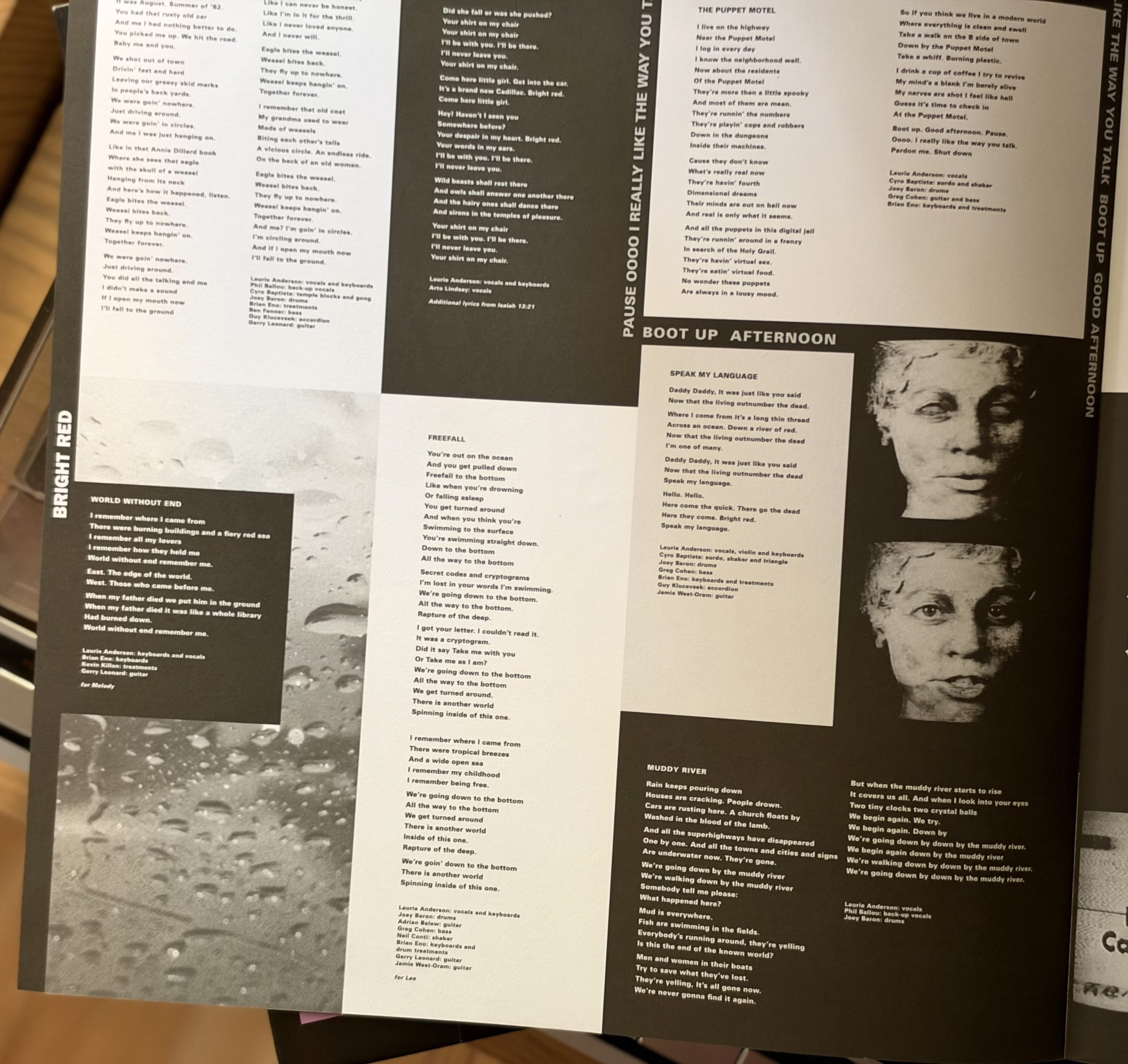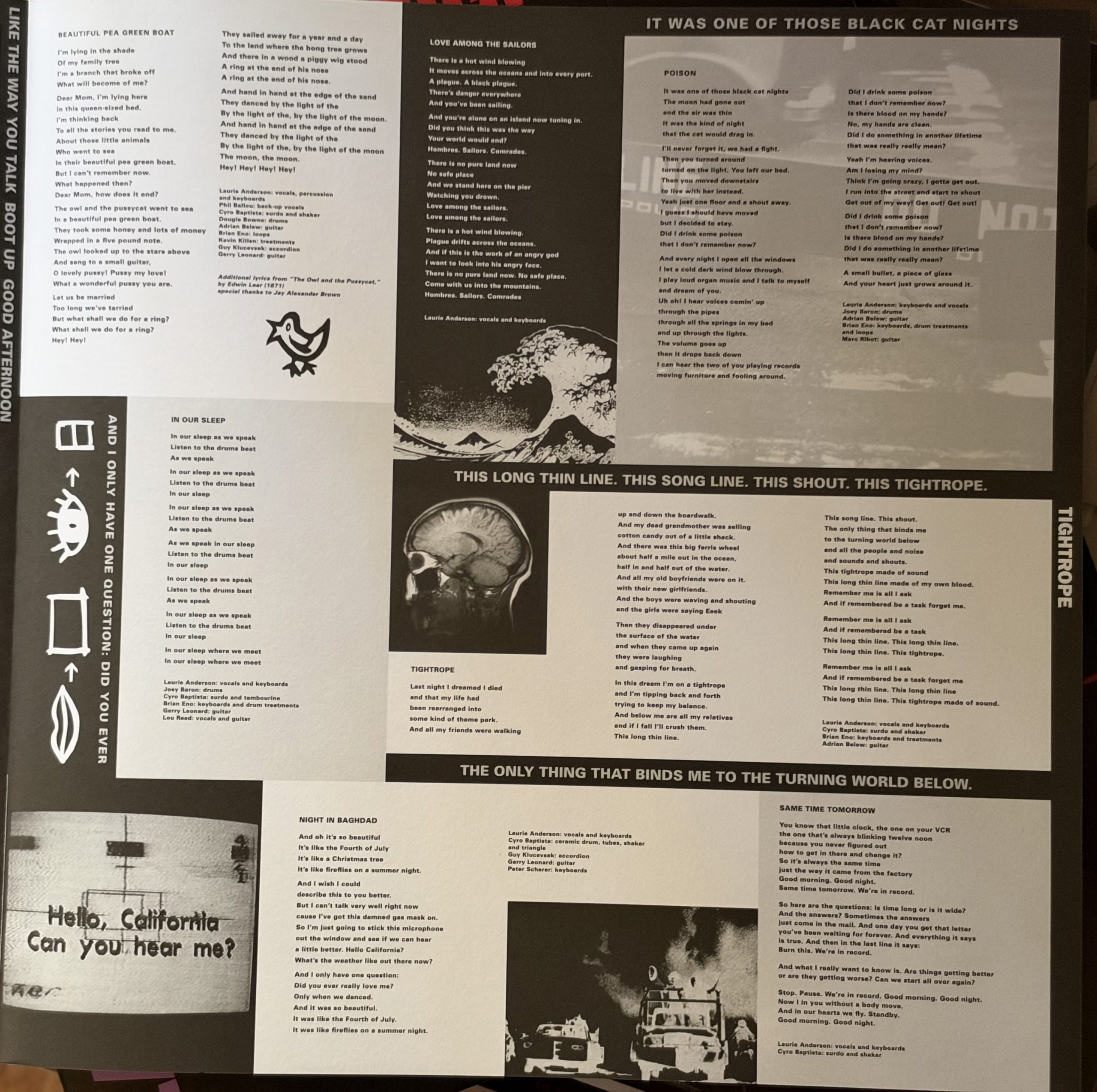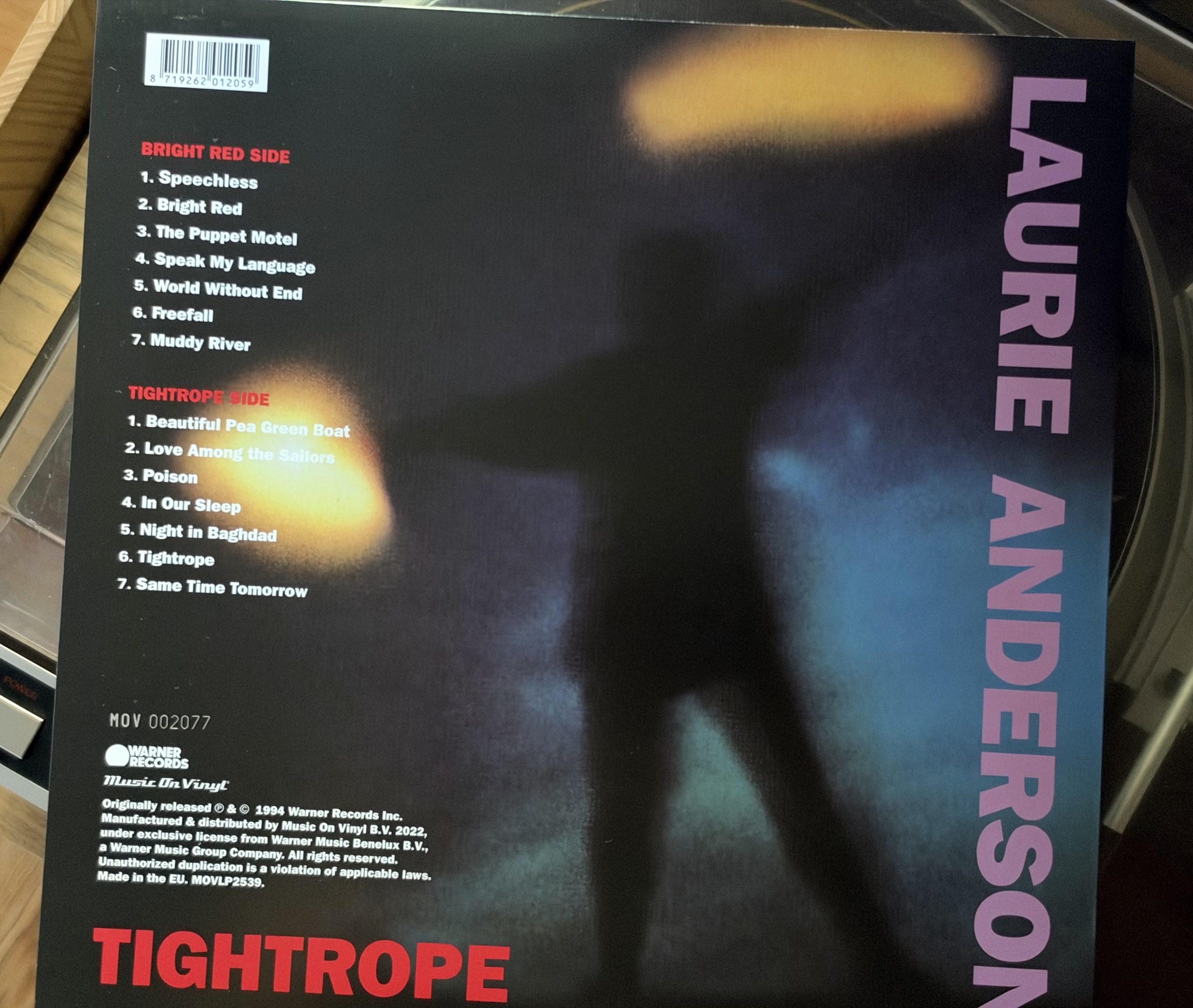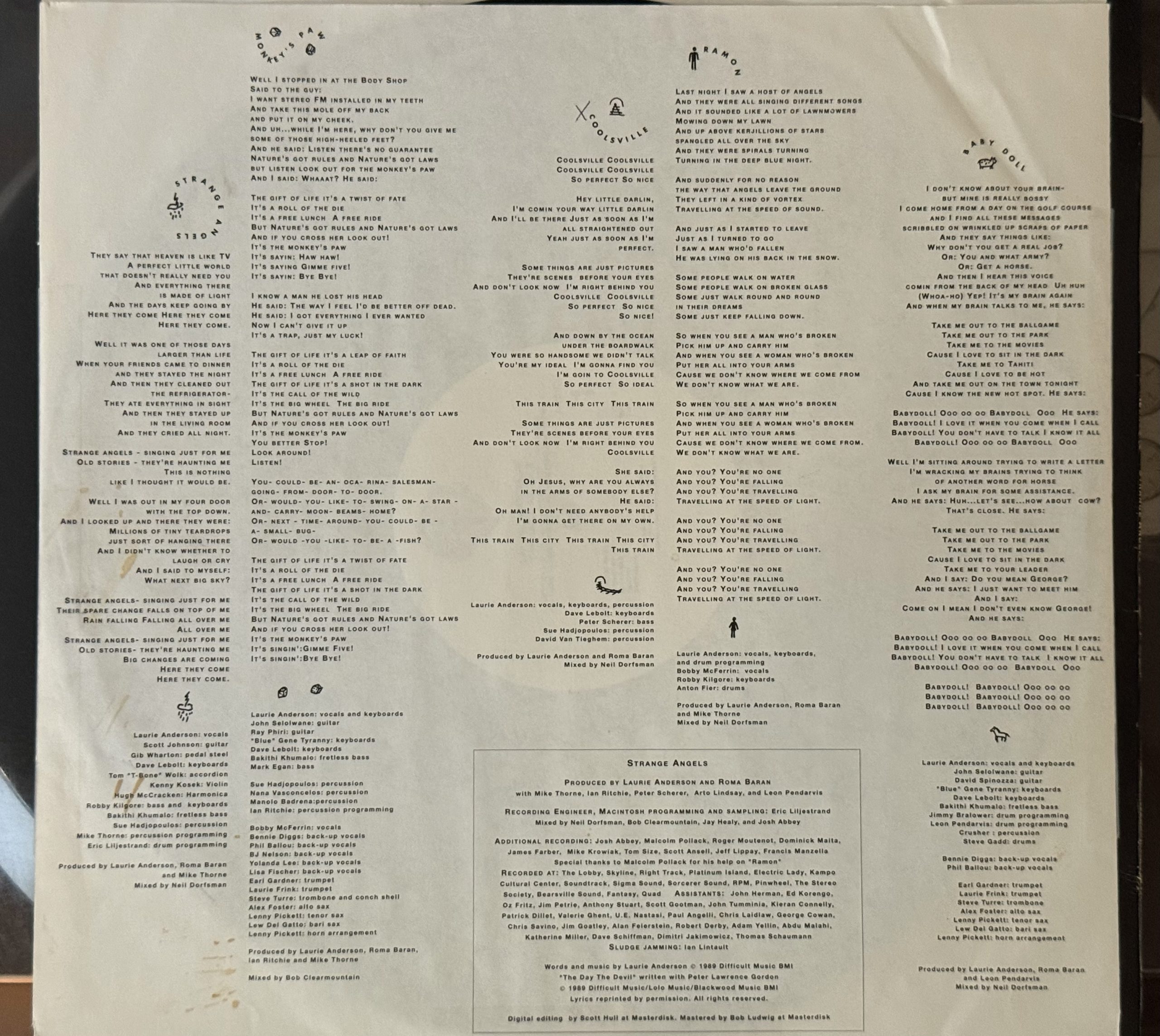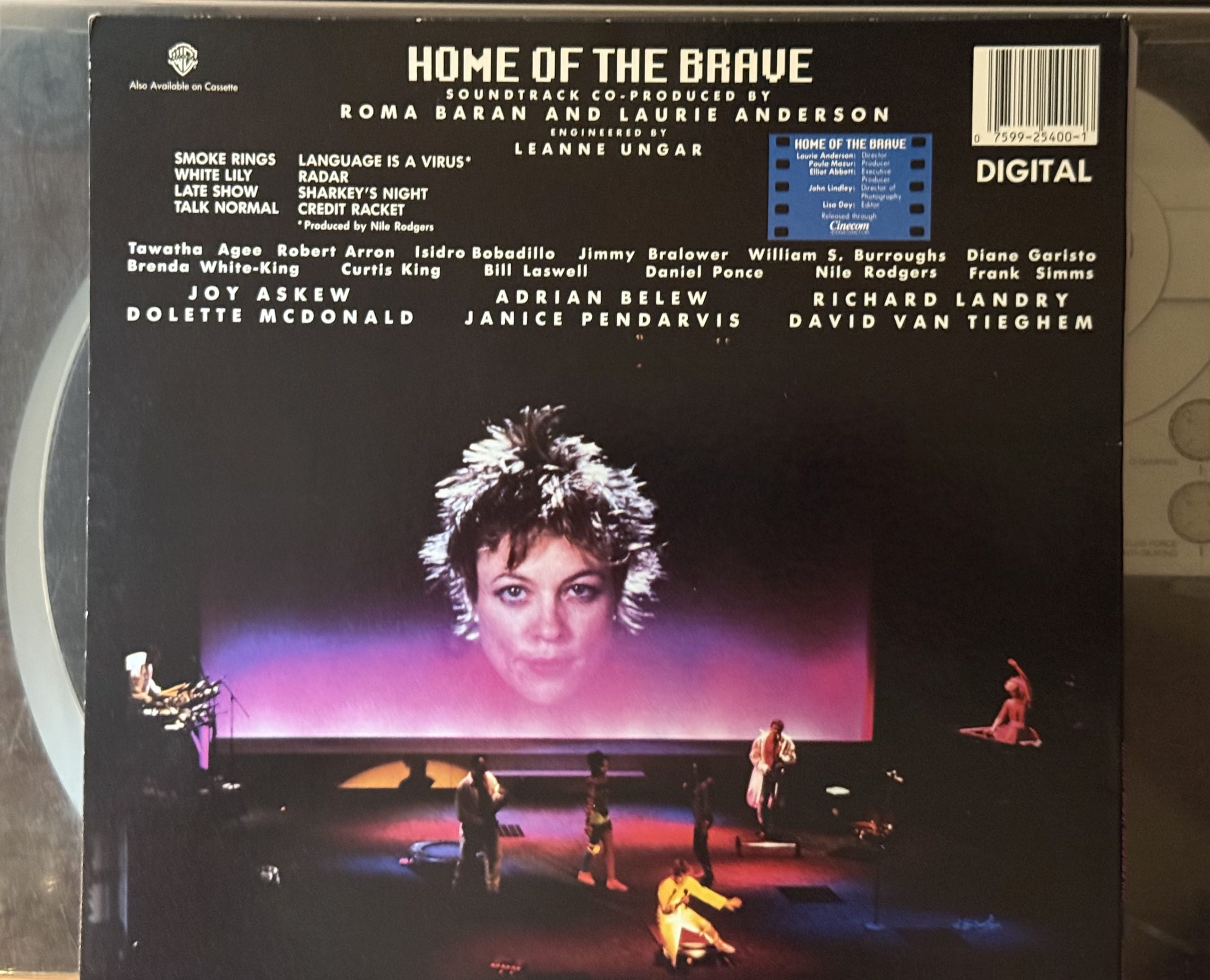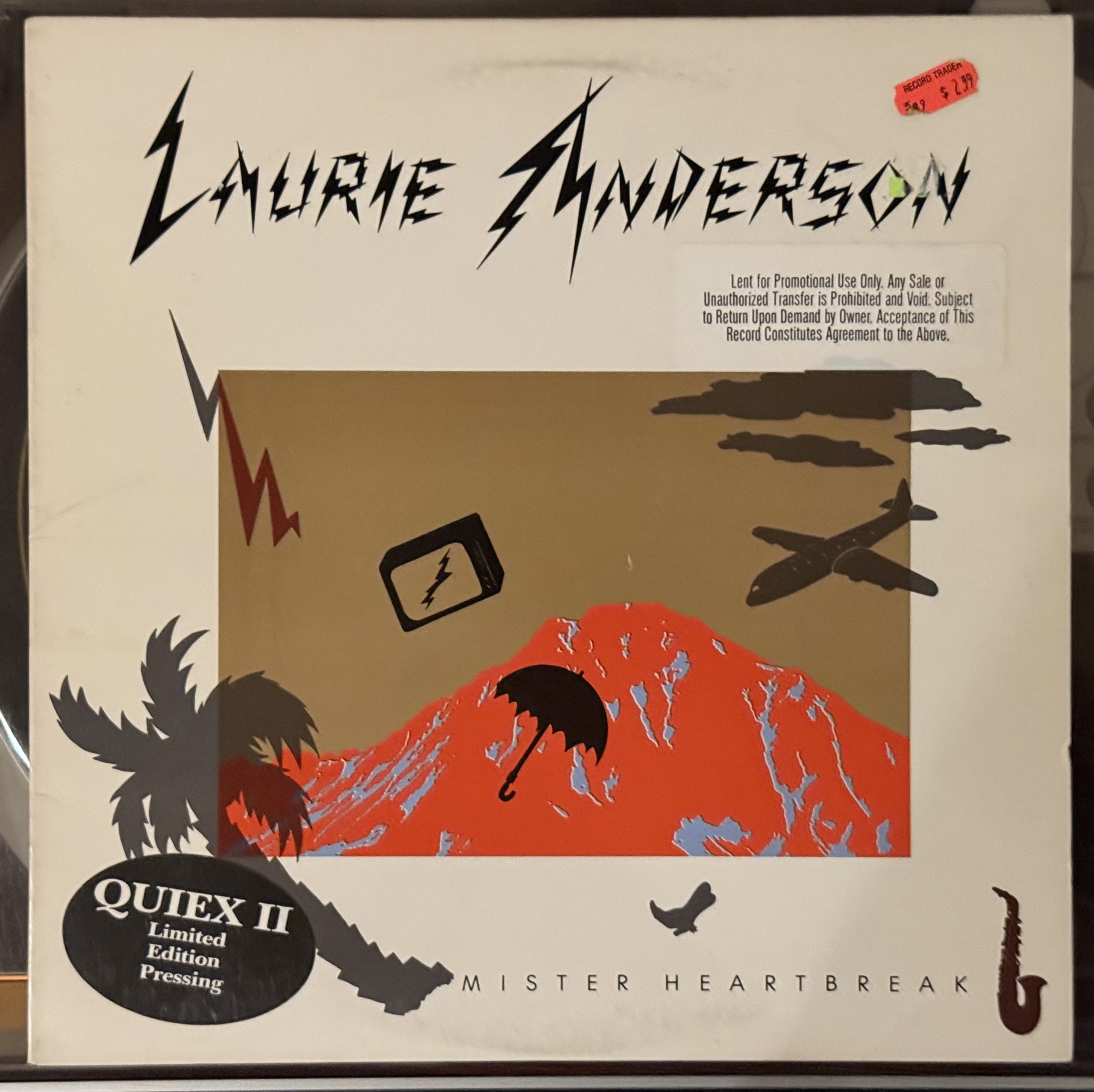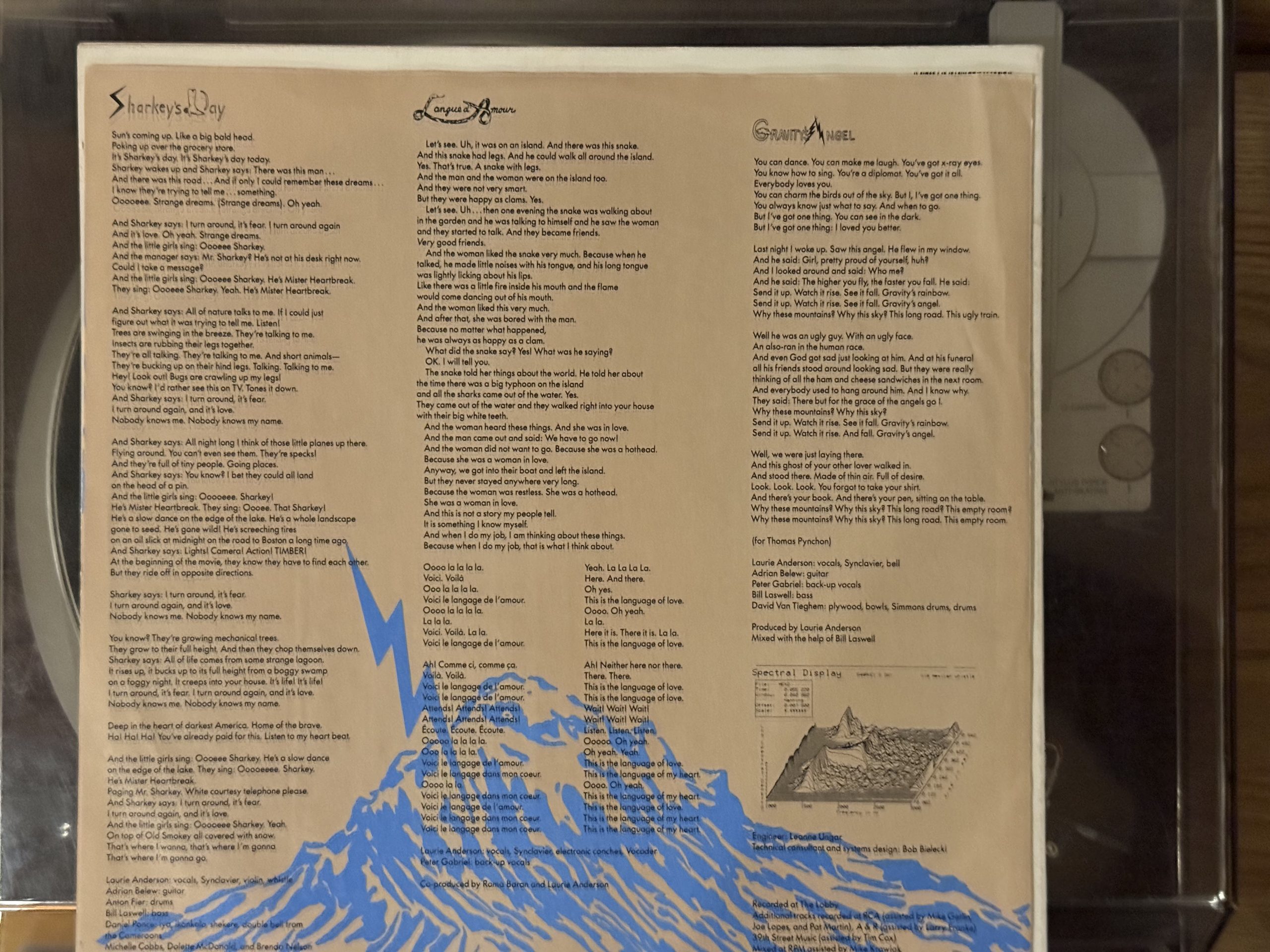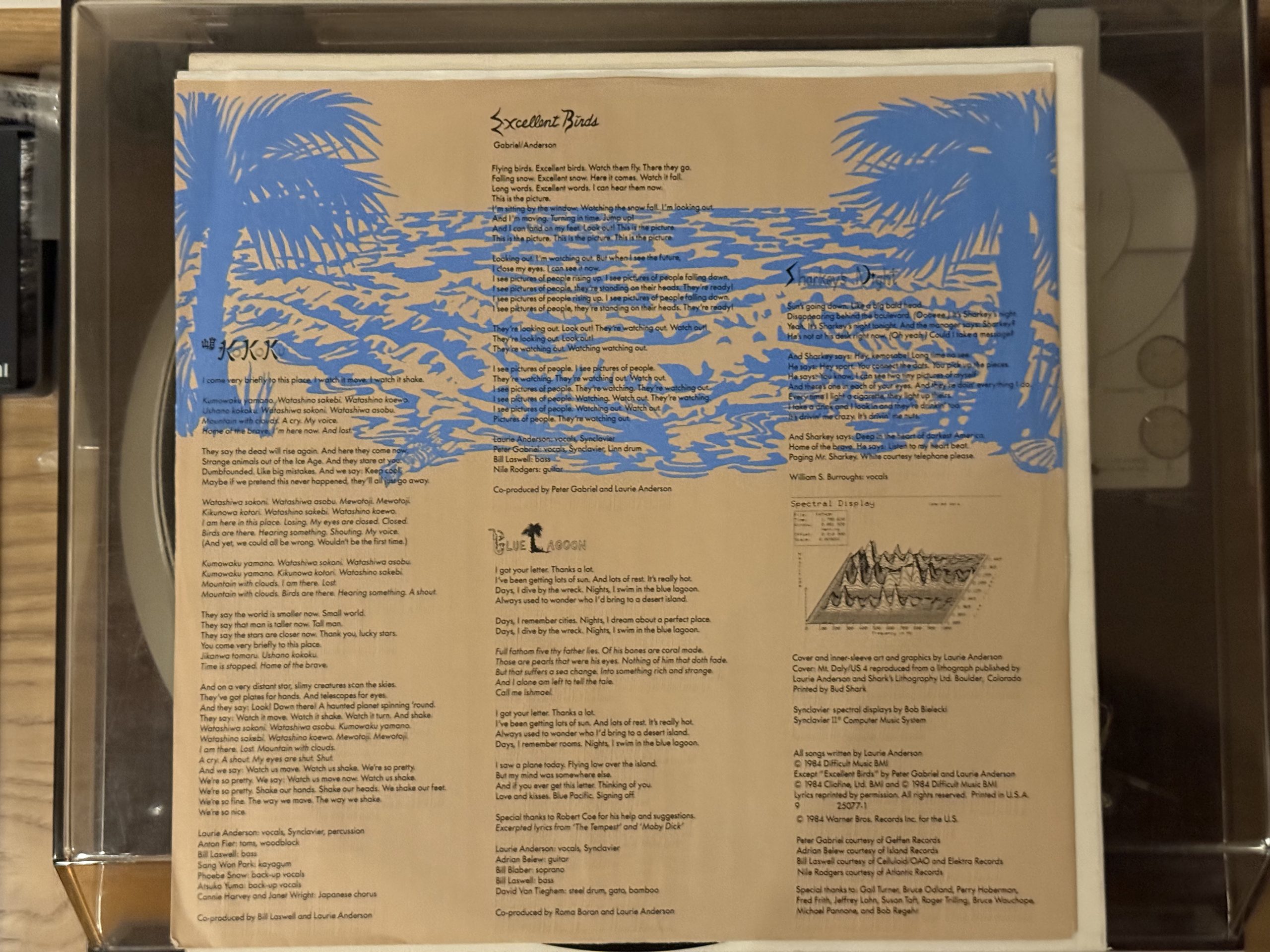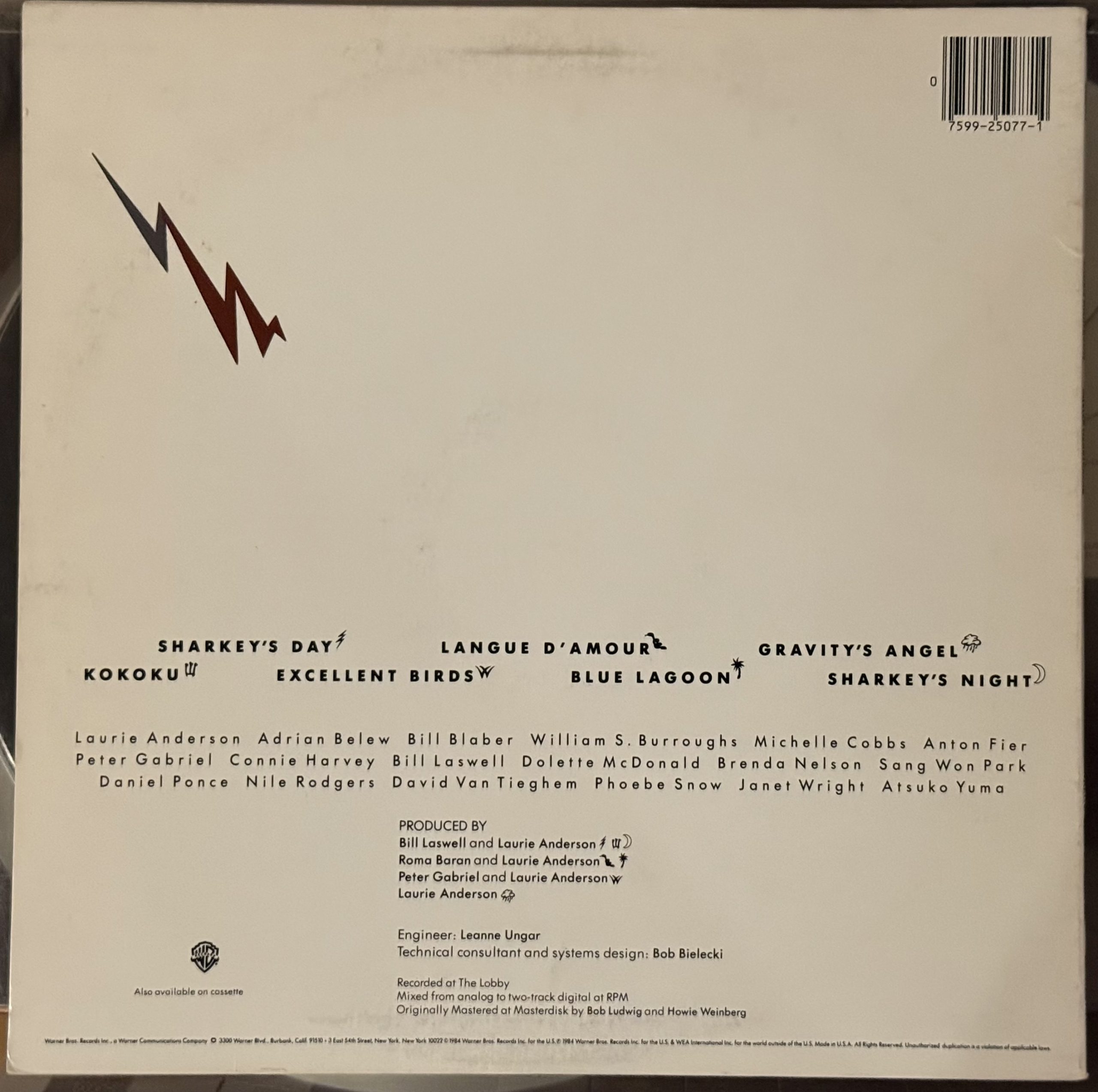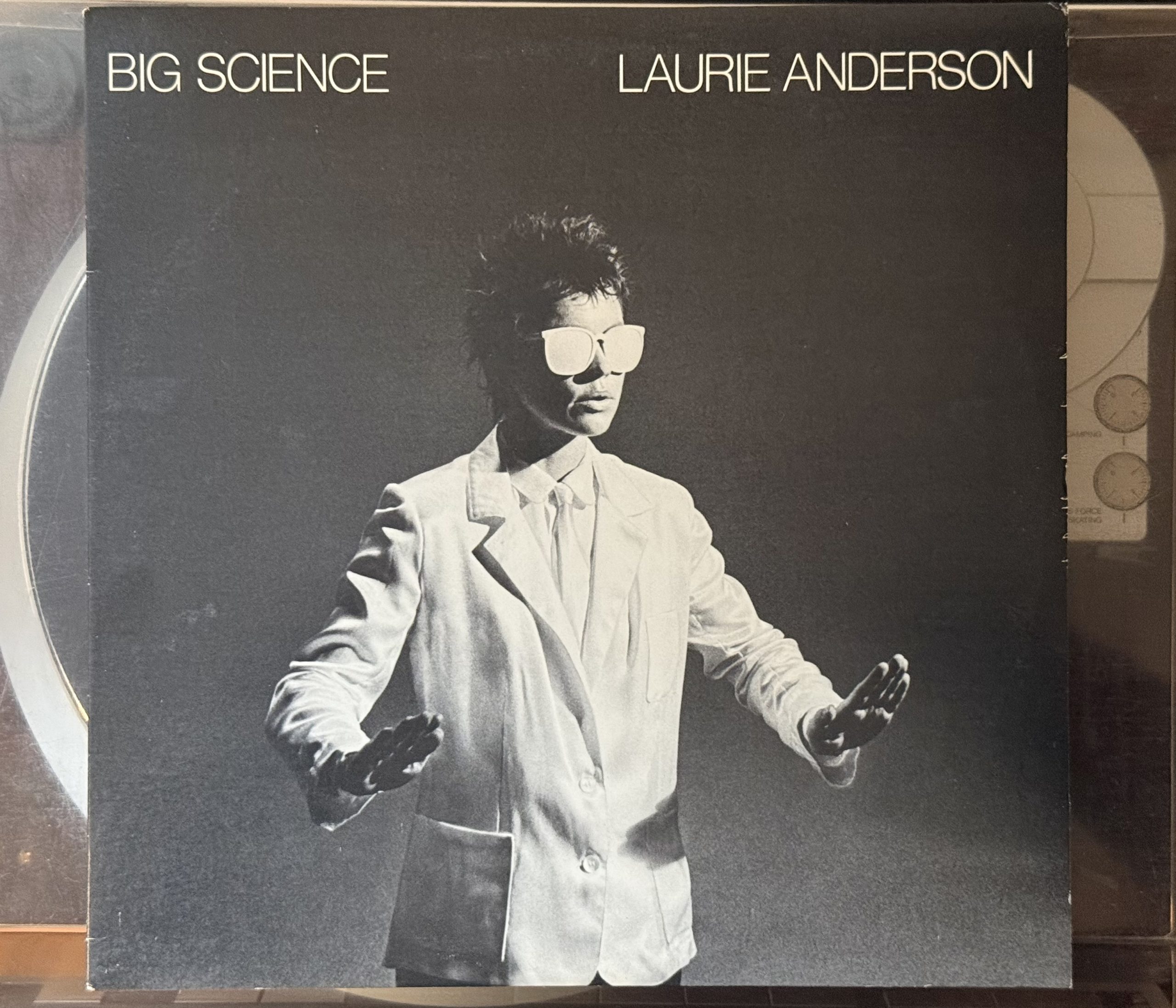
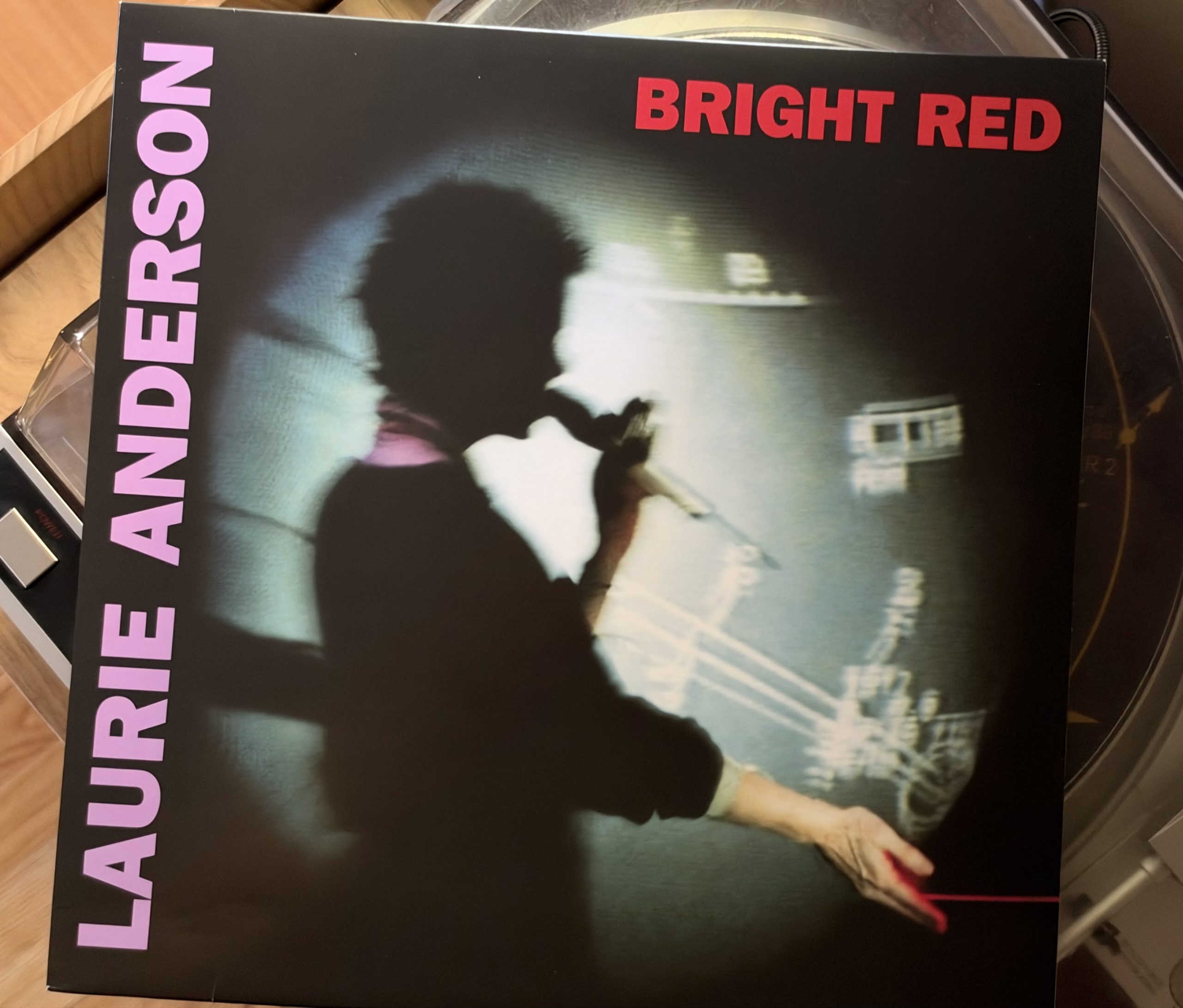
Laurie Anderson, Big Science

The conceptual artist’s first major label album is an unliikely, and highly listenable, artifact from an ambiguous future.

Album of the Week, March 28, 2026

Performance artists do art pieces and get grants. They might release recordings of their work on small labels. They don’t, typically, have singles that hit the top of the charts, and they certainly don’t dedicate those singles to a dead French composer. But then, Laurie Anderson has never been typical.

The story of Big Science starts before You’re the Guy I Want to Share My Money With. Laurie had recorded the song and released it as a single in the UK in 1980 on the small label One Ten Records, in a limited edition of 1000 copies. That’s when BBC DJ John Peel changed the trajectory of her career. Putting it in frequent rotation on his show on BBC Radio One, his championing of the song led a British distributor to request 80,000 copies of the single. Laurie signed a distribution deal with Warner Bros. Records and the single went all the way to Number Two in the UK. On the strength of the single, Warner Bros. signed Laurie to an eight-album deal.

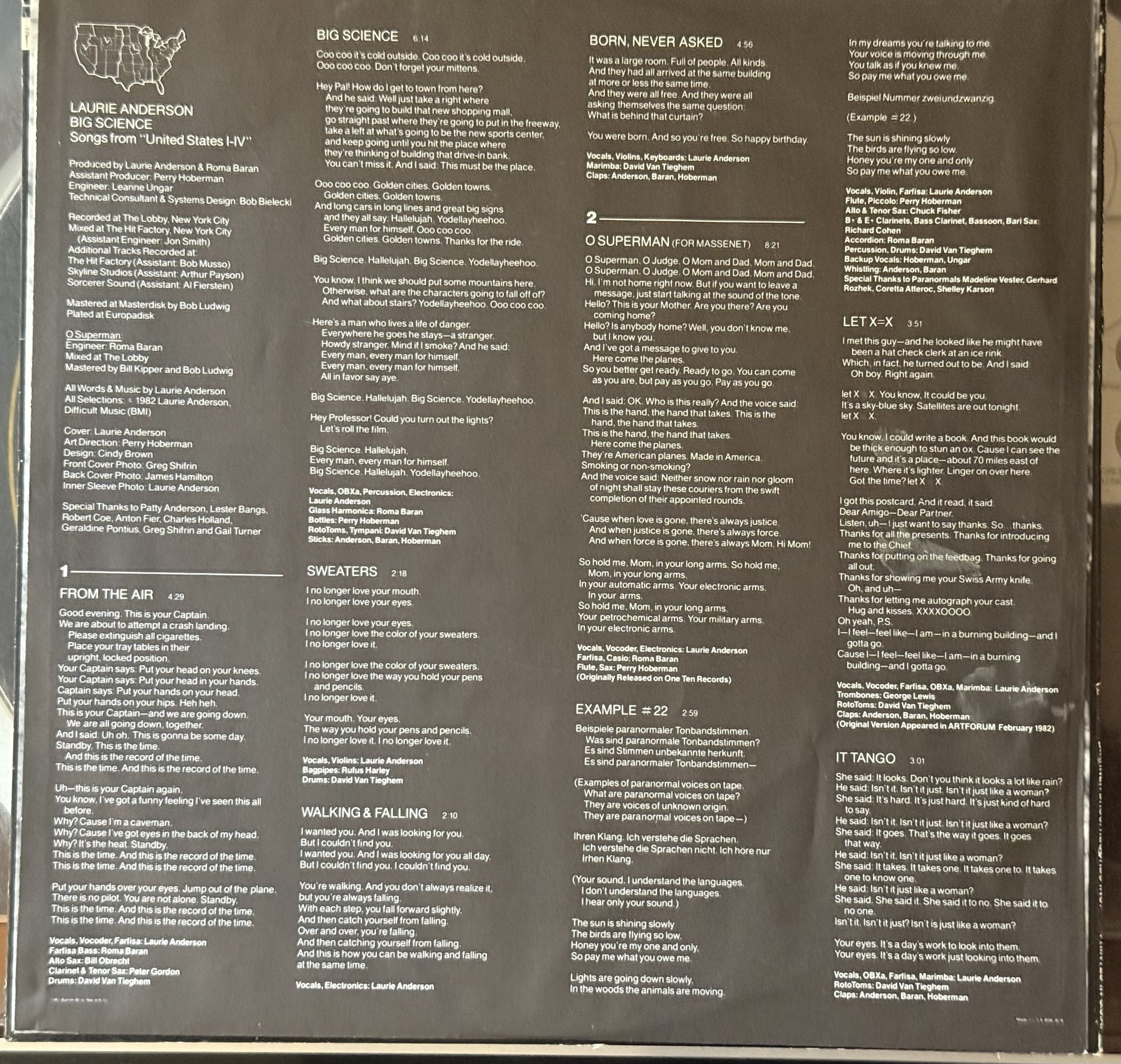
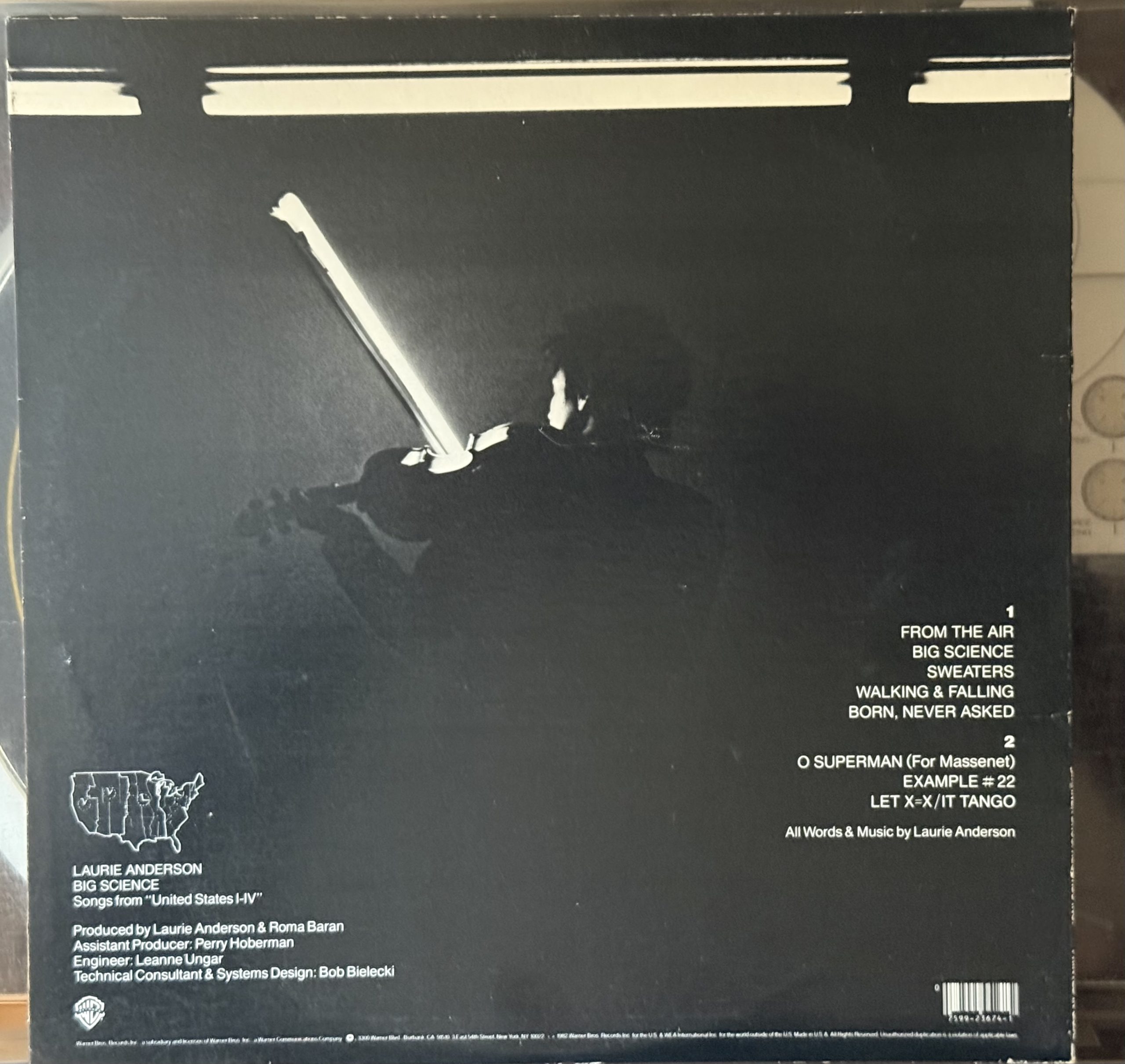
The album was released in April 1982. Produced by Roma Baran, who also played keyboards, accordion and percussion, and featuring installation artist Perry Hoberman on reeds, experimental composer Peter Gordon on clarinet and tenor sax, Bill Obrecht on alto sax, and composer David Van Tieghem on drums, marimba and percussion, the album featured a variety of performances drawn from a long-form show that she would eventually perform and record as United States Live I – IV. The material is much more melodic than the numbers on You’re the One I Want to Share My Money With, but still far from traditional song structures; built on loops, repetition, and open-ended chords, the pieces on Big Science feel like alerts from the future.

From the Air” starts with a blast of keyboards and saxophones against the drums as Laurie Anderson narrates the increasingly unhinged thoughts of an in-flight announcement: “Your Captain says put your head on your knees. Your Captain says put your head in your hands. Captain says, put your hands on your head. Put your hands on your hips! Heh heh. This is your Captain, and we are going down. We are all going down together. And I said Uh-oh. This is going to be some day.” The repetition and music slowly ratchets up in intensity, and the syncopated drum pattern the sense of uncertainty, until the final verse: “Put your hands over your eyes. Jump out of the plane. There is no pilot. You are not alone. Standby. This is the time, and this is the record of the time.” Anderson’s words here (and elsewhere on Big Science) take on an uncomfortable resonance in the shadow of the September 11th attacks, but even without that massive hole in history lending its gravity, the intersection between order and chaos, the apparent power of the captain that is revealed to be illusion, pulls us in.

If “From the Air” has a sense of claustrophobia, “Big Science” and its synthesized lonely howl bring us to a wide empty space, with echoing handclaps and open fifths adding to the sense of anticipatory emptiness. We hear Laurie’s actual singing voice, a pure soprano in contrast to her normally lower pitched speaking voice, which gives an apocalyptic vision of the future: “I said, Hey pal, how do I get to town? And he said, well, just take a right where they’re going to build that new shopping mall, go straight past where they’re going to put in the freeway, and take a left at what’s going to be the new sports center. And keep going til you get to the place where they’re thinking of putting in the new drive-in bank.… And I said, ‘This must be the place.’” The future here is anticipatory but also hostile: “And long cars and long lines and great big signs/And they all say: Hallelujah. Yodellayheehoo. Every man for himself.” Laurie was listening to the same wavelength as William Gibson, who had written “The Gernsback Continuum” a year before about hallucinatory invasions of alternate future universes from 1930s pulp paperbacks: “The Thirties dreamed white marble and slip-stream chrome, immortal crystal and burnished bronze, but the rockets on the covers of the Gernsback pulps had fallen on London in the dead of night, screaming. After the war, everyone had a car—no wings for it—and the promised superhighway to drive it down, so that the sky itself darkened, and the fumes ate the marble and pitted the miracle crystal…” But here rather than hallucinatory bleed-through the future is just full of totemic emptiness.

Sweaters” has all the edge of Laurie’s more confrontational early work, here amped up to eleven by Van Tieghem’s stumbling drum work and Rufus Harley’s screaming bagpipes, playing against Laurie’s nonverbal vocalizations and her drone-like violin, all against a series of aleatory declarations of ended love: “I no longer love the color of your eyes/I no longer love the color of your sweaters.”

Walking and Falling” is a quieter experimental reading against a looped background, a meditation leading into a straightforward reading of a poem ending with the question: “What is behind that curtain?” Then we get the keyboards and marimba of “Born, Never Asked,” in a new reading that is compositionally identical to the version on You’re the Guy… but with much better sound. A voiceover announces “You were born, and so you’re free. So happy birthday,” providing a non-answer to the question of what lies behind the curtain: it’s up to you, apparently, even if that self determination ultimately leads to the desolation of “Big Science.”

Side two opens with the album’s most enduring work. “O Superman (For Massenet)” is so titled because of Laurie’s cockeyed translation of the Massenet aria (from the opera El Cid) “Ô Souverain, ô juge, ô père”: “O Superman, o judge, o mom and dad.” The music is simple: built on a loop of Anderson’s voice on a single note, the vocal melody destabilizes, going from a major key (with the single note on the third) to a minor key with the repeated note on the tonic. Effects on Anderson’s voice make the sung lines sound at once like a Greek chorus and a robot. Even more than “From the Air,” the stark arrangement and openness of the voices fill the listener with a sense of growing unease, ultimately growing to a real feeling of dread: “Hello? This is your mother. Are you there? Are you coming home? —Well you don’t know me/But I know you/And I have a message/To give to you:/Here come the planes.” Anderson has stated that she wrote the song in the aftermath of the failed rescue of the Iranian hostages, Operation Eagle Claw, and the tragic deaths of eight American servicemen, and it continues the message of dependence and violence: “So hold me mom/In your long arms… In your automatic arms/Your petrochemical arms/In your electronic arms.” Other motifs weave their way through the song, culminating in a crescendo of minor-key chord progressions that echo the melody of “From the Air,” rise like the tide to a crashing climax, and fall away, leaving only the “ah-ah-ah.” Listening to it, you understand what would drive John Peel to play the song over and over, and Warner Bros. to sign her.

From the sublime to the ridiculous, “Example #22” announces itself in German as “examples of paranormal voices on tape” (Beispeile paranormaler Tonbandstimmen), interspersed with ringing phones, saxophones, reeds, and an accordion, accompanying what must surely be Laurie’s brattiest vocal. It’s great fun and completely impenetrable.

By contrast, “Let X = X / It Tango” closes out the record with quotably wry wit. “Let X = X” is practically a quotable aphorism in every line: “And I said, O boy. Right. Again. … You know. It could be you. It’s a sky-blue sky. Satellites are out tonight. … You know, I could write a book. And this book would be thick enough to stun an ox. ‘Cause I can see the future, and it’s a place about 70 miles east of here. Where it’s lighter.” The handclaps and marimba tie the arrangement back to “Born, Never Asked,” only in a much lighter vein; they continue through “It Tango,” a stopping and starting argument in search of an antecedent. She closes with a declaration of utterly failed communication: “Your eyes. It’s a day’s work just looking into them.”

Laurie’s first album immediately established her as a witty, thoughtful, highly listenable artist. And a bankable one: it sold 150,000 copies in its first year of release, smaller sales than a typical rock album but not by much (compare to 100,000 copies of Peter Gabriel (1977) in the UK). Her voice would continue to develop over the next few years, and we’ll check in on her again soon, but first we’ll see what kept Peter busy since the 1980 self-titled album.

You can listen to this week’s album here:

BONUS: The b-side of “O Superman” was “Walk the Dog,” an exercise in odd narrative that leans into a trope from her shows, the “difficult listening hour,” with barking dogs, a voice shifted high in pitch to the edge of squeak, strummed violin strings, and a bashed drum kit:

BONUS BONUS: Laurie Anderson did a Tiny Desk Concert from home back in 2021, joined by Roma Baran and cellist Robin Kodheli, performing “Let X=X” and “O Superman”:

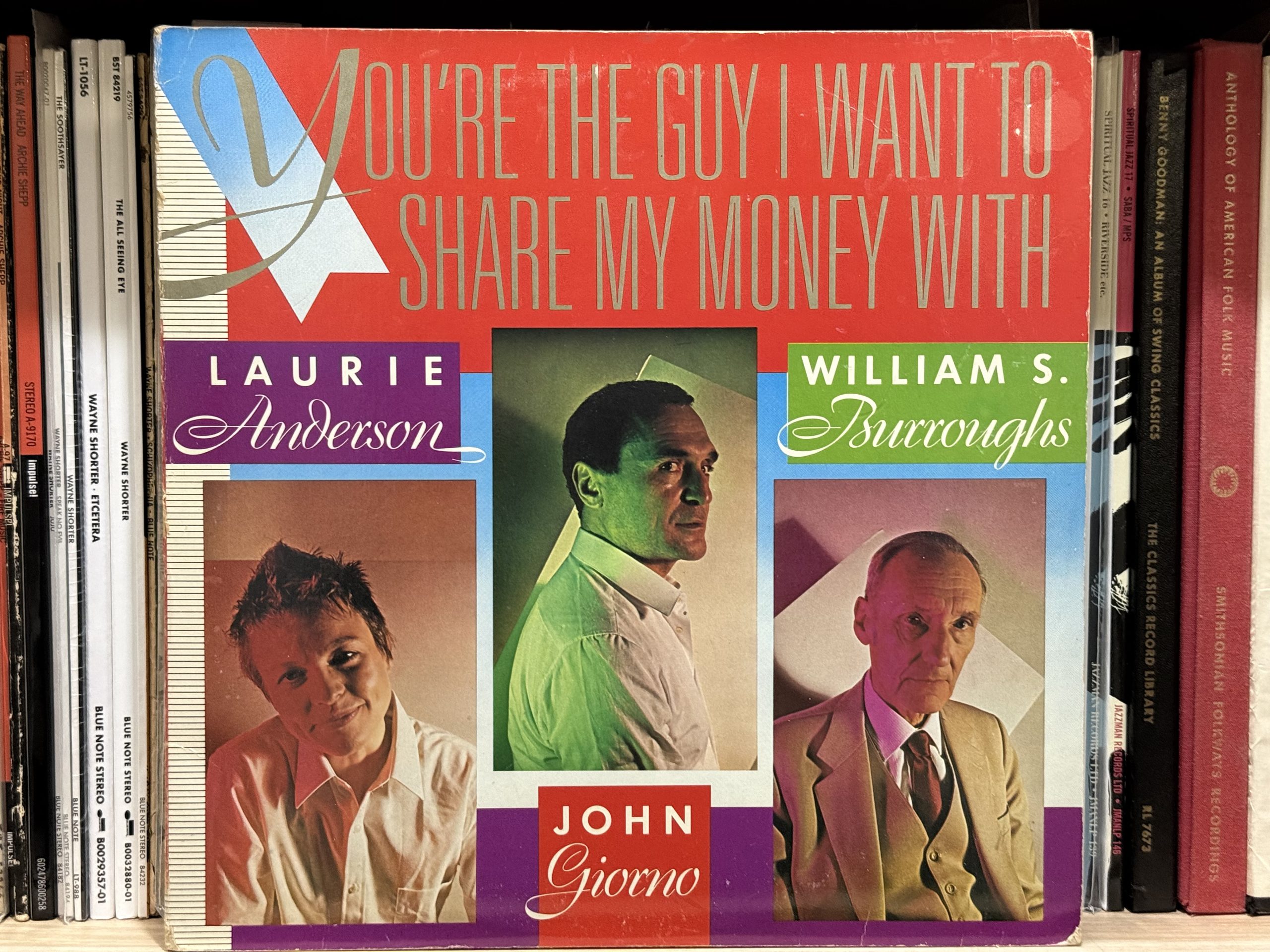
Anderson/Giorno/Burroughs, You’re the Guy I Want to Share My Money With

A dip into the wild world of performance art and avant-garde writing from the dawn of the New Wave.

Album of the Week, March 21, 2026

The name of this segment of my album reviews was originally going to be “art rock.” But while that term has been used to apply to Peter Gabriel’s work, it’s impossibly undefinable, and didn’t really cover the work of one of his collaborators whose story we’ll begin to discuss today. Though Laurie Anderson is undeniably an artist, the “rock” part is an ill-fitting label, and none of her recordings illustrates the challenge as much as today’s recording, a compilation of spoken word, performance art, and poetry that pairs her with two other challenging artists over a year before the release of her debut album.

Laurie Anderson was born in Chicago and grew up in the Illinois suburbs studying art and playing in the Chicago Youth Symphony. She drew comics, made sculpture, and did performance art: her first public performance was a symphony for automobile horns, and one of her best-known pieces from the 1970s, “Duets on Ice,” involved her playing violin against a recording of herself while wearing ice skates that had been frozen into blocks of ice—the performance ended when the ice melted enough to free her skates.1 Also in the 1970s she connected with New York poet and performance artist John Giorno, on whose Giorno Poetry Systems label she released some of her earliest recordings (including some for his groundbreaking “Dial-A-Poem” system).2

Increasingly Anderson was drawn to recorded art, though she never abandoned her more visual instincts, and in 1981 she released two important records. One, a single called “O Superman,” was released in October on a small label and had an unusually strong reception (which we’ll discuss another time). The second was a side (er, a side-plus) of this double album on Giorno Poetry Systems, with which Anderson appeared alongside two even more avant-garde poets: Giorno himself, and William S. Burroughs.

The latter had outlived his early tumultuous years—gay, addicted to opiates, accidental murderer—and had built a solid, if solidly weird, literary reputation as the author of works like The Naked Lunch, a science fiction trilogy (The Soft Machine,3 The Ticket That Exploded, Nova Express) and a great many short stories. He also made a number of recordings on a variety of small labels that featured his distinctive reading of his own works, based on the live readings that he was now giving on the lecture circuit. It was in this vein4 that Burroughs appeared on this recording. All three artists had appeared together in a series of readings and performances dubbed “The Red Night Tour.”

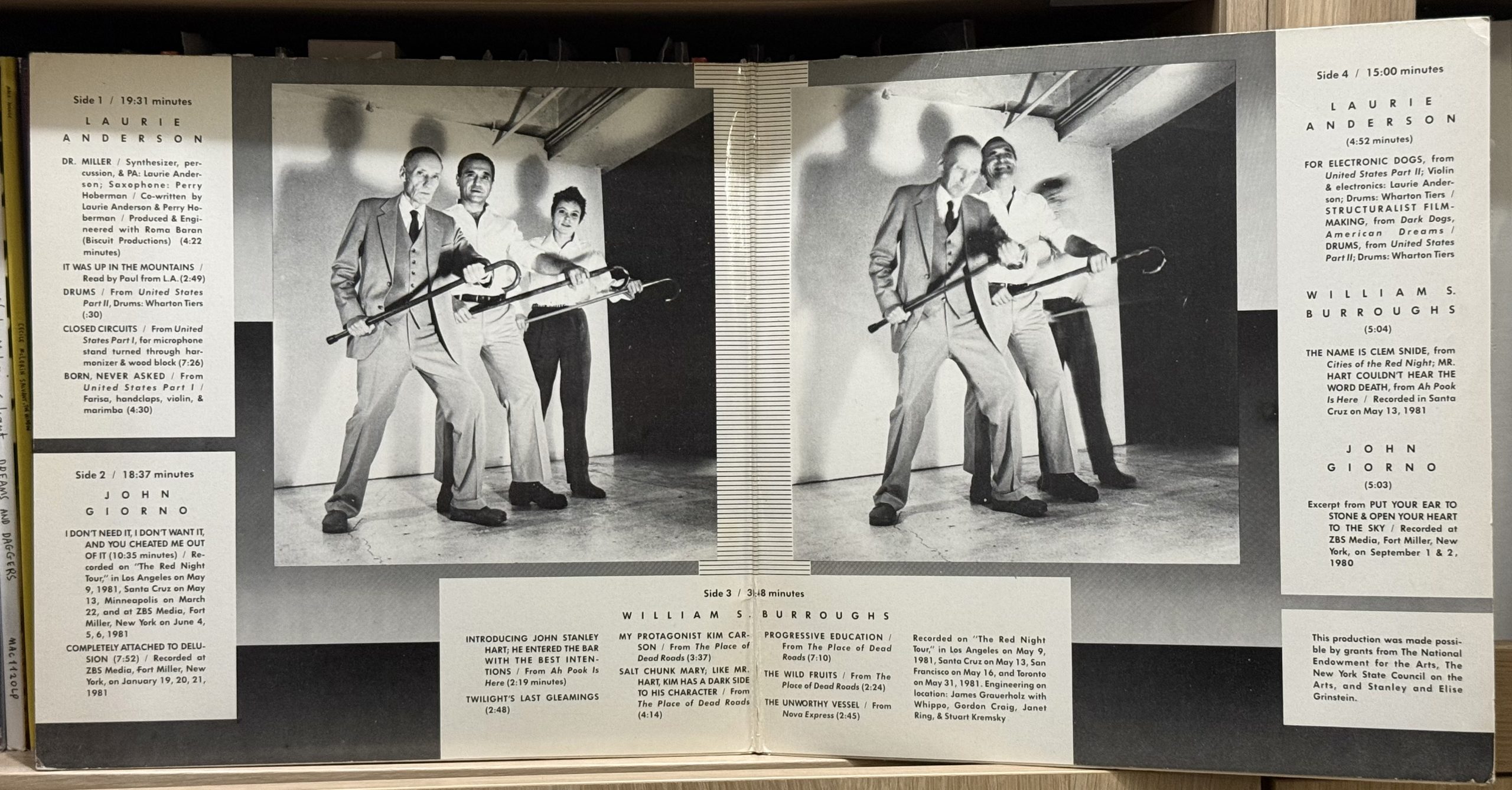
Laurie Anderson’s segment of the album is the most straightforward, and that’s saying something. While parts of the performance were recognizably connected to other things happening in music in the early 1980s (“Doctor Miller” is practically a Kraftwerk song, if you subtract the increasingly anxious PA voiceovers calling for the doctor), others are distinctively and uniquely Laurie’s voice, even (“It Was Up in the Mountains”) when the words are spoken by someone else. If I’m honest, “Closed Circuit” is more interesting than listenable, notable primarily for featuring Laurie’s use of vocal effects to create a deeper timbre for her speaking voice—a trick that she would perfect elsewhere, but here is marred by the lengthy lyric that feels more like a shaggy dog story. The end of Side 1 closes with an eerie instrumental played on a Farfisa, a marimba, handclaps, and Laurie’s brilliant violin; “Born, Never Asked” would appear again.

Side 2 is given over to two John Giorno poems, “I Don’t Need It, I Don’t Want It, and You Cheated Me Out of It” and “Completely Attached to Delusion.” Like Laurie Anderson, he plays with vocal effects, but his use of tape delay and pre-recorded alternate readings of the work is by turns disorienting, exhilarating and overwhelming. But it is a committed and fully out there reading, and there’s a direct line to be traced from his work to poetry slams.

Burroughs gets the next side, giving a series of readings from his novels, including the first appearance of his horrifically funny Dr. Benway (“Dr. Benway, ship’s doctor, drunkenly added two inches to a four inch incision with one stroke of his scalpel… ‘Perhaps the appendix is already out, doctor?’ The nurse said, appearing dubiously over his shoulder. ‘I saw a little scar.’”) But listening to the material one after another, one draws the following conclusions: that half the joy in listening to Burroughs comes from the sheer naughtiness of it and the joy he takes in elongating the sneering tones of protagonist and antagonist alike; that beneath that sneer lurks a pointed and deadly serious battle against inhumanity, stupidity and senseless violence; and that the non sequiturs introduced by Burroughs’ “cut up” method of literally cutting and pasting his writing together into new alearic combinations can sometimes be the only defense against a nonsensical and fragmenting world.

The most unusual feature of the album is its tracklist. Each of the performers takes up a side from 1 to 3, but the fourth side is something else again, featuring three independent grooves about five minutes each. Which one you get depends on where you drop the needle. Laurie’s contribution is a montage featuring two electronic percussion numbers (“For Electronic Dogs” and “Drums”) sandwiching an earnest young man reading a short bit over some cheery library music. “Structuralist Filmmaking” is one of Laurie’s most dryly funny bits; I wonder how much of its narrative was inspired by Burroughs’ cut-up method.

Taken together, the two hours of You’re the Guy I Want To Share My Money With are by turns funny, bracing, moving, and occasionally maddening. The connection from Laurie Anderson’s experimental synthesizers and samples to Peter Gabriel’s increasingly rhythmic art-pop sensibility is hard to see at this stage. But in next week’s album, we’ll see the bridge begin to be built, and it starts with that other 1981 Laurie Anderson release.

You can listen to this week’s album here:

BONUS: Giorno was one of a group of artists in Burroughs’ orbit when he returned to New York City in the 1970s, and later lived in the windowless apartment (dubbed “The Bunker”) where Burroughs lived and wrote and shot pistols for target practice (!). Here he gives a tour through the Bunker, which was restored to the way it was when Burroughs lived there after the latter’s death:

Footnotes

  1. For those for whom this sort of stuff is fascinating, her 1994 book Stories from the Nerve Bible offers a great look at all the wonderful weirdness of her performance art days. ↩︎
  2. Somewhat to my amazement, not only is Giorno Poetry Systems still online, but so is the web version of Dial-A-Poem. ↩︎
  3. The Soft Machine later lent its name to an English progressive-rock group that included about twenty musicians among its membership in its lifetime, including Rick Wakeman (later of Yes), Andy Summers of the Police, and Peter Gabriel’s occasional saxophonist Dick Morrissey. ↩︎
  4. Pun intended. ↩︎

Old mix: the bang and the clatter (as an angel runs to ground) (summer 1993)

In the summer of 1993, I was on top of the world. Having finished a great Glee Club season and gotten a literary magazine off the ground, I had just gotten a room on the Lawn and was staying in Charlottesville for the summer as an undergraduate assistant in a physics lab. I had just started listening to the funkier side of James Brown and was starting to discover blues, hip-hop and world music. Plus, I now had wheels, in the form of an incredibly fun but unreliable 1977 MGB.

This mixtape, accordingly, was shaped by all these factors, perhaps not least of all by the last. Most of the selections on this mix were chosen because they sounded great in the MGB with the top down. That was certainly true of “Ocean Size,” the opening track. After ignoring Jane’s Addiction for many years, I finally got into them about two years after they had broken up. This was a version of Los Angeles rock I could get behind—something like heavy metal for art students. And the lead-in to Hubert Sumlin’s slashing guitar on the great “Killing Floor” remains a potent link from the first song to the second. I had first picked up the Chess blues sound from a phenomenal box set of Willie Dixon recordings, and then this 1965 Chess anthology of Howlin’ Wolf’s work, which had just been reissued on CD. (It’s with no shame that I note that my first exposure to the title of this track was in William Gibson’s short story “Johnny Mnemonic,” where he borrows the phrase and puts it to an entirely different purpose.)

On the strength of Peter Gabriel’s early Real World compilation Passion Sources, I started to branch out and find other artists on the label. The African artists on the label, such as Geoffrey Oryema and Ayub Ogada. Oryema’s “Piri Wango Iya” is a great introduction to the Ugandan’s sound, featuring only his voice and the traditional Ugandan lukeme (a gourd with plucked resonating metal strips).

I was still working my way through Suzanne Vega’s phenomenal 99.9 Fº, and “Blood Makes Noise” was just the sort of twitchy dance that I could get behind. Likewise PJ Harvey’s “Sheela-Na-Gig,” which even then struck me as a striking reversal of traditional gender politics, with Harvey’s narrator confidently offering herself sexually to a man who flatly rejects her as an exhibitionist and is terrified of being dirtied by her. We hadn’t explicitly covered Freud’s take on what would now be called the Madonna-whore complex when I read him in my first year, but it was a pretty clear illustration.

Then follows, for some reason, “Englishman in New York,” a track which I love by itself but which doesn’t flow very well here. Then “North Dakota.” I never had listened to much country music, but a friend who came to visit that summer left me with an aching heart, and a mixtape featuring this phenomenal Lyle Lovett song. “If you love me, say I love you” sounds like the loneliest thing ever, and it resonates at the heart of this tape once you peel back everything else.

I wasn’t emotionally mature enough to acknowledge or linger in my feelings, but I was more than capable of irony, and PJ Harvey was always there to help, as was the gently mocking narrator of Laurie Anderson’s “Language is a Virus.” Self-mockery always made me feel better, so it was a good transition from there into “What Goes On” and “Numb,” which may have been the first U2 song that made me laugh. Ditto the over-the-top apocalyptic Western of Nick Cave’s track from Until the End of the World, another third-year frequent rotation CD that I was still digesting.

The end of this summer, when I was starting to put this mix together, was a rough one physically, and I was starting to feel ragged and tired around the edges. When I came home at the end of the summer for a few weeks before school started, I realized why — I had contracted mononucleosis, probably as a consequence of the close living quarters in the student apartment that was my home for the summer. (While I was dating someone that summer, we only spent a few days together as she was off doing her own things, so I’m pretty sure I didn’t get the “kissing disease” the fun way.) “Run That Body Down” accordingly became my theme song. It’s a good thing I didn’t know then how rundown a body could actually get…

More feelings avoidance, more loud rock! I still love “Ain’t No Right,” though not as much as I love the downtempo shift that follows it. I listened to For the Beauty of Wynona for the first time with a good friend and neighbor who had good taste in music and confused my feelings (a common theme of my college years). And Lanois’ country-infused guitar had a natural connection, at least in my mind, to the freaked-out electric blues that Miles and his band pulled from thin air on “Honky Tonk.”

My immature late teenage feelings (okay, I was actually 20) loved getting lost in Elvis Costello’s Brodsky Quartet collaboration, and on no track was this more true than on “Who Do You Think You Are?,” a paean for those with a more active imagination than love life. And again, any time I felt actual feelings getting close to the surface, it was time for a shift of gears. I have always loved “Le Bien, Le Mal” ever since borrowing Jazzmatazz Vol. 1 (and the first Digable Planets album) from a neighbor in that crowded college apartment (thanks, Patrick!), but the name of the transition technique between the Elvis Costello track and this is called “discontinuity.” Once I found that groove, though, it was a logical connection to James Brown, whose “Get Up (I Feel Like Being A) Sex Machine” had soundtracked a memorable party a few months prior in an apartment full of physics students, quality porter and stout, and someone’s incredible record collection (including, oddly, Speak No Evil).

I didn’t always know how to end mix tapes then, so there’s no real through line for the last few tracks. But “En Mana Kuoyo” is a fine closer, a brightly percolating groove from Kenya that transported me to another place. I hope it does the same for you.

Full track listing below:

  1. Ocean SizeJane’s Addiction (Nothing’s Shocking)
  2. Killing FloorHowlin’ Wolf (The Real Folk Blues)
  3. Piri Wango IyaGeoffrey Oryema (Exile)
  4. Blood Makes NoiseSuzanne Vega (99.9 F°)
  5. Sheela-Na-GigPJ Harvey (Dry)
  6. Englishman in New YorkSting (Nothing Like The Sun)
  7. North DakotaLyle Lovett (Joshua Judges Ruth)
  8. Rub ‘Til It BleedsPJ Harvey (Rid Of Me)
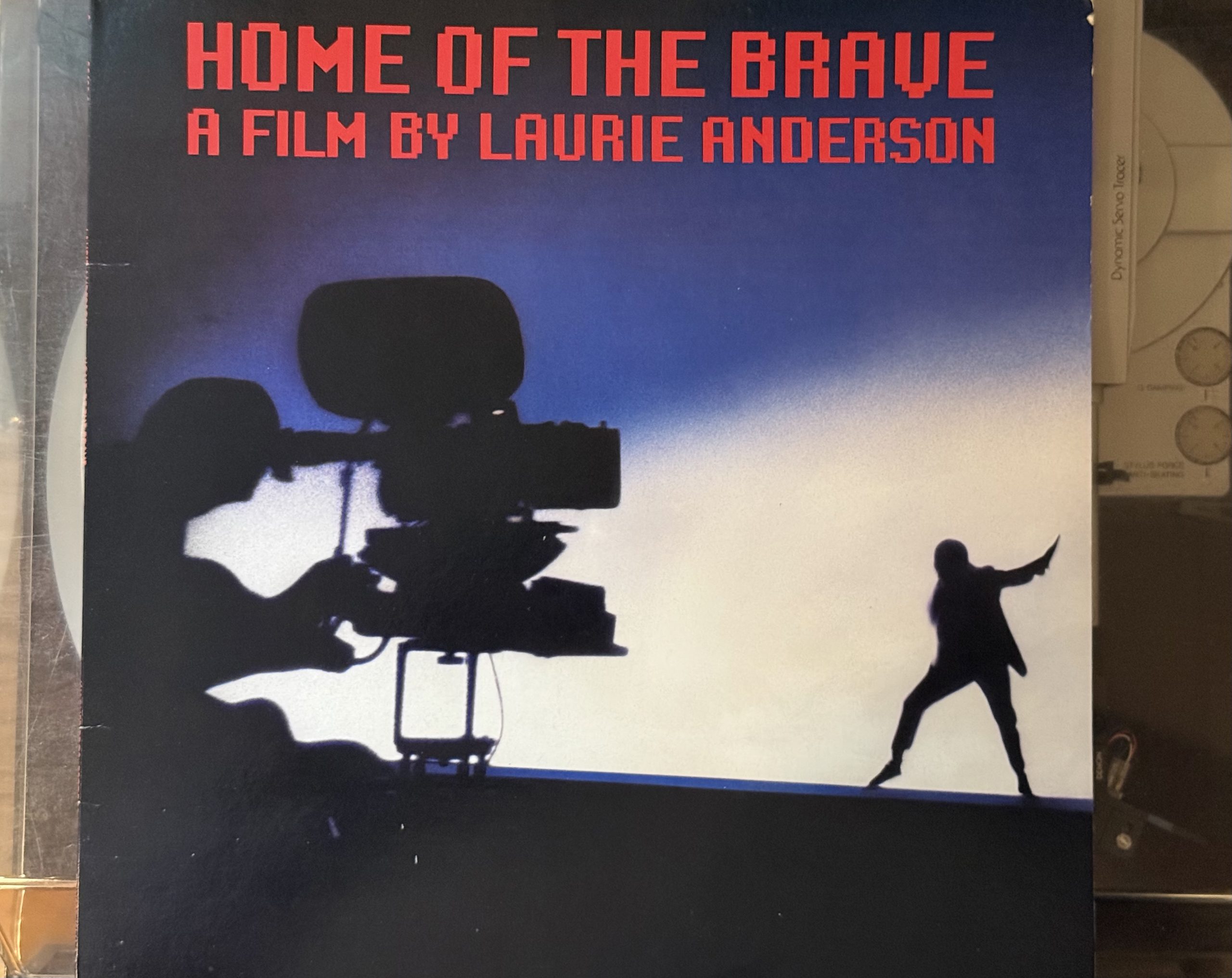
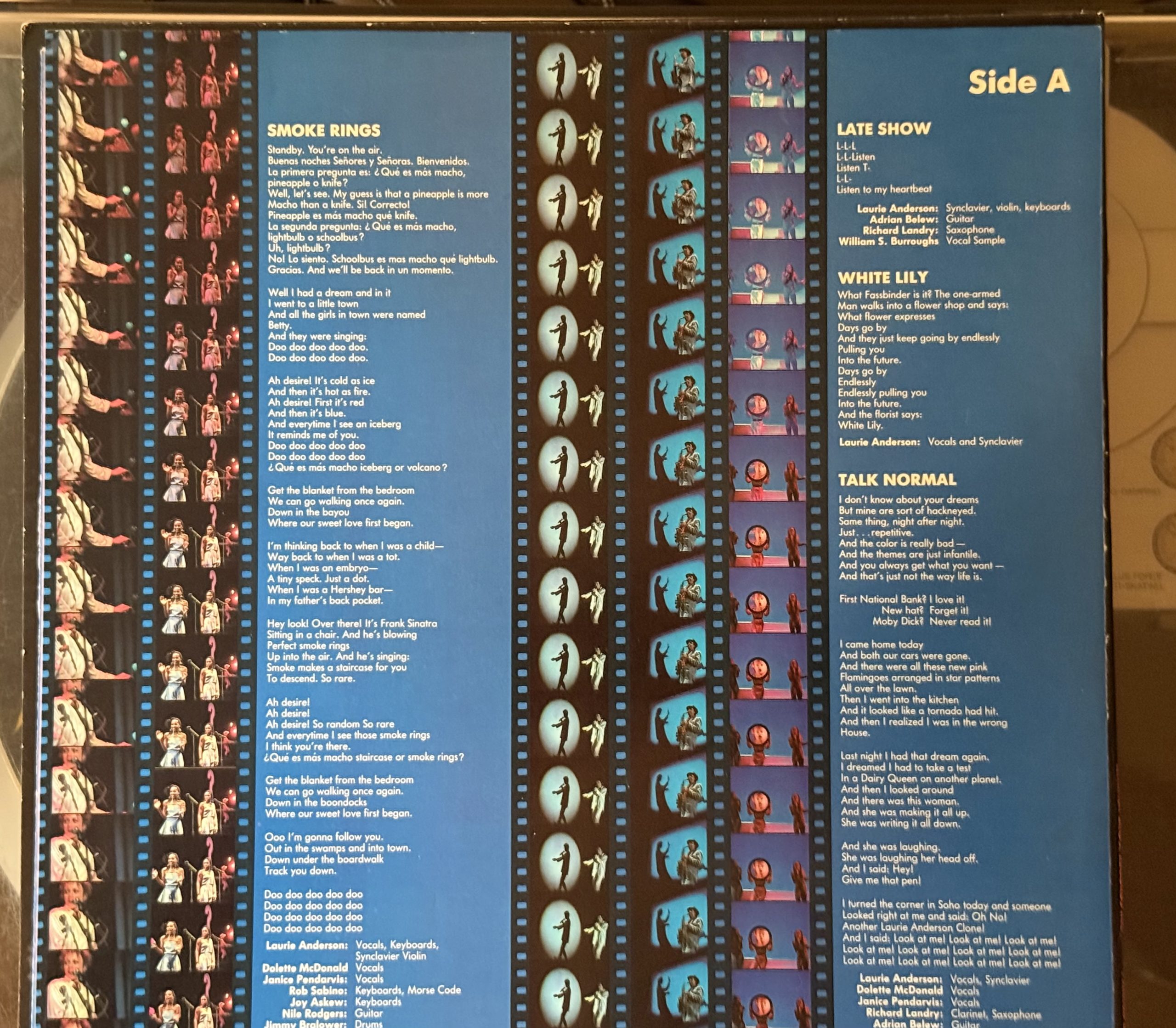
  9. Language Is A VirusLaurie Anderson (Home Of The Brave)
  10. What Goes On (Closet Mix)The Velvet Underground (Peel Slowly and See)
  11. NumbU2 (Zooropa)
  12. (I’ll Love You) Till The End Of The WorldNick Cave And The Bad Seeds (Until The End Of The World)
  13. Run That Body DownPaul Simon (Paul Simon)
  14. Ain’t No RightJane’s Addiction (Ritual De Lo Habitual)
  15. Still Learning How To CrawlDaniel Lanois (For The Beauty Of Wynona)
  16. Honky TonkMiles Davis (Get Up With It)
  17. Who Do You Think You Are?Elvis Costello And The Brodsky Quartet (The Juliet Letters)
  18. Le Bien, Le MalGuru Featuring Mc Solaar (Jazzmatazz Volume 1)
  19. Get Up (I Feel Like Being A) Sex MachineJames Brown (Funk Power 1970: Brand New Thang)
  20. I’ve Been TiredThe Pixies (Come On Pilgrim)
  21. Jane SaysJane’s Addiction (Nothing’s Shocking)
  22. Stay (Faraway, So Close!)U2 (Faraway So Close)
  23. Every Time I Go Around HereFrank Black (Frank Black)
  24. En Mana KuoyoAyub Ogada (En Mana Kuoyo)

You can listen to (most of) the mix on Apple Music:

Old mix: An angel being blown backwards into the future

Prodded by yesterday’s post about Pieces of Africa and the mixes it inspired, I was inspired to post about a few of them. These were mix tapes—made well before the advent of Rip.Mix.Burn—and they reflected whatever was going through my brain at the time.

This mix was made early in the summer of 1993. I had just finished my third year at the University of Virginia and was interning in a physics lab, and slowly coming to the painful conclusion that I would not be going on to graduate study in my field. But it was sunny, and I was reasonably happy! So this was made to play in my car with the top down.

Like so many of the mixes I made (and still make), this was a way for me to digest all the CDs I had bought and listened to, whether from Plan 9 or in the BMG music club, which sold classical and other CDs at a substantial discount if you didn’t mind the occasionally blurry reproductions of album art and liner notes they suspiciously sported…

But summer of 1993 was still a pretty good time. Frank Black had just changed his name and released his first solo album; Sting’s latest showed he still had songwriting chops. I had met a singer from a woman’s chorus on a Glee Club tour who moved me deeply, to the tune of a Suzanne Vega song. Peter Gabriel’s Real World was still introducing me to new voices like Sheila Chandra. My friends in the New Dominions had just recorded their first CD, for which I did the jacket and disc design, working around a brilliant illustration by Deepak Raghu. I had heard Tori Amos for the first time in concert at Old Cabell Hall, being lucky enough to score tickets after a Glee Club rehearsal. I was starting to explore jazz beyond Coltrane and Miles and Wynton and Branford. Good times indeed.

  1. Fu ManchuFrank Black (Frank Black)
  2. 99.9 F°Suzanne Vega (99.9 F°)
  3. Love Is Stronger Than Justice (The Munificent Seven)Sting (Ten Summoner’s Tales)
  4. Before You Were BornToad the Wet Sprocket (Fear)
  5. Ever So Lonely/Eyes/The OceanSheila Chandra (Weaving My Ancestors’ Voices)
  6. AvaDavid Byrne (The Forest)
  7. Tin ManNew Dominions (Salamander!)
  8. TilliboyoKronos Quartet (Pieces of Africa)
  9. Road To NowhereTalking Heads (Sand In The Vaseline Popular Favorites 1976-1992)
  10. Precious ThingsTori Amos (Little Earthquakes)
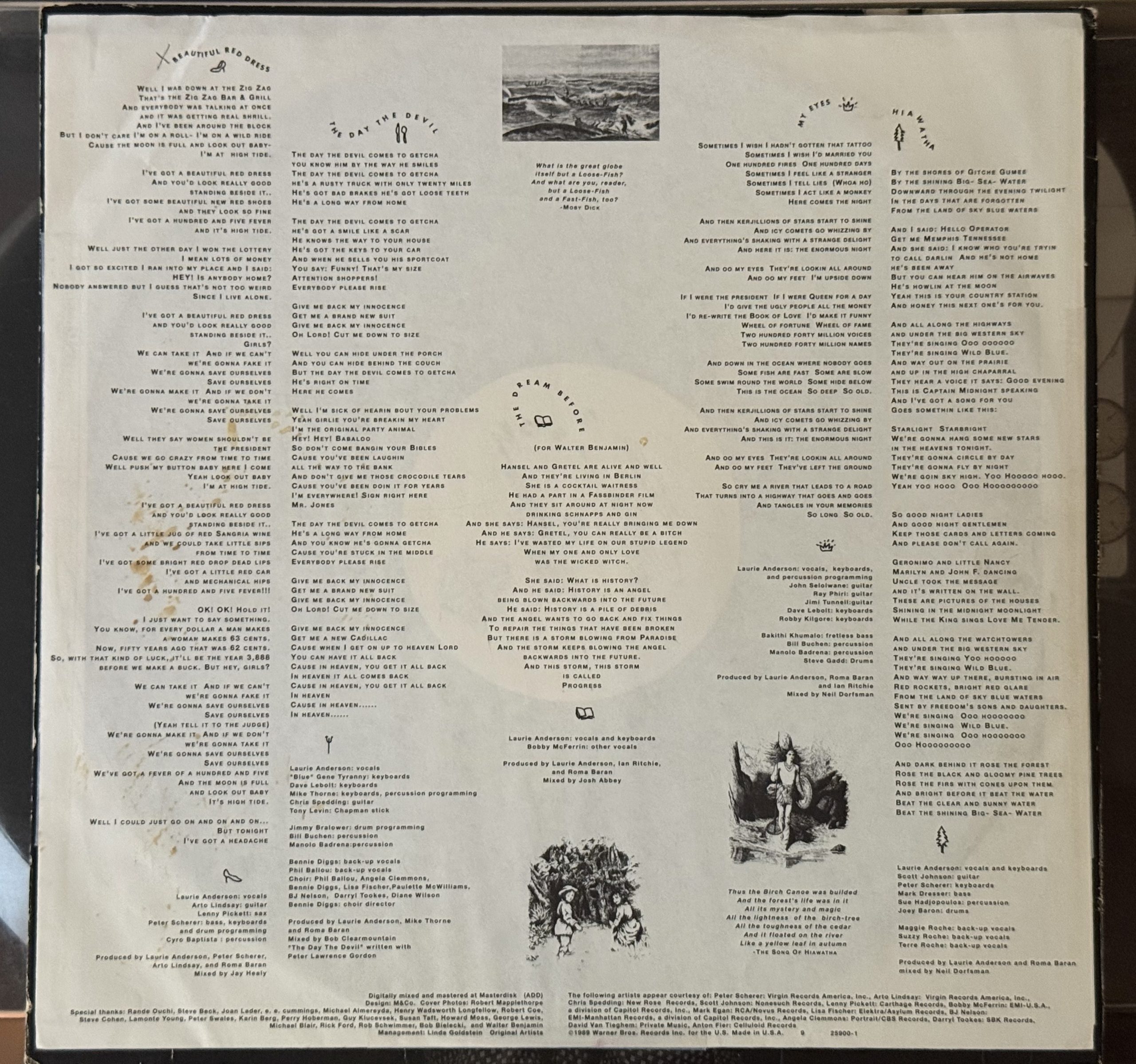
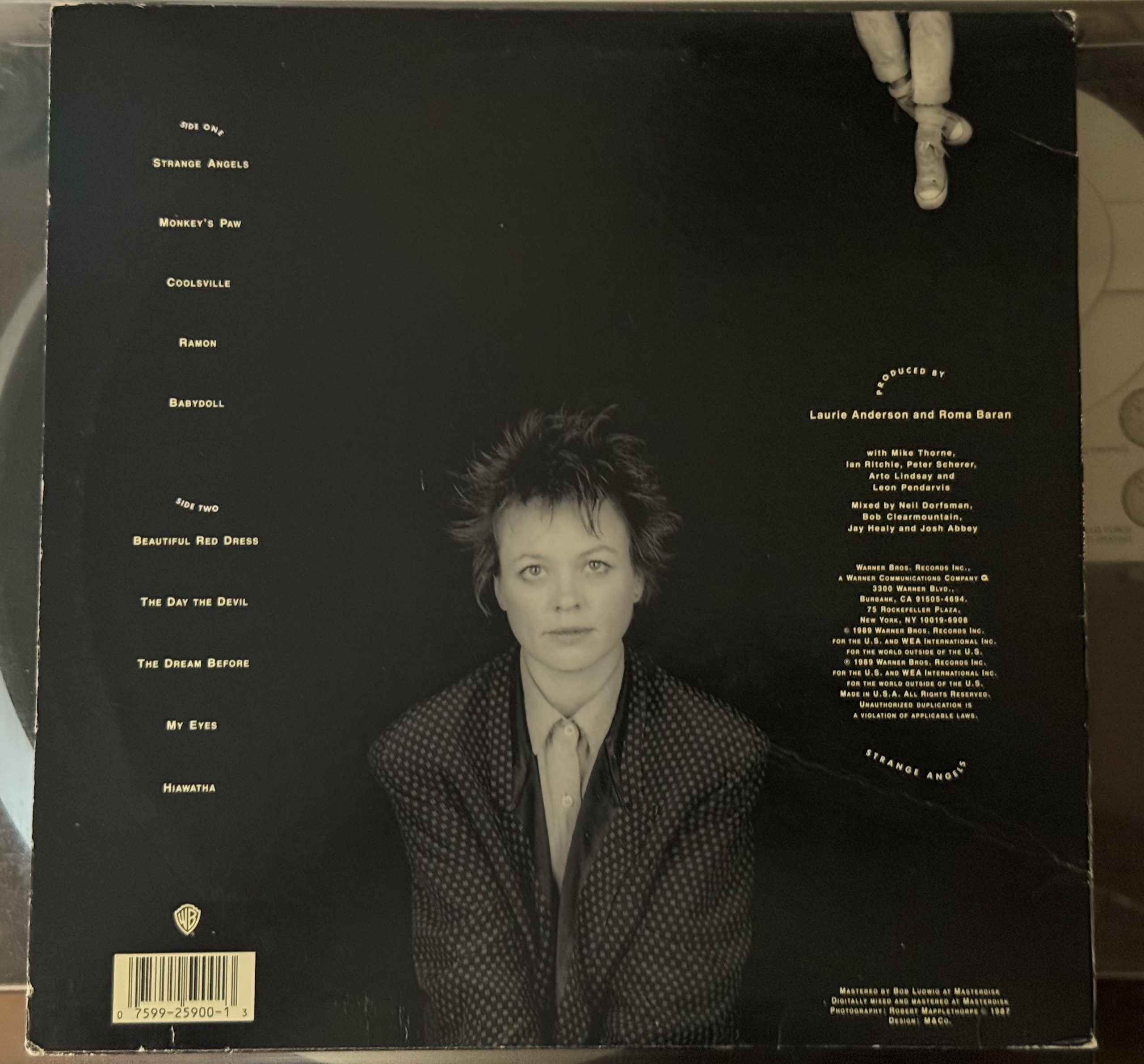
  11. The Dream BeforeLaurie Anderson (Strange Angels)
  12. Seven DaysSting (Ten Summoner’s Tales)
  13. Drawing Room BluesJoe Henderson (Lush Life – The Music of Billy Strayhorn)
  14. SassyNeneh Cherry (Homebrew)
  15. Ed Is DeadThe Pixies (Come On Pilgrim)
  16. Warning SignTalking Heads (More Songs About Buildings And Food)
  17. As Girls GoSuzanne Vega (99.9 F°)
  18. Dirt In The GroundTom Waits (Bone Machine)
  19. Death Of A TrainDaniel Lanois (For The Beauty Of Wynona)
  20. Washing Of The WaterPeter Gabriel (Us)
  21. Motorway To RoswellThe Pixies (Trompe Le Monde)

If you have Apple Music, you can listen to the mix here, though it doesn’t include all the tracks… 🙁

Errata: Although “Upside Down” is in the track listing on the j-card for the tape, it wouldn’t fit on the end of Side 1. So I saved it for another mix.

Also noting: I added a page to the blog to track all the articles about mixes.

Linkblog for 8 Jan 2018

Quirkspace: 78 RPM Records. One user’s tips for recording 78RPM records when your turntable only supports 33/45 RPM, including settings in Amadeus Pro.

Stereophile: My Top 10 Jazz Albums of 2017. Fred Kaplan runs down a list of great jazz releases from last year, including both new and historical releases. Totally agree about the Cecile McLorin Salvant release.

Gaffa: Lou Reed og Laurie Anderson: DR Koncerthuset, København. A review of late-period Lou Reed, from 2009, four years before his death, in concert with Laurie Anderson. From the review, this was a true collaborative show. There may be a bootleg of the performance floating around out there…