Peter Gabriel, Plays Live

Gabriel gives a definitive send-off to the sound and songs of his first four albums in his first live record.

Album of the Week, April 11, 2026

Live albums serve a different purpose for a rock artist than for a jazz musician. In jazz you’re documenting the spontaneous magic that happened on a particular night, in a particular venue. With rock you sometimes get that, but more often it’s about getting the sound of a certain era, about all the different ways an artist takes music that originated in a studio into a live performance. And sometimes it’s about summing up an era of an artist’s work, getting all the hits performed in front of a screaming crowd as a souvenir of a particular moment.

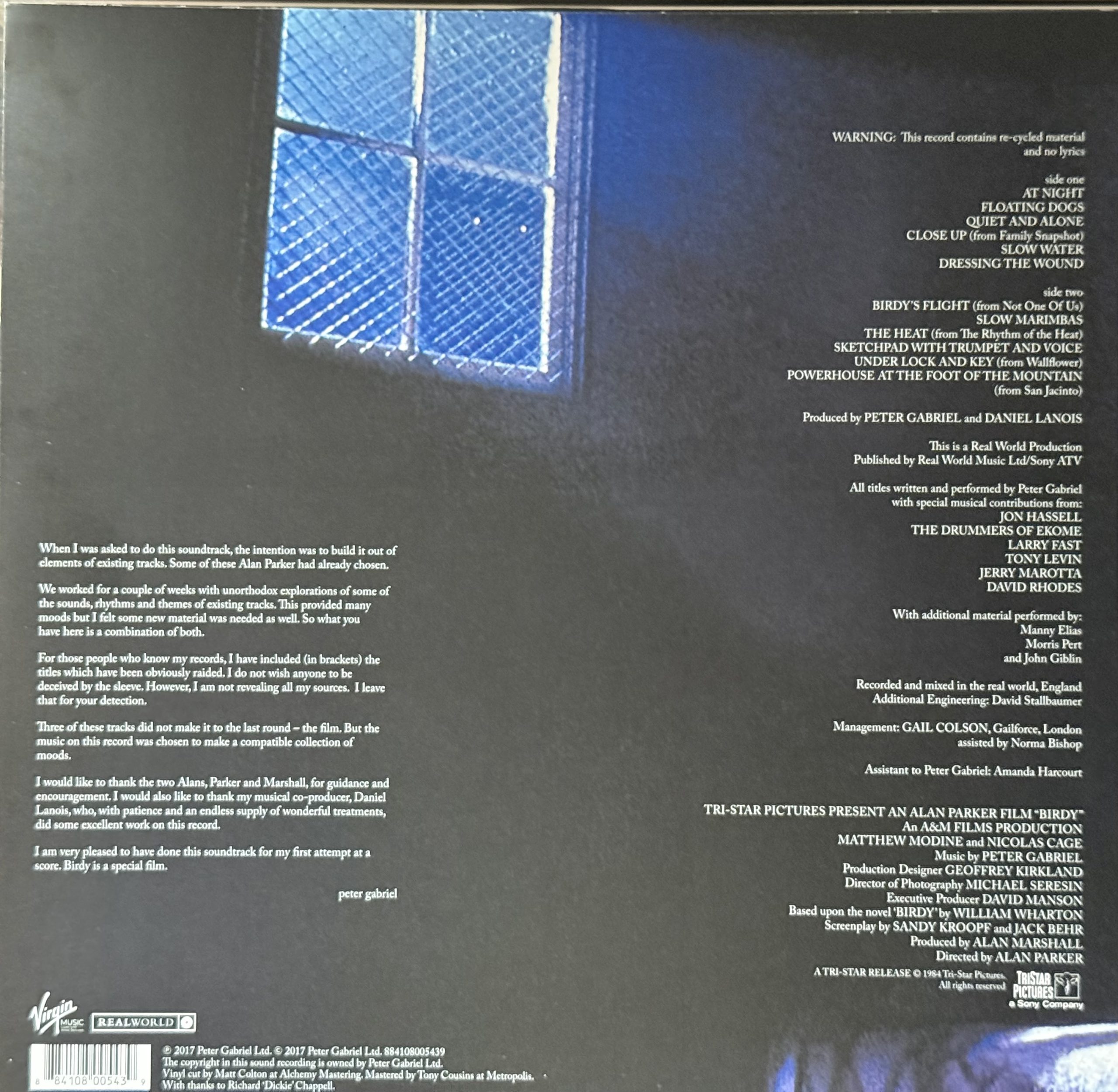
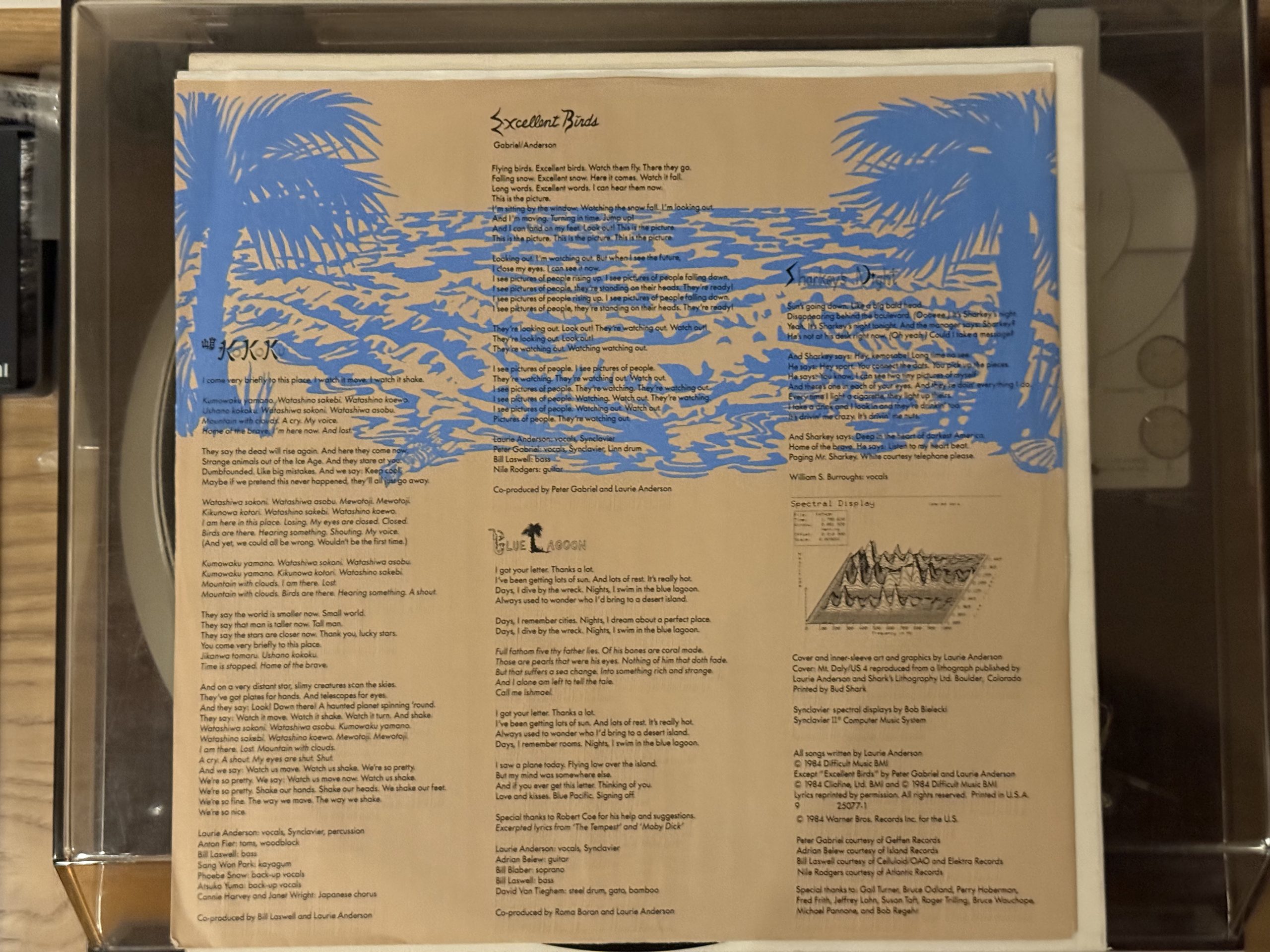
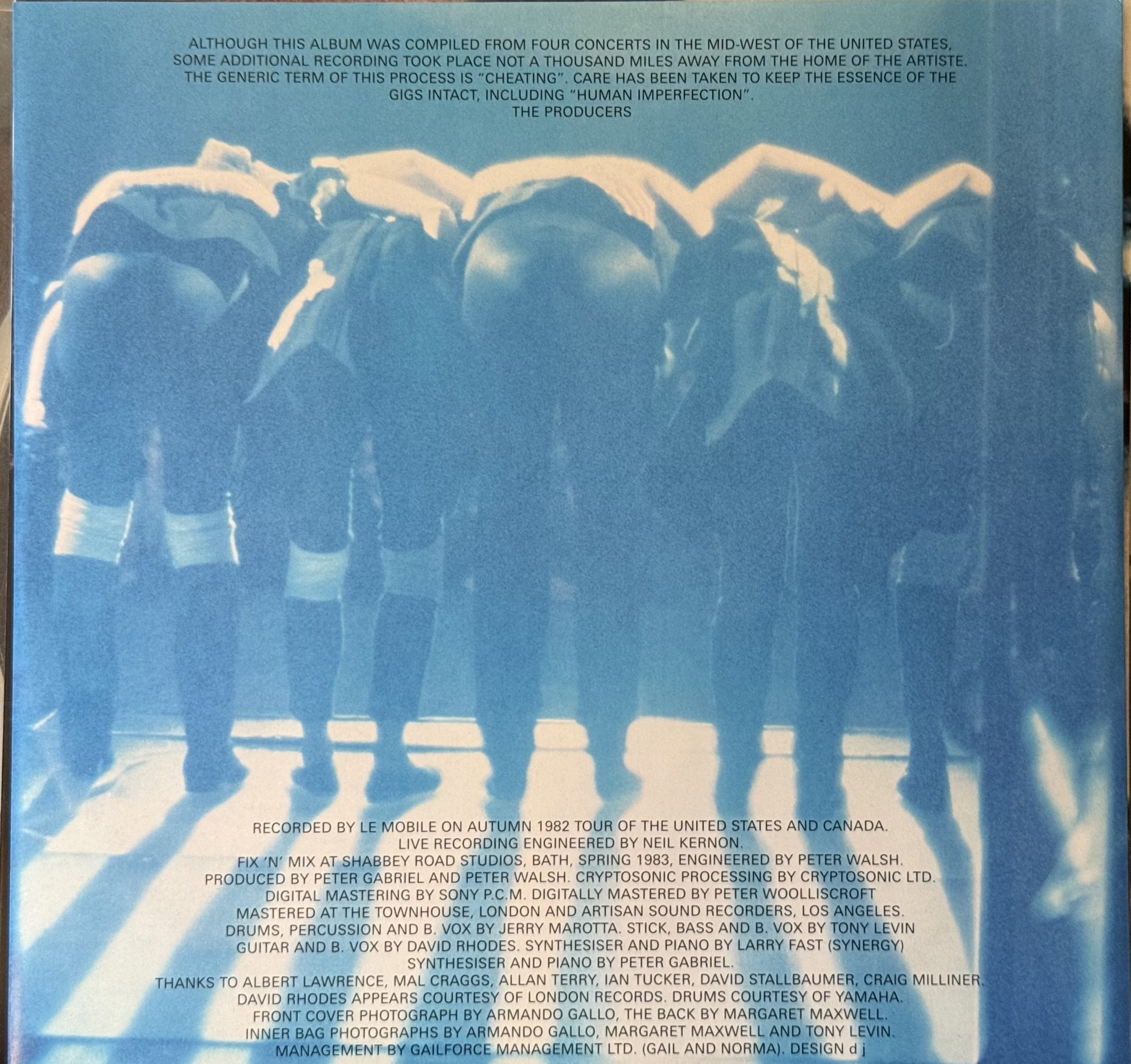
This last category is definitely where Plays Live falls, but there are elements of the other motivations as well. In particular, some early songs are revisited and updated, while others faithfully recreate their studio sound. Some of that “faithful” sound might be due to touch-ups; the notes on one of the dust sleeves say, “Although this album was compiled from four concerts in the mid-west of the United States, some additional recording took place not a thousand miles away from the home of the artiste. The generic term of this process is ‘cheating’.” Whatever the means, the album presents music from four concerts in November and December 1982 that show how Gabriel transformed the music from his first four albums into a coherent stage performance, with the stalwart help of Tony Levin, David Rhodes, Jerry Marotta, and Larry Fast.

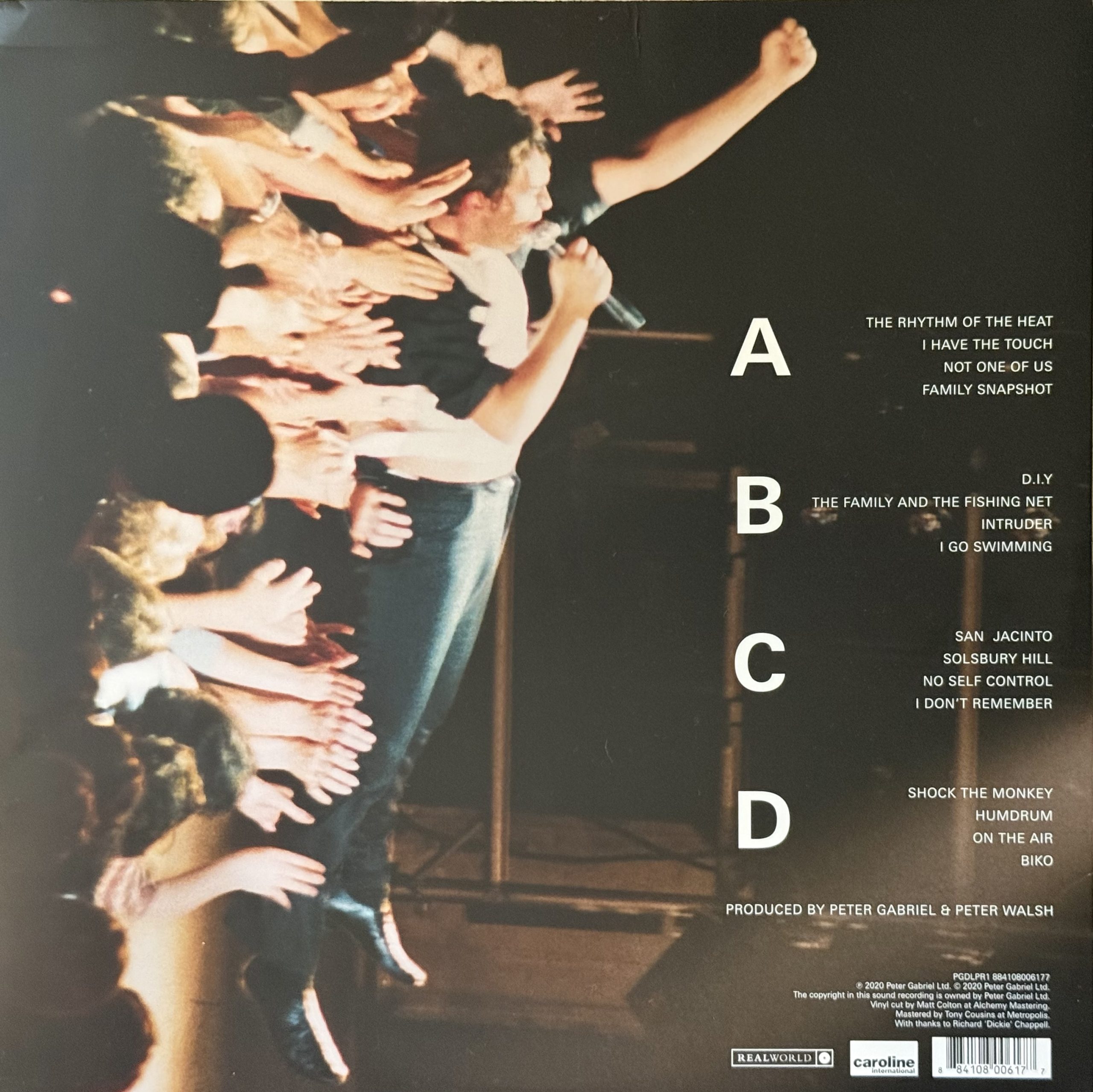
The Rhythm of the Heat” is remarkably faithful to the album original, with Larry Fast and Peter playing the same loops and synths used to construct the studio track. Only at the end does the performance deviate from the original, and that’s only because Jerry Marotta only has four limbs; while his drum performance is appropriately climactic, it doesn’t have the apocalyptic frenzy of the polyrhythms played by Ekome on the original track. “I Have the Touch” is slightly looser, with a combination of drums and synth percussion backing up Peter as he swaggers through the song. Peter’s outro has some vocal improvisations that carry the imprint of Motown, pointing ahead to a change of direction in future albums.

Not One of Us” is another faithful recreation, with Tony Levin’s bass lines prominently front and center and Jerry Marotta’s drums leading into the massive breakdown at the end of the song. A quiet “Family Snapshot” has the epic arc of the original, greeted with respectful applause to close out the first side.

D.I.Y.” is the first song of the set to have a substantial revision, with synths standing in for Robert Fripp’s guitar but carrying the same rhythmic intensity. “The Family and the Fishing Net” faithfully recreates the spooky quality of the voodoo and wedding rituals from the original, with some extra synth lines adding slightly polyrhythmic accents at the beginning and a massive choral outro with the band singing backing vocals behind. (This is a good time to shout out appreciation for the collective voices of Levin, Rhodes, Marotta and Fast, who create a great backing sound behind Peter.)

Intruder” is great live here, with Marotta’s drums ably filling in for Phil Collins’ legendary gated reverb and Fast’s synths somewhat less ably replacing the marimbas in the instrumental. But that’s a note-perfect whistle at the end, over some sort of idiophone, presumably played by Marotta, and a massive finale with Peter taking the final line up an octave to great effect.

I Go Swimming” is a gift of sorts, the only song here not to have previously appeared on a PG album. It’s a fun tune led off by a locked-in groove by Tony Levin, soon joined by the rest of the band as they play in the chromatic intro. Peter’s vocal on the chorus gives a bit of an Al Green feel, which abruptly switches into a more traditional Gabriel verse in 6/8. The song was apparently a leftover from the 1980 PG3 session that became a live staple, and a great break in the set.

Both “San Jacinto” and “Solsbury Hill” hew closely to their recorded versions, albeit with keys replacing the jubilant twelve-string guitar in the latter plus an extended joyous vocal coda. (Okay, not hewn quite as closely as all that.) “No Self Control” gets the most dramatic retooling of all the back catalog numbers, with a moody synth-driven groove replacing the marimba and dueling guitars of the original. Played about 20% slower than the original, it carries less manic intensity than resignation and despair. “I Don’t Remember” maintains the disco-funk brilliance of its predecessor thanks to Tony Levin’s deft playing and a wordless vocal bridge in the extended outro that raises the hackles on the back of the neck.

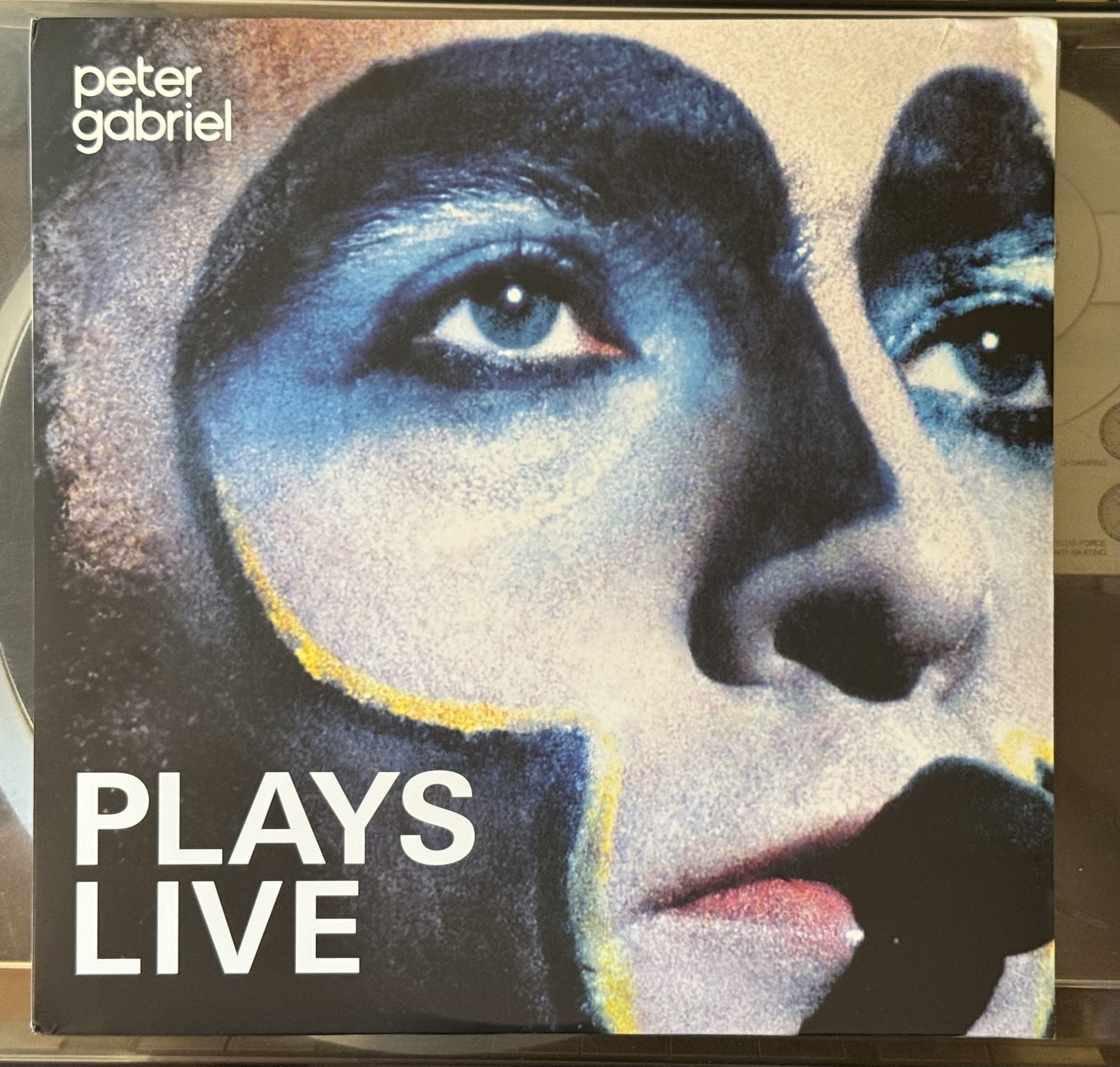
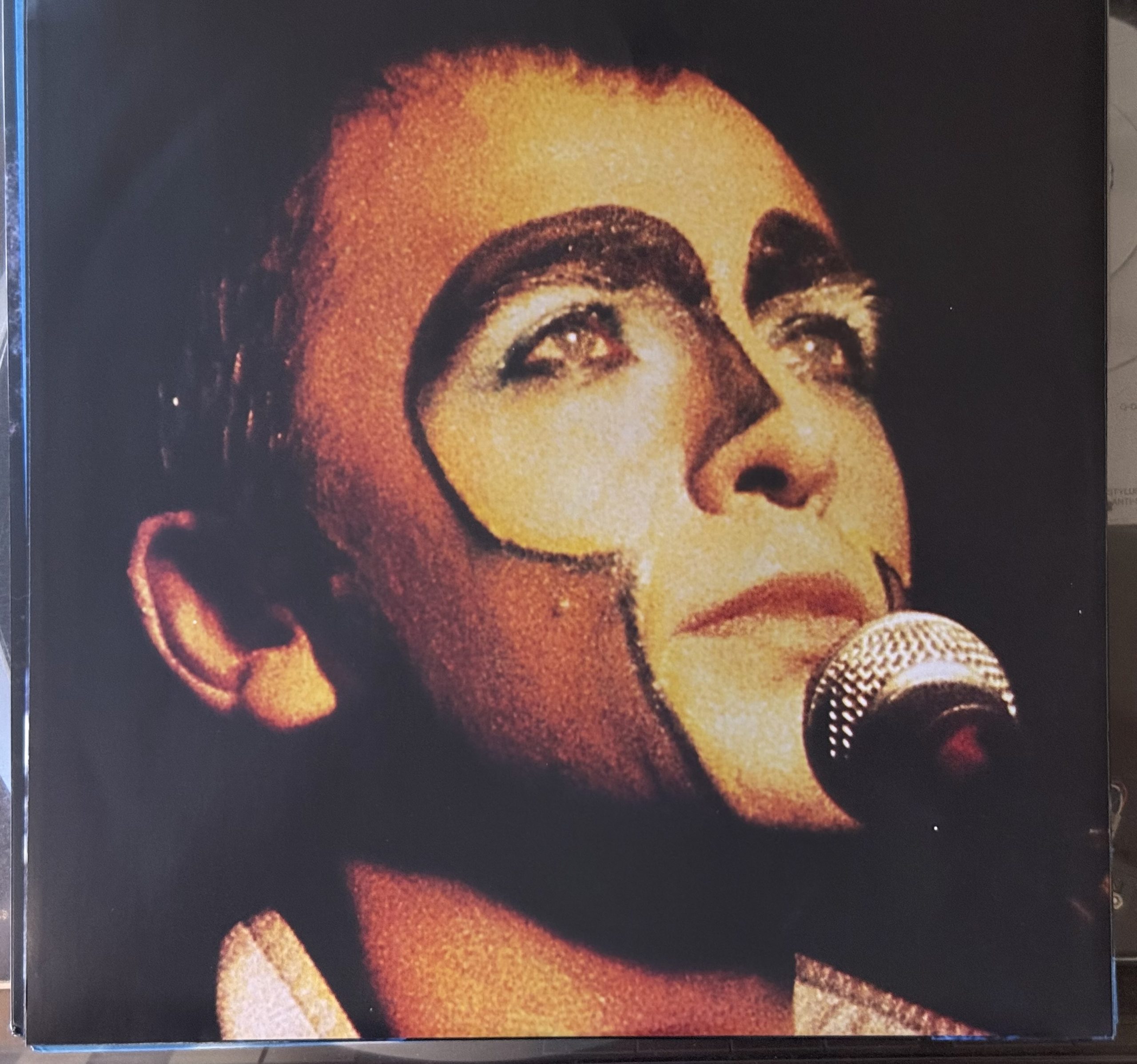
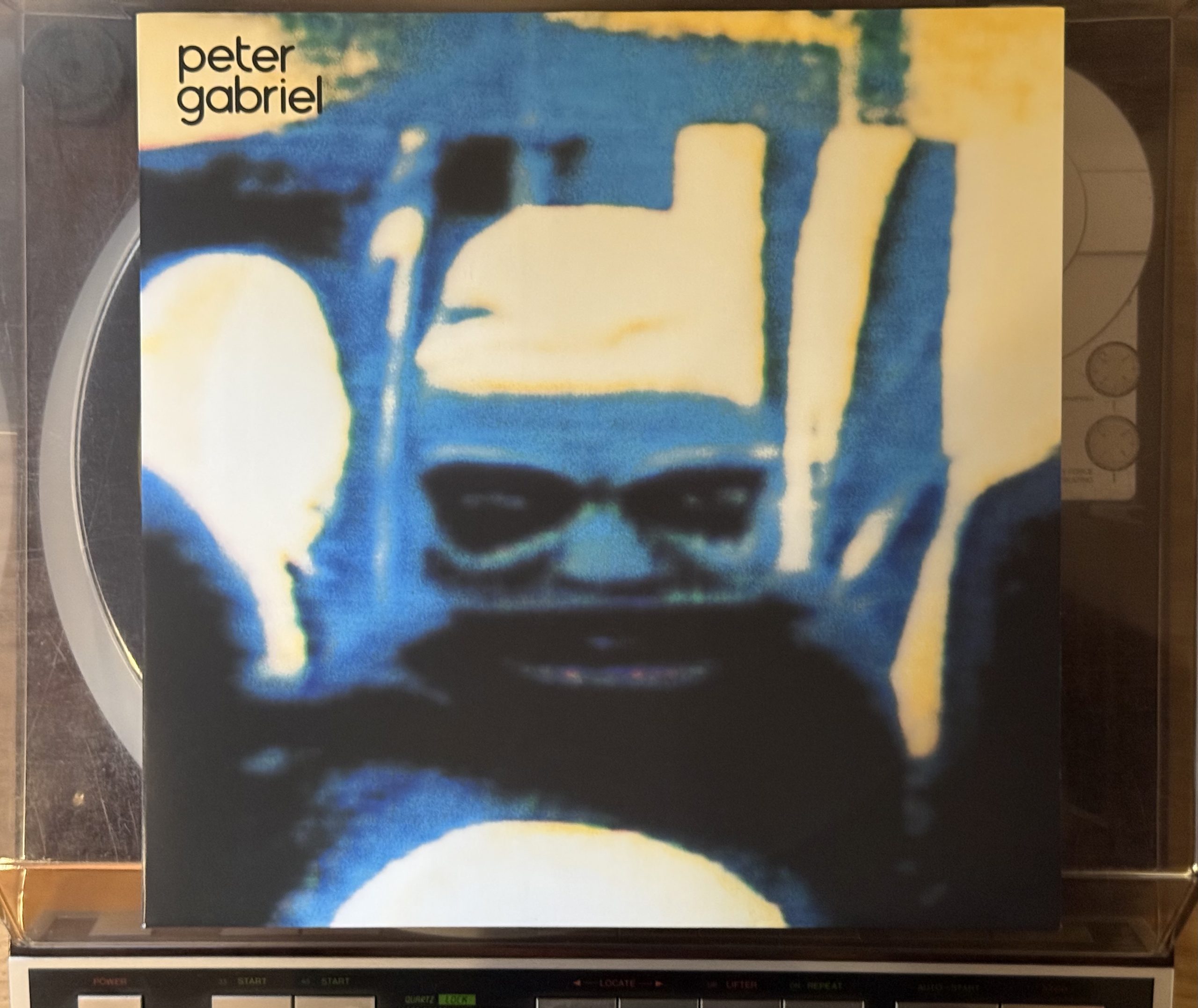
Shock the Monkey” is a jittery wonder here, all funky high notes above a relentless, mechanical dance rhythm. It’s also arguably the farewell to an early Gabriel practice—the use of face paint to portray different characters in live performance (and videos). The blue make-up on the album cover (and the insert above) is a simplified version of the elaborate ritual monkey make-up used in the video; photographer Armando Gallo recalls it was actually taken during “Lay Your Hands On Me,” a track omitted from the original LP.

Humdrum” is a pleasant surprise in the running order, a throwback all the way to PG1. The song offers the opportunity to hear how Peter’s vocals evolved during this first six-year stretch of solo performance. His low notes are richer, his high notes with a bit of sandy grit around the edges but with assurance as he takes rhythmic liberties with the line. The vocals are also mixed much further forward than in Bob Ezrin’s original, allowing the lyrics to be more clearly understood; this might be the definitive version as a result. “On the Air” is a last intense workout, with the band lending it more polish than the dry Fripp-produced original and somehow also carrying a greater intensity throughout. The audience is in it all the way, shouting their response to Peter’s sung “on the air” in the chorus. The band gets a great workout in the outro, with an instrumental workout before Peter sings the final chorus as a great shout.

The album ends, as did so many of his concerts, with “Biko.” Stripped of its opening and closing South African hymns, it plays as a more direct protest anthem, with the crowd’s singing along audible under the third verse and the extended outro. The album ends with a long fade-out as Peter calls “Good night!” and the crowd chants “Peter, Peter, Peter” in response.

Plays Live is unique in Peter’s discography for serving as a perfect punctuation mark at the end of his first four-album run. With five tunes each from the third and fourth albums and the hits from the first two, you could be forgiven for never checking back to listen to the originals. (I would strongly recommend making time for 3 and 4, both of which stand as massive accomplishments.)

In a way it was also a farewell to this portion of his career, as what came after would prove a powerful transformation for his sound and his fortunes. But before we get there, he had one last project, albeit a slightly obscure one, that revisited the sound from this period in a more unexpectedly direct way. And before that, we have one of the collaborations that began to shape his new direction; we’ll hear that next week.

You can listen to this week’s album here:

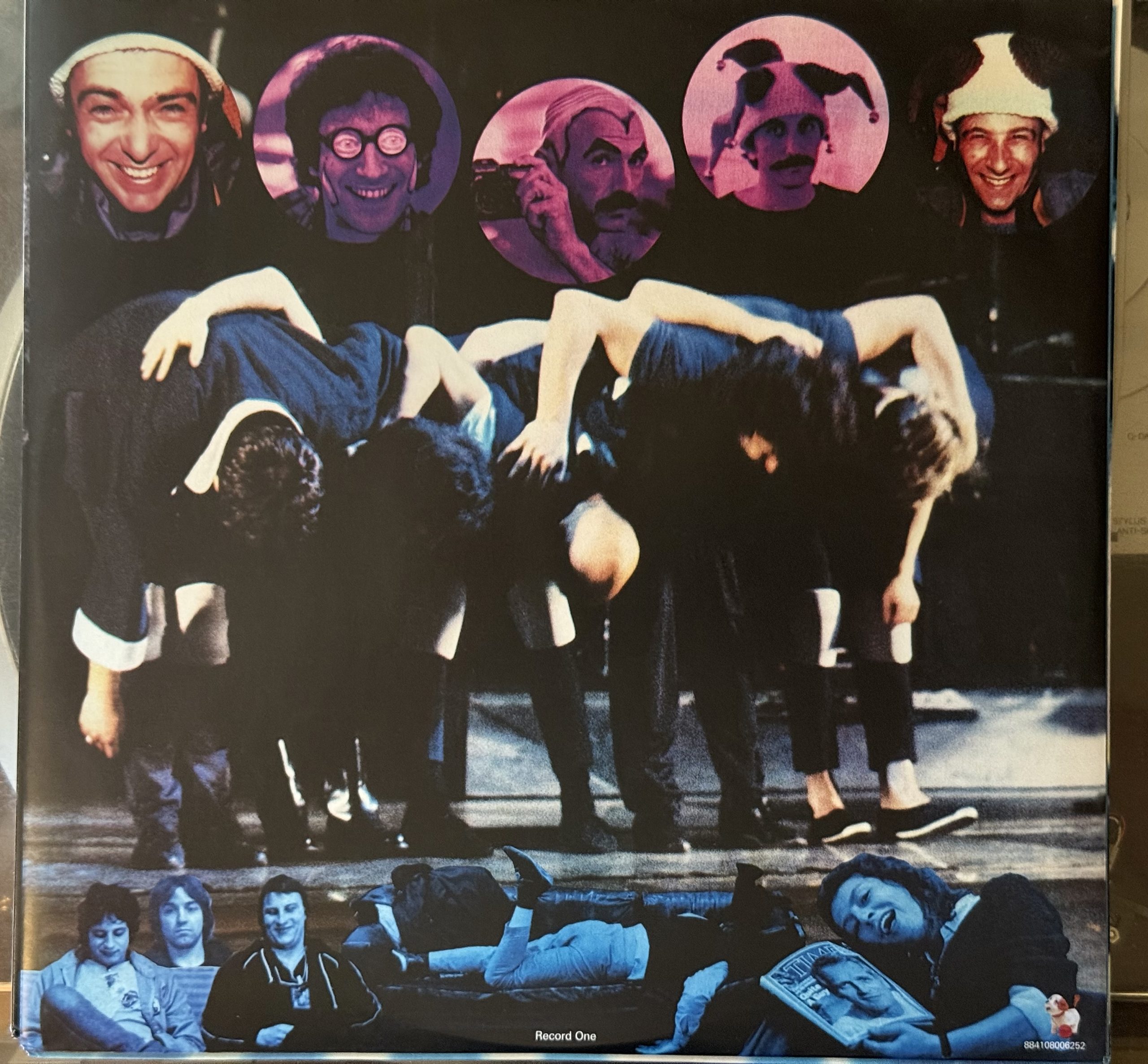
BONUS: While “Lay Your Hands on Me,” with Peter pictured singing while crowd-surfing on the back cover, was part of the set for these concerts, it was never issued on a version of Plays Live. That makes this 1983 video from Gabriel’s performance in Copenhagen all the more interesting, if frustrating for its low resolution and high levels of background chatter at the beginning:

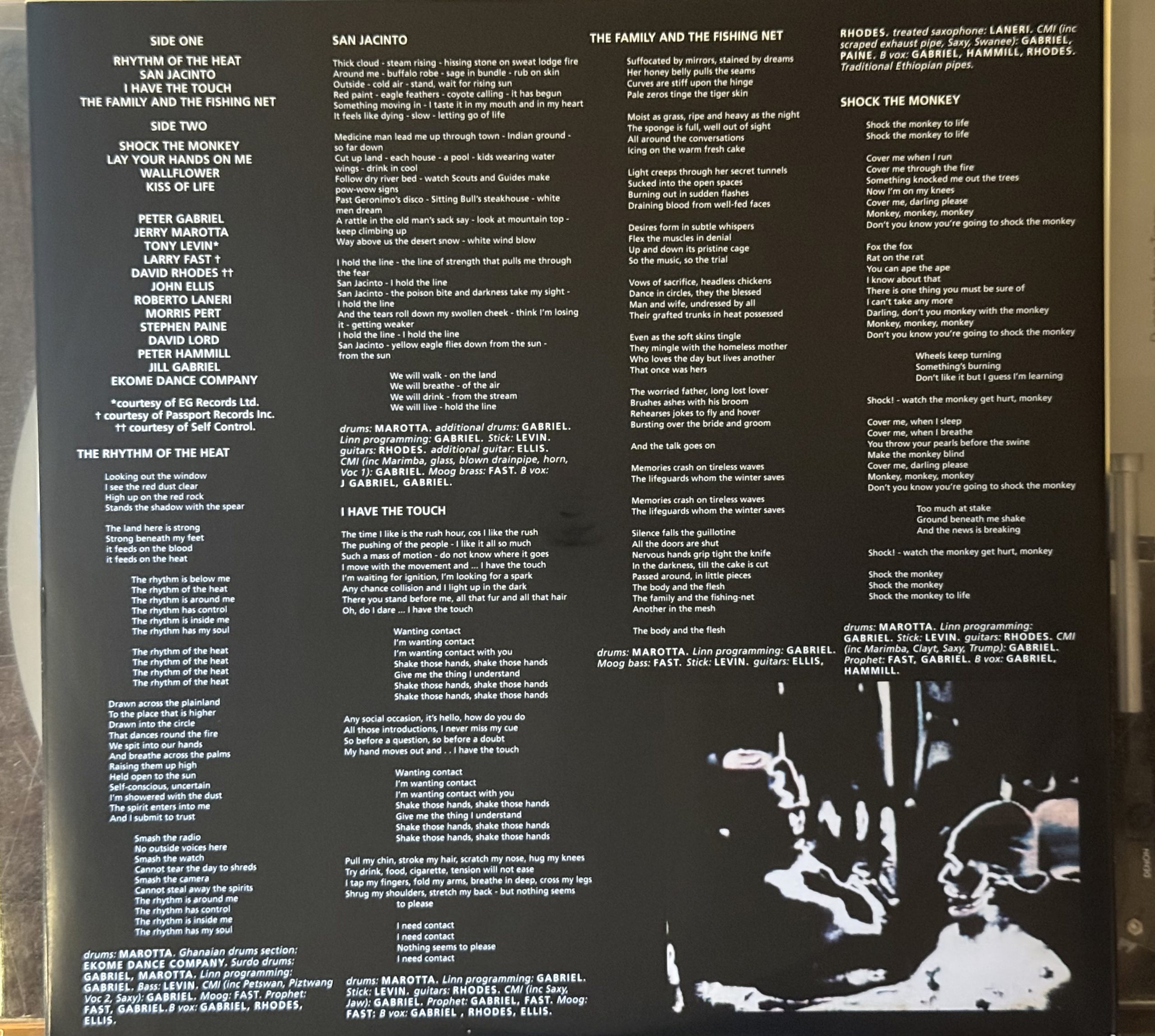
Peter Gabriel, Peter Gabriel 4 (Security)

Embracing both musical sounds from around the globe and modern technology produces a pioneering album that is still compelling and strange today.

Album of the Week, April 3, 2026

Two important things happened to Peter Gabriel in the lead up to his fourth self-titled album, which, thankfully for those of us who write or talk about music, his new label Geffen talked him into giving an actual title, Security, in the United States. The first was that the sampling synthesizer, the Fairlight CMI, that he had first encountered in 1979 became more powerful and able to manage up to 64 kilobytes worth of samples in memory. The second was a series of encounters with musicians from outside the UK that led to something that changed his career, and the careers of countless others, forever.

The Fairlight CMI had been invented by Peter Vogel and Kim Ryrie, from an earlier invention by Tony Furse. Struggling to get an instrument that was easier to control than the all-analogue Moog synths which were then the kings of the market, Vogel and Ryrie hit on two important ideas: to use a microprocessor—a digital chip, rather than analog—to control the device; and—a discovery by Vogel while studying the harmonic waveforms of acoustic instrument sounds)—to use samples (short recordings of real instruments) as part of the sonic palette of the instrument. Vogel brought a first-generation Fairlight CMI to Gabriel’s home while he was working on Peter Gabriel 3, and he was smitten, using the sampling feature to record real world sounds—though he used glass breaking and other percussion, rather than piano or strings. Gabriel was so impressed that he and his then-brother-in-law Stephen Paine formed a company to sell the instrument in the UK. It sold like hotcakes, with Kate Bush, John Paul Jones, Trevor Horn, Alan Parsons, Pink Floyd’s Richard Wright, and Thomas Dolby among the early purchasers.1 By 1982, the Series II was released, giving higher-frequency samples. Gabriel famously showed the use of this feature on the BBC’s The South Bank Show in a special on the making of PG4.

The other thread would seem to be the complete opposite pole. Following the release of PG3 and based on Gabriel’s burgeoning interest in African music and politics following the release of “Biko,” he launched the first World of Music, Arts and Dance (WOMAD) festival in 1980. Artistically2 a huge success, it brought performers from India, Burundi, Cameroon and Nigeria together with pop and world music luminaries from the UK.

Gabriel continued to meet with new African musicians, some of whom appeared on his next album. They joined a cast of by-now familiar faces: Tony Levin, Jerry Marotta, David Rhodes, Larry Fast, Morris Pert (here on percussion and Ethiopian pipes)—and also Peter Hammill, who had played at the first WOMAD, and David Lord, who co-produced the album with Gabriel. For this recording they were at Ashcombe House, a 19th century manor in Somerset that had a barn that Gabriel converted to a recording studio, while he rented the main house as a domicile.

The first track, “The Rhythm of the Heat,” combines the synthesizer, sampling, and world music threads of Gabriel’s interests into a single whole. Starting with a sampled loop on the Fairlight, Gabriel utters a cry that seems to swoop from somewhere in a resonant acoustic right up next to the listener, as a giant tone sounds on the tonic against a syncopated beat in the drums. Gabriel sings about losing oneself in rhythm (“the rhythm has my soul”), as neat a summation of the ethos he was exploring in his songwriting from PG3 on as one could hope for. It’s mostly successful here; the rhythms in the main song are careful (“the rhy-thm of the heat”) and feel a little too controlled. But on the last reprise, as he sings “smash the radio… smash the watch… smash the cameras… the rhythm is around me, the rhythm has control/the rhythm is inside me/the rhythm has my soul,” suddenly the heavens break open and an avalanche of drums, courtesy the Ekome Dance Company from Ghana, carry the track away in a massive, reverberating, polyrhythmic frenzy. If Gabriel was looking for transcendence in rhythm, he surely found it.

San Jacinto” is a different feeling, a careful dance-like pattern in synthesizers that contrasts with the story sung by the narrator, a Native American man feeling despair at the loss of his culture to modernity. Some listeners interpret the lyrics as the narration of a young man coming of age in a ritual involving a rattlesnake bite; I’ve always heard it as the narration of an older man taking his last journey to the mountaintop, where he faces the decision to live or die. The coda (“We will walk on the land/We will breathe of the air/We will drink from the stream/We will live, hold the line”) seems a declaration of revitalized intent in the face of this despair, and is tonally distinct from the rest of the song, almost a hymn to itself.

I Have the Touch” is one of two more pop-leaning songs on the album, but it doesn’t ease up the thematic intensity; here Gabriel seems to revisit the theme of the outsider that he first explored in the nightmarish “Intruder” on PG3, only this time, instead of maliciously breaking and entering, the narrator is in the street and filled with a yearning for human contact. “I move with the movement and/I have the touch… Only, only/wanting contact/with you”: he finds some respite in the crowd, the “pushing of the people,” but knows that he cannot be happy without true human contact.

The dark reverse of this longing for contact, perhaps the ultimate “be careful what you wish for” song, comes with the last track on the first side. “The Family and the Fishing Net,” which sings of marriage as a dark ceremony that enmeshes the participants through strange rituals, seems to warn of too much of a good thing. In a college poetry seminar I brought the lyrics, with their super-specificity and descriptive language, as an example of pop music as good poetry. I’m not so sure now; the whole thing seems rather over-egged. But “moist as grass, ripe and heavy as the night” is not a good way to describe a bride to be. And the attempted intersection of Christian imagery and voodoo in the last stanza “In the darkness, as the cake is/Cut and passed around/In little pieces/The body, the body and the flesh” doesn’t land for me. Then again, it did for the unmarried me at 18, still anxious about the future, which is maybe all it was supposed to do.

Speaking of anxiety: has there ever been a stranger Top 40 hit than “Shock the Monkey”? With the music track drawing inspiration from Motown and progressive rock in equal measure, there’s a relentless beat driving Peter’s plea to an unknown lover not to “shock the monkey”—that is, not to arouse the creature of jealousy that sits in the core of relationships. But you don’t need to have the psychological background to appreciate the song; it’s a banger, even if it sits uncomfortably high in the vocal range for singalongs. (As the University of Virginia Hullabahoos discovered when they covered it on their first album, years ago.)

In a sort of through-line with “I Have the Touch,” “Lay Your Hands on Me” is a song about finding healing in opening up and being vulnerable to connection with another human. The opening, with skittering percussion and an ominous spoken narrative (that veers into silliness—“fat men play with their garden hoses… sausage speared by the cocktail satellite”), masks a real portrait of alienation, as the narrator seeks to escape the crowds and find solace in being alone, whether out of introversion or fear, or both. But the chorus—“It’s only common sense/There are no accidents round here/I am willing (Lay your hands on me)/I am ready (Lay your hands on me)/I believe (Lay your hands on me)”—roars back into an embrace, literally, of the healing power of touch. Gabriel would ultimately end live performances of the song by standing at the edge of the stage and falling backward into the crowd, trusting them to buoy him up. (I recall reading an interview in the 1980s when one of the band wryly remarked, “We all did it; the problem was, no one wanted to catch the drummer.”) Gabriel has been open over the years about the power of therapy to help heal emotional wounds, and you can hear it starting here—and in true PG fashion it arrives as a massive anthem that delivers an emotional punch with each repetition. And that bass line!

Wallflower” is in similarly hymnic territory, but with a different subject. Sketches of the melody originated during the recording of PG3, but the lyrics didn’t come together until Peter viewed television programs sponsored by Amnesty International about political prisoners in Eastern Europe and Latin America, particularly the plight of Lech Wałęsa and of dissidents who were imprisoned in mental hospitals. In this way the lyrics feel like a merging of the lyrical concerns of “Lead a Normal Life” and “Biko” and give the former tune an additional layer of universal meaning.

There’s nothing but good times in the closer, “Kiss of Life”—at least in the massive rhythms that spur one to dance in imitation of the “big woman” who dances on the tables at the Easter feast for the fishermen, welcoming each one. And then there’s a turn: in the bridge, we learn that “there’s a body in the sand” which the big woman resuscitates: “With heat from her skin and fire from her breath/She blows hard, she blows deep/In the mouth of death.” Did the narrator have a near death experience? Whatever the narrative truth, there is an inexorable dual meaning in the final chorus of “Kiss of life/kiss of life,” with life and death dancing together—however awkwardly, with alternating 3/4 and 4/4 meter in the opening and outro.

In embracing both modern technology and non-European rhythms, Gabriel found a more consistently adventurous sound that enabled him to span between art rock and pop, and landed him an unlikely top-40 hit—all while staying true to his distinctive artistic vision. It came at a cost: the album was recorded and mixed in sessions spanning from early 1981 through the summer of 1982, with hints of the songs only peeking through in a 1982 WOMAD festival performance in which he premiered seven of the eight tunes. That 1982 performance has recently been released, and is worth a listen in its own right, as the musicians dig into tunes that would seem to be designed only for studio performance and miraculously transform them into riveting live bangers.

Peter’s future albums would gestate even longer, as touring and his growing perfectionism stretched the time between albums further and further. Fortunately for us, his collaborators were also releasing spectacular music in their own right in between these infrequent records, and we’ll hear from one of those next time.

You can listen to this week’s album here:

BONUS: Here’s what might be the first live performance of “The Rhythm of the Heat,” from the 1982 WOMAD festival complete with the original rhythm section:

BONUS BONUS: “Shock the Monkey” is the most coverable of all the songs on the album, so it takes a lot for a new cover of it to surprise me. This one by Local H with both band members sharing a gorilla costume achieves the goal.

BONUS BONUS BONUS: A sort of cover? Here’s Peter Gabriel with Sting performing “Shock the Monkey” live in 2016:

Footnotes

  1. Horn would famously help to popularize one of the key samples from the Fairlight’s built-in set, an orchestral “hit” called ORCH5, in his work with both Yes and Art of Noise. ↩︎
  2. It might have been an artistic success, but it was a financial flop; faced with substantial debt, Gabriel reunited with Genesis for a single show, which put the festival, and his own finances, back on an even keel. ↩︎