Cocktail time: Cointreau-ing in Eden

Or, what to do with that quinquina in your liquor cabinet.

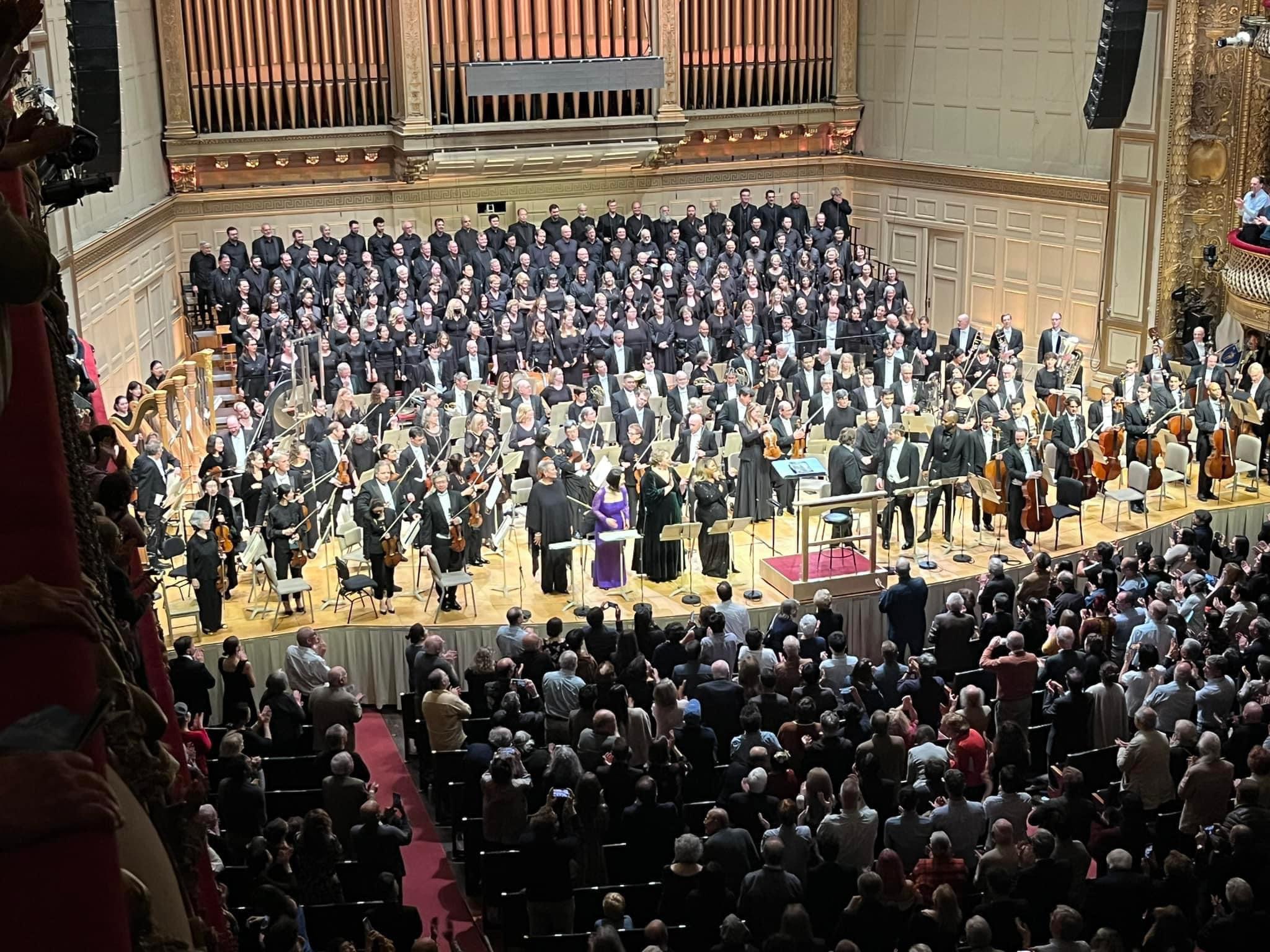
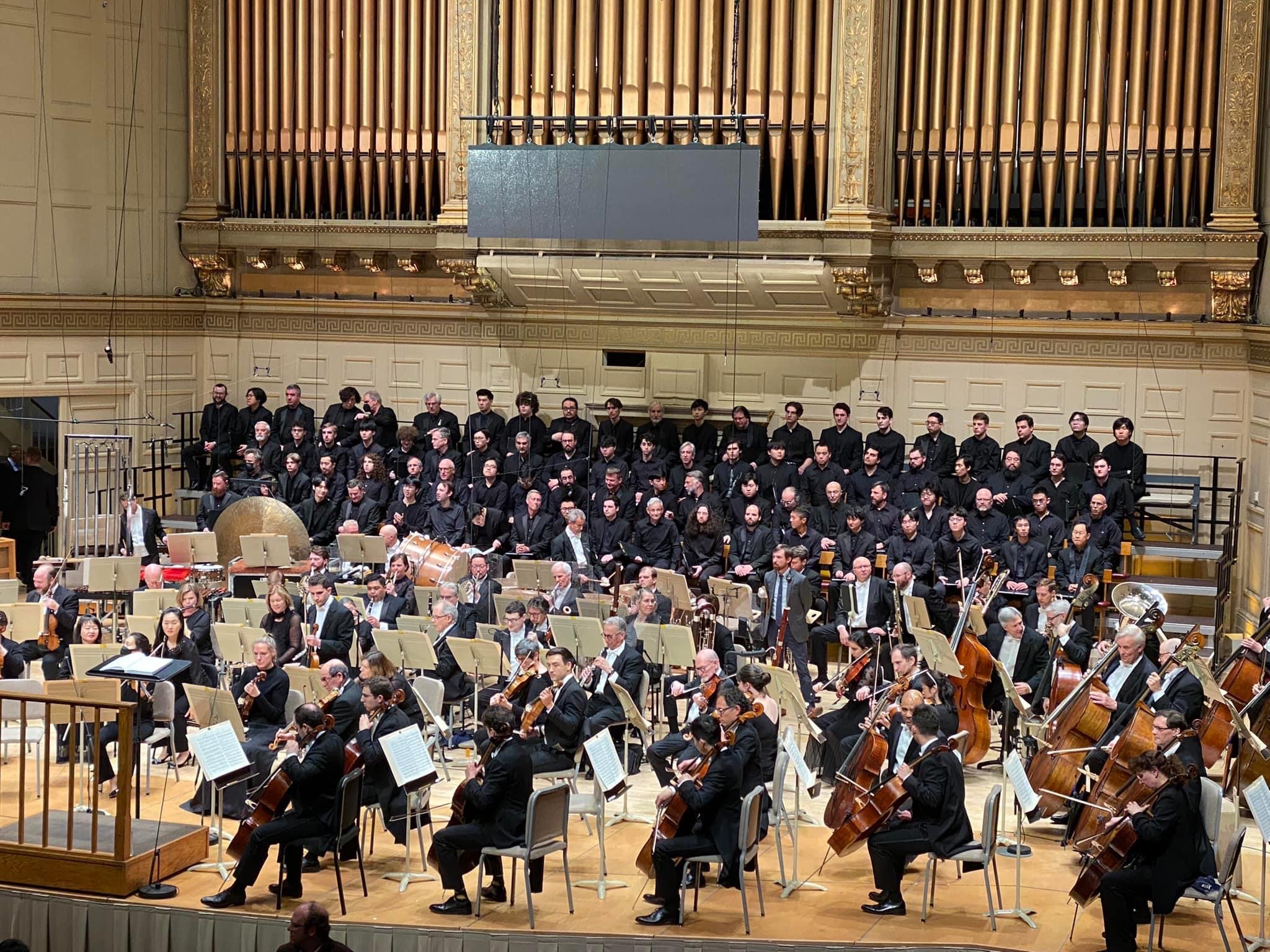
The Tanglewood Festival Chorus just finished a run of John Adams’ “Harmonium” (alongside the Beethoven 9th Symphony), for the first time in thirty-five years. I wasn’t a member the only previous time the chorus performed Adams’ early masterwork (under the direction of Sir Simon Rattle, no less!), but there were nine choristers who did perform the piece back then with us this time.

“Harmonium” is a massive piece, one of the true masterworks of minimalism. But tagging it with that undersells the harmonic and melodic attractions of the piece. True, it does open with two hundred or so measures of chanted “no no no”s1 and other syllables of negation, demonstrating with the human voice the same approach to building with rhythm previously done with marimbas, keyboards, or other instruments in works by Philip Glass and Steve Reich. But then the text of Donne’s poem breaks through like a ray of light—“I never stooped so low”—and you’re in a completely different world. The work is full of surprises and earworms; I found myself saying “rowing, rowing, rowing” under my breath as I walked, in rhythm, down the sidewalk to my car after one rehearsal, and a number of us have half-jokingly agreed that we’ll work on a carol arrangement that uses the melody of the second movement, “Because I could not stop for Death,” to set “O Little Town of Bethlehem” and see if Keith Lockhart will do it for Holiday Pops.

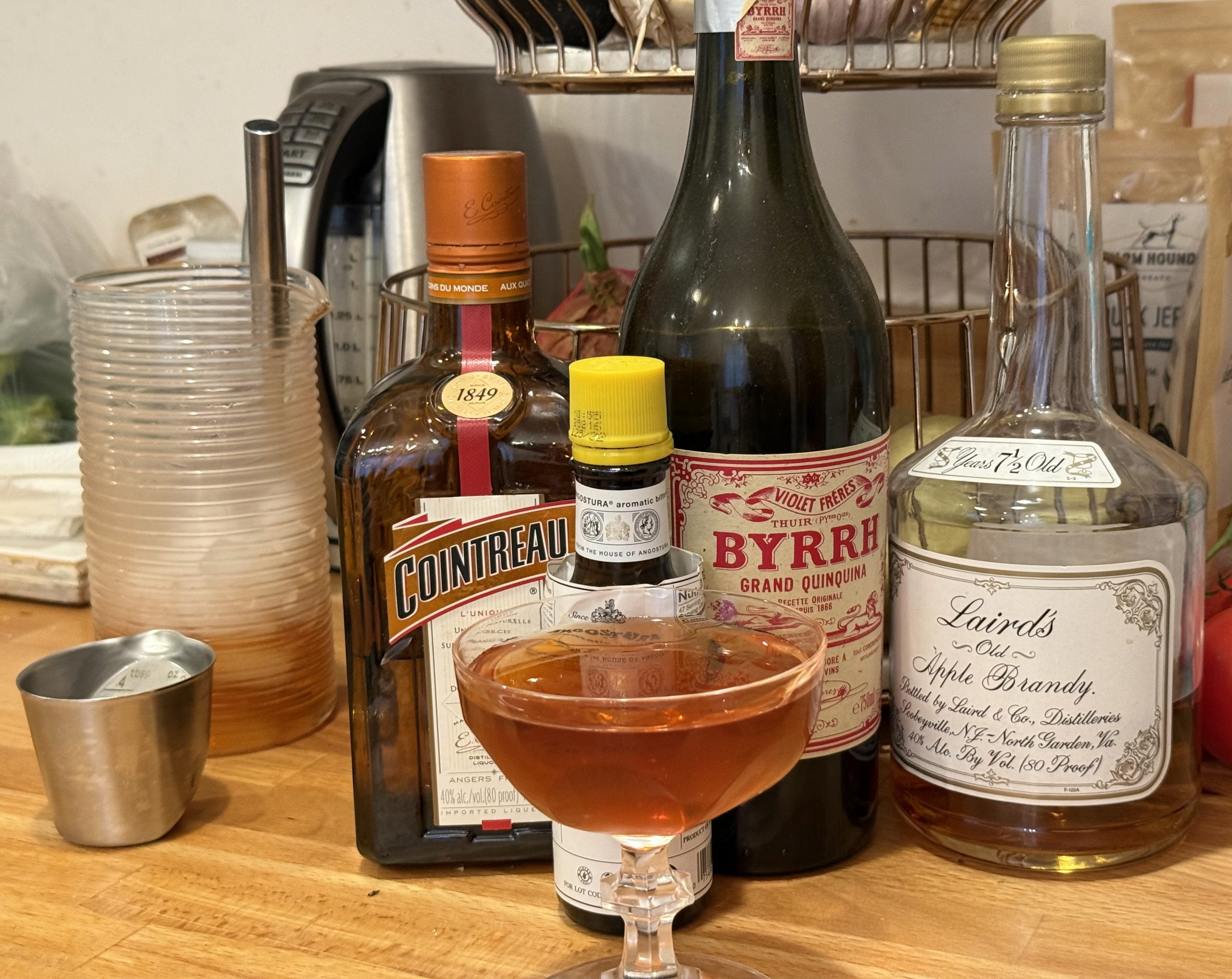
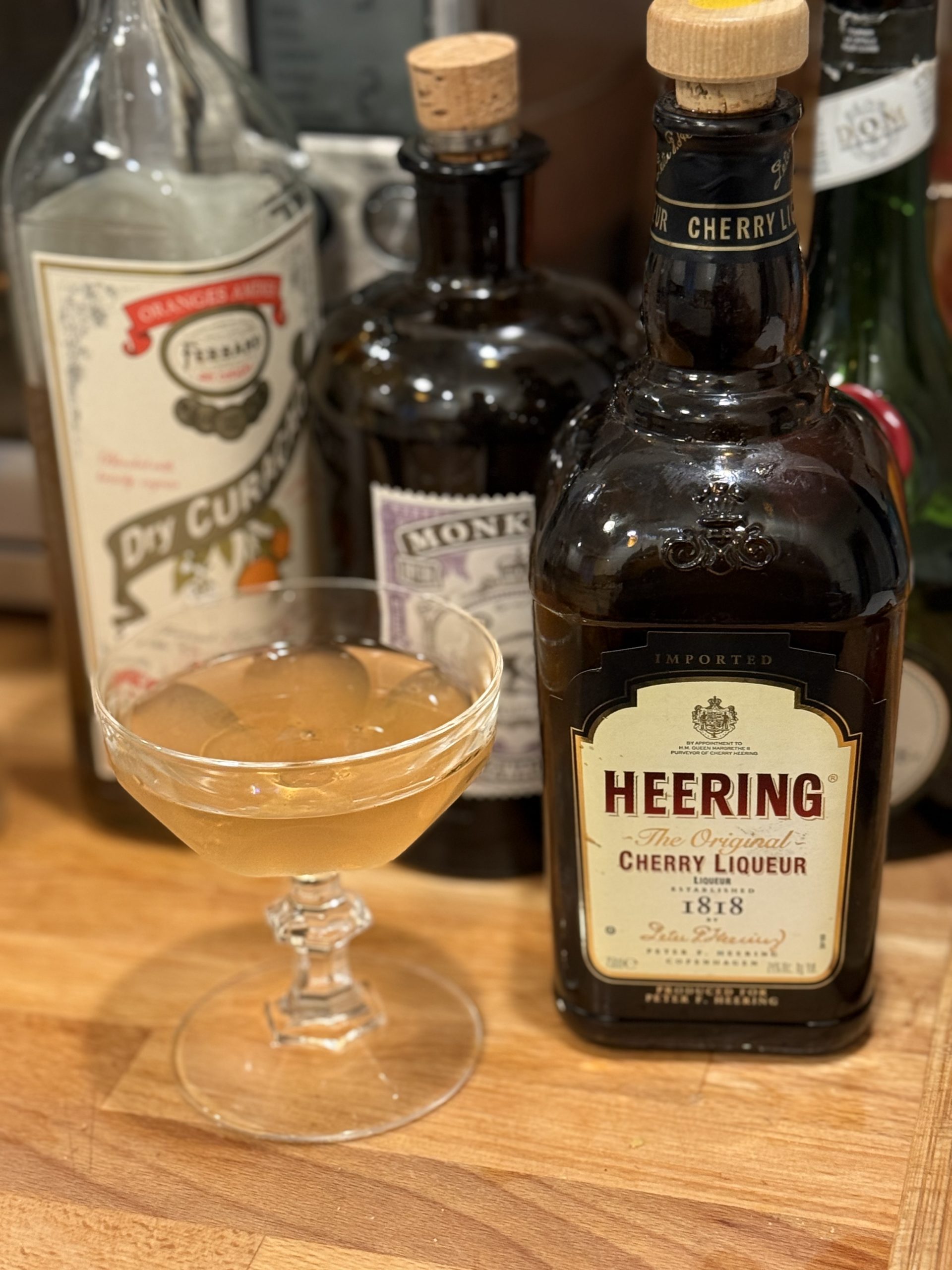
But I digress. Back to “rowing”; as I tried to decide on a cocktail for this run, that rhythm and its ultimate culmination “rowing in Eden” kept going through my head, and so I decided the cocktail had to be “Cointreauing in Eden.” I rifled through some of my old cocktail lists for inspiration and found a jumping off point, the Ante Cocktail. It’s a classic, included by Harry Craddock in his seminal 1930 Savoy Cocktail Book, but it calls for an apertif wine called Hercules.

How obscure is Hercules? Obscure enough that my source app starts the write-up with “Here’s what we know about Hercules…”, which perhaps explains enough to make me curious about this attempt to recreate it from a few years back. But the app helpfully suggested that I could substitute Byrrh, which I for some reason have in my inventory. Both Hercules and Byrrh are quinquinas, sweetened fortified apertif wines containing quinine (for bittering and presumably for health reasons) and spices; the family also contains Lillet and Dubonnet. Byrrh in particular is a French quinquina, made with red wine, mistelle (a mixture of ethanol and partially fermented grape juice), and quinine, that was originally sold as a health drink to avoid competition from neighboring apertif makers in the Pyrenees. Some day I’ll write about the intersection of cocktails and patent medicines… Anyway, the flavor is a tad sweet and deeply bitter in a pleasant way.

Cointreau is of course the legendary triple sec formulation produced in Saint-Barthélmy-d’Anjou. I suppose one could use other orange liqueurs, but I don’t recommend a substitution of Grand Marnier; I grabbed the wrong bottle by mistake last night to make this and the orange flavor was far too subdued. Regarding the apple brandy, you can substitute Calvados; I used Laird’s Old Apple Brandy, an aged 80 proof liqueur. Be careful with other substitutions; Laird’s Applejack contains neutral spirits and lacks the punch of real apple flavor.

As always, you can use the recipe card with Highball. Enjoy!

  1. There’s a story that, at the choir party following that 1991 performance, members of the choir gifted both founding TFC director John Oliver and Simon Rattle with the same gag gift: a pair of boxers with the words “NO NO NO NO NO” printed on them… and a different message printed in glow-in-the dark letters that could be read when the lights are out. This is one of many moments that I wish that JO had actually finished writing his memoirs. ↩︎
Michael Tilson Thomas

End of an era.

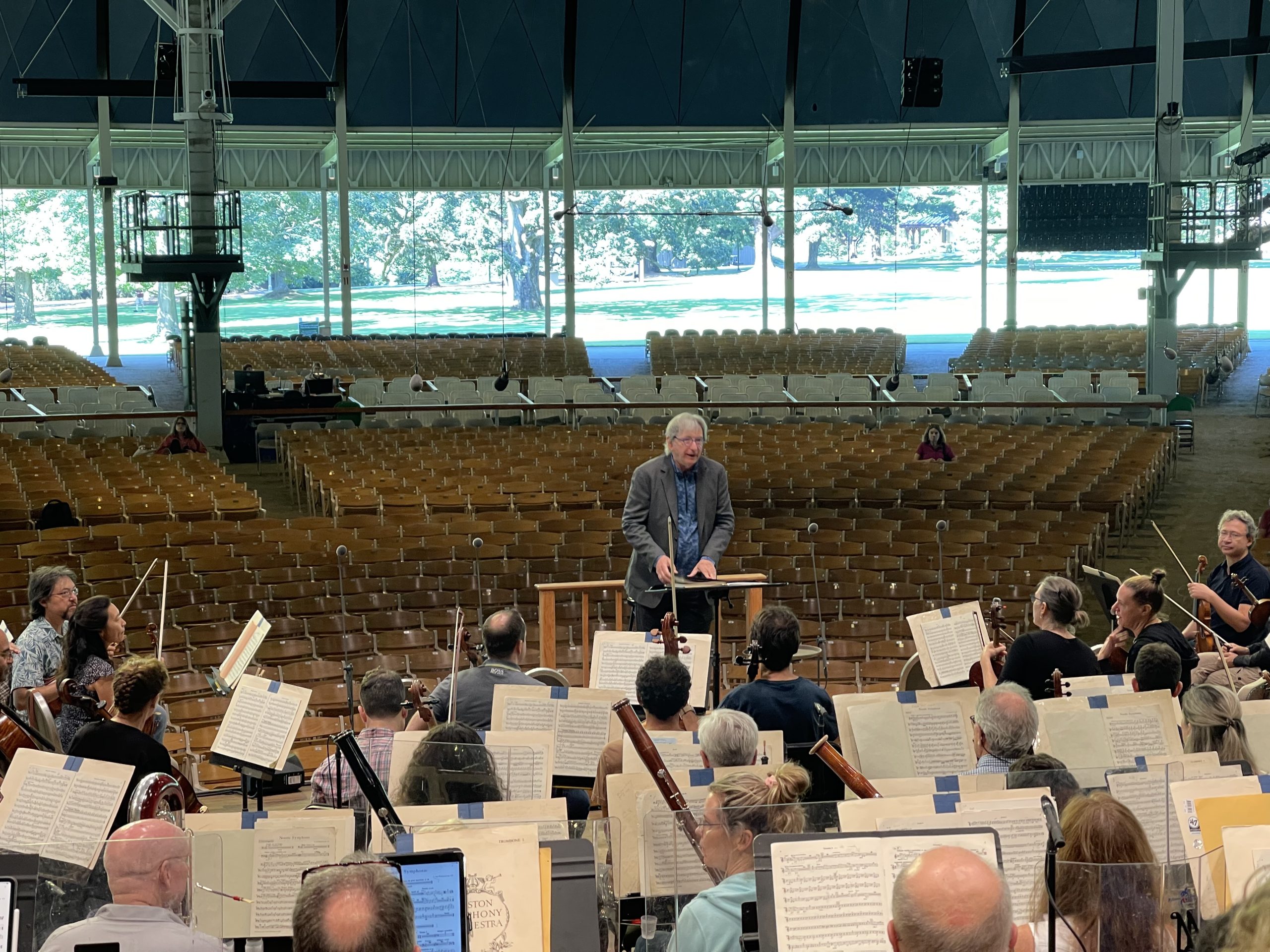
Michael Tilson Thomas, Tanglewood, August 2022

I was profoundly saddened to learn about the death, yesterday, of Michael Tilson Thomas. Just because something is inevitable and imminent doesn’t make it less of a shock when it comes.

I sang under Maestro MTT’s baton twice in my career, both times at Tanglewood: once in the summer of 2010 for performances of the Stravinsky Symphony of Psalms and the Mozart Requiem, and once recently, in 2022, for the season-ending Beethoven 9 performance (preceded by a nervy chorus-only performance of Charles Ives’ “Psalm 90” under the baton of James Burton).

I feel privileged to have had these experiences, particularly the 2022 one, coming only a short time after his diagnosis of terminal cancer. To see him continuing not only to battle on but to make music the way it should be performed—that is to say, vitally, humorously, and above all humanely—was tremendously moving.

Also: no one prepared me for how garrulous, funny, and generally chatty he was as a a conductor. He told us stories about growing up with his vaudeville grandparents, the Thomaschevskys; he also told us about how he thought about Beethoven and the monumental 9th symphony. He showed us, rather than told us, how to be human and to face down the ultimately inevitability with grace.

New York Times: Michael Tilson Thomas, Celebrated American Conductor, Dies at 81.

NPR: Michael Tilson Thomas, renowned conductor and composer, dies at 81.

San Francisco Standard: SF Symphony legend Michael Tilson Thomas dies: ‘Like some great library being burned.’

Gramophone: A tribute to Michael Tilson Thomas, who has died at the age of 81.

Boston Symphony issued a statement on Instagram.

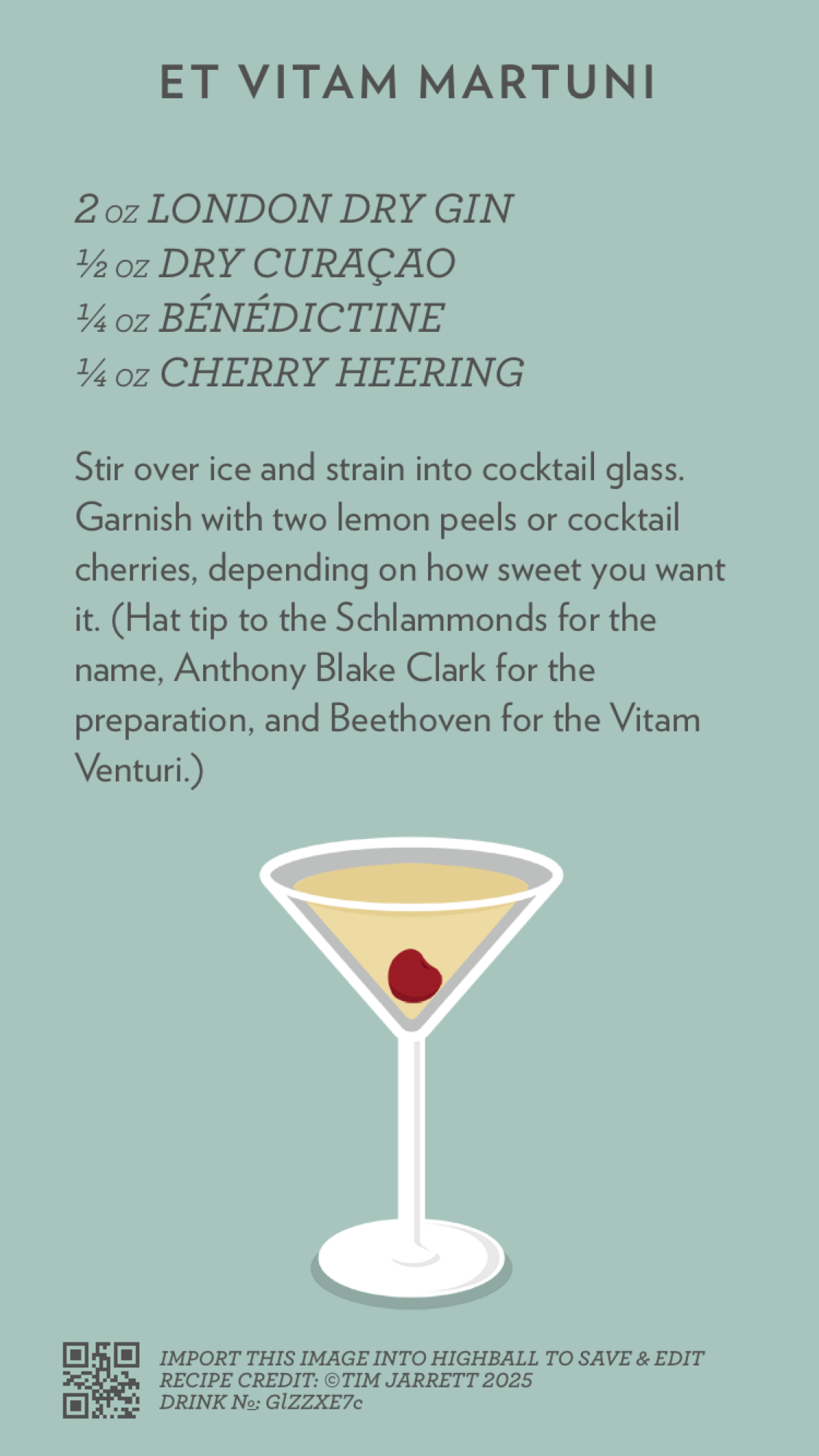
Cocktail Friday: Et Vitam Martuni

In which we create a cocktail to accompany Beethoven’s massive Missa Solemnis.

I have gotten something of a reputation among my fellow members of the Tanglewood Festival Chorus for creating cocktails that go with our major performances. So the speculation started early about what the cocktail would be that would go with this week’s performances of the Beethoven Missa Solemnis. This post is an attempt to document my creative process for these cocktails, in case any brave souls want to follow in my footsteps.

Name: Almost always, the name comes first, and almost always it’s a quote or a pun from the text of the piece. (Cf: Promisistini, Veni Creator Spiritous, Aufersteh’n, Sugar Rum Cherry No. 1 and 2.) So with this piece, it had to be “Et Vitam Venturi,” the part of the “Credo” that supports not one, but two fugues. And through the process of elimination, it became “Et Vitam Martuni,” because it was funnier than either “Et Vitam Martini” or “Et Vitam Negroni” (the two leading contenders).

Composition: So what was an “Et Vitam Martuni”? I started out using the Martini as a base, but it turns out that the liqueurs I pulled off my shelf did not go well with the Martini. At first I blamed it on the liqueurs; as I wrote to my collaborators on this cocktail, “The combination of vermouth and Cherry Heering does not work at all. I should have known better; with Beethoven, the Heering is never good.”

But it turns out I was blaming the wrong ingredient, and a shift in focus was beneficial. By reformulating the drink as an approximation of the Martinez—i.e. not requiring white Vermouth—I was able to make the ingredients work, even the Cherry Heering. So here’s to the “Et Vitam Martuni,” the drink so good you’ll want to have it twice, once slow and once damned fast.

Special thanks to my collaborators on this one, the Schlammonds, who suggested the name and were my rubber duck as I thought through the combinations. And special thanks to the TFC and our guest conductor, Anthony Blake Clark, who is the reason that the drink recommends a pair of something for the garnish.

As always, you can use the recipe card with Highball. Enjoy!

Mozart Requiem, and the Promisistini

Last night, my friends in the Tanglewood Festival Chorus and I wrapped up a series of performances of the Mozart Requiem with the Boston Symphony Orchestra (Dima Slobodeniouk conducting—we had previously sung Grieg’s Peer Gynt with him; Erin Morley, soprano; Avery Amereau, mezzo; Jack Swanson, tenor, substituting for Simon Bode who couldn’t get a visa; and the redoubtable bass Morris Robinson returning after performing it with the BSO in 2017). I had last sung the Requiem with Michael Tilson Thomas at Tanglewood in 2010 and in Symphony Hall in 2009 (with Shi-Yeon Sung substituting for an ailing James Levine), and before that in 2006 at Tanglewood with Levine; before that, I performed it in Bellevue, Washington, with the Cascadian Chorale in 2002 as part of a commemoration of the first anniversary of 9/11.

Which is to say, the piece and I have history.

What was distinctive this time (as my colleague Jeff Foley notes) was the amount of time we were able to spend refining our approach to the music and making effortless parts that often end up barked or belted in other performances. The work appears to have paid off, as the Globe specifically cited the sound of the tenors as a highlight of the performance: “With the ‘Requiem,’ the Tanglewood Festival Chorus gave a stunning and profound display of unity. Their quality of performance has been on a distinct upswing lately, and the fruits of their work showed in the precise intonation in the ‘Kyrie,’ explosive dynamic variation in the ‘Dies Irae,’ and elegant phrasing in the ‘Lacrimosa’ — staples of the choral repertoire where rough patches tend to make themselves visible. The tenor parts of the ‘Requiem’ choral book can be especially punishing, and the TFC tenors deftly shouldered the demands, letting their high notes bloom.”

Which is to say, that calls for a cocktail! This one borrows its title from the “Quam olim Abrahæ” fugue, which appears at the end of both the “Domine Jesu” and the “Hostias,” and I couldn’t resist a Martini variant. This is based on Louis Muckensturm’s “Dry Martini” from 1906, one of the only ones I know that uses curaçao.

The Promisistini can be as dry as you like, depending on the ratio of vermouth to Curaçao.

As always, you can import the recipe card photo into Highball. Enjoy!

Cocktail: Veni Creator Spiritous

Photo courtesy Boston Globe

We’re doing Mahler’s 8th Symphony this weekend. It’s the first time for me since 2015 and only the second since I joined the Tanglewood Festival Chorus 19 years ago. (I wrote about that experience performing with James Levine, the late great Johan Botha, Deborah Voigt, and Heidi Grant Murphy (the soprano in the rafters) among others, at the time.)

The work remains galactic in its scope and stentorian in its volume. (We have a little grassroots decibel reading practice among the choristers; last night reached “only” 106 from my position on the fifth bench, and we’ve hit as high as 108 in rehearsal.) But it feels different. For one thing, years of in-rehearsal vocal coaching from the TFC’s music director James Burton have made it much easier to sing properly, and “bloomin’ loud” as he’s said on at least one occasion, without screaming. Which is a skill you need if you’re going to be hitting those decibels.

For another, I’m an experienced hand now. While I won’t have a special marking next to my name in the program book until I complete this year plus five more, there are far fewer in the chorus who have a double digit tenure than when I started.

And so, it felt appropriate to mark this weekend’s performances, again, with a special cocktail. As I did for Mahler’s Second, I took inspiration from the text. While it was tempting to just go with the memorable text from Part II’s opening (“Waldung, sie schwankt heran/Felsen, sie lasten dran/Wurzeln, sie klammern an/Stamm dicht an Stamm hinan/Woge nach Woge spritzt…”) and make a “spritzt,” that didn’t feel sufficiently … impactful for a piece that featured two full choirs and boys’ choir, offstage brass, eight soloists, four harps, a harmonium, a pipe organ, and two mandolins. (There were around 300 of us on stage last night.)

So I went with the opening text instead, and made a “Veni Creator Spiritous.” (Groan.) The jumping off point was a Sazerac, but I switched everything up while keeping the overall slightly boozy affect… and, as with the Aufersteh’n, made sure to include herbal liqueurs in honor of Mahler’s vegetarianism.

As always, you can import the recipe card photo into Highball. Enjoy!

“The widest possible audience”

Back at Carnegie Hall today, for the fifth time, and the first since 2015, to perform Dmitri Shostakovich’s Lady Macbeth of Mtsensk. This will be the second time I’ve sung Russian here. Previous visits:

Each of those performances brought something different. The first two, conducted by James Levine, showed how the BSO had transformed under his conducting. The “Missa” was about frailty in the middle of the strength of that monumental score; after Kurt Masur withdrew due to progressing complications of Parkinson’s, the performance was conducted by TFC musical director John Oliver, who would step down from the chorus he founded three years later and be dead in six. The Nevsky happened the fall after JO’s retirement and at the beginning of Andris Nelson’s tenure.

The reviewers in Boston have been kind to our earlier run of performances. Fingers crossed for tonight.

Shostakovich Symphony No. 13

I spent the weekend with Dmitri.

As part of the Boston Symphony’s ongoing (and almost complete) project to perform the complete symphonies of Dmitri Shostakovich, I’ve been able to participate in multiple concert runs over the last few years that performed his choral symphonies, and which were recorded by Deutsche Grammophon for eventual release as part of a unique partnership that began in 2015. The first two symphonies, Shostakovich’s Second and Third, were, candidly, hard to love. Exciting and loud, but the choral parts featured a word salad of Soviet propaganda.

The Thirteenth is a different beast altogether. Written from a set of poems by Yevgeny Yevtushenko, the subject matter touches on Soviet antisemitism, inextinguishable humor in the face of repression, the everyday hardships of Russian women seeking to provide for their families, the fear felt under Stalin’s leadership, and the sacrifice of principles in pursuit of a career. And the music is gorgeous and subtle, with multiple earworms that threaten to consume my brain.

I’ll have more to say about some of the interesting corners of the symphony, but for now I’ll just note that it’s been a remarkable journey. Reviews of our performances are in the Boston Globe (paywalled), the Boston Musical Intelligencer, and the Boston Classical Review.

RIP Bramwell Tovey

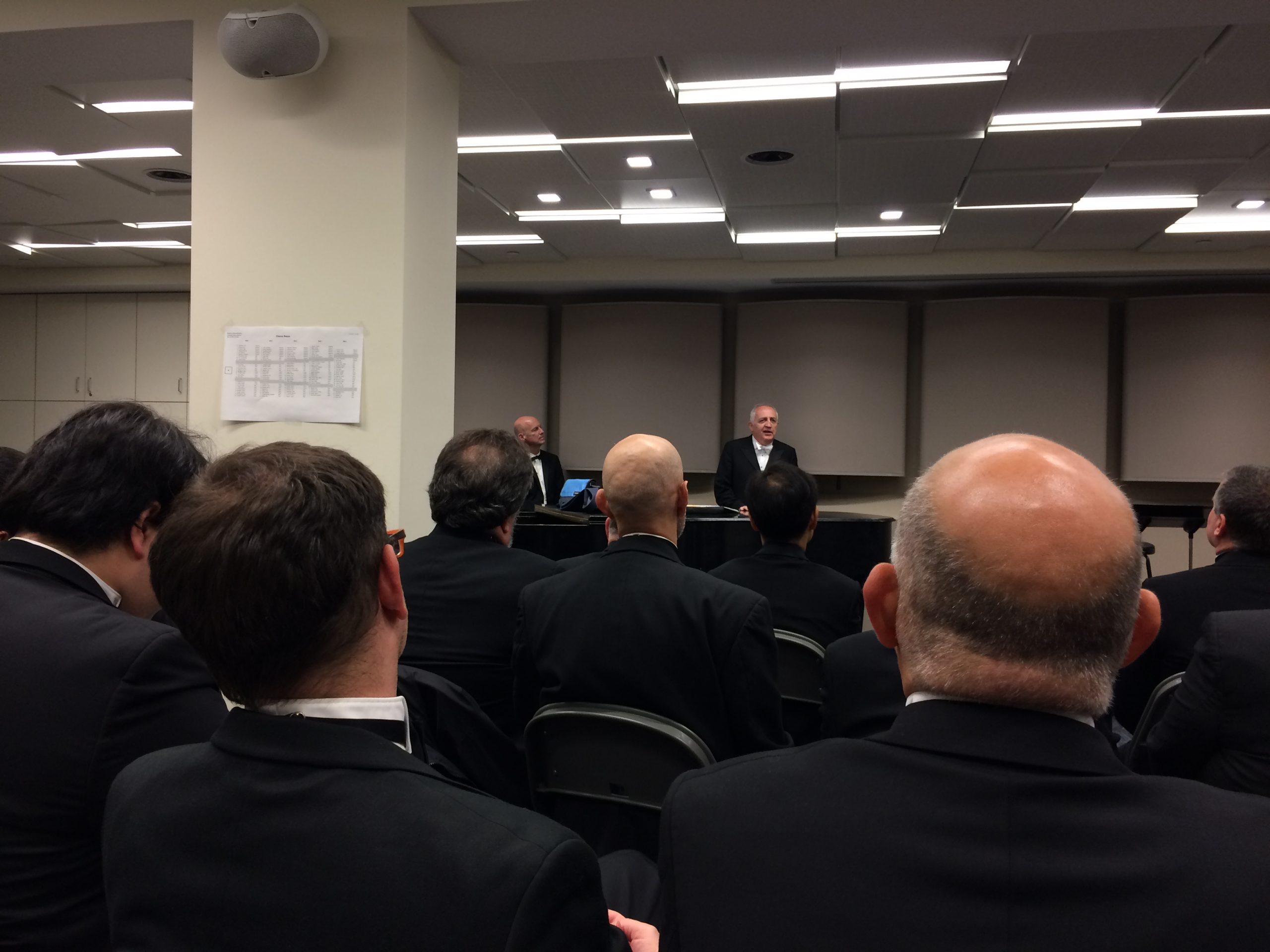
Bramwell Tovey, Boston Symphony Hall Chorus Room, October 22, 2014

CBC: Bramwell Tovey, Grammy-winning conductor, dead at 69. I was always thrilled to work with conductor Bramwell Tovey. He was collegial, friendly and funny — and a heckuva jazz pianist in after-concert parties! But also incisive, insightful, precise, and focused on communication as the central tenet of choral performance with symphonic orchestra—which is a rarer trait than you’d think.

My records say I only performed with Maestro Tovey once, which seems incorrect given the fond memories I have of him. I believe I attended chorus parties after other concerts conducted by him, at which he inevitably stepped up to the piano to display a keen melodic sense and impeccable mastery of jazz standards — something that you can’t often say about symphonic conductors.

Mostly I remember him as a conductor for musicians, under whose baton I would be happy to sing any time.

Estévez, Cantata Criolla

Rehearsal of the Cantata Criolla, April 8, 2019, James Burton conducting

It seems like only a year or two ago that John Oliver was tapped on short notice to conduct the Beethoven Missa Solemnis, taking over for an ailing Kurt Masur (it was seven years ago last month). This week history (sort of) repeated itself.

We were due to sing with the great Venezuelan conductor Gustavo Dudamel in a concert of music by Venezuelan composers. Our piece was to be the Cantata Criolla of Antonio Estévez, a fantastical piece that combines Venezuelan folk music and stories, a singing duel with the Devil, high modernism and Gregorian chant into one spectacular cazuela gaucho.

And then, after a weekend in Boston conducting Stravinsky’s Rite of Spring, among other works, Dudamel aggravated a wrist injury and was unable to conduct. Two of the works, never performed in Boston and little known, had to be removed from the program as there was no way to adequately prepare them in time. But James Burton, the TFC’s current conductor, had been working closely with us on Cantata Criolla for about six weeks, and was tapped to conduct the piece so that we would preserve at least some of the original plan for the concert run.

The first concert was last night and was incredible. James got incredible colors out of the orchestra and chorus. The attack of the cicadas was actually frightening. And I’ve never heard an orchestra produce a sound like steel drums before, but Estévez’s orchestration and the precision of James’s conducting brought out a distinctly festive flavor to parts of the singing duel between our complero protagonist Florentíno and El Diablo. It’s a fun work and I’m looking forward to a few more performances.

A Pizzetti Prelude

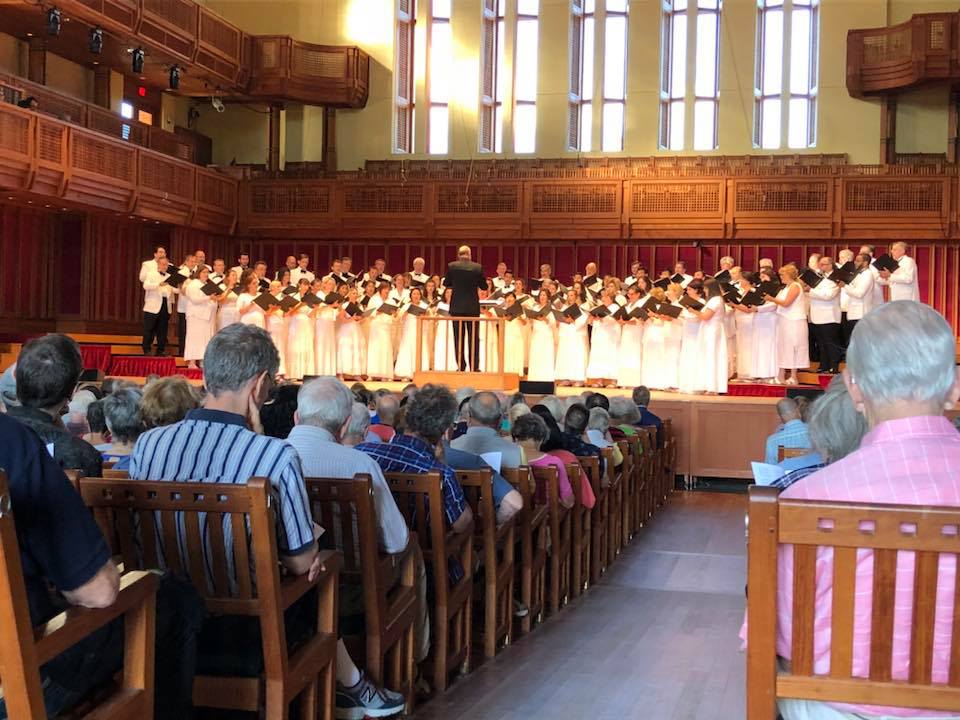
Tanglewood Festival Chorus at Seiji Ozawa Hall, James Burton conducting, July 20, 2018. Photo courtesy Jon Saxton

I’m still a little weak-legged this morning after last night’s TFC performance. It’s not common for me to feel so completely drained, but our Prelude concert last night, with works by Pizzetti, Palestrina, Rossini, Lotti, and Verdi, took everything I had.

I was unfamiliar with Ildebrando Pizzetti and his works before this concert. From my exposure to him through his Requiem, he embraced older sacred music traditions, filtering them through twentieth century ideas of tone and form. The Requiem has echoes, consciously or un-, of earlier Renaissance works, including what I still insist is a nod to Tallis in the setting of “Jerusalem” in the first movement.

Our director, James Burton, pulled those connections to the fore by programming the Requiem alongside works by Palestrina (“Sicut Cervus”) and Lotti (the “Crucifixus a 8”). But Pizzetti owed a debt to his immediate forebears, too, with the operatic sensibilities of Rossini and Verdi both present in his writing. From those artistic forebears we added the Rossini “O salutaris hostia” and Verdi’s great “Pater Noster.”

If you put all those works together, you have about an hour of a cappella music by Italian composers in Latin and Italian. To intensify the drama, James interleaved the other works between movements of the Pizzetti—the final order was:

  • Requiem aeternam (Pizzetti)
  • Sicut cervus
  • Dies irae (Pizzetti)
  • O salutaris hostia
  • Crucifixus a 8
  • Sanctus
  • Agnus dei
  • Pater noster
  • Libera me

We transitioned between movements attaca (without a break), and performed without a piano, taking the pitch from James and his tuning fork. And I think it was some combination of these things—the intense drama of the music, the quick transitions without a break, the unrelenting mental focus—that left me literally shaky. That or hypoxia. There are some seriously long lines in all the works.

But I have a new composer on my list of “must listens” now, and a new appreciation for others that I’ve sung for years. It was a great night.

Here’s a taste of the Pizzetti, from our Thursday rehearsals, that gives you a hint of the remarkable G Major beauty that raises its head above the clouds.

Quiet time

The blog is quiet this week thanks to another Tanglewood outing, my second and last for the summer. This week I’m here exercising my straight tone, singing with Herbert Blomstedt on the Haydn Missa in angustiis (aka “Lord Nelson Mass”) and singing a chorus-only Prelude program featuring the Pizzetti Requiem and a set of related Italian choral music.

My colleague Jeff has written about the Pizzetti, so I’ll just add that Pizzetti’s allusions in the piece are maddening. So far I’ve found the connection to Tallis’s Lamentations of Jeremiah in Pizzetti’s setting of the word “Jerusalem” (first movement), and I’ll post others as I find them.

Tanglewood – Chichester, Barber

The first Tanglewood Festival Chorus residency of the season is concluded and it was bittersweet. I got to watch my colleagues perform an astonishing La bohème on Saturday, took in the final rehearsals of the newly formed Boston Symphony Children’s Chorus (though wasn’t able to see their concert), and performed Bernstein’s “Chichester Psalms” for the first time with the BSO (and about the fifth time in my life).

All of which was a pretty good warmup to the highlight of the weekend, the memorial concert for John Oliver. There were about 175 choristers from all eras of John’s tenure on stage in Ozawa Hall. We performed a set of songs by Samuel Barber, of which I had only performed “Heaven-Haven” (some twenty-eight years previously, with Mike Butterman and the Virginia Glee Club); was familiar with (but had never sung) “Sure on This Shining Night,” and had never heard (“The Coolin” and “To Be Sung on the Water”). The chorus came together in passionate song remarkably quickly, considering how long it had been since some of the members had sung with the TFC (thirty years or more in some cases).

And I was by turns amused and deeply moved by the remembrances by TFC members Brian Robinson and, especially, Paula Folkman. And doubly so by the brief remembrance held earlier in the day at John’s tree (not the one above; I’ll get a picture next week) where Mark Rulison and a crowd of alumni, friends, and family gathered to remember John.

Classic Quadrophenia, part 2


Yesterday I wrote about the experience of singing Pete Townshend’s Classic Quadrophenia, including the odd feeling of being a backup singer for some of the biggest names in rock and roll and of being inside a rock concert at normally staid Tanglewood. But what about the work? Did it, well, work?

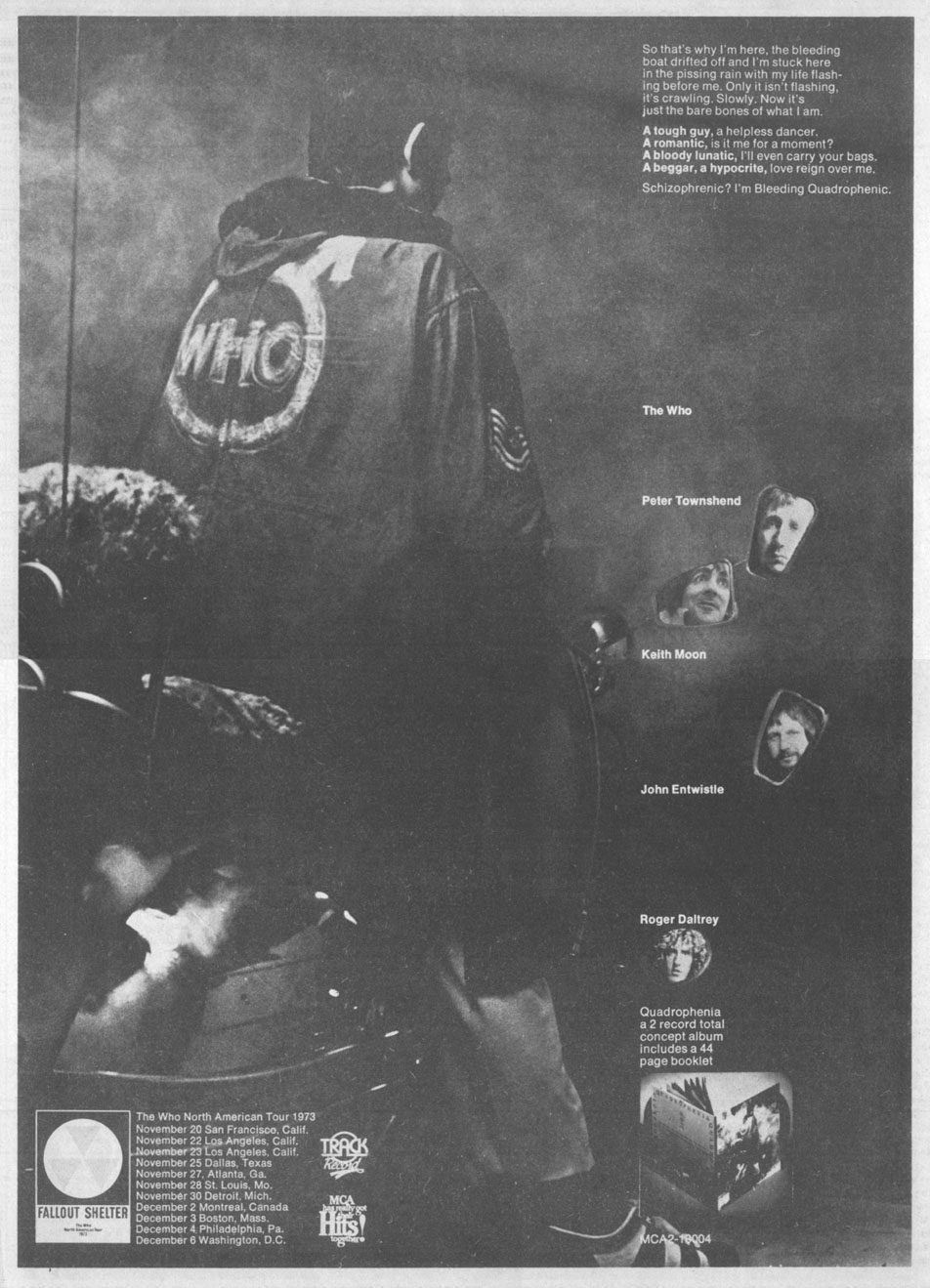
I should acknowledge, to begin with, that I was unfamiliar with Quadrophenia except by reputation before this all began. I knew “Love Reign O’er Me,” and I had heard Pete Townshend perform “Drowned” in a solo acoustic set as part of the video release of Amnesty International benefit The Secret Policeman’s Other Ball. I knew the Mods/Rockers plot and the concept of multiple personal disorder that the title refers to (“Schizophrenic? I’m bleeding quadrophenic“). And I knew about the character of the Ace Face, because Sting played him in the 1979 feature film based on the rock opera.

But the material?

So, first of all, a rock opera isn’t an opera. The songs are songs, not arias. And yet… the musical themes carry from number to number (“Is it me for a moment,” “The Real Me,” and other motifs appear in several tracks, as does the chugging honky-tonk of “5:15”). The emotional arc of the show carries us from Jimmy’s bold statement of theme (“The Real Me” again) through despair and nihilism to a final desperate statement of hope.

And there is a real emotional story at the core, an exploration of what it means to be a man when all the supports for manhood are crumbling around you. Jimmy looks for approval from his father and mother but doesn’t find it. He falls back to the approval of his tribe (“Why should I care if I have to cut my hair? I’ve gotta move with the fashions or be outcast”). He looks at his Mod band idols to realize that they offer nothing more than the fashion he’s already growing disillusioned with (“You declared you would be three inches taller/You only became what we made you”). He takes a manual labor job and realizes that the workers are being abused but won’t stand up to protest (“The Dirty Jobs”: “My karma tells me/You’ve been screwed again/If you let them do it to you/You’ve got yourself to blame/It’s you who feels the pain/It’s you who takes the shame/…You men should remember how you used to fight”). He feels threatened by the changes to his society, the arrival of black immigrants taking jobs and the mechanization affecting even retail jobs (“Helpless Dancer”).

And so he turns to casual sex, and fighting, and ultimately slides into homelessness and despair, and strands himself on a rock in a torrential rainstorm, pleading for love to rain over him in a lyric that has echoes of The Waste Land (as well as the teachings of Pete’s guru Meher Baba).

Lyrically it’s a bleak journey but a fully realized one. Robert Christgau thought so: “… if Townshend’s great virtue is compassion, this is his triumph — Everykid as heroic fuckup, smart enough to have a good idea of what’s being done to him and so sensitive he gets pushed right out to the edge anyway.”

And as a classical crossover work? I think the real challenge that this production faces comes down to sound. For instance, there’s percussion aplenty — various drums including an enormous bass drum, timpani, snare — but if not mixed well you can still get complaints, as we did from one reviewer, that the drums weren’t there. But the visceral punch of the Who orchestration is traded for the grandeur of a full orchestral (and choral) treatment, as heard in “Love Reign O’er Me.”

And the songs are first-class earworms. I’ve had “The Real Me,” “Is It In My Head?,” “5:15” and of course “Love Reign O’er Me” in my head for the better part of two weeks now. With any luck, our rehearsals of the Berlioz Damnation of Faust will finally chase them away. 

Classic Quadrophenia, part 1

At the beginning of the summer I was feeling a little down. I was only doing one performance at Tanglewood with the Tanglewood Festival Chorus, and while I was really looking forward to singing Mahler’s Second again I was sad not to perform with my friends for the other weekends—especially for Walton’s Belshazzar’s Feast, which I sang with Reilly Lewis twenty years or so ago. But I had business and family travel and so resigned myself to it being a quiet and ordinary summer.

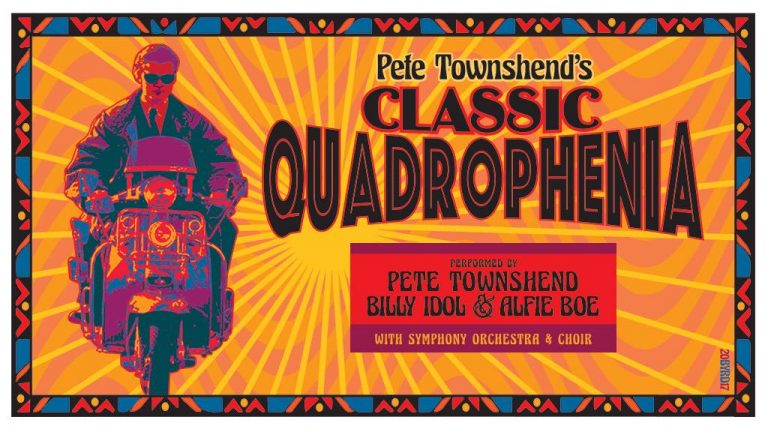
That’s when the email came. “On Saturday, September 2nd, The Who’s Pete Townshend will bring his ‘Classic Quadrophenia’ show to Tanglewood. This show will feature Townshend, Billy Idol, Alfie Boe, the BSO Pops and TFC singers.”

I didn’t even ask. I just checked the calendar and put my name in. A few weeks later, I was dancing when I got the roster and my name was on it.

I suspect that for all classical singers of Generation X and later (and maybe for a few born before me), there’s a part of us that wants to be a rock and roll singer. And while I’m not the biggest fan of the Who, I’ve always had a ton of respect for Pete Townshend’s songwriting — and Billy Idol’s stage presence.

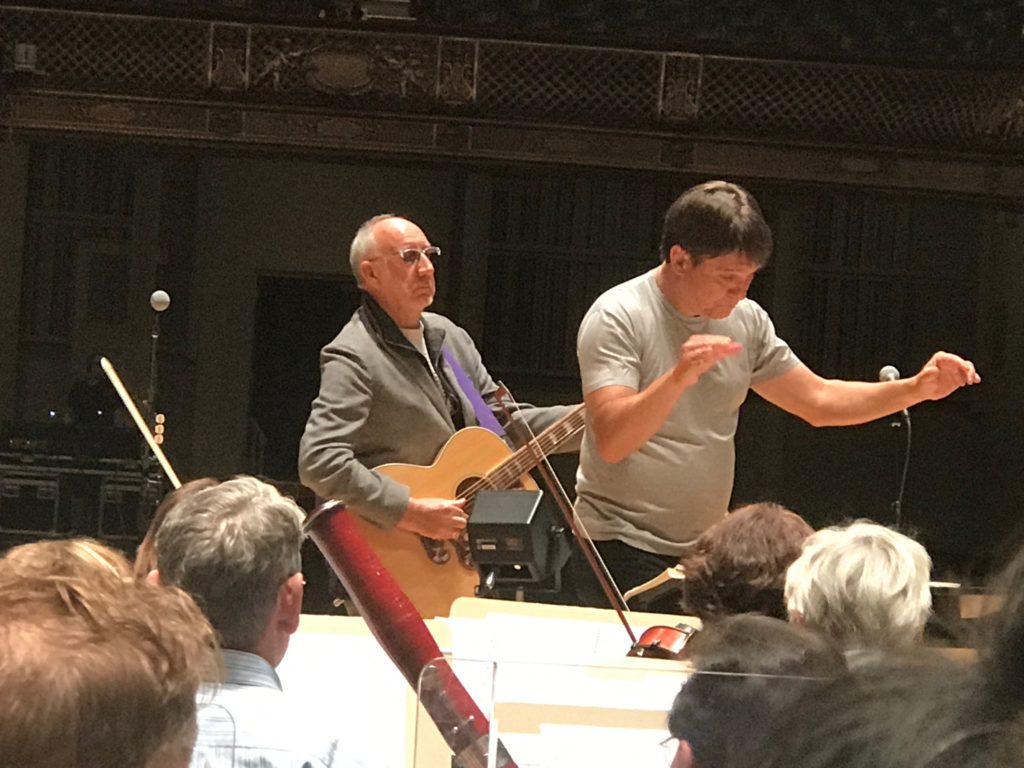
So we started rehearsals last week and by Friday’s orchestra rehearsal we had a show. It was mind-blowing to sing backup with Pete Townshend on tunes like “The Punk and the Godfather,” and to hear his guitar with us on “I’m One.” Even more mind-blowing was watching Billy Idol, looking a great deal like James Marster’s Spike (from Buffy the Vampire Slayer), duetting with wundertenor Alfie Boe.

On Saturday, we boarded a bus to Tanglewood, rolled off and got straight to rehearsal on the stage. The main learning from this: the tech part of the rehearsal, as Pete’s sound team figured out how to balance soloists vs. chorus vs. orchestra, was the most important part of the day. As our director noted, they get one shot at balancing sound in an unfamiliar space and have to balance the audibility of quiet instruments like acoustic guitars against the punch of big percussion sections and voices. We even got our own sound check. (See below.)

And then came the performance, and it was amazing. First, Alfie Boe is a force of nature:

Second, I have never seen a Tanglewood audience so excited. They cheered for the opening bell; for the orchestra tuning; at the end of solos. They jumped to their feet and started dancing at various points. It wasn’t a full on rock concert audience—it couldn’t be, given the seats in the Shed—but it was as close as Tanglewood comes.

Last, it was an amazing honor to sing behind these guys. The passion they brought to the stage was unbelievable, and the music still hasn’t left my head.

The Punk and The Godfather #williamsnyderphotography #classicquadrophenia

A post shared by Alfie Boe (@mralfieboe) on

I had a bunch of thoughts about the music itself, but I’ll save that for part II.

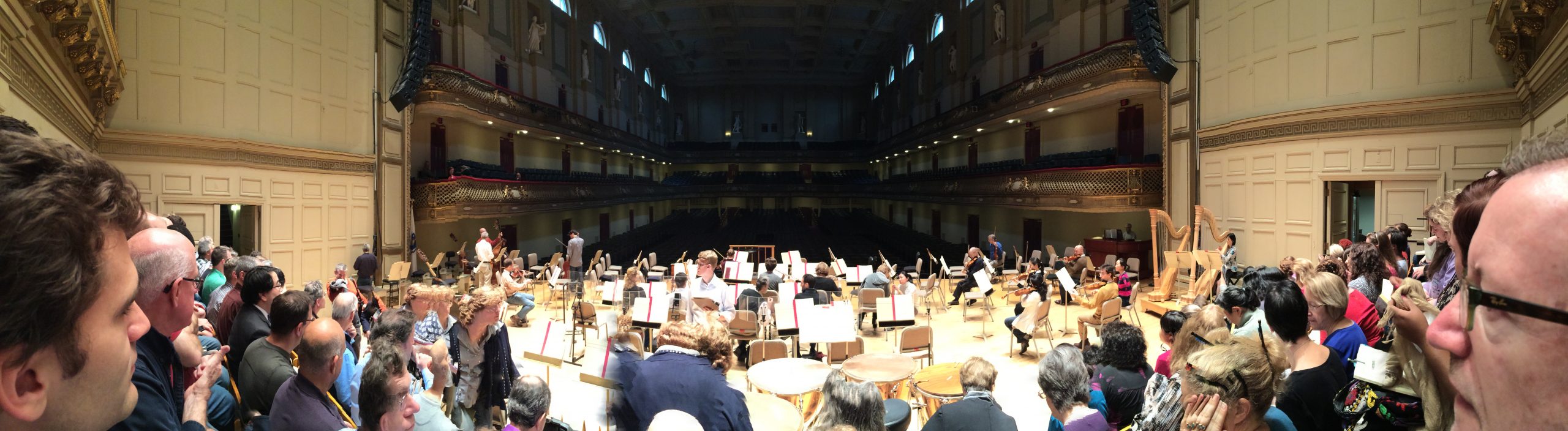
Mahler 2, Boston Symphony/Andris Nelsons, Tanglewood, July 7, 2017

Between a week-long vacation in Asheville and a residency at Tanglewood, plus the usual work and family stuff, posting on this blog has ground to a halt. But it’s not as if I haven’t been busy.

Take the Tanglewood residency, for instance. This was my third performance of Mahler’s Second Symphony with the Boston Symphony Orchestra; my first Mahler 2 was with Seiji in 2006, my second with Christoph von Dóhnanyi in Symphony Hall. This was my first performance of the work under the baton of Andris Nelsons, and my first time through the piece with James Burton, the new conductor of the TFC.

It was a pretty magnificent experience, all told. Besides the improvements to tuning, diction, and affect that I’ve come to expect with Jamie, the chorus also found its way deeper into the work than we’ve done in the past. We talked about the difference in vocal tone required in the “Bereite dich” to ensure that we were strong and assertive but not aggressive. We were more attentive to the maestro than I remember being before.

Here’s the audio of the full performance.