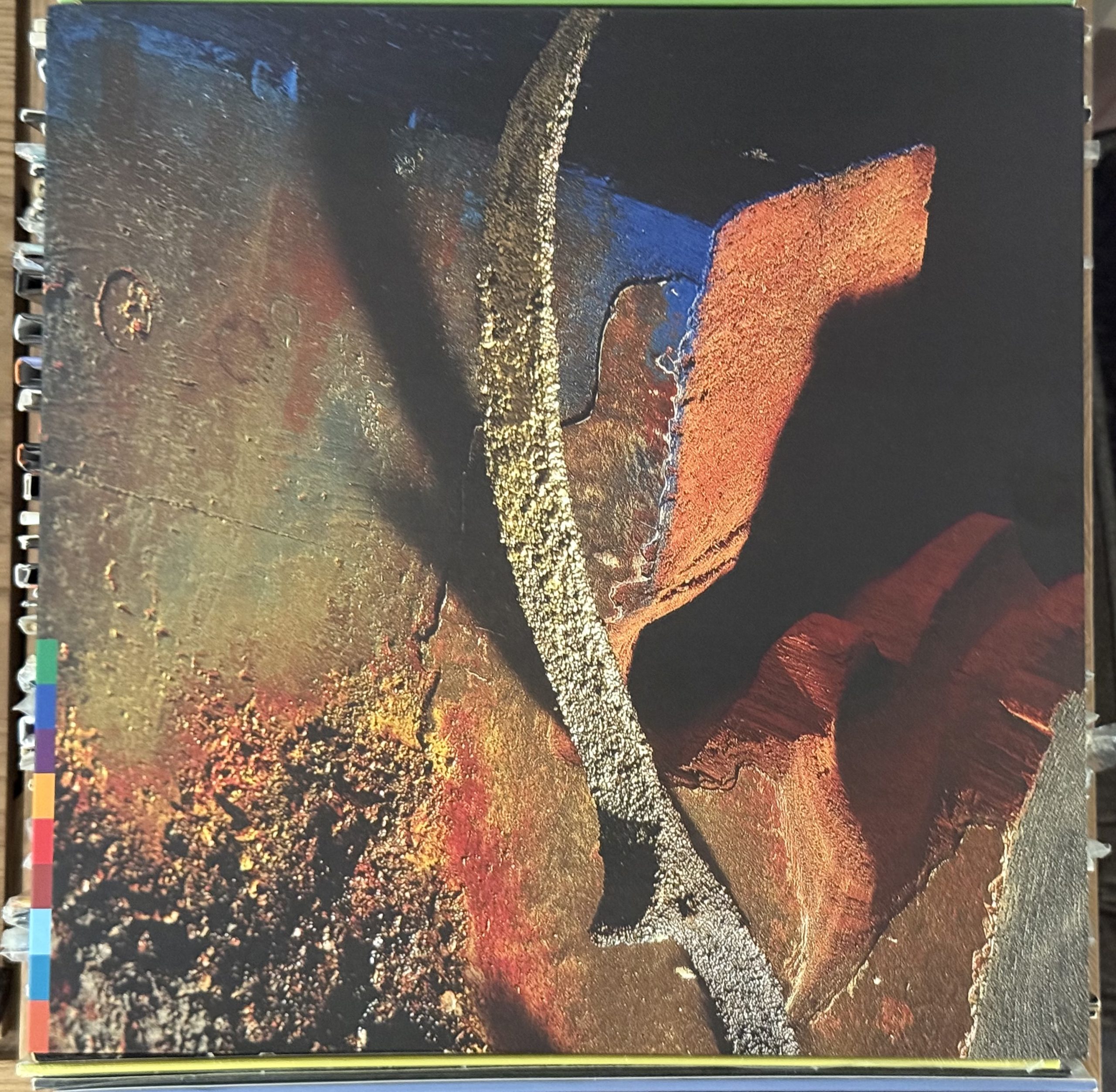
Nusrat Fateh Ali Khan, Mustt Mustt

A legendary collaboration between the great singer and ambient artist Michael Brook that gave traditional qawwali music a new beat.

Album of the Week, July 26, 2026

We’ve heard several albums by the great Pakistani singer Nusrat Fateh Ali Khan, featuring the hallmarks of the qawwali tradition: accompanied by harmonium and tabla plus a chorus, extended introductions, vocal improvisation, performances stretching anywhere from eight minutes to half an hour. We’ve also heard him in modern contexts collaborating with Peter Gabriel and others. But we haven’t heard his traditional work directly adapted for a wider Western audience. That’s where producer Michael Brook came in.

We met Brook last week, as the producer on Youssou N’Dour’s Set. But the Canadian guitarist had been in the music industry for years previously, working as an engineer at Daniel and Bob Lanois’ Grant Avenue Studio, where he worked with musical polymath Brian Eno, composer Harold Budd, and U2 guitarist The Edge, among others. It was during this period that Brook invented a kind of infinite sustain device that allowed an electric guitar to hold a continuously sustained note.1 Brook had a background in ambient music through his collaborations with Eno, Budd and Lanois, and his ideas for this collaboration with Nusrat were twofold: bring some hallmarks of modern music to Nusrat’s sound, and explore what happened if you slowed down the pace and allowed Nusrat to just explore sound rather than perform with his customary vocal pyrotechnics. At both, Mustt Mustt succeeds admirably.

Brook brought a handful of Western musicians to the session, including bassist Darryl Johnson (Neville Brothers, Lanois, Bob Dylan’s Oh Mercy), engineer David Bottrill (Peter Gabriel), and percussionist James Pinker (Dead Can Dance), but members of Nusrat’s party including Farrukh Fateh Ali Khan (harmonium) and Dildar Hussein (tabla) were there as well.

Mustt Mustt (Lost in His Work)” is a song of praise to the Sufi saints (“Upon my breath and in my intoxication is the great Qalandar…my worship and upon my breath is the great name Ali”) that is westernized with the interplay of Johnson’s bass and Brook’s guitar over the tabla and harmonium. What emerges is a mix of devotion and groove. It’s still fully recognizable as qawwali; Nusrat sets up the chorus, improvises vocally with the harmonium, unleashes strings of sangam syllables. But there’s that fat bass line throughout, interplaying with the tabla and harmonium to create something completely new. It’s also more concise than a traditional qawwali performance, thanks to Brook’s careful editing (though the liner notes indicate that Brook and Nusrat had to compromise on some of the edits so as not to affect the meaning of the traditional syllables).

Nothing Without You (Tery Bina)” starts with percussion first, then harmonium, again bringing rhythm to the traditional Qawwali forms. There’s more of Nusrat’s chorus here, and the tune is slower and more deliberate than it might be in a qawwali performance. Brook’s guitar is used to add small amounts of harmonic complexity while still keeping the song anchored in its traditional form.

Tracery” is where the ambient starts, with Brook and Johnson laying a gentle foundation upon which Nusrat builds up sound in dialog with himself just as the guitar builds up patterns on patterns in a hypnotic swirl. The liner notes observe that the form is complex, building on one cycle that has nine beats and another with eleven. Here Nusrat embraces the challenge, issuing vocal runs across the patterns. It’s a gorgeous collage of sound as Nusrat finds ways to bring more and more expressive vocal sounds into the mix.

The Game” begins with sustained guitar tones that yield to a Western rhythm courtesy of a drum machine pattern that Peter Gabriel contributed. Darryl Johnson lays down a bass line on the Moog and plays piano to build the melodic core of the backing track. Across all of this is Nusrat’s improvised vocal, combining runs of syllables with soaring vocal lines.

Taa Deem” is built from the interchange between Nusrat and his party on vocals over the harmonium, then with a complex rhythmic backing with Dildar Hussein on tabla, Michael Brook on the surdu, and James Pinker and Darryl Johnson on djembe. Brook also contributes some low searing guitar lines and the whole thing becomes a dark explosion of melodic interchange.

Brook and Johnson create a synthesized soundscape to open “Sea of Vapours,” against which Nusrat vocalizes low in his range. There’s no percussion, just multiple layers of drone. By contrast, “Fault Lines” builds from a hypnotic low vocal introduction into a rhythmic back and forth between a multitracked Nusrat and members of the party thanks to James Pinker’s percussion. There’s a wonderful bit at the end where all the percussion falls away and it’s just a gentle hint of Nusrat’s voice. “Tana Dery Na” feels like a continuation of “Fault Lines” on a simpler percussion line and with a more prominent guitar part, and with only Nusrat’s voice over the top.

Shadow” is just Nusrat and harmonium, an extended sangam improvisation. It serves as a sort of extended prelude to “Avenue,” a group live-in-studio jam with Brook’s guitar, Johnson on clay drums, Pinker on djembe joining the harmonium and tabla. The three percussionists lock in on a groove while Nusrat and Farrukh reinforce each other and the guitar adds ecstatic high notes. It fades out just as Nusrat finds a new vocal pattern to throw into the mix. Someday there’ll be an extended anniversary edition of this album that restores some of the longer bits from this session that were edited out; I’ll be first in line.

Unusually for 1990, the album ends with a remix track. “Mustt Mustt (Massive Attack Remix)” is a dub-style remix that suspends bits of the original track in reverb, heavy percussion and synthesized bass, courtesy of the legendary Bristol collective a year before they released their debut album.

No one had combined East and West in quite this way prior to the release of Mustt Mustt, and the use of tablas with western sounds became a pivotal moment for British music, opening doors for many more musicians to mix Asian inspiration with the dance floor. It also raised Nusrat’s profile even further and gave him a wider base of fans and admirers. We’ll talk about some of the folks he influenced in the future and hear more music from him. Next week, though, we’ll hear from another artist who got his first exposure to Western audiences through Gabriel’s Real World label.

You can listen to this week’s album here:

BONUS: Here’s a more traditional rendition of “Mustt Mustt” from WOMAD Yokohama in 1992. This is how I heard the work when I saw Nusrat and party perform in Washington DC in 1996:

Footnotes

  1. Brook made three Infinite Guitars: one for himself and one each for Daniel Lanois and the Edge. You’ve heard the sound of the Infinite Guitar on U2’s The Joshua Tree, including on “With or Without You.” ↩︎

Youssou N’Dour, Set

His second major label album finds the Senegalese superstar making uncompromising mbalax dance music that moves feet globally.

Album of the Week, July 18, 2026

When is a hit not a hit? In the world of the music business, having an album that tops a Billboard chart may not be enough to save you from the axe. Such was the fate of Youssou N’Dour’s contract with Virgin Records following the release of his second album for the label. Set, which sounded a note of support and positivity for the Senegalese Set-Setal movement, hit number one on the world charts but failed to generate a single that matched the performance of The Lion’s “Shakin’ the Tree.” That’s the bad news.

The good news is that in almost every way, Set is a superior album to Youssou’s major label debut. While produced by world music musician Michael Brooks (about whom more later), the musicians on the recording were almost entirely Youssou’s band, the Super Étoile de Dakar. Returning from the first album were Habib Faye on bass and keyboards, Pape Oumar Ngom on guitar, and Assane Thiam on talking drum; the rest of the band included Mbaye Dieye Faye on the sabar, Ibou Cisse on keyboards and guitar, Galass Niang on drums, and Thierno Koite and Issa Cissokho on alto and tenor saxophone. Daniel Lanois produced one track, adding a slightly more commercial note, but otherwise the album plays like music written for the streets of Dakar.

Set” starts things off with a bang, with the band delivering a guitar-led groove as Youssou sings about the desire for a clean slate, for the youth to be able to hope again. There’s a brief bridge in English: “Give me your hand, give me one chance to know what do you think for the future?” And there’s a tight horn section punctuating the final verses and the play-out. The whole thing is in and out in less than 3:50.

Alboury” is similarly tightly wound, but with the horns leading the charge this time and with shifts in meter driving the music forward. Youssou retells the story of Alboury Ndiaye, Buurba of the Jolof kingdom who led a rebellion against the French colonial powers in Senegal in the late 19th century before dying in battle against them in 1901. The music pivots from one motif to another with lightning speed, before speeding up to an epic finish.

Sabar” is a groove driven by guitar and talking drum as Youssou instructs the listener on how to dance the traditional sabar dance, which is accompanied by the sabar drum. It’s a cool little moment, a snack of a song, and you’d like to hear it go longer, but Youssou has other matters on his mind. “Toxiques” is clearly meant to be the single, with Daniel Lanois producing together with the UK DJ crew Coldcut. It’s a pointed political protest song: “Rich countries make toxic waste/Why should they send it to me?/Poor countries know toxic waste/ Why should they accept it?” There’s definitely a groove here, but one sees why the song wouldn’t get a lot of airplay in the European or American markets, unfortunately.

Sinebar” is a joyous, brisk song warning the listener about the dangers of illicit substances. I don’t know if we can trust the tone of the translation but it seems intended as humorous: “The breeze from the sea/Makes me feel hot rather than cool/I cannot even enjoy/Being with my girlfriend/And I’ve been wearing the same clothes since Sunday/Au secours, SOS.” Again interesting to hear how the musicians play against the meters laid down by the percussionists, veering from a strict 4/4 to an extended meter-blurring introduction in the keyboards to a punchy horn part. Youssou’s wordless chorus in which he sings along with the horns is infectious, and this is one where I tend to sing along regardless of my lack of knowledge of Wolof.

Medina” is a song of praise to the cradle of Islamic faith, over a gentle keyboard and percussion groove with a killer hook in the alto sax. It’s another short one, just over three minutes, and feels like a lead-in to the faster “Miyoko,” even though the latter song only runs about 20 seconds longer. The difference is in the punchy horn charts. The song is dedicated to the Japanese photographer Miyoko Akiyama, who documented Youssou’s tours of Japan and served as his business representative there. Those are her photos on the album cover and in the liner notes.

Xale (Our Young People)” puts Youssou’s vocals over the Kreisler String Orchestra, in an arrangement by Habib Faye. It shouldn’t work as well as it does, but the strings really dig into their parts, playing gnarly harmonies against the sinuous vocal melody. Youssou’s lyrics urge the young folks of Senegal to take control of their own destinies and start to contribute their own ideas for the improvement of their country.

Fenene (Another Place)” is a straightforward love song (“If you really love me/Come away with me/To a place/Where we may be at peace”) set to a jubilant arrangement. Opening with a strummed guitar chord, a brisk talking drum pattern and Youssou’s amazing vocals, the body of the song is built up with the horn section and bass locking in together on a tight groove as Youssou sings the verses above. We get to observe one of his distinctive vocal talents in action on this song, as the phrasing for each line of the verse is completely different, seemingly decided in the moment. For me, this is the one arrangement on the album that feels like it gives the right amount of time to the song; nothing feels rushed and you’re left feeling somewhat breathless when the talking drum ends.

Fakastalu (Watch Your Step)” is the closest to an American pop song on the album, what with the restrained backing synths and what is either an uncredited accordion or a very good accordion sound on the synth, as well as Youssou’s simpler singalong performance on the vocals. Were it not for the talking drum and the Wolof lyrics, we might be in an REM song, which might explain why I put this one on a mix tape back in the day (one whose anniversary is coming up; I sequenced it on July 28, 1992, preceding the song with “Simple Twist of Fate” and following it with “King of Birds”).

Hey You!” continues the general vibe of “Fakastalu” with similar instrumentation, but in service of a relative rarity: a Youssou break-up song. There’s the anguished sounding bridge: “Hey you! Hey you you! Where is Ami? / She’s no longer my girlfriend / For all I know she has found / Someone else who makes her happy.” If you don’t speak Wolof it comes across mostly as a chill out tune, with only a little extra grit in Youssou’s vocals to surface the emotional subtext.

One Day (Jaam),” by contrast, wears its emotional message of peace for the whole world, including peace between humans and animals, on its sleeve. The arrangement stacks a series of keyboards, from a slightly tinny sounding acoustic piano setting to a more convincing Hammond B3 soundalike to more 1980s synths, atop Habib Faye’s bass, insistent percussion, and horn blasts on the chorus. Youssou sings the “one day” part of the chorus in English atop a vibrant talking drum part, giving American listeners just enough of a hook to grab hold of and try to sing along with. The song comes to an end with a descending vocal line that ends with a cappella harmonies, showing off a casual virtuosity right to the finish.

As mentioned above, Youssou was dropped by Virgin Records after this album, but that was hardly the end of his career. He signed with Spike Lee’s 40 Acres and a Mule Musicworks label (an imprint of Columbia Records) and issued the great Eyes Open in 1992, followed by The Guide (Wommat) in 1994. The latter contained his greatest hit, the duet “7 Seconds” with Neneh Cherry, which hit Number One in the Europe, UK, Italy, France, Iceland, and other charts. In 2004 he released Egypt on Nonesuch Records, an album that honored and incorporated music from Mouride Sufism as a statement of solidarity with his religious background. The album was honored (he won his only Grammy award for it) and controversial: recorded in 1999, its release was delayed due to the September 11, 2001 attacks, and some Islamic listeners criticized the record for its perceived combination of Islamic and pop music. Youssou continued to record and even spent a year as Senegal’s Minister of Tourism. He’s now on his own label and showing no signs of slowing down.

We won’t hear another Youssou record, alas—aside from an unobtainable European vinyl release of The Guide, there haven’t been any subsequent album releases on vinyl. But next week we’ll hear another album that crossed over Islamic traditions and pop music, with startling results.

You can listen to this week’s album here:

BONUS: The CD version of Set featured a bonus track, “Ay Chono La”:

BONUS BONUS: A period music video for what seems to be an older version of “Alboury,” complete with soldiers on a train, an unsmiling Habib Faye, and a dance-off:

BONUS BONUS BONUS: There are a lot of longer versions of “Sabar” out there; this one, from a 1991 Earth Day performance in Tokyo, gives an idea of the dance and of some of the wildness left off the record. It’s a must-watch:

BONUS x4: Youssou is still out there performing. Here’s “Sinebar” from 2024. Youssou’s pipes are still impeccable even if his footwork is a little less fleet:

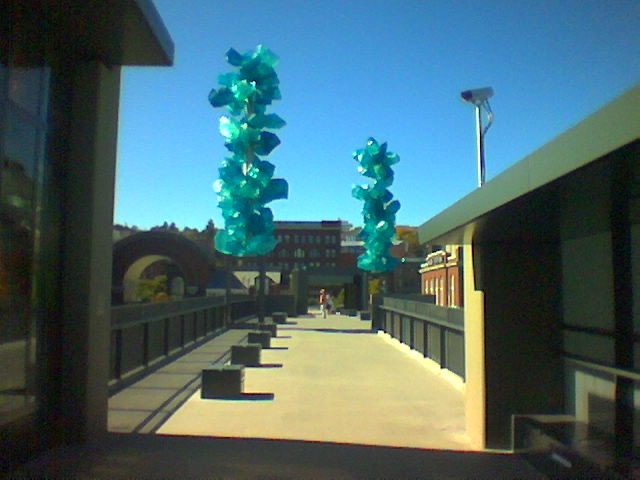
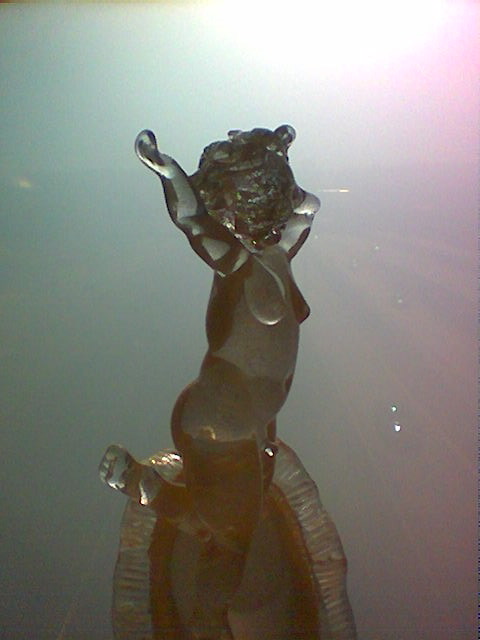
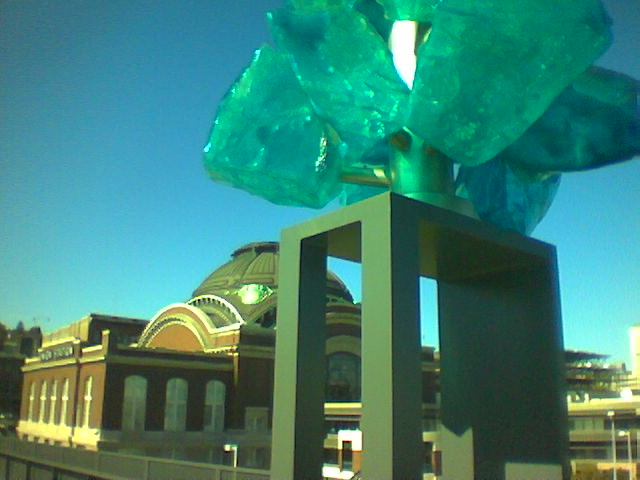
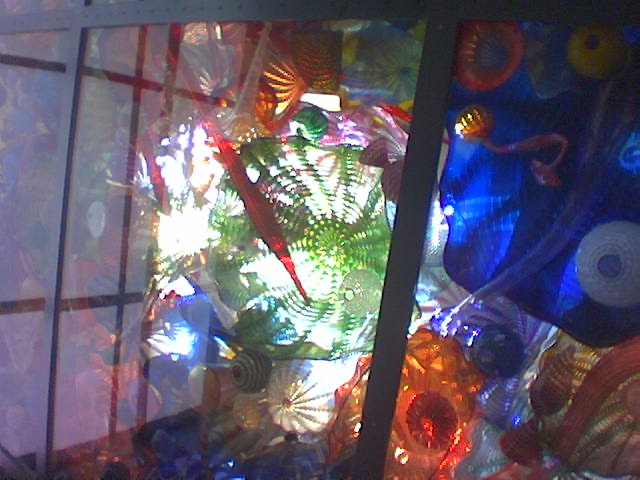
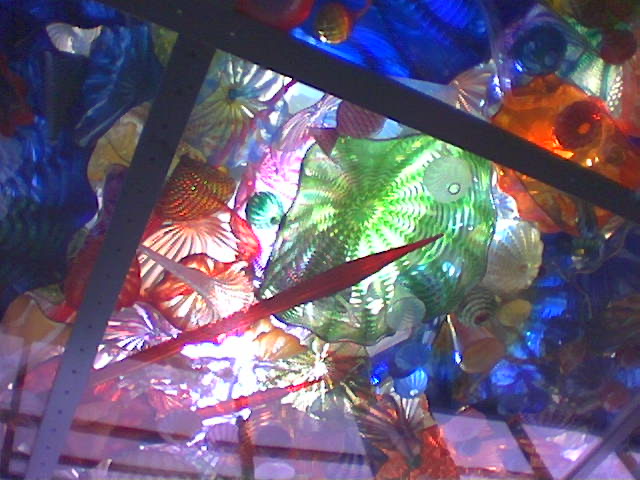
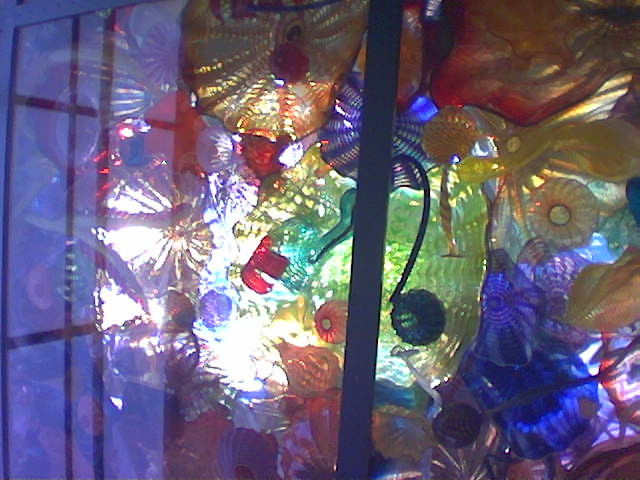
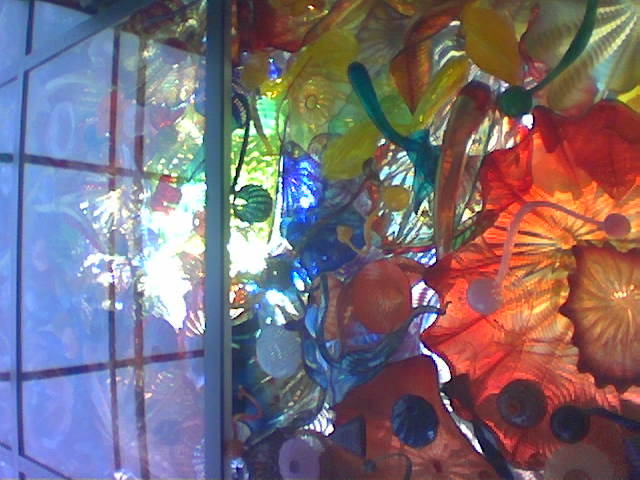
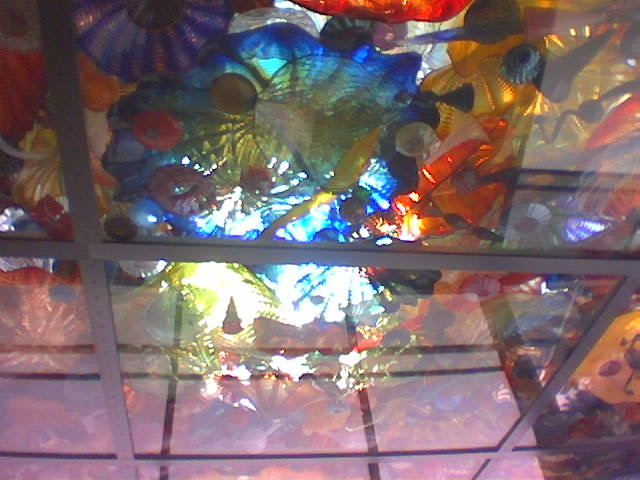
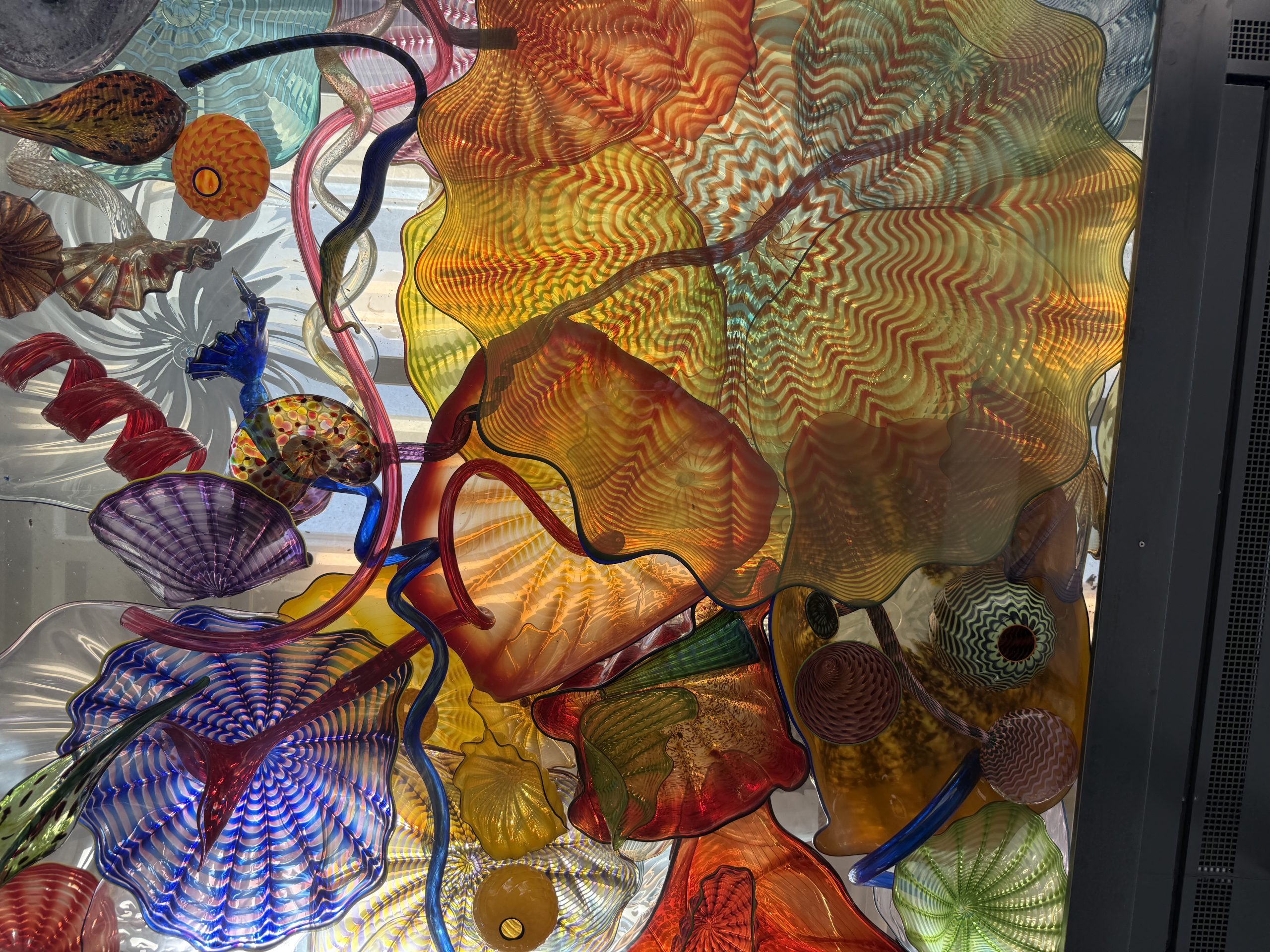
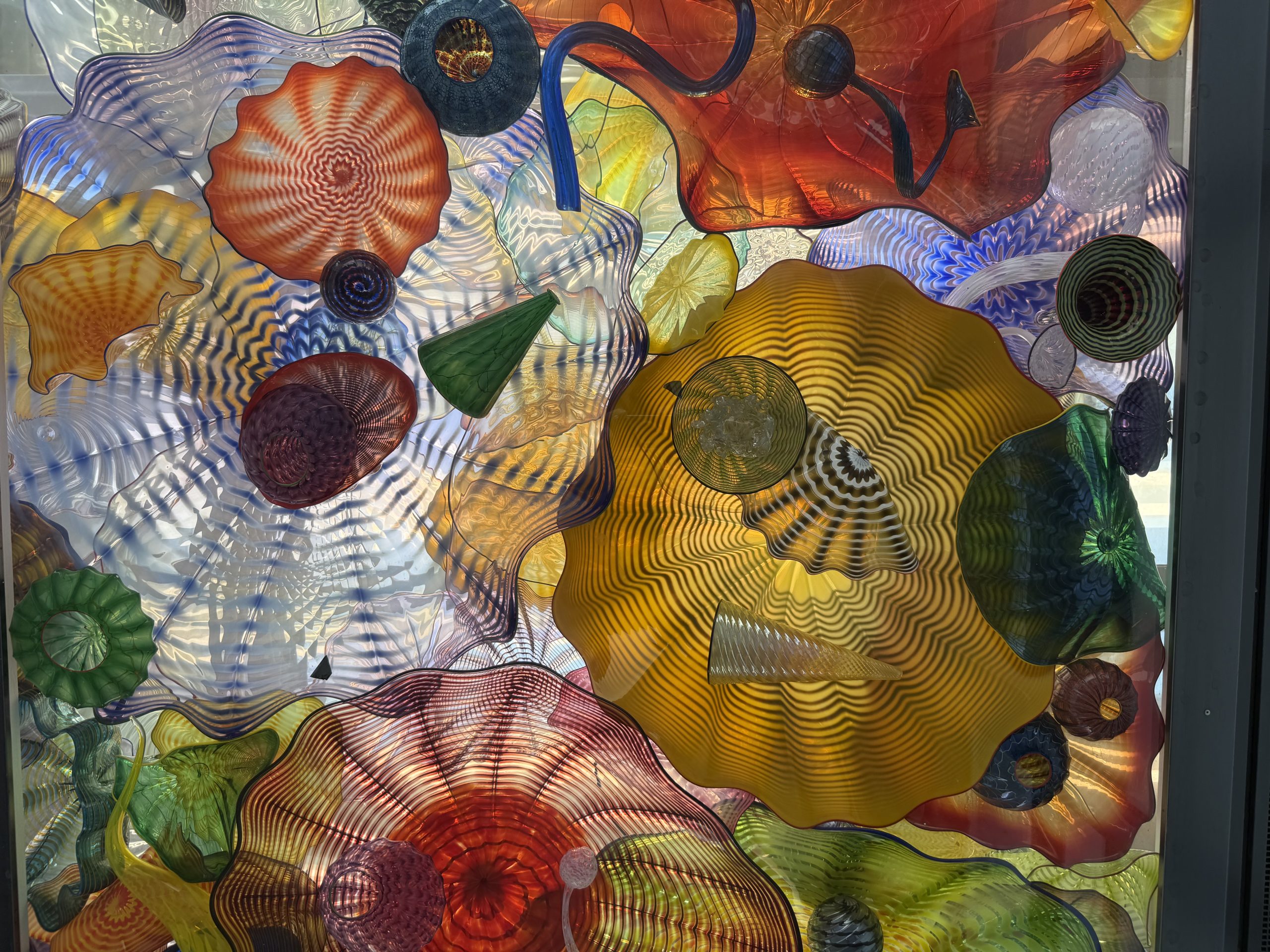
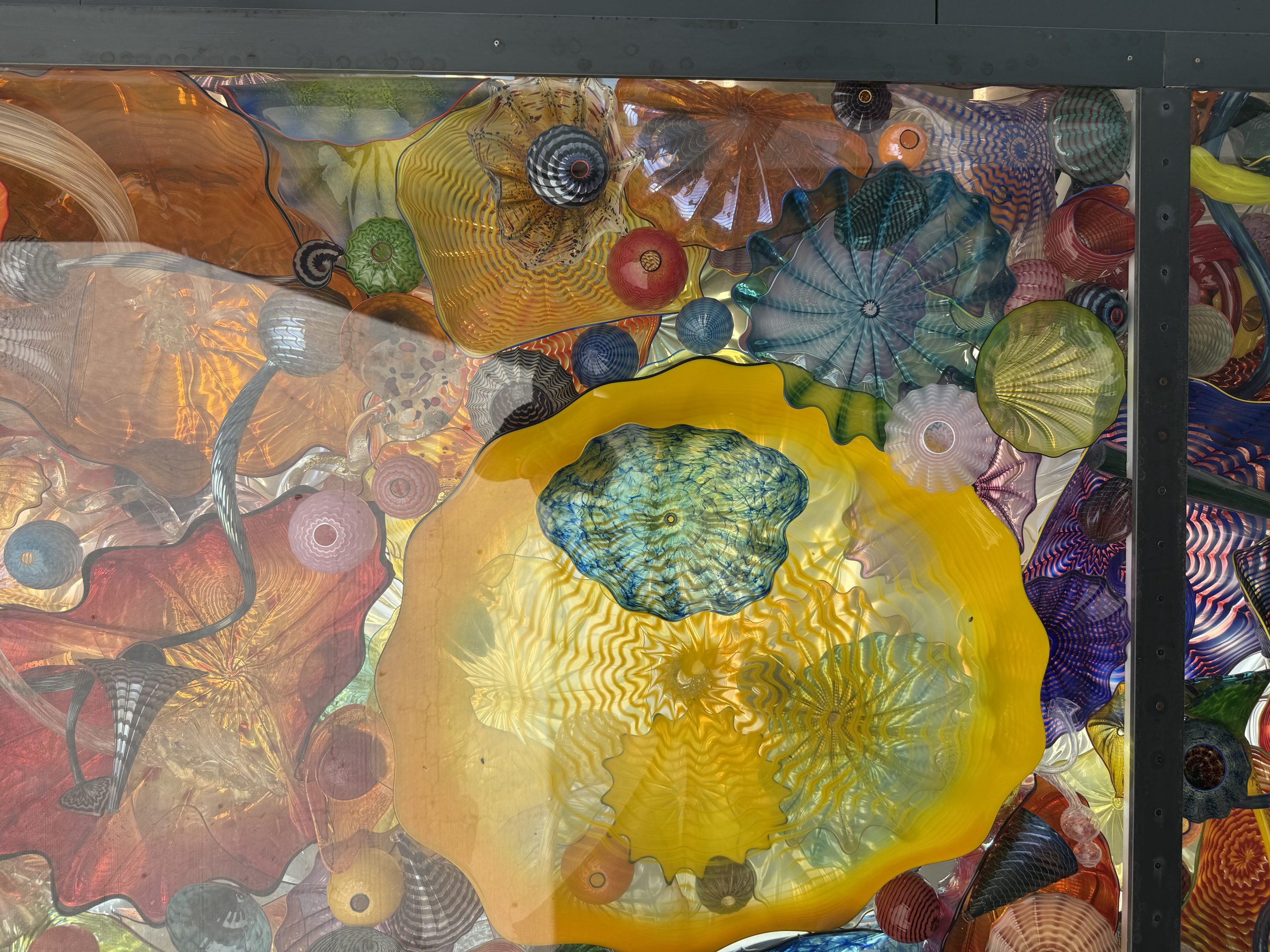
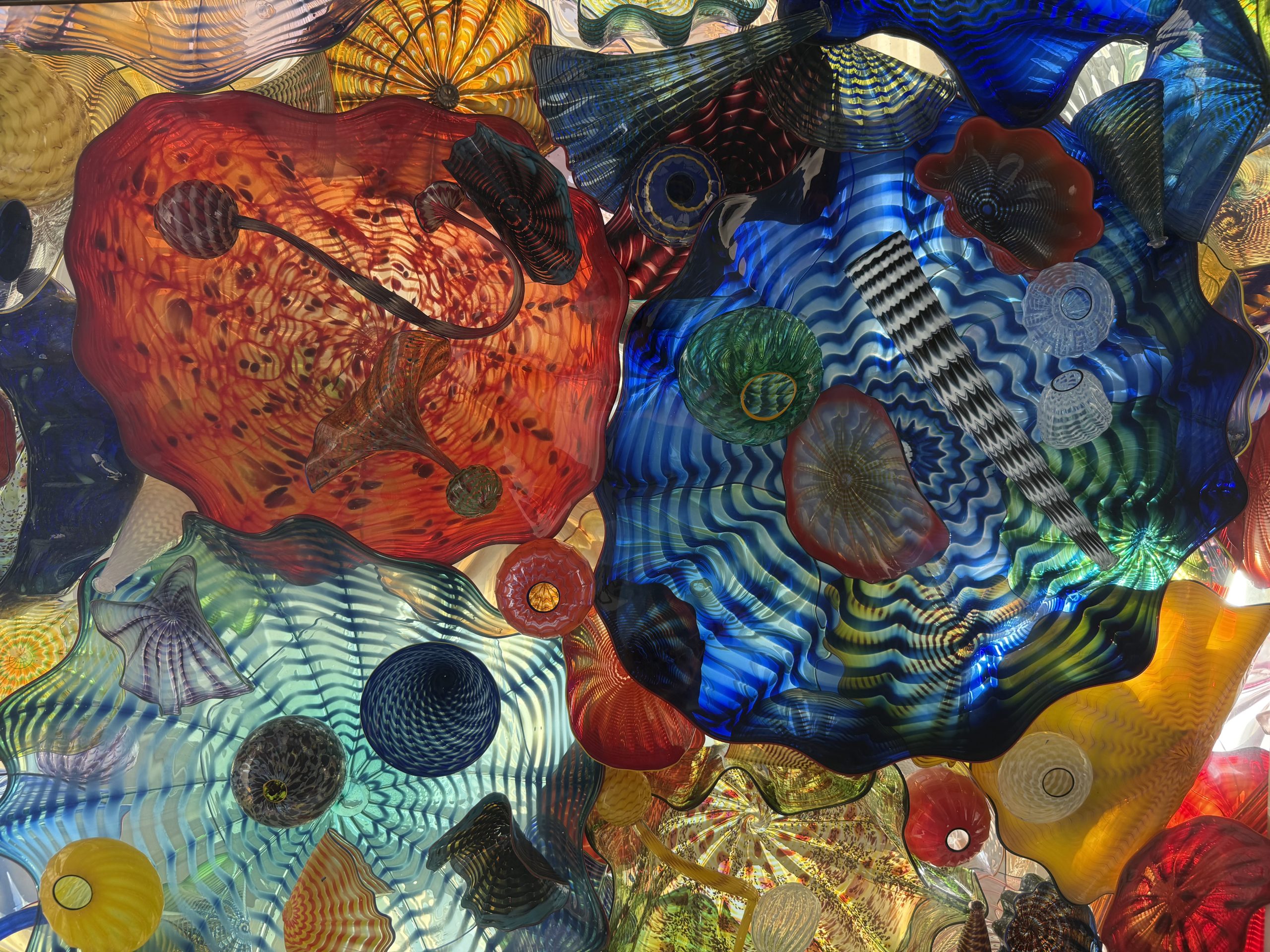
Revisiting the Museum of Glass and Bridge of Glass in Tacoma

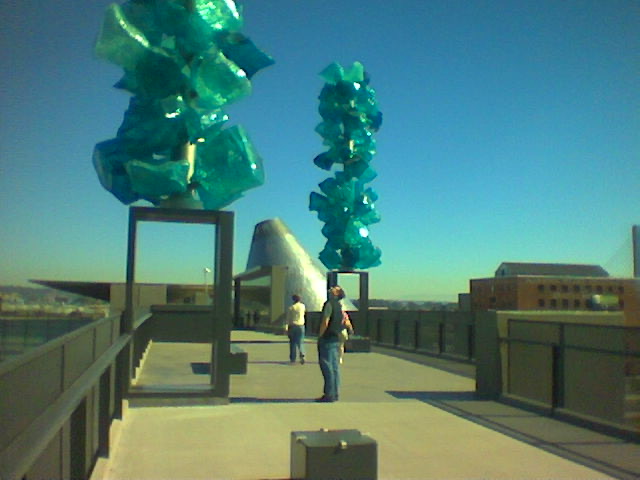
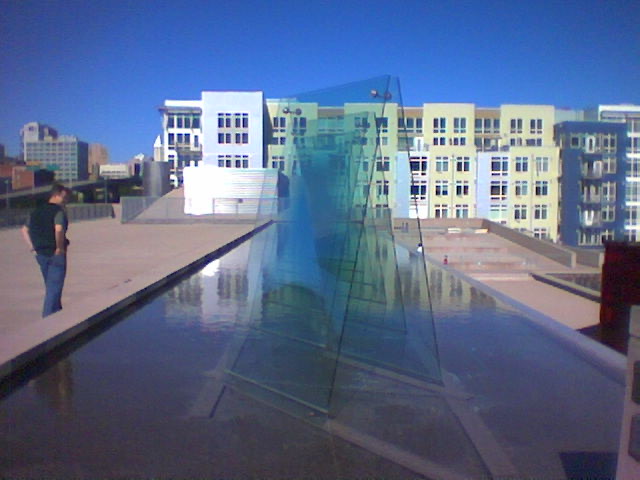
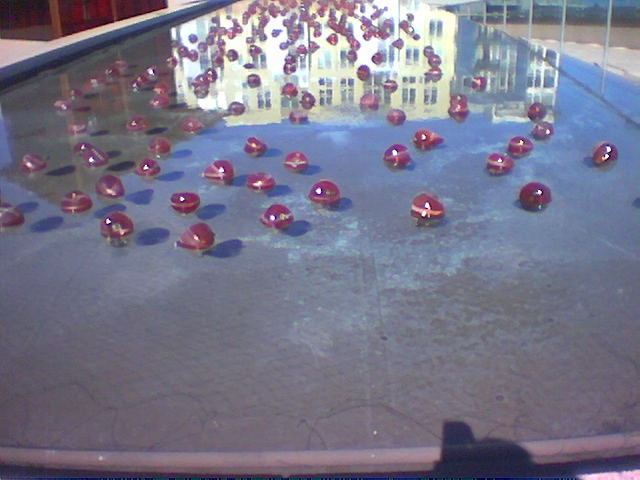
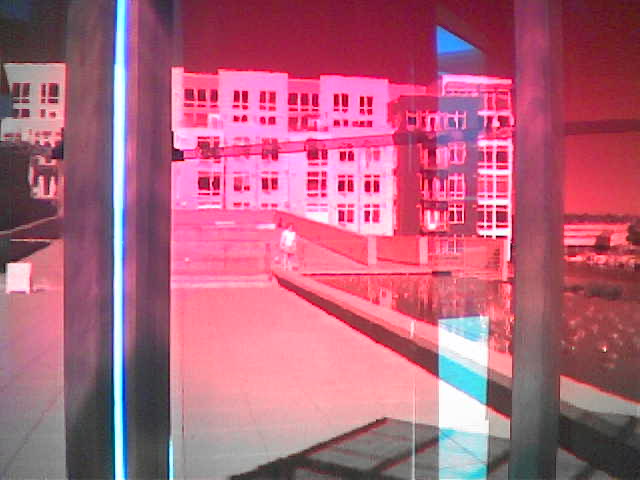
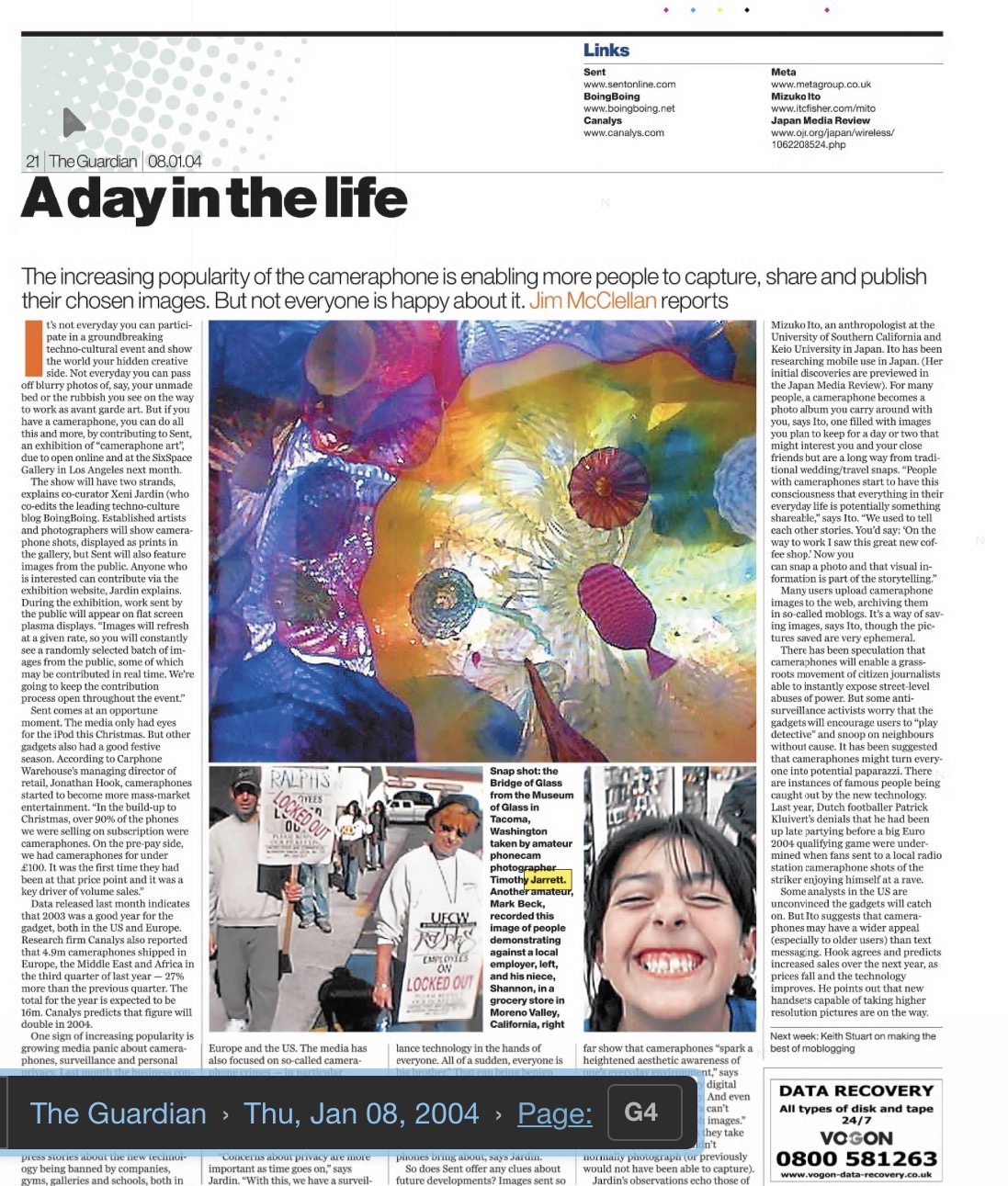
Way back in 2003 and 2004, I wrote about a trip that we took with our friends Charlie and Carie to see the Museum of Glass and pointed to the pictures we took there. That trip started a chain of events that saw me enter an NPR phoneblogging competition and one of my photos published in The Guardian.

Most of that is offline now, but with a little careful archaeology I was able to pull some of the pieces back together and also get some updated photos from our trip yesterday. Here are some of the bits and pieces.

First, the photos from that day. I used to use Mac.com to serve my photo albums before switching to Flickr. Unfortunately you can’t access any of the Mac.com content any more; fortunately it’s all in the photo albums in my Photos app, to this day. So here’s the gallery of the photos that were there.

Second, there was the SENT online exhibit of “phonecam art,” which included both a curated portion and a participatory portion (which was run by NPR). On the blog, I announced that I sent some photos from my phonecam, including ones from above. Sadly, SENT no longer exists so you can’t reload the page to see my photos alongside those from Wil Wheaton and Warren Ellis, but you can get the drift by clicking on the link above which takes you to the Internet Archive. The physical exhibit went online July 10, 2004 in Los Angeles. And my photo was selected as a winner in the NPR contest; you can see the winning photos in the archive here, and the NPR episode of “Day to Day” where they discussed my photo is still online. (My photo gets discussed at 2:40.) There was even a spread on the contest in an AT&T magazine (again, rescued by the archives).

In the middle of all of this, the Guardian wrote their article. My photo was never in the online version but Newspapers.com now has the actual print article online; see below.

My photo in the print edition of The Guardian, January 8, 2004.

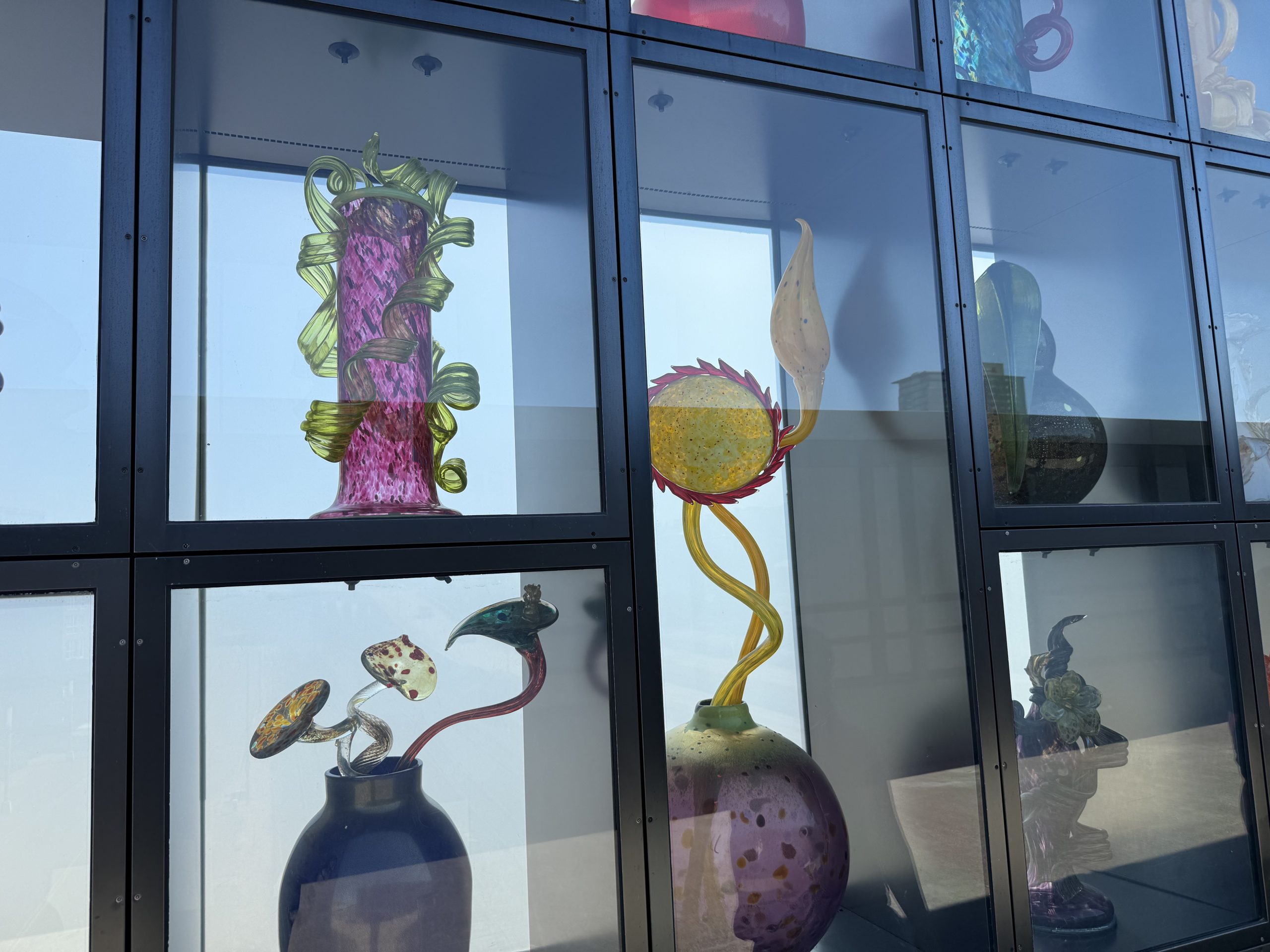
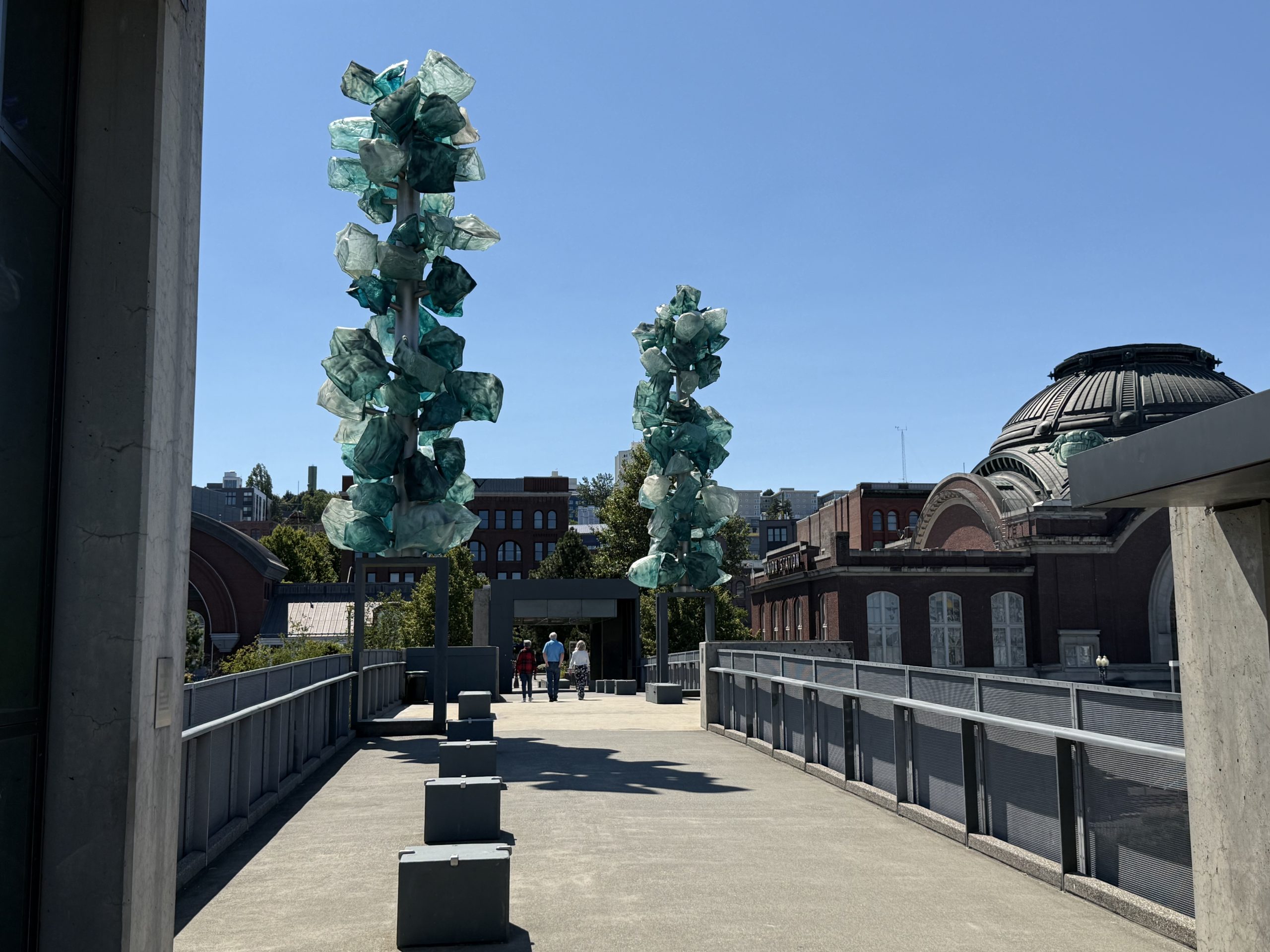
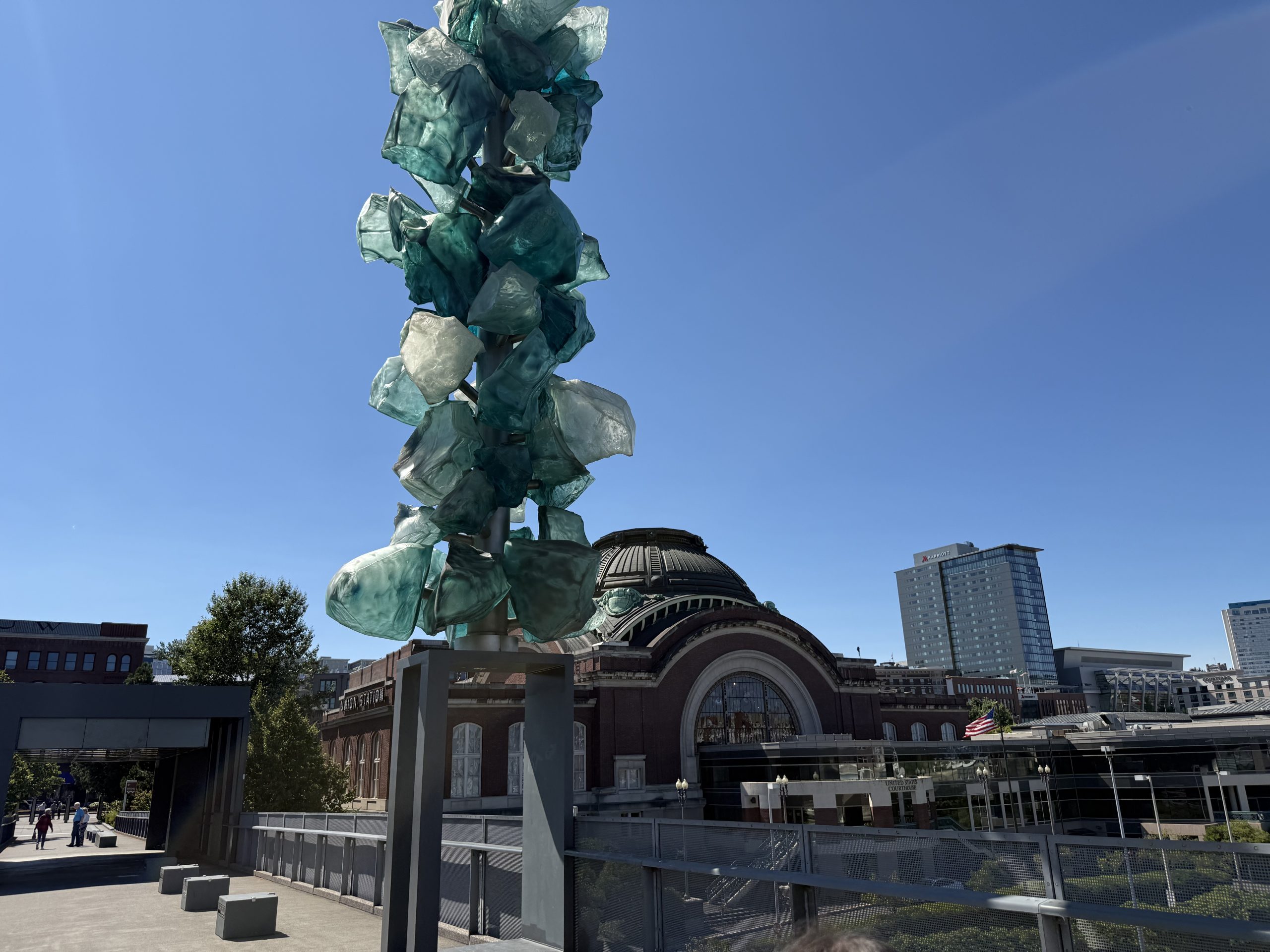
Last but not least, I retook some of the photos from that day when we visited the museum again last month. Amazing to me how the exhibit still has the same impact though the landscape around it has changed.

Laurie Anderson, Strange Angels

In which a performance artist leans into the musical side of her art and finds emotional resonance.

Album of the Week, July 11, 2026

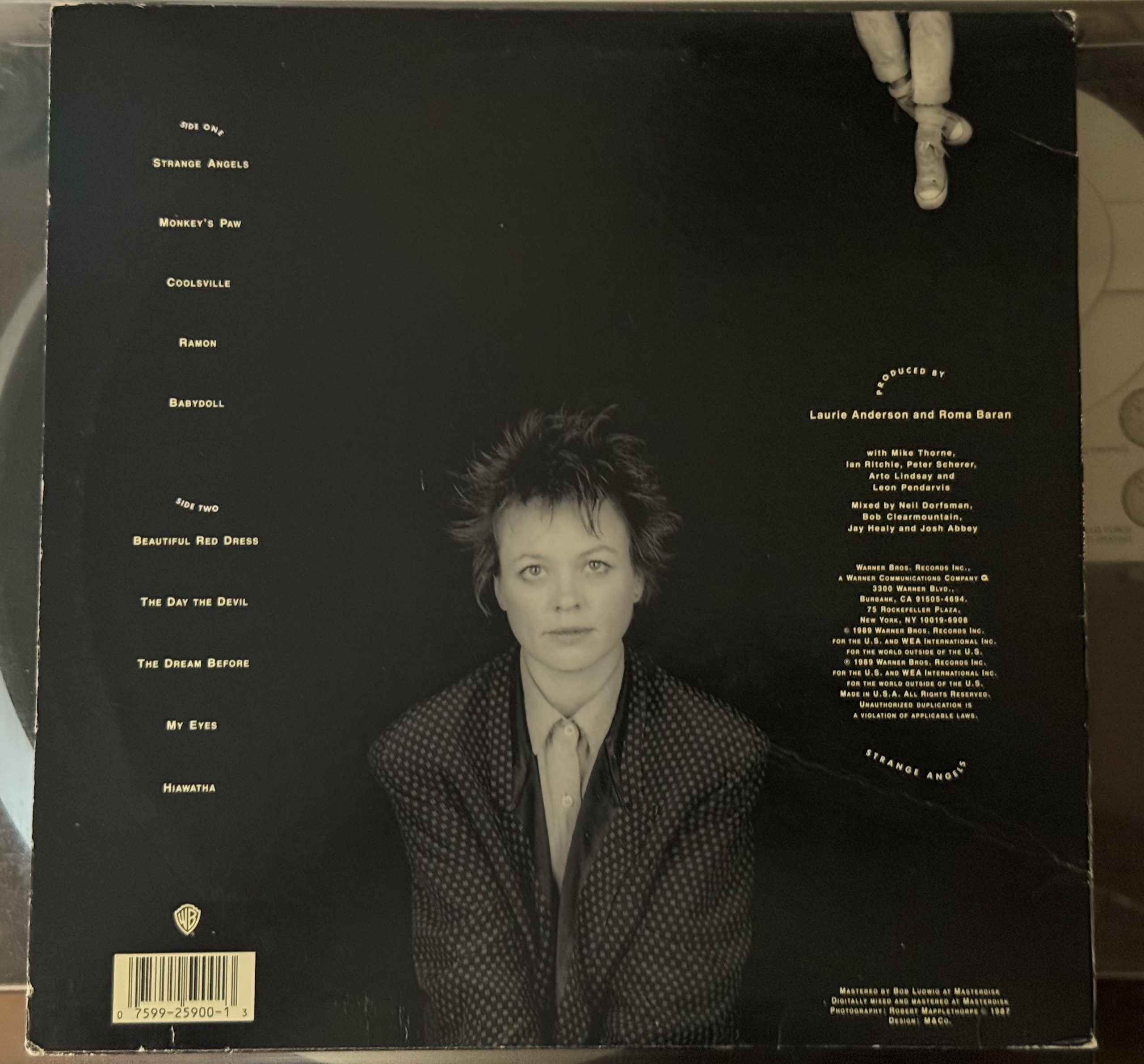
Laurie Anderson might have started the 1980s as the definitive performance artist who also happened to sing, but her last album of the decade posited her as a singer who also happened to be a performance artist. Like Kate Bush’s The Sensual World, released just a week before Strange Angels, the album centered Laurie the person in an emotional space that she had never really occupied, showing her with fewer electronic tricks and more heartfelt songwriting in an album adorned by a stunningly intimate cover portrait.

That cover was taken by famed photographer Robert Mapplethorpe, who near the beginning of his career had captured the great Patti Smith for her first album Horses. In the earlier photo he portrayed someone both confrontational and delicate in a way that played with gender conventions. Here, near the end of his life (Mapplethorpe died several months before the album’s release, of AIDS), he imbued Anderson, previously careful to present herself through a sort of hip androgyny, with a sort of uncanny beauty, presenting her in a way that was still undeniably artistic and avant-garde but somehow unavoidably feminine.

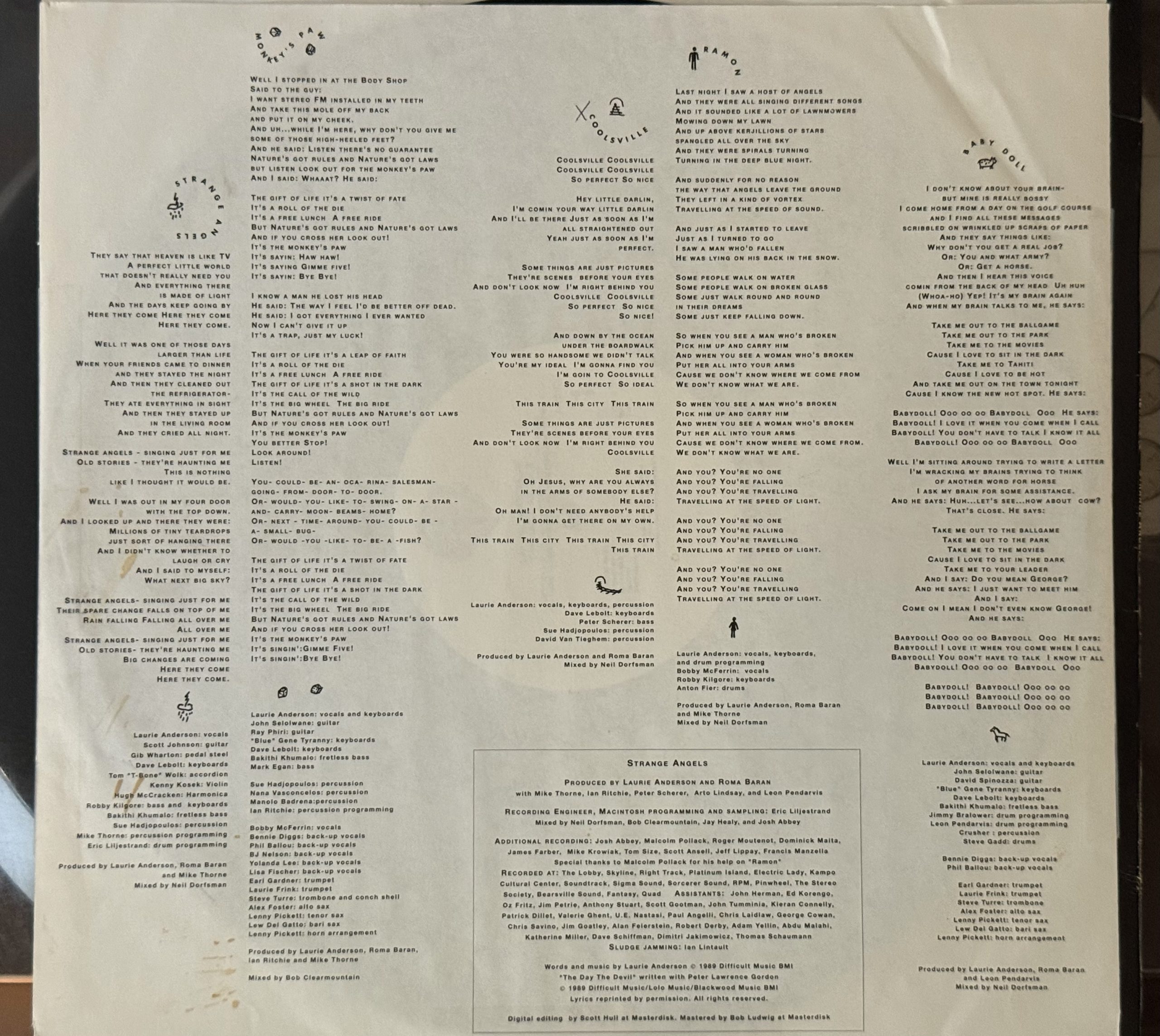
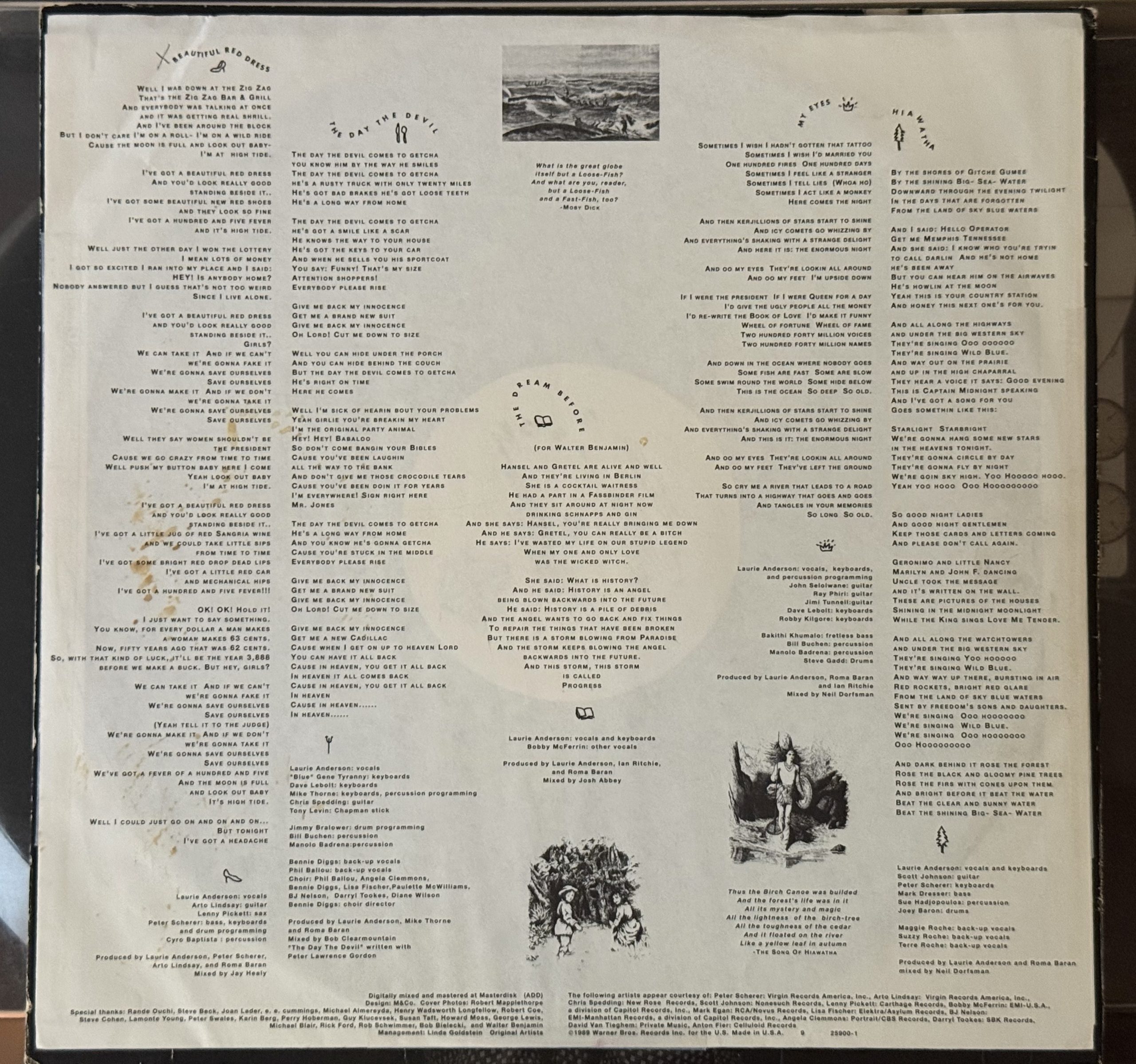
The cover photo was a good metaphor for the music contained inside, as an artist who had previously relied on an electronic pitch-shifter to give her “The Voice of Authority” now leveraged a new voice, an unexpectedly clear and beautiful soprano. She has told a story about realizing that a song needed to be actually sung instead of talked, going to take voice lessons, and discovering that voice had been waiting for her the whole time. And while there are certainly familiar collaborators, including producer Roma Baran and percussionist David Van Tieghem, most of the musicians on the record are most familiar for having collaborated with someone else: the Golden Palominos’ Anton Fier; trumpeter Earl Gardner, trombonist Steve Turre, drum programmer Leon Pendarvis (Janice’s husband) and accordionist Tom “T-Bone” Wolk from the Saturday Night Live band; session drummer Steve Gadd (“50 Ways to Leave Your Lover”); Tony Levin; guitarist Ray Phiri and bassist Bakithi Kumalo (Graceland); minimalist tape loop composer Scott Johnson; bassist Mark Dresser (Anthony Braxton); drummer Joey Baron and percussionist Cyro Baptista (John Zorn); and a host of well-known voices lending backing vocals including Meat Loaf, Bobby McFerrin, outsider artists The Roches, and Lisa Fischer (Rolling Stones, Luther Vandross).

Strange Angels” begins as a classic Laurie Anderson lyric: “They say that heaven is like TV,/A perfect little world/That doesn’t really need you.” But it’s sung, not wryly spoken, and the combination of instruments that joins as she intones “here they come” – guitar, accordion, bass, crisp percussion – tells us we are in for a different sort of experience. I always loved the lyric that leads off the second verse: “Well it was one of those days / Larger than life / When your friends came to dinner /And they stayed they night/ And then they cleaned out the refrigerator / They ate everything in sight / And then they stayed up in the living room / And they cried all night.” Possibly I feel this way because the first time I heard the album was in the living room of a Mount Holyoke choir member, where I was crashing overnight on the floor while we were on tour. I don’t make friends easily but that night we stayed up until two, and would have cleaned out the refrigerator had there been one. (Some of these reviews are not impartial.) Perhaps, though, I like the tune so much because, as the chords swing from major to minor, the band creates an undercurrent of melancholy underneath the main story, and we understand that we’re looking backwards at a visitation from the angels that can never occur again.

The Monkey’s Paw” is a different thing, a fable about not messing with Mother Nature in the form of a song. The setup—Laurie going to a retail establishment and requesting modifications—is not particularly novel, but the salesman pushing back on her warning of the unintended consequences is: “Please. There’s no guarantee. Cause nature’s got rules, and nature’s got laws, and if you cross her look out — it’s the monkey’s paw.” The musical track is light, thanks to Ray Phiri and Bakithi Kumalo, and the gorgeous falsetto vocalise of Bobby McFerrin.

Coolsville” is a song built over an effect, a delayed reverb circuit providing a sort of call and response effect behind Laurie’s vocals. That’s the gimmick, and on the initial listen when she intones “Coolsville” into this thing it can be overwhelming. But the song itself, with its longing for perfection that doesn’t exist, is somehow deeply moving nevertheless.

That brings us to “Ramon,” which for me is the emotional center of the album. Opening with a deceptive drum pattern that always makes me think the beat is dislocated by half a measure, Laurie is back to clouds of angels: “Last night I saw a host of angels, and they were all singing different songs/And they sounded like a lot of lawnmowers/Mowing down my lawn/And up above kerjillions of stars spangled all over the sky…” But the visitation of angels leaves us and there’s a man fallen on his back in the snow. Laurie’s verse centers this man in the broader cosmos: “some people walk on water/some people walk on broken glass/some just walk round and round in their dreams/some just keep falling down.” There’s something deeply human, almost a humanist form of Christian ethics, in these lyrics: regardless of which kind of person you’re dealing with, when you see a man who’s broken, pick him up and carry him! To put this into context, this was coming at the end of an eight year period where the culture had encouraged a kind of spiritual self-centeredness, amid the rise of televangelism and the rapid removal of societal support for the homeless, as well as at the end of a period where the Reagan administration’s refusal to do anything about the AIDS crisis had meant the loss of tens of thousands of people, with the population of artists in New York with whom Anderson collaborated (including Mapplethorpe) hit especially hard. So for me, hearing these lyrics against this context, it came as a sort of moral call to arms. For Anderson, this isn’t an explicitly Christian moment, more a humanist one, since we are all in this together: “We don’t know where we come from/We don’t know what we are.”

The first side closes out with “Babydoll,” which is for me one of the songs on the album that would have done better as spoken word. The concept, about a brain that stops functioning on behalf of its owner because it wants to have fun, is pretty good, and the music is rich, but they somehow don’t seem to reinforce each other. Still the song is worth it for its extremely 1989 moment, in which the brain says, “Take me to your leader/And I say: do you mean … George?”

Beautiful Red Dress” flips the tropes of women’s roles (shrill, decorative, emotionally unstable, dependence) on their heads, starting from the first chorus: “I’ve got a beautiful red dress/And you’d look really good/Standing beside it…” Lenny Pickett gets to play some spectacular 1980s saxophone all over the track, and there’s a great moment in which Laurie quiets the track down with the observation, “You know, for every dollar a man makes, a woman makes 63 cents. Now, fifty years ago, that was 62 cents. So, with that kind of luck, it’ll be the year 3,888 before we make — a buck.”

The Day the Devil” flips the script on blaming external forces for your problems, with the devil being blamed for knowing you inside out before sneering, “Don’t come banging your Bibles/Cause you’ve been laughing all the way to the bank.” It’s not, to my hearing, entirely coherent, but the gospel chorus covers a multitude of sins in this song for me: “Give me back my innocence… ‘Cause when I get on up to heaven Lord/You can have it all back.”

The other emotional center for me comes next. “The Dream Before” is an unvarnished story of dashed hopes and unhappy outcomes. Hansel says, “I’ve wasted my life on our stupid legend/When my one and only love was the wicked witch.” The second half of the brief functions as sort of an ultimate Zen koan, with Anderson and Bobby McFerrin laying down some high-grade philosophy: “History is an angel being blown backwards into the future… and the angel wants to go back and fix things, to repair the things that have been broken, but there is a storm blowing from Paradise … and this storm, this storm, is called Progress.” Really listening to this as an about-to-graduate college student did something to the wiring of my brain. (I centered this song on a mix tape in 1993.)

My Eyes” is somehow the perfect blend of Laurie’s tart observations and her new musical fluency, all the more so because there’s no pat moral or punchline. She confronts the enormous night, the kerjillions of stars, the “ocean, so deep, so old,” and simply exists in it: “Everything’s shaking in strange delight.” The track is underpinned by that spectacular one-two combo of Bakithi Khumalo’s fretless bass and Ray Phiri’s guitar.

The album ends with a valediction for the departed in “Hiawatha,” as Laurie invokes the spirits of Elvis, JFK, and Marilyn Monroe to welcome newly departed souls: “Well, starlight, starbright, we’re going to hang some new stars in the sky tonight.” The combination of Scott Johnson’s guitar and the understated backing vocals of the Roches turns the overall effect into a simultaneous groove and valediction.

Laurie’s experiment with leaning more fully into the musical side of her art was well received by the critics, with Robert Christgau giving the album an A. After the album it took a while for her to find her next voice, but find it she did after about five years, and we’ll hear that sound another time. Next week, though, we’ll swerve back over into what was being called “world music” to hear the next album from one of Peter Gabriel’s other collaborators.

You can listen to this week’s album here:

BONUS: Here’s Laurie performing “Strange Angels” live in San Remo in 2001, during an award ceremony in which she was awarded the Premio Tenco for songwriting:

BONUS BONUS: “Strange Angels” soundtracks a moving moment in the William Hurt/Elizabeth Perkins 1991 film The Doctor, in which the characters, playing cancer patients, embrace a moment of grace:

BONUS BONUS BONUS: Laurie originally didn’t pursue the traditional music video route to promote the album, instead opting to produce a series of short videos, called “Personal Service Announcements,” in which she did her version of stand-up comedy. A few of these have surfaced over the years, including these:

Declarations

For me, the American Bicentennial celebrations in 1776 came and went without leaving much of an impact. I was not yet four years old, so am unsure of what I do remember, though certain impressions (crowds, heat, loud sounds) persist. I do remember the atmosphere of the year: lots of red, white, and blue kitsch. A resurgence in Holly Hobbyized “Colonial” fashion. Wrought iron plaques on garage doors and the siding of split level ranches, indicating the inhabitants’ connection to the Colonial era.

What I remember happened five years later, during the celebration of the Yorktown Bicentennial, celebrating the final battle of the Revolutionary War and the surrender by General Cornwallis to the American forces. We visited during that four day period when the crowds of adults weren’t there, as part of a crowd of schoolchildren bussed in on massive field trips. In early October in Tidewater it was still hot; the grass of the field was scratchy; and the event struck the right balance between celebration and sober reflection—the latter mostly at how big the battlefield was and how far we had to walk.

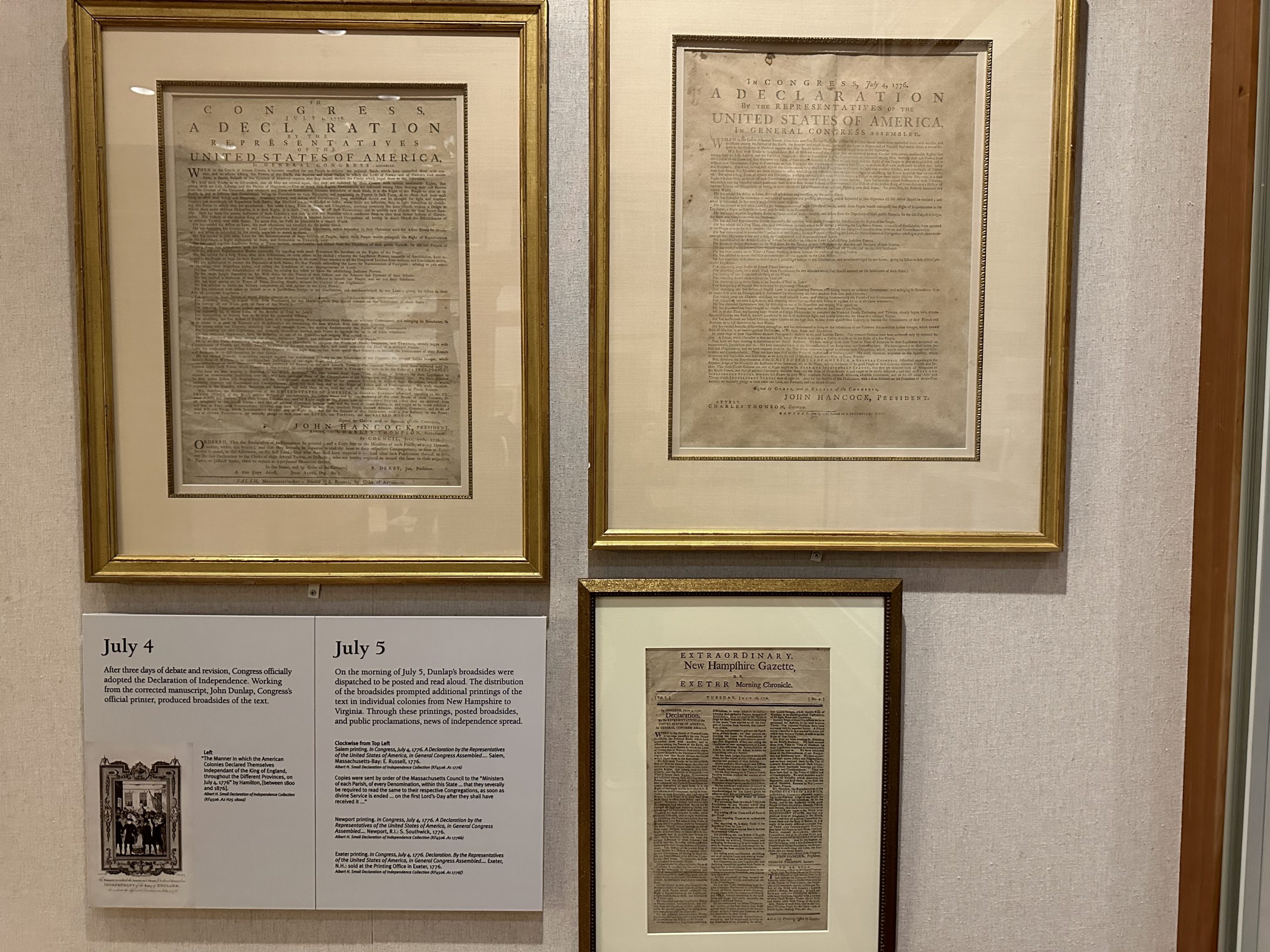
I feel the same about the Declaration of Independence that was announced on July 4. We all remember the engrossed copy, but the one we remember is an 1820s facsimile of an original that was then already fading, now almost completely illegible. But the versions the country first saw were like the ones in the photo above: printed hastily by John Dunlap in Philadelphia and distributed throughout the 13 colonies, who then went on to print their own versions to spread the news far and wide. (Albert Small collected these and other copies of the Declaration; the photo above is from the Small Special Collections Library at the University of Virginia.) Our country’s birth was announced by mass media and by word of mouth, and we remember the fancy souvenirs rather than the original announcement.

Thomas Jefferson to John Adams, September 12, 1821

We seek consolation in these moments from the past, and also inspiration. Last year I quoted Jefferson’s letters: “The flames kindled on the Fourth of July…” and “The spirit of 1776 is not dead.” This year I think of another quote (coincidentally also used in the Testament of Freedom): “I shall not die without a hope that light and liberty are on a steady advance.” Of a potential eclipse of reason in Europe, he also wrote, “even should the clouds of barbarism and despotism again obscure the science & liberties of Europe, this country remains to preserve and restore light and liberty to them.” Here’s hoping it goes both ways.

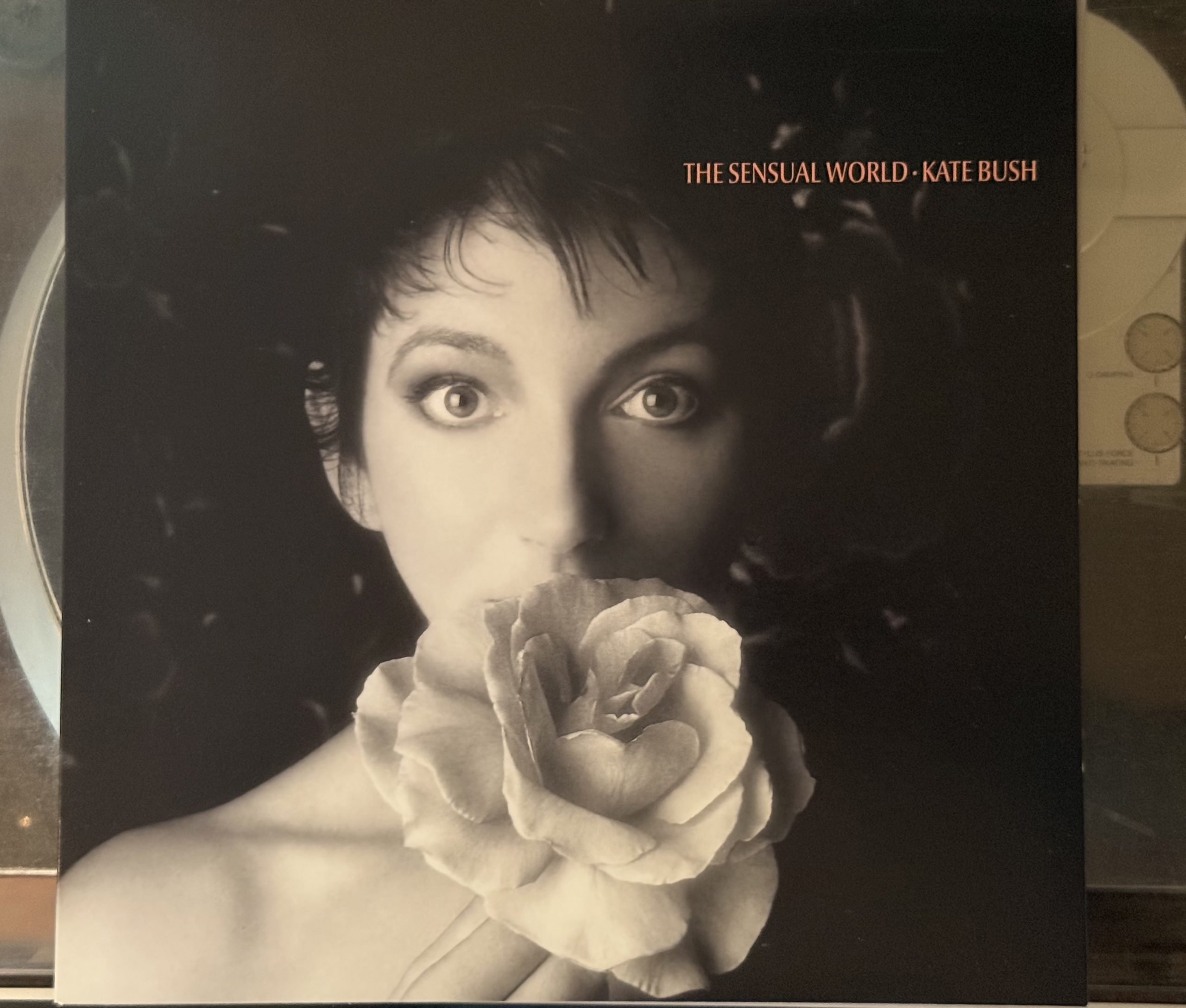
Kate Bush, The Sensual World

Kate reaches a deeper emotional resonance on the sequel to Hounds of Love, with help from an unlikely cast of collaborators.

Album of the Week, July 4, 2026

Though Kate Bush wasn’t touring (she legendarily eschewed live performances aside from the occasional TV appearance from the conclusion of her 1979 “Tour of Life” for the next 35 years), she was keeping busy following the one-two hit of Hounds of Love and her appearance on Peter Gabriel’s So. She released her first greatest hits collection, The Whole Story, in 1986, featuring a re-recorded version of “Wuthering Heights” and a new single, “Experiment IV.” Though she was quiet in her official releases, she recorded the original version of “This Woman’s Work” for the 1988 John Hughes romantic comedy She’s Having a Baby while in the studio, off and on, working on her next album. It was finally released on October 16, 1989, having gestated in studio session stretching from September 1987 to July 1989.

In addition to some of her stalwart musicians like Del Palmer, her brother Paddy Bush, Alan Murphy (who died three days after the album’s release), bassist Eberhard Weber, and Pink Floyd guitarist David Gilmore, there were some notable additional musicians who lent the album a unique color. These included Uilleann pipes from Irish musician Davy Spillane (Moving Hearts), bassist Mick Karn (Japan), orchestral arrangements from Michael Kamen, the Balanescu Quartet performing string quartet arrangements by Michael Nyman, and most of all the Bulgarian vocal ensemble Trio Bulgarka.

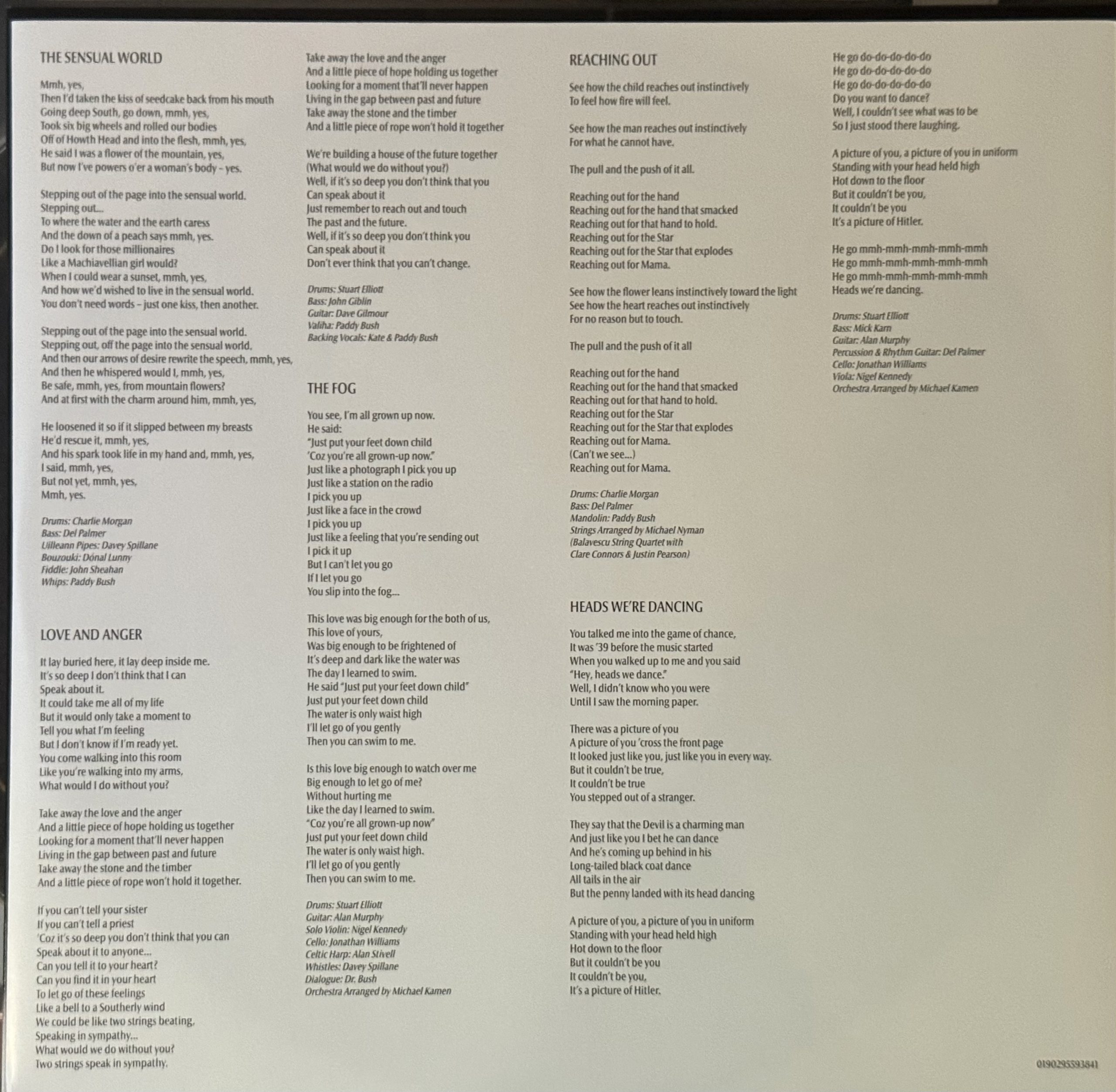
We begin with the title track, which is a song that almost didn’t happen. “The Sensual World” was originally Kate’s take on Molly Bloom’s famous interior monologue from James Joyce’s Ulysses, and actually set text from the novel, until the estate complained and she was forced to write new words to the track. (In 2011 on her album Director’s Cut, on which she re-recorded many of the tracks from this album and her follow-up, she was able with permission from the estate to present the original version of the track, now titled “Flower of the Mountain.”) The song itself leans into its title, with Bush using both her broadening lower range and a breathily erotic tone over a rich sonic tapestry that includes church bells, fiddle, bouzouki, whips(!), and Spillane’s brilliant Uilleann pipes. Through it all she presents a vision of a heroine experiencing the sensations of being in the physical world for the first time, stepping off the page to experience sensations and, especially, pleasure. The setting is typically brilliant for Kate; this character, formerly trapped in the two dimensional world of the book, expresses herself almost entirely on a single tone throughout the verse, only varying in pitch when rising to an earthy blues note on the repeated blue note of “ooh, yes” and in the chorus. It’s a bewitching, nearly hypnotic effect. I’ve been known to listen to it on repeat from time to time.

Love and Anger” is another magnificent Kate uptempo song, with high energy courtesy the tight rhythm section of Stuart Elliott on drums and John Giblin on bass, a soulful piano line, backing vocals from the Trio Bulgarka (a Bulgarian folk group who had performed on the pivotal 1970s albums Les Mystère des Voix Bulgares, Volume Two and on Balkana: the Music of Bulgaria) and a wicked guitar line from Pink Floyd’s David Gilmour.1 It’s all in service of a movingly mature lyric about a relationship on the rocks due to the inability of the participants to communicate about where their emotional millstones lie. The track also features one of my all-time favorite hummed parts in any song. Again, Track 2 on Kate albums is where she puts the bangers.

The Fog,” by contrast, is a return to the world of The Ninth Wave, in which the narrator fears dissolution and loss of identity as she contemplates stepping away from her family (Kate’s father Dr. Robert Bush speaks on this track) into the water, which seems life threatening but is only waist deep. In the song, there is a deep ambivalence about the water: is it the unknown? Is it the deep and somehow threatening love of another, one who threatens to disappear, to slip into the fog? The lyrics are vulnerable and beautiful, and are given an exquisite string instrumental with enfant terrible violinist Nigel Kennedy and a taut guitar solo from Alan Murphy.

Reaching Out” is a tenderly maternal ballad, with added emotional heft from the choral accompaniment by the Trio Bulgarka and strings arranged by composer Michael Nyman and performed by the Balanescu Quartet. (In my symphonic performance experience, we call that “luxury casting.”) Kate’s vocals on the soaring chorus are magnificent, though the verses are a bit wooly —“See how the child reaches out instinctively/to feel how fire will feel” invokes a different reaction in me than what she presumably intended.

Heads We’re Dancing” is something entirely different. Driven by a propulsive synth line, and a shaggy dog story about a woman in 1939 who is asked by a stranger to dance, and who realizes in the morning that she was dancing with Adolf Hitler. The whole thing is a brilliant excuse for more Alan Murphy, some brilliant bass from Japan’s Mick Karn, and one of the all-time great “doo doo doo” choruses. Indeed, with each song on the first side, Kate seems to lean further into a sexily minimalist groove. (The darkly chromatic string parts, by the way, are arranged by Michael Kamen, who was by now almost a decade into his film-score career.)

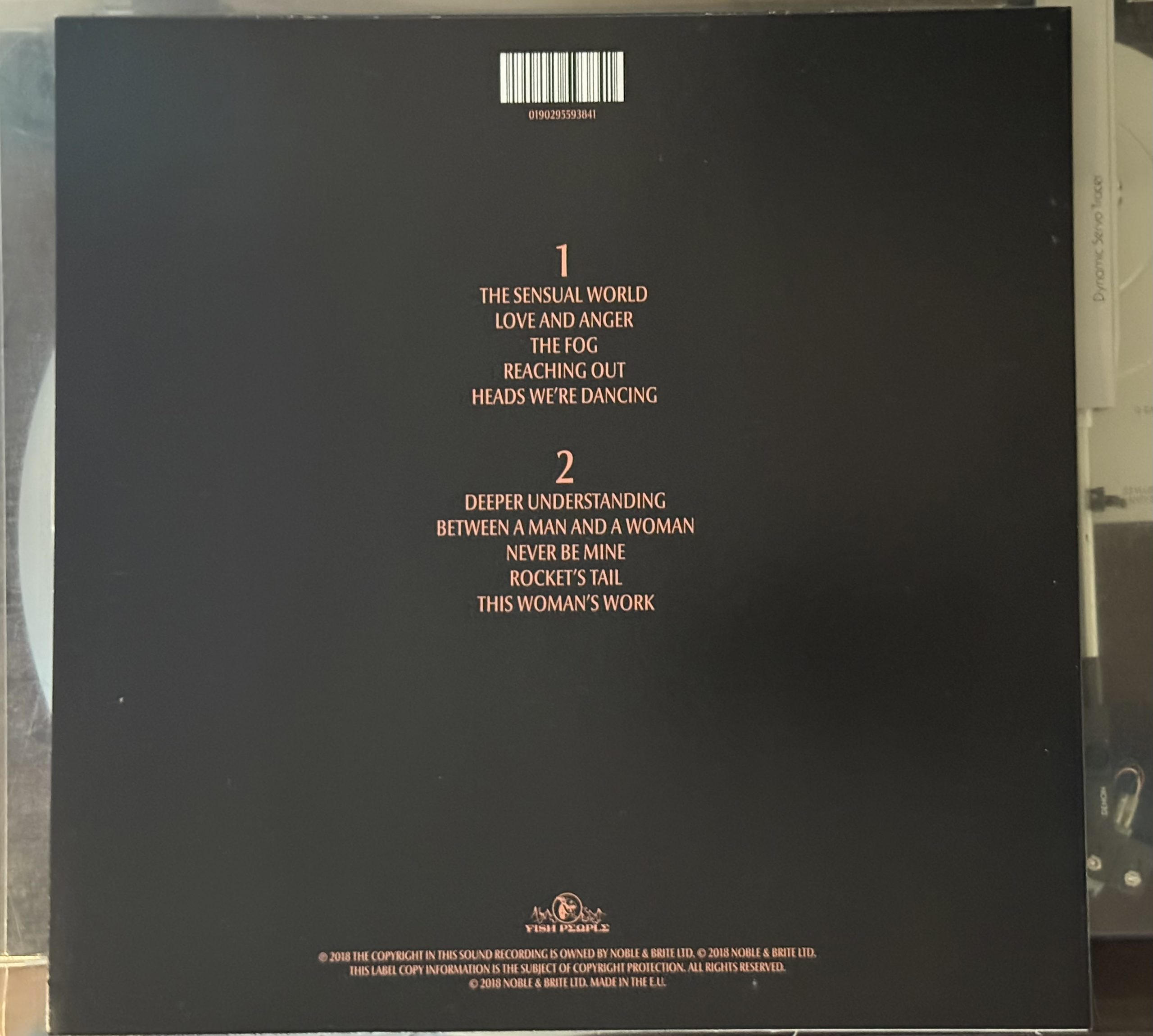
Opening Side 2, “Deeper Understanding” tells the story of a narrator who disappears further and further into a rapport with a computer, until they forget to eat or sleep. Supposedly inspired by a documentary about Stephen Hawking, it’s been noted that there may be an autobiographical element here as well, as the Fairlight CMI also loads programs and has a button marked “Execute,” and Kate spent many months in front of it producing the album… Trio Bulgarka put flesh and blood on the digital heartbeat of the track with a hair-raising solo line and a resonant chorale at the end.

Between a Man and a Woman” returns to the theme of a difficult relationship, with a twist: here Bush’s narrator warns the listener not to intervene in the “pendulum swing/between a man and a woman.” The track feels to have grown from the same roots as “Heads We’re Dancing”, as though there was one long jam session that birthed them both. By contrast, “Never Be Mine” is something new, driven by Eberhard Weber’s slinky bass and a vision of the narrator confronting the smoke from the burning stubble in a cornfield and stating “This is where I want to be,” as she burns off the last bits of her connection to an ex-lover so that she can plant the seeds of something new. Trio Bulgarka provide a moment out of time here as well, singing in ringing harmony to the departing lover as Davy Spillane provides a sympathetic tone in the pipes.

Trio Bulgarka get their ultimate shot at brilliance, going full out on “Rocket’s Tail” as the narrator calls the listener’s wistful desire to be a rocket in space “the saddest thing I’d ever seen,” then herself seizes the moment and flies into space. Bush, the Bulgarians, Stuart Elliott, John Giblin and David Gilmour are all going full out, seizing the electric moment, and then contentedly burning out into silence. It’s breathtaking.

Into the sudden silence steps “This Woman’s Work,” performed by Bush accompanying herself on piano with Michael Kamen’s orchestral arrangement. The lyric is Bush’s most deeply heartwrenching, as she sings from the point of view of a man forced to watch his wife fight for her life in childbirth as he confronts his regrets for things left unsaid and undone. It’s an astonishing, bravura performance, all the more amazing for its made-to-order origins in “She’s Having a Baby.”

I think there’s something about the records that come out when you’re in high school that have a special glow about them. While objectively Hounds of Love is an album of high brilliance, somehow it’s the emotional center of The Sensual World that keeps drawing me back; even if I only found it at the very end of my senior year, it’s still dug deep into that primal memory. And who is to say that the high concept of Hounds of Love is really superior to the personal depths of The Sensual World? It’s ultimately a triumph either way, an album that laughs, sobs, and takes steps out into a multidimensional landscape of heart and mind.

Kate wasn’t ready to burn out like a rocket just yet, and we’ll hear more from her. But first we’ll hear from another Peter Gabriel collaborator’s 1989 release and its own unexpectedly emotional moments.

You can listen to this week’s album here:

BONUS: Following the release of The Sensual World, Kate gave a rare long-form interview that was aired as The Sensual World of Kate Bush:

BONUS BONUS: An even rarer live performance by Kate from this late period, this version of “This Woman’s Work” from the Wogan television program is moving:

BONUS BONUS BONUS: While there are fewer covers of the songs from this album than of some of Kate’s other songs, the version of “Love and Anger” by Nada Surf on their covers album If I Had a Hi-Fi gets me every time. Though the audio is imperfect, this live cover from the Bowery Ballroom in 2010 is somehow even better than their studio version:

Footnotes

  1. One of several session appearances in 1989 for Gilmour; the others were Warren Zevon’s Transverse City and “We Got Married” on Paul McCartney’s great Flowers in the Dirt. ↩︎