
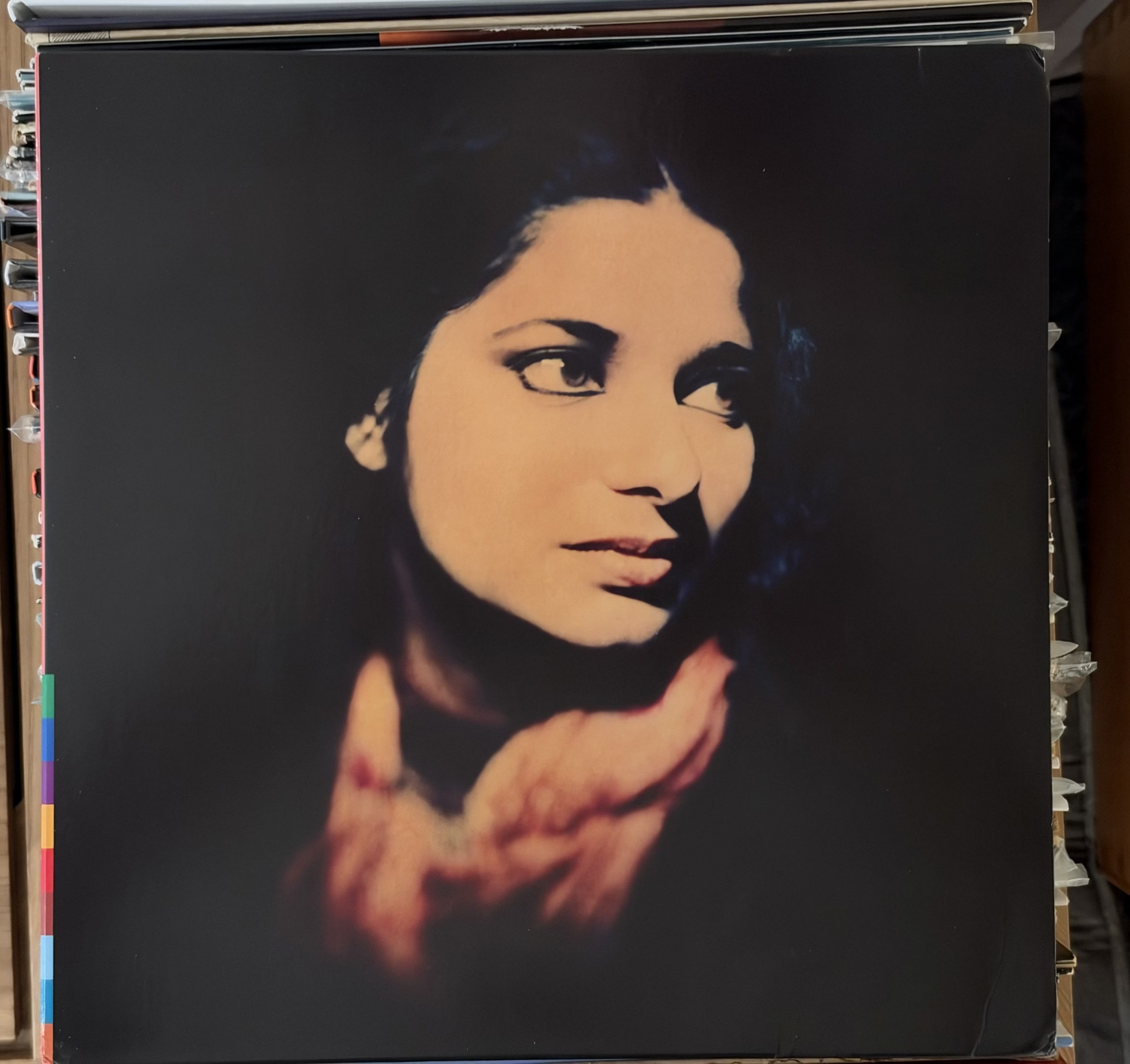
Album of the Week, October 3, 2026
The last studio album Sheila Chandra released on Real World was rather different than its predecessors. While Weaving My Ancestors’ Voices explored the intersections among British folk song and traditional South Asian ragas (among others), and The Zen Kiss added in themes of the lived experience of women across multiple cultures, ABoneCroneDrone strips away much of the experience, as well as language. What’s left is drone and pure melody.
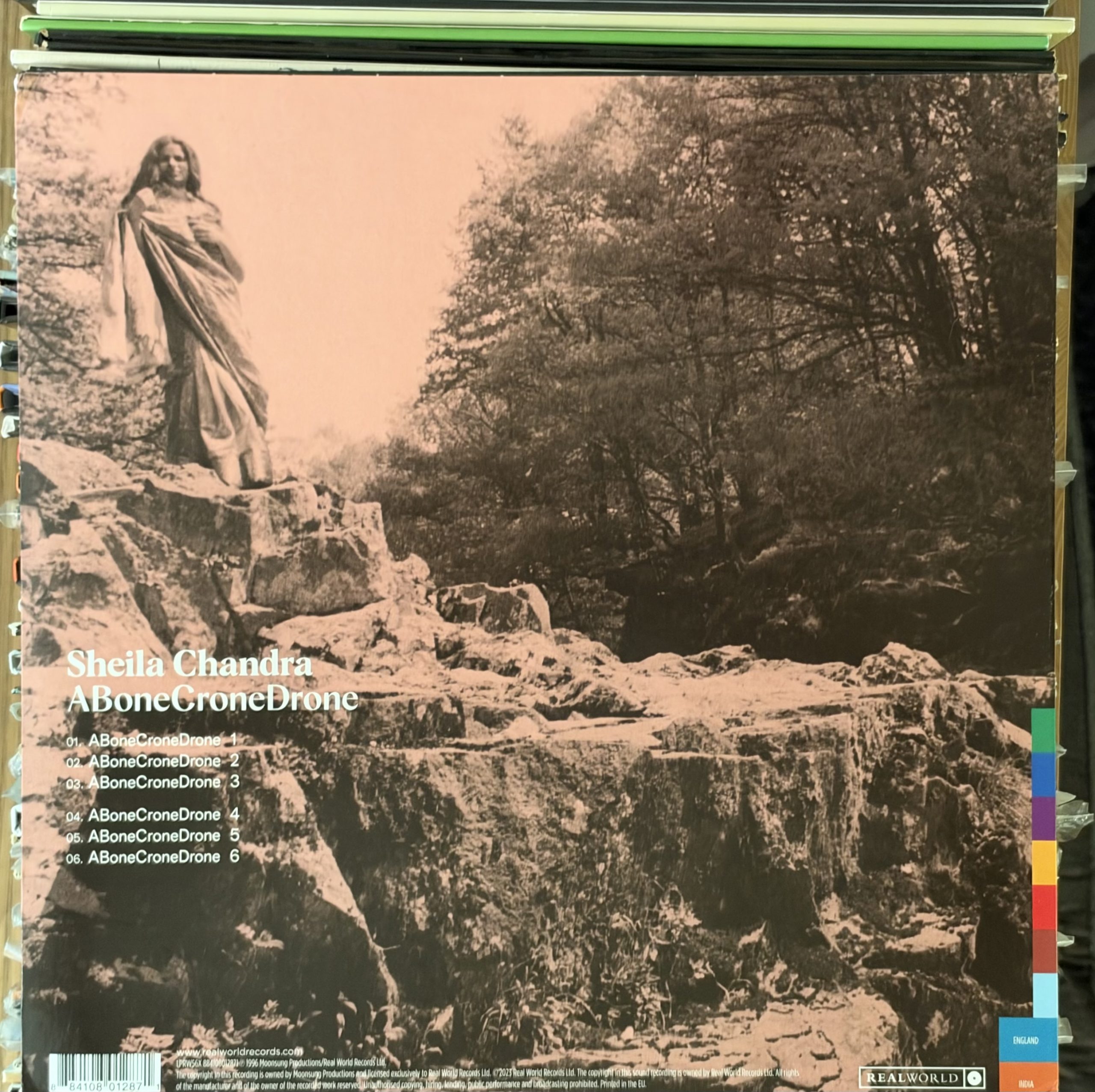
In some ways ABCD is the most straightforward of Chandra’s albums, with different meditative vocals atop drones played by longtime producer Steve Coe, along with contributions from bagpiper Paul James, didgeridoo player Jim Mills, and engineer Stuart Bruce (contributing guitar harmonics). There are six tracks (“ABoneCroneDrone 1 – 6”), each clocking in at between seven and eight minutes long. What’s not simple are the melodic ideas explored along the way.

The opening track is birdlike, with an almost pop melody over a bed of vocal drones. The voices come and go in the mix, and develop harmonic complexity slowly with fourths and sevenths creeping into the open fifths. At the end whistling overtones add even more to the unfolding ocean of sound. The second layers birdsong over the drones from Chandra’s voice in open fifths and a drone constructed of layers of bowed instruments. When the didgeridoo hits it’s startling, adding an intense bass note to the landscape. The rest of the track swims in harmonics, with hints of melody swimming in and out of the sonic bath. The third begins where the second left off, but here the drone brings in layers of sevenths and ninths, building conflict into the open sound. Chandra’s vocals build in a patter of syllables, leading into a more open raga-like exploration of the tone row. The track culminates with a full-throated melody that disappears as soon as it arrives; an almost subliminally distant bagpipe fades the track out.

The second half begins with Chandra’s voice creating a melodic space against an open fifth, pulling a tune seemingly directly from the drone as her voice circles the spaces between its poles, then falling silent to let the drone speak. In the fifth movement, the drone is infinitely more complex, with the instruments seemingly playing notes all up and down the octave; Sheila’s voice comes out of the texture to limn a melody before falling silent again to let the drone speak. At the central point she begins to overlap her vocals, with one melodic high point harmonizing against a lower melody before the drone fades out. Finally, the ending sees a drone that cycles in time, pulsing against the sounds of the ocean and Sheila’s voice in the lowest part of its range. Sheila’s melody feels like a more traditional song here even as it drifts and pulls against the drone, but ultimately the drone lulls us back to the sea, to the ultimate cradle of creation.
ABCD is a unique achievement, a pure exploration of sound that is by turns philosophical and blissful. Following the album’s release, Chandra’s career rolled on into the 2000s, with a mix of live performances and greatest-hits collections on both Real World and Indipop. But in 2009 she suffered an incredibly ironic setback, experiencing painful symptoms that eventually were diagnosed as burning mouth syndrome. The condition prevents her from speaking or singing without suffering intense pain, effectively silencing her voice. She has started a second career as an author, and has occasionally recorded brief statements, but has otherwise retired from music.
Next time we’ll change gears to see what Peter Gabriel was doing all during the 1990s while his label was busily releasing music from his collaborators.
You can listen to this week’s album here:
BONUS: It’s not often that Sheila performed in a pop context after the Monsoon days, but this 2006 performance with Lou Rhodes (who was, it seems, the voice of the late 1990s band Lamb) was an exception to the rule. From a February 2006 performance called Daughters of Albion, the two performed a faithful cover of PJ Harvey’s “Down by the Water”:
BONUS BONUS: The Lord of the Rings movies featured amazing vocalists (Enya, Annie Lennox, Elizabeth Fraser) on all three soundtracks, but none more surprising than Sheila Chandra. Though her songs had appeared in TV and movie soundtracks for years, in 2002’s The Two Towers, composer Howard Shore wrote “Breath of Life” and “Arwen’s Fate” especially for her:
BONUS BONUS BONUS: Coincidentally, last week saw the release of Chandra’s final album for Real World. Echo is a collection of live performances, mostly of material from the first two albums, and is an excellent on-ramp into the mystery of her voice and her heady blend of British folk and traditional South Asian music:
Thanks for the reminder of her music. I’m looking forward to listening to this.