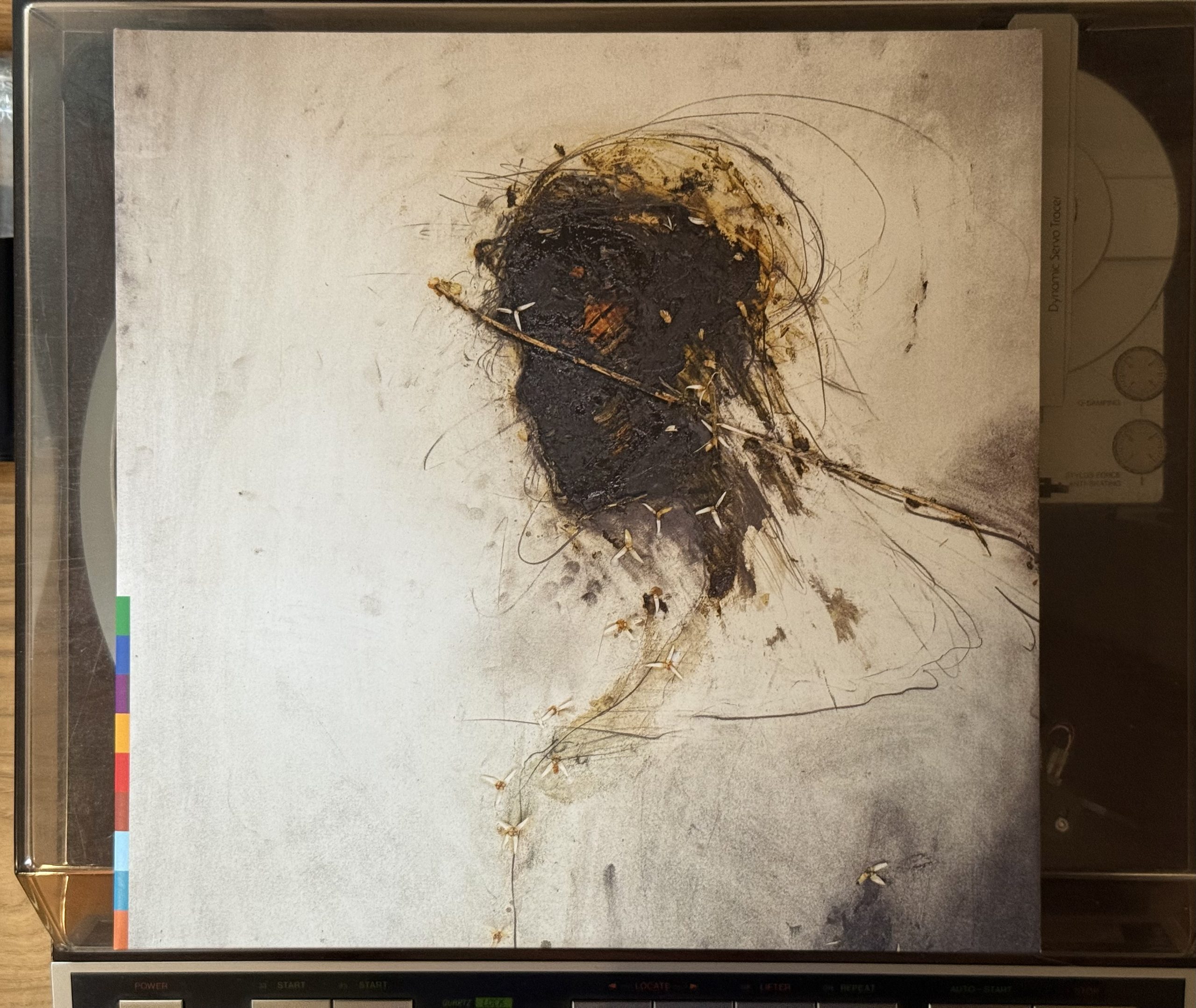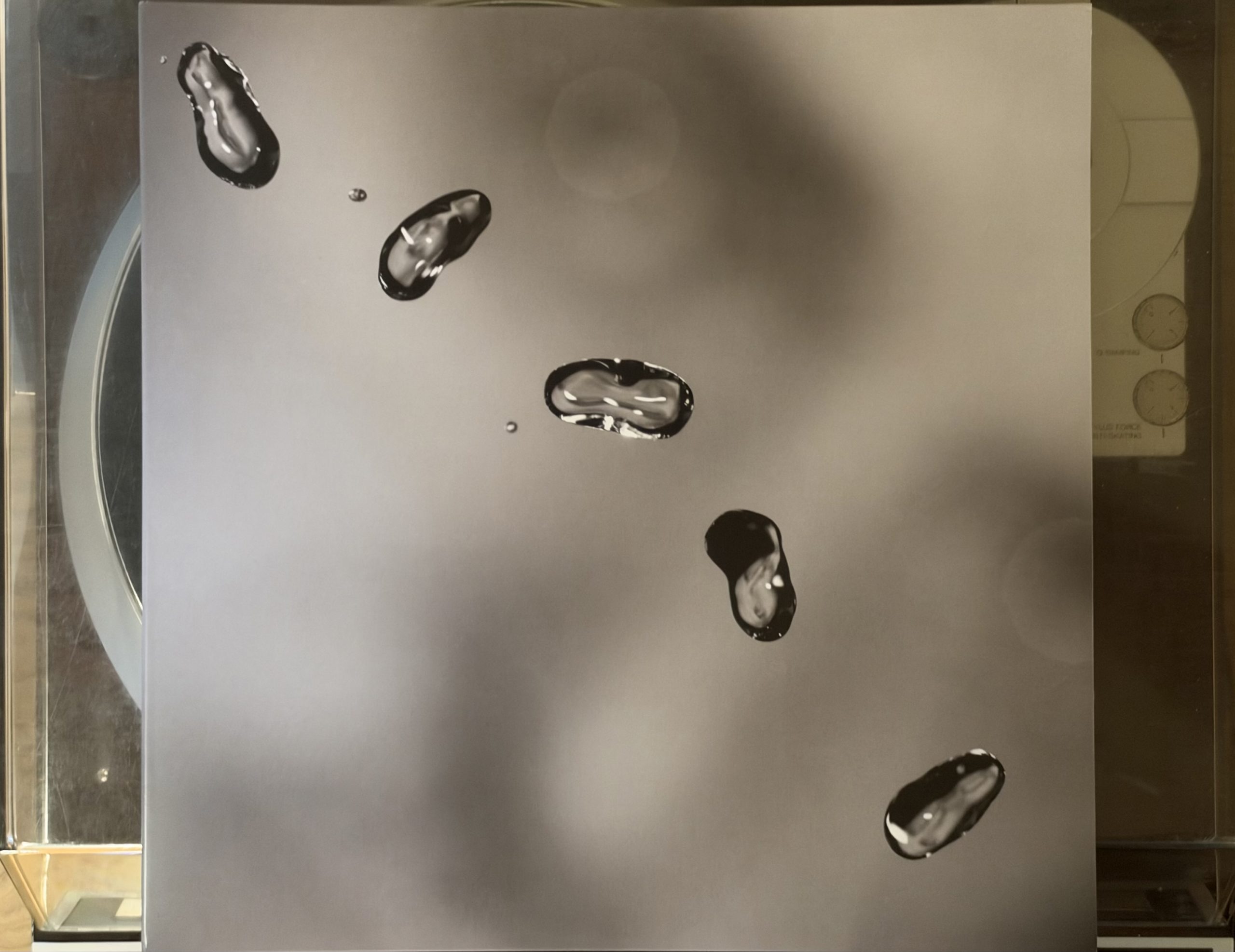
Peter Gabriel, Up

Diving deep into life, death, contemplation and grief, an album whose pleasures reveal themselves slowly.

Album of the Week, October 17, 2026

Peter Gabriel’s album Us came out when I was in college, in 1992. As the subsequent decade passed there was a live album, Secret World Live; some soundtrack songs; and the OVO project. I began to despair of Peter releasing another album of original material ever again. Though there were rumors of an album being worked on, it almost felt like a joke because the rumored album title was one that was being used by other artists.1 And when Up finally appeared in September 2002, twelve days after the first anniversary of 9/11, I felt an immense relief. Surely, I thought, this would be the longest time between albums that Peter would ever go. Heh.

I also felt, honestly, concern. Because while we were all still mourning a year after 9/11, the depths of his despair as it surfaced on Up were striking. Has Peter been hospitalized? Listening to this album for the first time, it seemed as though the answer was yes, that the therapy that had gotten him to such a helpful place around the time of Us had let him down. But on subsequent listens I found hope and beauty among the emotional desolation.

Up is also a Peter Gabriel album, with all that implies: immaculate production, anthemic sweeps, and a long list of musicians who had recorded with Gabriel before or who had come through Real World Studios and found themselves sitting in on a Peter Gabriel recording session as well as recording their own albums. In addition to the stalwarts Tony Levin, Manu Katché, David Rhodes, and Shankar, they included percussionist Ged Lynch, former drummer for Black Grape and the Ruthless Rap Assassins; Daniel Lanois and David Sancious, both of whom had affiliations with Gabriel going back to So; Passion–era collaborators Hossam Ramzy and Assane Thiam; composer/producer/session player Jon Brion; bassist and Pentangle co-founder Danny Thompson; the Black Dyke Band, who played on OVO; the late Nusrat Fateh Ali Khan; and Gabriel’s daughter Melanie on backing vocals. There were a whole cluster of musicians, influential producers in their own right, who showed up to contribute arrangements, play instruments, or generally bask in the aura, including Bob Ezrin (brass arrangements), Stephen Hague (percussion), Will Gregory (string arrangements), and Mitchell Froom (backwards guitar) in addition to Brion and Lanois. And there were, improbably, the Black Boys of Alabama, a gospel group formed at the Alabama Institute for the Negro Deaf and Blind in Talladega in 1939 and whose first album on the Real World Label, Spirit of the Century, won the Grammy award for Best Traditional Soul Gospel Album in 2002.
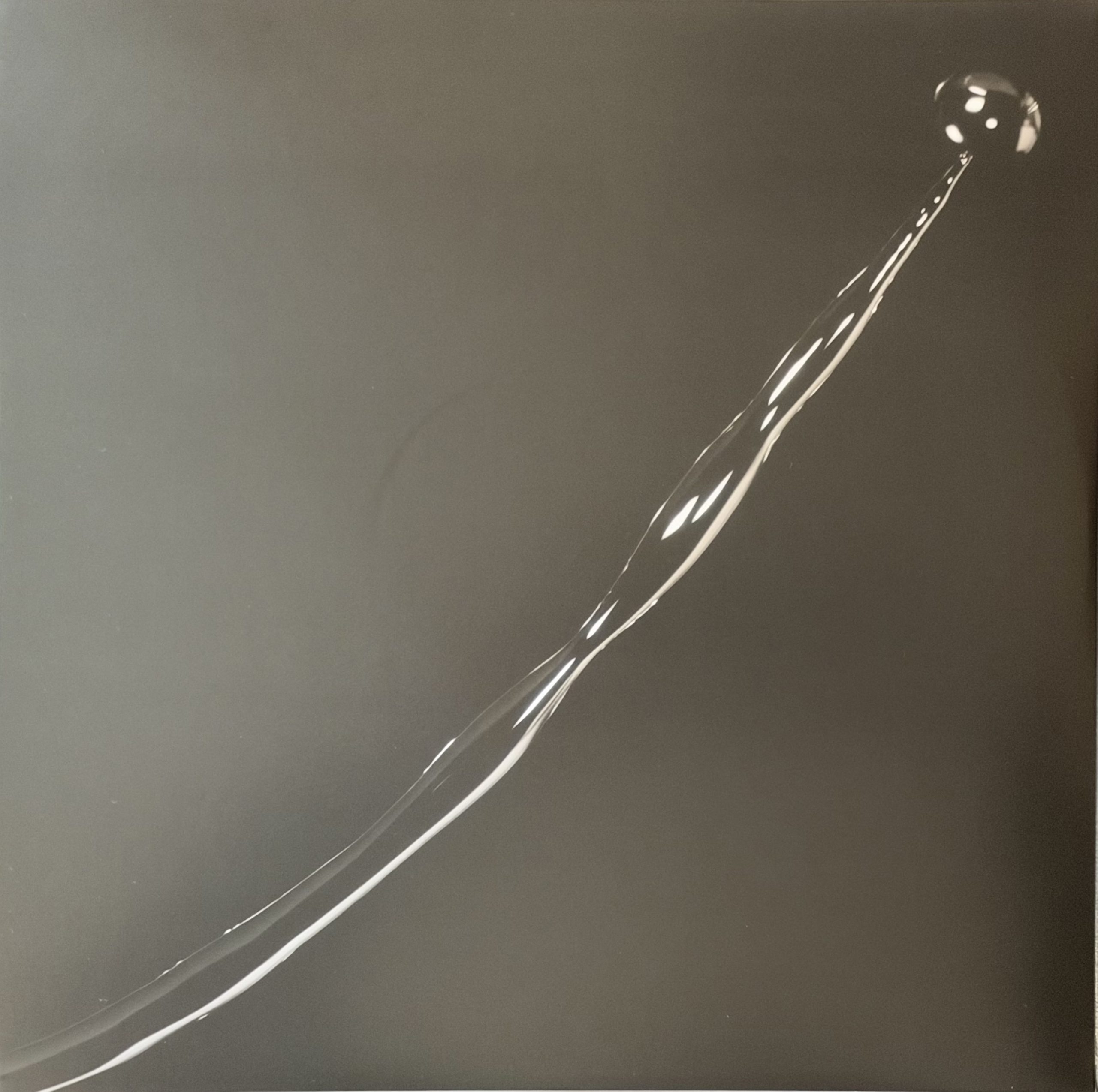
“Darkness” is appropriately titled; his most abrasive sound since Peter Gabriel 3, the song has screaming guitars and giant percussion as Peter recites a series of confessions from the heart of a depressive episode: “Every fear I swallow makes me small… I’m afraid I can be Devil Man / And I’m scared to be divine… I’m afraid of loving women / And I’m scared of loving men…” The so-called monster that he chases through the forest ultimately turns out to be “curled up on the floor / just like a baby boy,” as he confronts the dark reality that the things he fears most are helpless and small and deep inside. The bombast of the song makes it feel like a Bob Ezrin production, but it’s actually Will Gregory’s string arrangement sawing away behind the rest of the musicians and propelling things forward. The song ends with the image of the monster curled up on the floor, with a heartbeat of a synth line fading away.

The strings continue into the intro of “Growing Up,” though that cello line appears to have been programmed rather than played. The main part of the song builds on a shuffling drum beat and whooshing synths, but Gabriel’s lyrics take us on a journey from the womb through birth and life as “my ghost likes to travel / so far in the unknown,” ultimately moving through the final transition: “the breathing stops … in a transition once again / such a struggle getting through these changes.” The ghost ultimately confides its disconnection with life: “It all seems so absurd / To be flying like a bird / When I do not feel I’ve really landed here.” The track builds off a massive groove, but the meditative lyrics don’t seem at home above the beats (though perhaps that’s the point).

The third track, “Sky Blue,” floats in on Daniel Lanois’ steel guitar, feeling as though it comes from the same emotional center as “Blood of Eden” or “Don’t Give Up.” The narrator becries his alienation: “Train pulled out said my goodbyes, sky blue / Back on the road alone with the sky, sky blue … So tired of all this traveling / So many miles away from home.” But the narrator paradoxically finds beauty in the distance and motion: “Warm wind flowing over the Earth / I sing through the land, the land sings through me … There’s a presence here no one denies, sky blue … I keep moving to be stable.” The slow 6/8 groove builds up to a wordless hymn as the Blind Boys of Alabama join to sing the cry at the end, accompanied by David Sancious’s Hammond organ. The track had been around since the Us sessions, but the addition of the Blind Boys take it over the top, finding the emotional center of the song in the narrator’s wordless cry to creation.

“No Way Out” comes closer to more traditional Gabriel territory, but is still immersed in the fear, despair and difficulty of facing death. The track builds up from a tight Danny Thompson acoustic bass line, with shuffling drums (both programmed and live) joined by Hossam Ramzy’s tabla under an insistent David Rhodes guitar line and a spare piano line. Here the narrator confronts the death of a loved one: “Someone runs to make a phone call / And the man kneels on the ground / There’s a tightening in my chest / I know that I’m drawn in / Oh God, let it not be you.” The chorus is more direct: “Don’t leave us / Don’t leave like this / Don’t leave me here again / I’m not quitting on you / There’s no one else.” The song is epic in emotional scope but only captures a brief flickering moment of despair; the band’s coda, in its crashing cymbals and circling bassline, leaves us in anger and despair.

That ultimately yields to the dark, spare opening of “I Grieve.” Originally written for the soundtrack of City of Angels, the American remake of Wings of Desire,2 it finds us in a moment after the fighting is done and the narrator is left only with the grief and anger of figuring out how to move forward: “It was only one hour ago … Looks like it always did / This flesh and bone / It’s just the way you were tied in / Now there’s no one home.” But the narrator moves past the feeling of abandonment: “Let it out and move on / Missing what’s gone / They say life carries on … Life carries on in the people I meet / In everyone in the street / In all the flies and rats / The rot and the rust / The ashes and the dust…” Ultimately the soul lives, he thinks, and the body is “just the car that we ride in / The home we reside in.” The narrator ends having made this transcendental argument but still acknowledging the emptiness left behind: “Now I can find relief / I grieve.”

What follows is a rarity in Gabriel’s catalog, a funky soul-inspired track that works as a mean groove while completely falling flat lyrically. “The Barry Williams Show” has a fantastic deep Tony Levin bass line, some great New Orleans style shuffle drums, and a killer horn line. Unfortunately it also comes with a fairly uninteresting vocal and lyrics that skewer reality television hosts like Jerry Springer, which firmly dates the song. It’s also not clear whether it is punching up at the host or down at his guests, which is not the sort of ambivalence you want in a song like this.

From sneers to the quiet echoes of a disturbed mind, “My Head Sounds Like That” takes us back into Gabriel’s survey of human experience, with a song that shows us how it feels to perceive the world through depression, where everything scrapes along jagged exposed nerve endings, both paradoxically dull and unbearably bright. It’s a painful song for anyone who’s had to live the experience of a visitation of the Black Dog, but it’s also quietly beautiful with the sounds of the Black Dyke Band behind the pain.

With an opening guitar riff that feels like a deliberate return to pop forms but which is actually Peter playing a Telecaster sample through a keyboard, “More Than This” finds the narrator contemplating the liminal, unseen things just beyond perception as he decides that there must be something more to the world, decides that the sense that is made when people are put together is like the sense constructed from words one after another. “So much more than this, there is something else there / When all that you had has all gone / And more than this, I’m alone, feeling so connected / And I’m all there, right next to you.” The song aches up against the edge of resolving the minor key chords that comprise it; Gabriel’s self-harmonies climb up the scale, landing on the minor tonic in a way that suggests that they’re really hanging on the edge of resolving to something brighter.

We don’t get that brighter in “Signal to Noise,” though the song (which I discussed in my post about Nusrat Fateh Ali Khan’s Night Song, does tie into the central message of finding that connection between people as the narrator begs to “turn up the signal, wipe out the noise.” How much of his catalog boils down to the resolution of this song: “Receive and transmit”! There are echoes of songs from “Secret World” all the way back to “On the Air” in those words, and ultimately a central thesis that we’re all better off when we actually open up the channels of communication one to the other. The incredible Nusrat vocal that anchors the song, extracted from the inaugural performance of “Signal to Noise” on Peter’s 1995 VH1 special, explains why the song holds such a strong place in PG fans’ hearts, as much as the centrality of his message. The choice to underpin this version with strings rather than a bombastic rock sound adds immensely to the rising tension at the end that is ultimately unresolved.

The album ends with “The Drop,” Peter playing piano and singing a melody that he couldn’t make fit OVO but which here anchors the album with the visual of paratroops jumping off into the unknown: “One by one, they’re going out / You watch them dim / One by one, you watch them fall / And wonder where they’re falling to.” A koan, and the only song shorter than three minutes on an album where the rest are more than twice as long, the tune echoes bits of “Downside Up” but ends, unresolved, on an open fifth, leaving us to decide the destination.
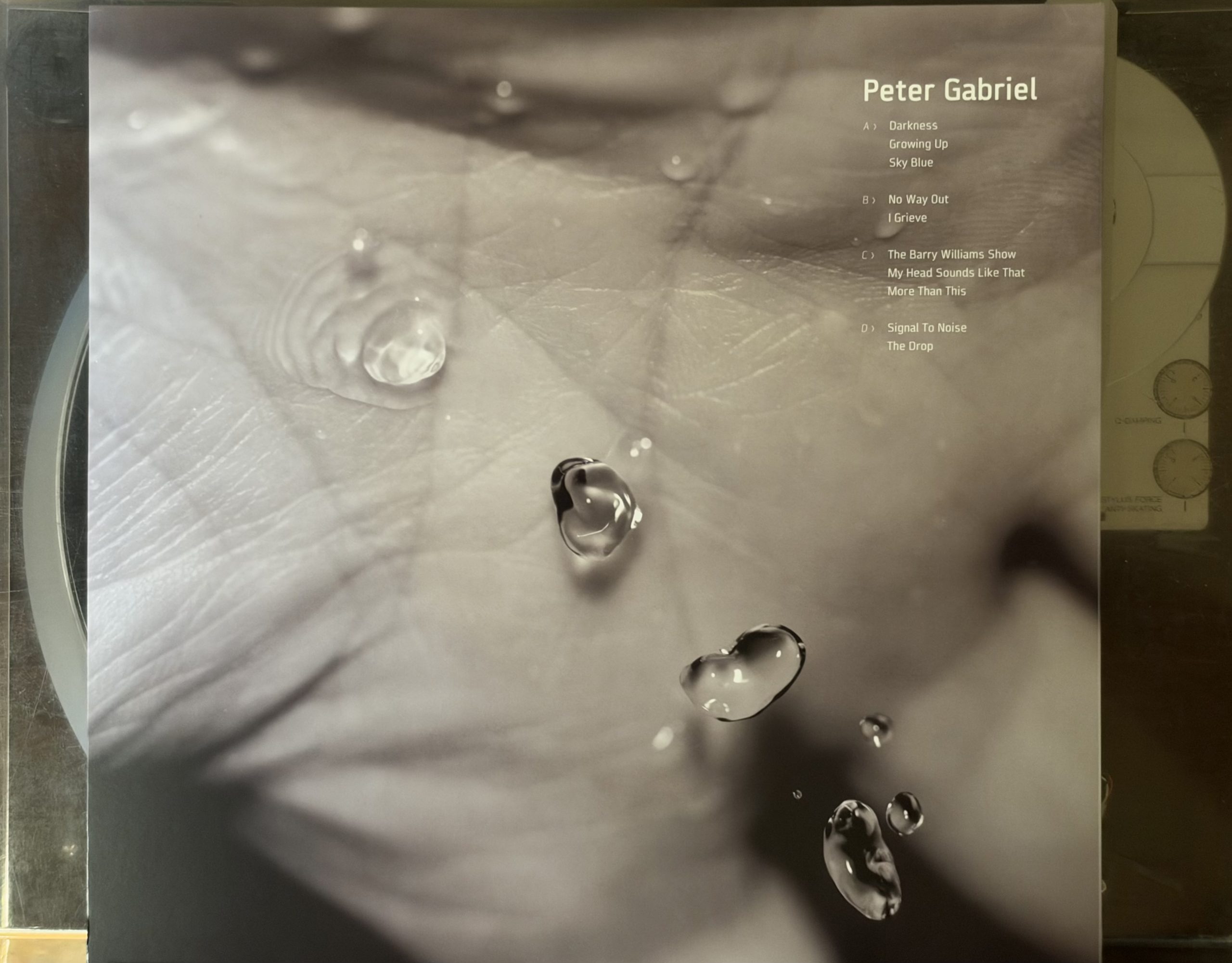
Gabriel toured behind Up (the “Growing Up” tour) and then seemed to drop back into the shadows. He released a few loose singles in the late 2000s, but much of what he recorded seemed like stock-taking projects: a long-in-progress collaborative album from the Real World recording weeks called Big Blue Ball; his Scratch My Back project featuring covers of other singers’ work; his orchestral album New Blood (and companion live album Live Blood), featuring arrangements of his own works; and several compilations and live albums. It seemed at the time like the end. But the lesson of Gabriel’s discography is to never count him out. In 2023, twenty-one years after Up, he released the album i/o, taking advantage of Bandcamp’s subscription features to push out a track a month to subscribers, which may have helped the famously distractible Gabriel stay focused on the project. He’s repeating the process right now with the album’s sequel, o/i. But though we’ll end our survey of his studio albums here, we’re not quite done with Peter, or this series, yet, as you’ll hear over the next two weeks.

You can listen to this week’s album here:

BONUS: I didn’t own Up on vinyl when I started this series, so I ended up using a few tracks written for the album as bonus tracks, including “Signal To Noise.” But there are a few other gems connected to these sessions out there, including this one from The Long Walk Home which uses the Blind Boys of Alabama part from “Sky Blue” as a standalone soundtrack cut:

BONUS BONUS: Peter has done a lot of live performances in Real World Studios for video and album releases. Here’s one recorded during the run-up to the “Growing Up Live” tour in 2002:

Footnotes

  1. Not only did R.E.M. release their own Up in 1998, but Ani DiFranco had her own Up Up Up Up Up Up in 1999. ↩︎
  2. A completely unnecessary film given the brilliance of Wim Wenders’ original. ↩︎
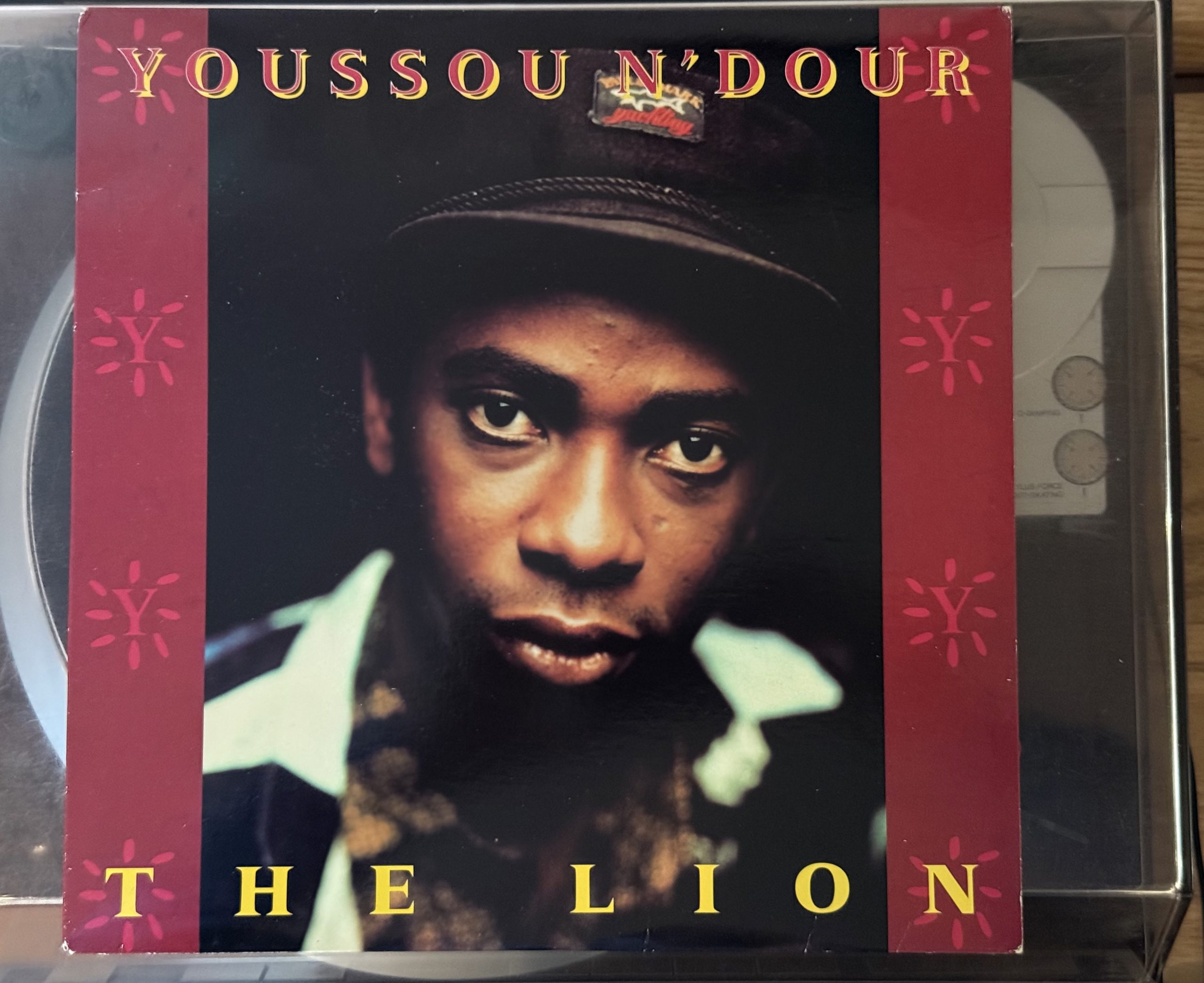
Youssou N’Dour, The Lion

The Senegalese superstar’s major label debut blends a deep groove with modern technology and that incredible voice into a compelling, if uneven, listen.

Album of the Week, June 20, 2026

We’ve met Senegalese superstar Youssou N’Dour in the context of his work with Peter Gabriel; he might still be best known for his incandescent vocal on “In Your Eyes,” and we’ve heard his contributions to Peter’s all-star project Passion. But even before this global success Youssou was, by any measure, a star. It just took the world a while to catch up with him.

Youssou was born in 1958 in the Senegalese capital city of Dakar. He was already performing at age 12, and made many appearances with the Star Band, the house band of the most popular nightclub in Dakar at the time, the Miami Club. A number of bands eventually spun off the Star Band, including Orchestra Baobab and Étoile de Dakar; Youssou was a breakout star in the latter. The band fused traditional Senegalese music with Latin dance music, jazz and soul influences to form the mbalax style, which rapidly became the leading musical form in Senegal, Mauritania and Gambia due to its spread via inexpensive, accessible cassettes.

Étoile de Dakar was short lived due to tensions inside the group and split in two in 1981; Youssou’s half, Super Étoile de Dakar, featured guitarist Jimi Mbaye, bassist Habib Faye, and talking drum (tama) player Assane Thiam. The band recorded eight albums on local labels from 1982 to 1988. You can find a few of them on streaming services; Immigrés and Nelson Mandela are especially worth a listen. But following the release of So in 1986, and the ensuing world tour, it was clear that Youssou had the makings of international stardom. He signed to Virgin Records, which was now distributing Peter Gabriel’s records in the UK, and brought the members of Super Étoile de Dakar along into the studio as his backing band.

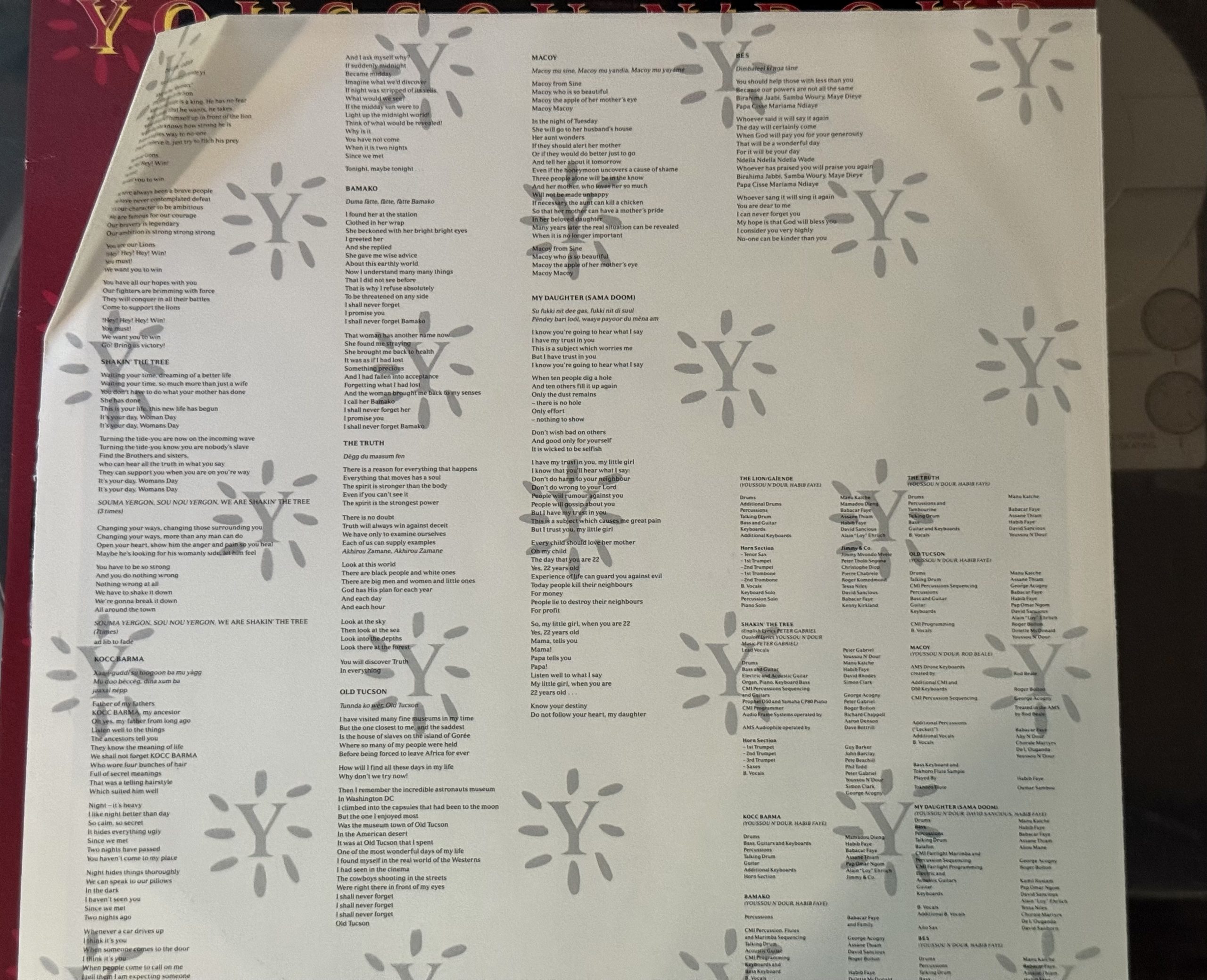
“The Lion (Gaïende)” starts us off with a bang. The band is tight as Youssou sings a song about the bravery of his people, in Wolof, that the liner notes translate in part as “We have always been a brave people/We have never contemplated defeat/It is our character to be ambitious… You are our Lions / Hey! Hey! Win! Win! / You must! / We want you to win.” Youssou is in fine voice here, moving quickly through the verse into an insistent chorus, in which he sings a second line that soars over the band. The bridge is noteworthy for some brilliantly fast keyboard work, which turns out to have been contributed by Kenny Kirkland. The lead track seems to fulfill all the promise of this debut, with sizzle and style that sacrifices none of the energy of the earlier Super Étoile recordings but adds a broader soundstage.

“Shakin’ the Tree” gives the people what they want—another Youssou/Peter Gabriel collaboration. This one is better thought of as Peter Gabriel’s band with Peter and Youssou trading lead vocals; of the players in Youssou’s band, only Habib Faye appears, joining Manu Katché, David Rhodes, and a horn section (Phil Todd, Guy Barker, John Barclay, Pete Beachill) made up of British jazz musicians. It helps that the song is a pretty strong Peter Gabriel composition, more optimistic—almost sunny—than the material on either of his two preceding albums. It also helps that it has two strong male voices singing about the strength of women, which you wouldn’t think would be groundbreaking but in 1989 was fairly revolutionary. And those horns! I remember reading a music mag article about Passion in which it talked about Peter sweating the stereo phase of the horns, trying to get the imaging just right in the mix, and you can definitely hear it here. About the only thing worth kvetching about is the vocal on the first verse, where, for the only time on record, Youssou sounds a little tentative as he sings the English lyrics. That may be why Peter chose to re-record the lead vocals with a higher melody when he put the song on his first greatest hits compilation a year later.

“Kocc Barma” is a more traditional mbalax number, featuring more of the Super Étoile sound including a non-British horn section and alternating sections of call-and-response and funky chorus. You can really hear the contributions of Habib Faye on bass and Assane Thiam on talking drum here; together they build an irresistible groove. This song was the headliner of one of Youssou’s last Super Étoile cassette releases, and it gives us a great high-definition picture of how mbalax could play on the world stage.

“Bamako” is more synth- and guitar-forward—that’s David Sancious on acoustic guitar, and African producer George Acogny’s keyboards and production. The percussion is forward in the mix but is largely relegated to straight-ahead timekeeping, with few of the talking drum flourishes from “Kocc Barma” until the very end. Instead we get stabs of strings and washes of heavily reverbed Youssou vocals, with backing vocals from Dolette McDonald. Not a bad thing at all.

“The Truth” builds atop a slap bass foundation with a strong Youssou chorus. Another inspirational lyric, the song begins (in translation) “There is a reason for everything that happens/Everything that moves has a soul.” About the only thing to complain about are the swathes of very 1980s keyboards, but then again, by 1989, synths are inevitable. Still, one wonders what this would sound like with the horn section.

Side two opens with “Old Tucson,” a puzzling song that features Youssou singing in English about three museums: the Maison des Esclaves (House of Slaves) on Gorée Island off the coast of Senegal; the Air and Space Museum, and Old Tucson, a kind of Disneyfied view of the old West where cowboys walk the streets. The groove is strong under the story, but it’s not clear where this shaggy dog story is going to end up. Is the point to marvel at the fruit that sprang from the poisoned beginnings, or just a travelogue? Whatever it is, Youssou will never forget, as he assures us in the final chorus. (This is another one that ended up on the Super Étoile Kocc Barma cassette.)

“Macoy” answers the question: what would it sound like if we had gotten more Youssou on Peter Gabriel’s Passion? The track is built around loops and samples sequenced on the Fairlight and features improvised vocals from Youssou and from his sister Aby N’Dour, along with backing vocals from the Chorale Martyrs de’Ougande. The translated lyrics in the liner notes don’t illuminate so much as deepen the mystery: who is Macoy from Sine? Why should there be shame in her going to her husband’s house? Why must she go after midnight?

“My Daughter (Sama Doom)” builds a groove out of a three-measure phrase and marimba samples on the Fairlight, but here it feels more organic thanks to the capable drumming of Manu Katché, who adds a little straight-ahead drive to the groove laid down by Faye and Thiam. Another soaring chorus adds emotional heft to this song of advice from Youssou to his daughter.

“Bés” closes out the album with another wash of synthesizers. It’s tempting to blame the major-label producers for the preponderance of synthesizers here, but the 1987 version on the Kocc Barma cassette has even more synth sound, albeit on less expensive hardware. It also has a stronger percussive drive than this version; though the album version features Thiam and Katché, it’s David Sancious’s keyboards that carry the overall sound. The lyric here is an inspirational message: “You should help those with less than you/Because our powers are not all the same.” He calls out a series of Senegalese politicians and innovators, charging them with a plea for generosity.

Coming on the heels of Nusrat Fateh Ali Khan’s Shahen-Shah, The Lion can be frustrating for the intrusion of synths, for the way that songs like “Old Tucson” and “Macoy” pose questions with no satisfying answers. At the same time, the album has some flat-out bangers, to say nothing of furthering the truly wonderful collaboration between Youssou and Peter Gabriel. And even better albums lay ahead; we’ll hear one of those in a few weeks. Next week we’ll hear more from some of the musicians who contributed to the success of Gabriel’s Passion.

You can listen to this week’s album here:

BONUS: Here’s a live performance of “Macoy” from Tokyo:

BONUS BONUS: Youssou was playing some of this material in the sets on the So tour where he opened for Peter Gabriel, including the legendary 1987 Athens performance. It’s a treat to watch the band perform “Kocc Barma” in high definition, even if this version omits the brass section:

Peter Gabriel, Passion

A landmark collaboration with a seemingly inexhaustible parade of master musicians creates one of the strongest offerings in Gabriel’s catalog.

Album of the Week, June 6, 2026

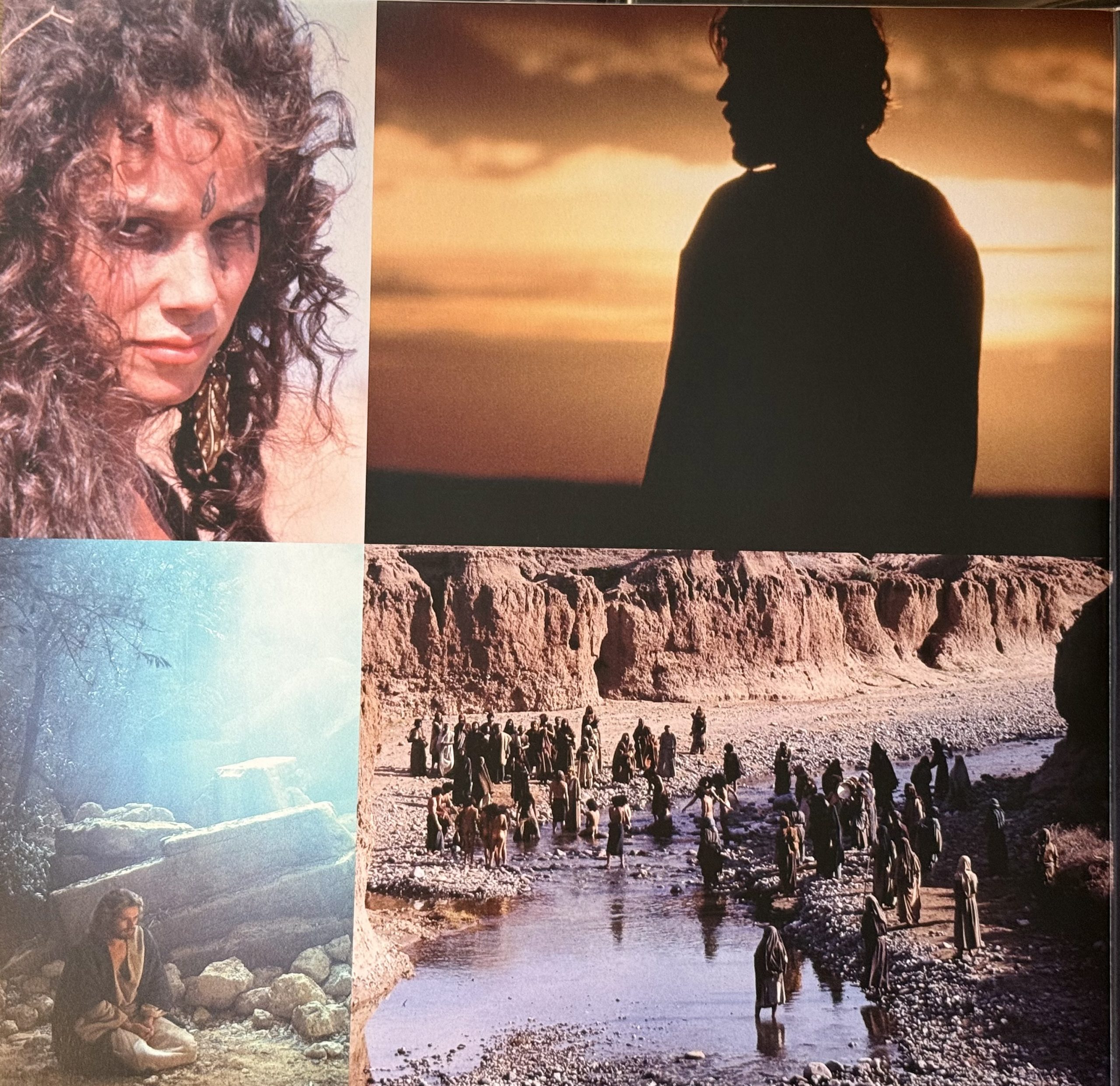
Peter Gabriel spent the months following So touring the world; the concert film Live in Athens gives a good idea of what that experience was like. But he was still writing music, and the next thing that came from him was a one-two punch: a soundtrack album to the most controversial film of the late 1980s, and a brand new record label to release it. And Peter being Peter, he released the album in June 1989, almost a full nine months after the theatrical release of the film that inspired it.

The energy that today animates reactionary groups like the Promise Keepers and Christian Nationalist groups was alive and well in the 1980s, in the form of groups like the Moral Majority, TV evangelist fans, and other similar gatherings of extremists. They weren’t happy with Martin Scorsese’s film (though few formed an opinion informed by actually having seen it), which dared to imagine that Jesus might have been human enough to have been tempted by the possibility of family life into abandoning his mission; the idea that Jesus might have in particular entertained sexual thoughts was particularly threatening.1 Some of those who felt so threatened lost the plot badly enough that they firebombed cinemas and made death threats against Scorsese. Plus ça change, plus c’est la même chose…

Gabriel seems to have escaped the threats, possibly because his album came out so much later than the movie’s release and the height of the controversy. Though a version of the music appears in the film, he kept working on it, trying to find the right sounds and textures, through March of 1989. And, thanks to his ongoing work with WOMAD and his previous collaborations, he had the right musicians to work with, many of whom would go on to release albums of their own on his new label, Real World Records. The list was long and included Egyptian percussionist Hossam Ramzy; Indian violinist L. Shankar; Senegalese vocalists Baaba Maal and Youssou N’Dour; Pakistani qawwali singer Nusrat Fateh Ali Khan; Senegalese drummer Doudou N’Daiye Rose; percussionists and string players Massamba Diop, Mahmoud Tabrizi Zadeh, and Fatala; Turkish ney flute master Kudsi Erguner; Brazilian percussionist Djalma Corrêa; Americans Jon Hassell, David Sancious, Billy Cobham, Nathan East and Manny Elias; and Peter’s long-term collaborators David Rhodes and David Bottrill.

All that said, the most notable music performance on the first track is a sample. “The Feeling Begins” opens with a traditional Armenian melody played on doudouks by Vatche Housepian and Antranik Askarian, from a collection of traditional Armenian music released on Ocora Records years before. The doudouk melody forms the backbone of the arrangement, but the massive percussion attack from Manny Elias with Hossam Ramzy is also fairly magnificent and provides our first clue that we’re in for a genre-bending ride throughout the album. As the doudouk melody comes to an end, the drums roar in a crescendo, using the same trick that Peter so memorably deployed in “The Rhythm of the Heat.”

One thing I discovered as a teenager listening to this album (I bought it the first summer I ever lived for myself, during a monthlong science Governor’s School experience at Virginia Tech, so I listened to it a lot) was that I was less engaged by the tracks that featured fewer live instruments. “Gethsemane” is one of those tracks, constructed by Gabriel from samples of flute and voices. But it’s appropriately ominous and ghostly, and does the job of foreshadowing that it’s meant to do.

It’s followed by one of the more spectacular sequences on the album. “Of These, Hope” opens with a fanfare of sorts on the arghul, an ancient reed instrument that here contributes a swirl of crowd noise over an insistent talking drum courtesy of Massamba Diop. Peter has said of So that the groove was the thing that made that album so special; “Of These, Hope” is a classical composition with groove. It also has strong textural interest thanks to the arghul, and from the combination of drone, flute whistle, talking drum, guitar and synths. This leads into “Lazarus Raised” without break via an anticipatory shiver of synths as another doudouk sample — this time an uncredited Kurdish player from a UNESCO collection — gives us a mysterious melody signifying the expression of power leading to the raising of Lazarus from the dead. Peter’s flute whistle leads us into “Of These, Hope (Reprise),” which plays like a further elaboration of the melody. It misses the shock and awe of the arghul chorus from the first repetition, but gains a different sort of shock and awe thanks to the presence of Baaba Maal, a Senegalese vocalist whose speciality was the traditional music of the Pulaar-speaking peoples of the Futa Tooro region of Senegal.

“In Doubt” is another synth-forward groove, given depth by the uncanny sound of the kementché, an Iranian bowed string instrument here played by Mahmoud Tabrizi Zadeh. Peter doesn’t let this groove build for very long before a bigger one takes over , a massive percussion onslaught from Doudou N’Daiye Rose and Fatala signals the arrival of “A Different Drum.” I can almost hear Peter telling Geffen Records, “This is the single.” Between the strong rhythmic intensity, the insistently repetitive melodic theme, the wordless chorus, and above all the presence of the spectacular voice of Youssou N’Dour, this is one of the most accessible and memorable tracks on the album. It has the feeling of one of Peter’s songs-in-progress that never received a proper lyric, but the feeling is there, a stirringly heroic track.

What did get life as an independent single, somewhat surprisingly, is the next track,“Zaar.” A complex track built around a slowed- and pitched-down drum sample, the band, here featuring Hossam Ramzy on percussion, Mahmoud Tabrizi Zadeh‘s kementché, wordless vocals, and an intense series of interjections from L. Shankar’s violin, constructs a striking mood piece whose free interchange of musical ideas and sounds seems to sum up the whole project. “Zaar” was the track Peter chose to represent this project on his first greatest hits album, which would be released two years later, and it feels like a universe of its own.

“Troubled” is built around a mean groove built out of layered drums and percussion, all played by the great Billy Cobham. After we heard him on Champions and on a whole slew of CTI albums, Cobham joined John McLaughlin’s legendary jazz-world-fusion project Mahavishnu Orchestra, and it’s that polyrhythmic intensity that he brings here over a backing of snarling synths and a wordless vocals chorus loop. “Open” breathes more freely, a duet between Peter on the Prophet and Akai S900 and vocals, and L. Shankar’s violin and vocals. It suspends time and, with the echoes of ragas in Shankar’s improvisation, lends an unexpected emotional resonance to the simple melody Concluding the trio of pieces, “Before Night Falls” is a three-way collaboration between Hossam Ramzy, Shankar, and the great Turkish Sufi ney flute legend Kudsi Erguner, with added depth courtesy of one of engineer David Bottrill’s legendary drones. The plaintive melody and fade-out lend the feeling of a sunset over the gates of a desert city.

We leave groove behind for more traditional composition with “With This Love,” a haunting melody played by Robin Canter on the cor Anglais. The melody is gorgeous but the layers of synths detract somewhat from the emotional power of the work. The theme bookends a trio of pieces dealing with the actual crucifixion of Christ, starting with “Sandstorm,” in which Hossam Ramzy, Mahmoud Tabrizi Zadeh, Manu Katché and Shankar build an atmospheric groove over a location recording of Moroccan percussion and vocals. The synths add a blurriness to the overall effect, so when the Moroccan musicians cut through it’s startling and intense.

“Stigmata” is a joint improvisation by Mahmoud Tabrizi Zadeh, Shankar and Gabriel. The instrumental texture is deep and mysterious, but ultimately the tension ebbs away into the fade-out before “Passion.” The redoubtable Shankar, Jon Hassel, and Peter’s Fairlight are the supporting players here for the astonishing vocal improvisations of Youssou N’Dour and Nusrat Fateh Ali Khan, here signifying the suffering of Christ on the cross. Here there is no ebbing of intensity; Nusrat masterfully builds suspense through his sangam improvisation, as Youssou’s interjections cut through to intensify the emotional impact. A devastatingly pure high melody from choirboy Julian Wilkins2 punctuates the rising emotional tide. At the end, everything cuts away but Youssou’s cries and Djalma Corrêa’s percussion.

The choral reprise of “With This Love” is introduced by the cor Anglais melody, but Gabriel wisely leaves the Wells Cathedral Boys Choir (recorded by Richard Evans) totally unaccompanied as they perform a heartwrenching four-part arrangement of the melody. The acoustic of the performance space can be heard—there’s an audible footfall or noise at one point that sounds a bit as though someone has stepped onto an echoing stone floor in one of the transepts and been hastily waved away—adding to the overall timeless resonance of the moment. It’s one of the most stunningly beautiful musical expressions on an album full of remarkable sounds. It’s also one of the most fraught; originally intended to accompany the scene where a devil in the form of a little girl tells Christ that he doesn’t have to suffer, removes the nails from his body, and leads him off the cross, it was nixed from the final film. Scorsese pointed out that the use of a Christian religious signifier like a boys’ choir would further underscore the blasphemy of the moment and pour fuel on the outrage that was already mounting even before the film was released.

“Wall of Breath” leads us into uncertain territory as Christ is tempted to abandon his destiny, with Kudsi Erguner, Shankar, and the Musicians du Nil building an atmosphere based around a shifting tonality. “The Promise of Shadows” takes us to a dark place with Billy Cobham’s drums and a rising chorus contributing to the feeling that something isn’t right. Despite the title, “Disturbed” seems to lead us into a brighter moment, as Shankar’s violin introduces an intense percussion groove built up from Hossam Ramzy’s tabla, African percussion from Fatala, and looped percussion from Mustafa Abdel Aziz and Said Mohammad Aly. Peter’s Prophet and Fairlight provide a simple melodic line to anchor the groove as the percussion fades out.

“It Is Accomplished” is signaled by a fanfare on the arghul followed by an uncanny shimmer of a vocal yell (uncredited on the album, the original location recording has surfaced which is amazing to listen to on its own. You can hear it in one of my Exfiltration Radio mixes). A triumphant melody built around a simple descending four-note pattern gains depth from Billy Cobham’s drumming, David Rhodes’ guitar, and David Sancious’s Hammond organ as the music celebrates Christ overcoming his last temptation and fulfilling his mission. “Bread and Wine” builds a new melody from the echoes of the old, creating something new in remembrance courtesy of a tin whistle performance by Richard Evans.

I cannot overstate the role this album played in furthering my personal musical development and encouraging me to listen to the world with open ears. And Passion marks a significant moment in Peter’s career, as a culmination of his work with WOMAD during the 1980s and a seamless blending of his explorations of synth textures with collaborative compositions from some of the finest non-Western musicians of the moment. It earned a Grammy Award for Best New Age Album3, and helped to further popularize “world music” as a genre in its own right.

It also helped create a vehicle to fuel the demand; as the first release on Gabriel’s new Real World label, it included advertisements for a series of individual recordings from many of the musicians on the record, plus more of Gabriel’s WOMAD collaborators. Real World is still going strong and has reissued many of those pivotal early recordings, some appearing on vinyl for the first time; we’ll check in on those, among other things, starting next week.

You can listen to this week’s album here:

BONUS: This 2021 performance by the Francesco Albano Open Ensemble of the Passion score is impressive. With all the layers in the original recording, it’s hard to imagine someone pulling off one of the songs live; to do the entire thing in a single concert is kind of mind-blowing.

BONUS BONUS: Speaking of live performances, Peter performed “Of These, Hope” live at the 1988 WOMAD Festival in St. Austell, with Nusrat Fateh Ali Khan and Youssou N’Dour. Sadly there’s no video but the audio in this bootleg clip isn’t half bad:

Footnotes

  1. It’s a good thing he didn’t imagine himself dancing. ↩︎
  2. Wilkins is now the conductor of the City of Birmingham Symphony Orchestra’s Youth Chorus. ↩︎
  3. Proof positive that this was something new, as the album bears as much resemblance to “New Age” music as it does to Metal Machine Music. ↩︎