Album of the Week, June 20, 2026
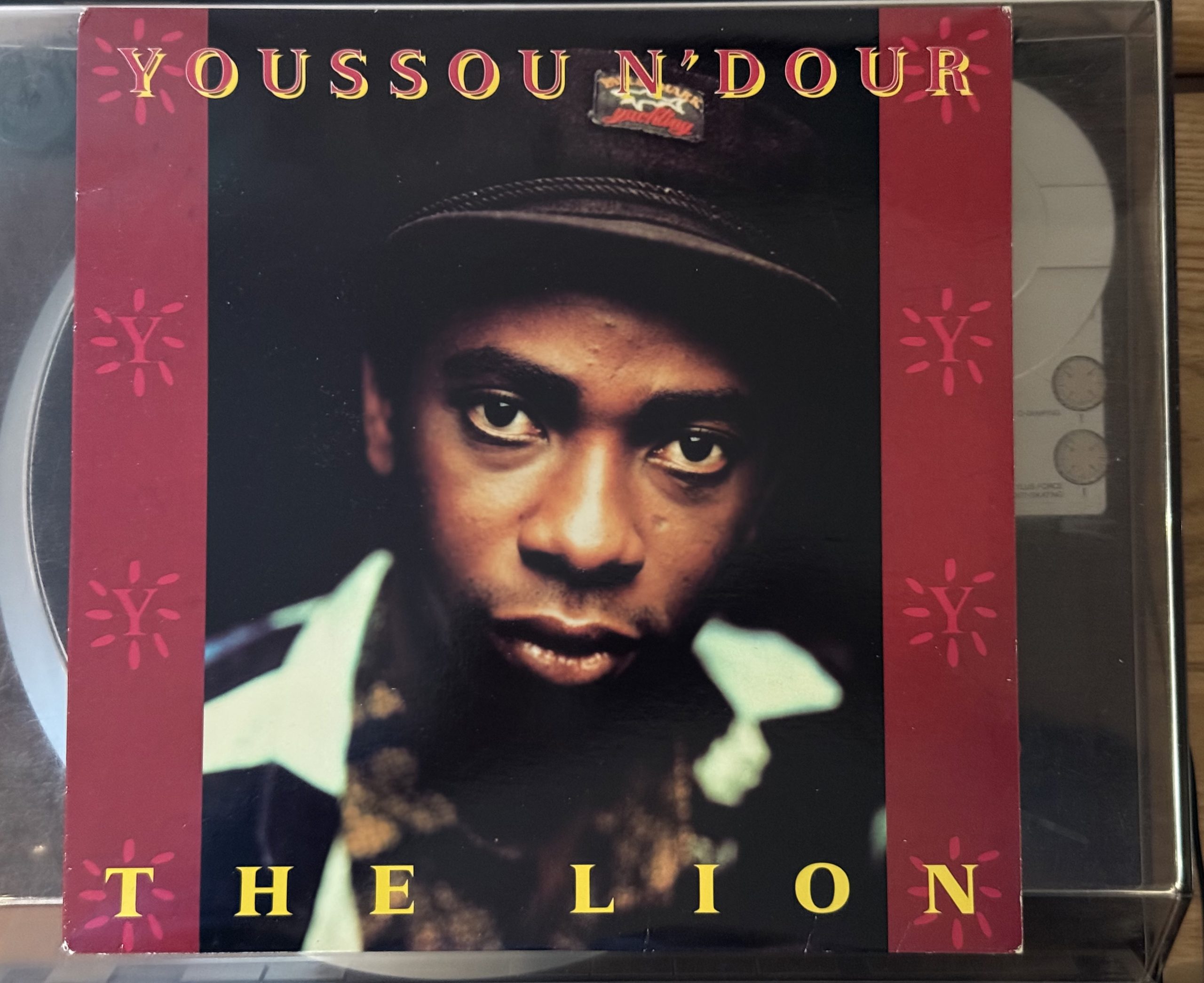
We’ve met Senegalese superstar Youssou N’Dour in the context of his work with Peter Gabriel; he might still be best known for his incandescent vocal on “In Your Eyes,” and we’ve heard his contributions to Peter’s all-star project Passion. But even before this global success Youssou was, by any measure, a star. It just took the world a while to catch up with him.
Youssou was born in 1958 in the Senegalese capital city of Dakar. He was already performing at age 12, and made many appearances with the Star Band, the house band of the most popular nightclub in Dakar at the time, the Miami Club. A number of bands eventually spun off the Star Band, including Orchestra Baobab and Étoile de Dakar; Youssou was a breakout star in the latter. The band fused traditional Senegalese music with Latin dance music, jazz and soul influences to form the mbalax style, which rapidly became the leading musical form in Senegal, Mauritania and Gambia due to its spread via inexpensive, accessible cassettes.
Étoile de Dakar was short lived due to tensions inside the group and split in two in 1981; Youssou’s half, Super Étoile de Dakar, featured guitarist Jimi Mbaye, bassist Habib Faye, and talking drum (tama) player Assane Thiam. The band recorded eight albums on local labels from 1982 to 1988. You can find a few of them on streaming services; Immigrés and Nelson Mandela are especially worth a listen. But following the release of So in 1986, and the ensuing world tour, it was clear that Youssou had the makings of international stardom. He signed to Virgin Records, which was now distributing Peter Gabriel’s records in the UK, and brought the members of Super Étoile de Dakar along into the studio as his backing band.
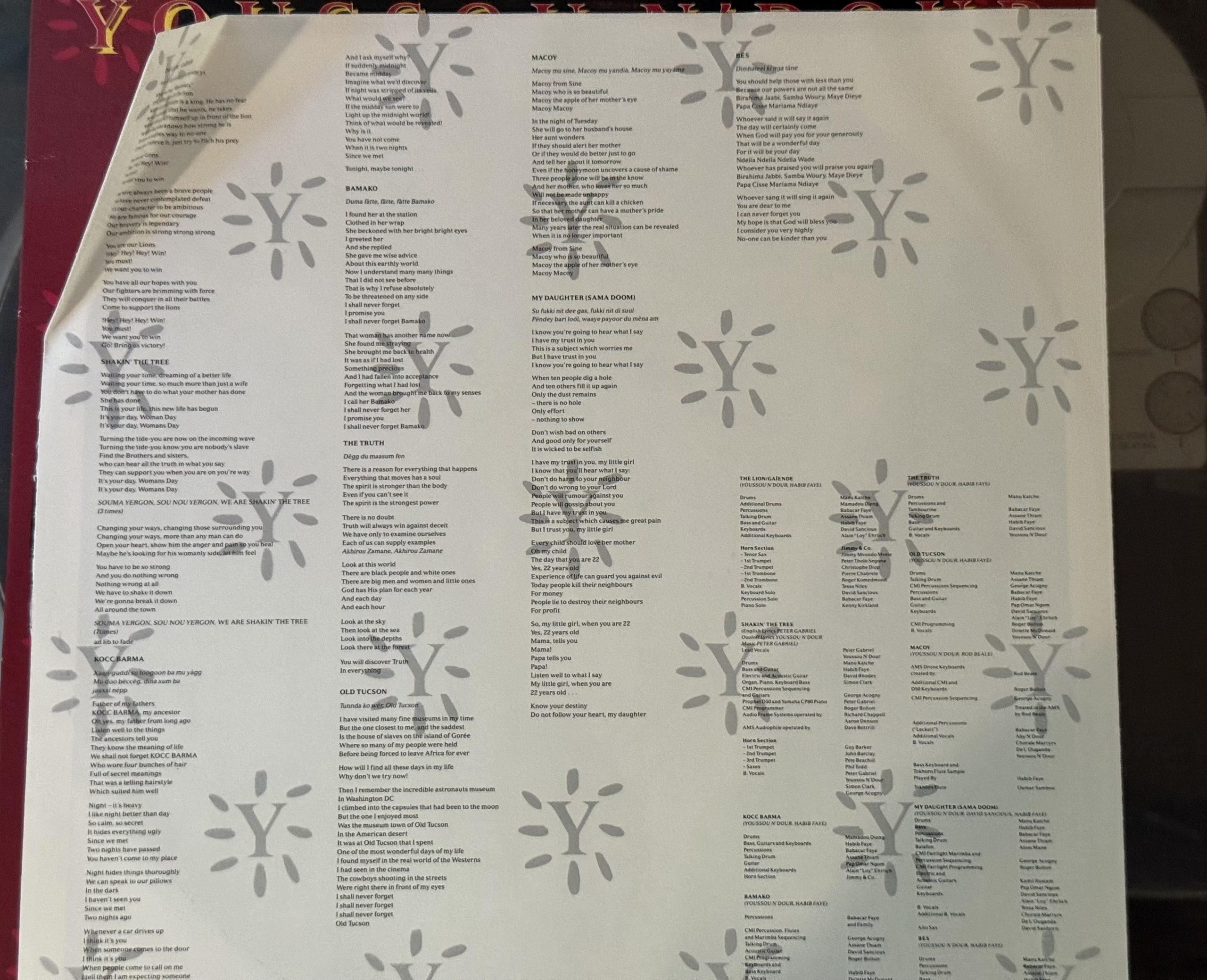
“The Lion (Gaïende)” starts us off with a bang. The band is tight as Youssou sings a song about the bravery of his people, in Wolof, that the liner notes translate in part as “We have always been a brave people/We have never contemplated defeat/It is our character to be ambitious… You are our Lions / Hey! Hey! Win! Win! / You must! / We want you to win.” Youssou is in fine voice here, moving quickly through the verse into an insistent chorus, in which he sings a second line that soars over the band. The bridge is noteworthy for some brilliantly fast keyboard work, which turns out to have been contributed by Kenny Kirkland. The lead track seems to fulfill all the promise of this debut, with sizzle and style that sacrifices none of the energy of the earlier Super Étoile recordings but adds a broader soundstage.
“Shakin’ the Tree” gives the people what they want—another Youssou/Peter Gabriel collaboration. This one is better thought of as Peter Gabriel’s band with Peter and Youssou trading lead vocals; of the players in Youssou’s band, only Habib Faye appears, joining Manu Katché, David Rhodes, and a horn section (Phil Todd, Guy Barker, John Barclay, Pete Beachill) made up of British jazz musicians. It helps that the song is a pretty strong Peter Gabriel composition, more optimistic—almost sunny—than the material on either of his two preceding albums. It also helps that it has two strong male voices singing about the strength of women, which you wouldn’t think would be groundbreaking but in 1989 was fairly revolutionary. And those horns! I remember reading a music mag article about Passion in which it talked about Peter sweating the stereo phase of the horns, trying to get the imaging just right in the mix, and you can definitely hear it here. About the only thing worth kvetching about is the vocal on the first verse, where, for the only time on record, Youssou sounds a little tentative as he sings the English lyrics. That may be why Peter chose to re-record the lead vocals with a higher melody when he put the song on his first greatest hits compilation a year later.
“Kocc Barma” is a more traditional mbalax number, featuring more of the Super Étoile sound including a non-British horn section and alternating sections of call-and-response and funky chorus. You can really hear the contributions of Habib Faye on bass and Assane Thiam on talking drum here; together they build an irresistible groove. This song was the headliner of one of Youssou’s last Super Étoile cassette releases, and it gives us a great high-definition picture of how mbalax could play on the world stage.
“Bamako” is more synth- and guitar-forward—that’s David Sancious on acoustic guitar, and African producer George Acogny’s keyboards and production. The percussion is forward in the mix but is largely relegated to straight-ahead timekeeping, with few of the talking drum flourishes from “Kocc Barma” until the very end. Instead we get stabs of strings and washes of heavily reverbed Youssou vocals, with backing vocals from Dolette McDonald. Not a bad thing at all.
“The Truth” builds atop a slap bass foundation with a strong Youssou chorus. Another inspirational lyric, the song begins (in translation) “There is a reason for everything that happens/Everything that moves has a soul.” About the only thing to complain about are the swathes of very 1980s keyboards, but then again, by 1989, synths are inevitable. Still, one wonders what this would sound like with the horn section.

Side two opens with “Old Tucson,” a puzzling song that features Youssou singing in English about three museums: the Maison des Esclaves (House of Slaves) on Gorée Island off the coast of Senegal; the Air and Space Museum, and Old Tucson, a kind of Disneyfied view of the old West where cowboys walk the streets. The groove is strong under the story, but it’s not clear where this shaggy dog story is going to end up. Is the point to marvel at the fruit that sprang from the poisoned beginnings, or just a travelogue? Whatever it is, Youssou will never forget, as he assures us in the final chorus. (This is another one that ended up on the Super Étoile Kocc Barma cassette.)
“Macoy” answers the question: what would it sound like if we had gotten more Youssou on Peter Gabriel’s Passion? The track is built around loops and samples sequenced on the Fairlight and features improvised vocals from Youssou and from his sister Aby N’Dour, along with backing vocals from the Chorale Martyrs de’Ougande. The translated lyrics in the liner notes don’t illuminate so much as deepen the mystery: who is Macoy from Sine? Why should there be shame in her going to her husband’s house? Why must she go after midnight?
“My Daughter (Sama Doom)” builds a groove out of a three-measure phrase and marimba samples on the Fairlight, but here it feels more organic thanks to the capable drumming of Manu Katché, who adds a little straight-ahead drive to the groove laid down by Faye and Thiam. Another soaring chorus adds emotional heft to this song of advice from Youssou to his daughter.
“Bés” closes out the album with another wash of synthesizers. It’s tempting to blame the major-label producers for the preponderance of synthesizers here, but the 1987 version on the Kocc Barma cassette has even more synth sound, albeit on less expensive hardware. It also has a stronger percussive drive than this version; though the album version features Thiam and Katché, it’s David Sancious’s keyboards that carry the overall sound. The lyric here is an inspirational message: “You should help those with less than you/Because our powers are not all the same.” He calls out a series of Senegalese politicians and innovators, charging them with a plea for generosity.

Coming on the heels of Nusrat Fateh Ali Khan’s Shahen-Shah, The Lion can be frustrating for the intrusion of synths, for the way that songs like “Old Tucson” and “Macoy” pose questions with no satisfying answers. At the same time, the album has some flat-out bangers, to say nothing of furthering the truly wonderful collaboration between Youssou and Peter Gabriel. And even better albums lay ahead; we’ll hear one of those in a few weeks. Next week we’ll hear more from some of the musicians who contributed to the success of Gabriel’s Passion.
You can listen to this week’s album here:
BONUS: Here’s a live performance of “Macoy” from Tokyo:
BONUS BONUS: Youssou was playing some of this material in the sets on the So tour where he opened for Peter Gabriel, including the legendary 1987 Athens performance. It’s a treat to watch the band perform “Kocc Barma” in high definition, even if this version omits the brass section:
