Album of the Week, June 6, 2026
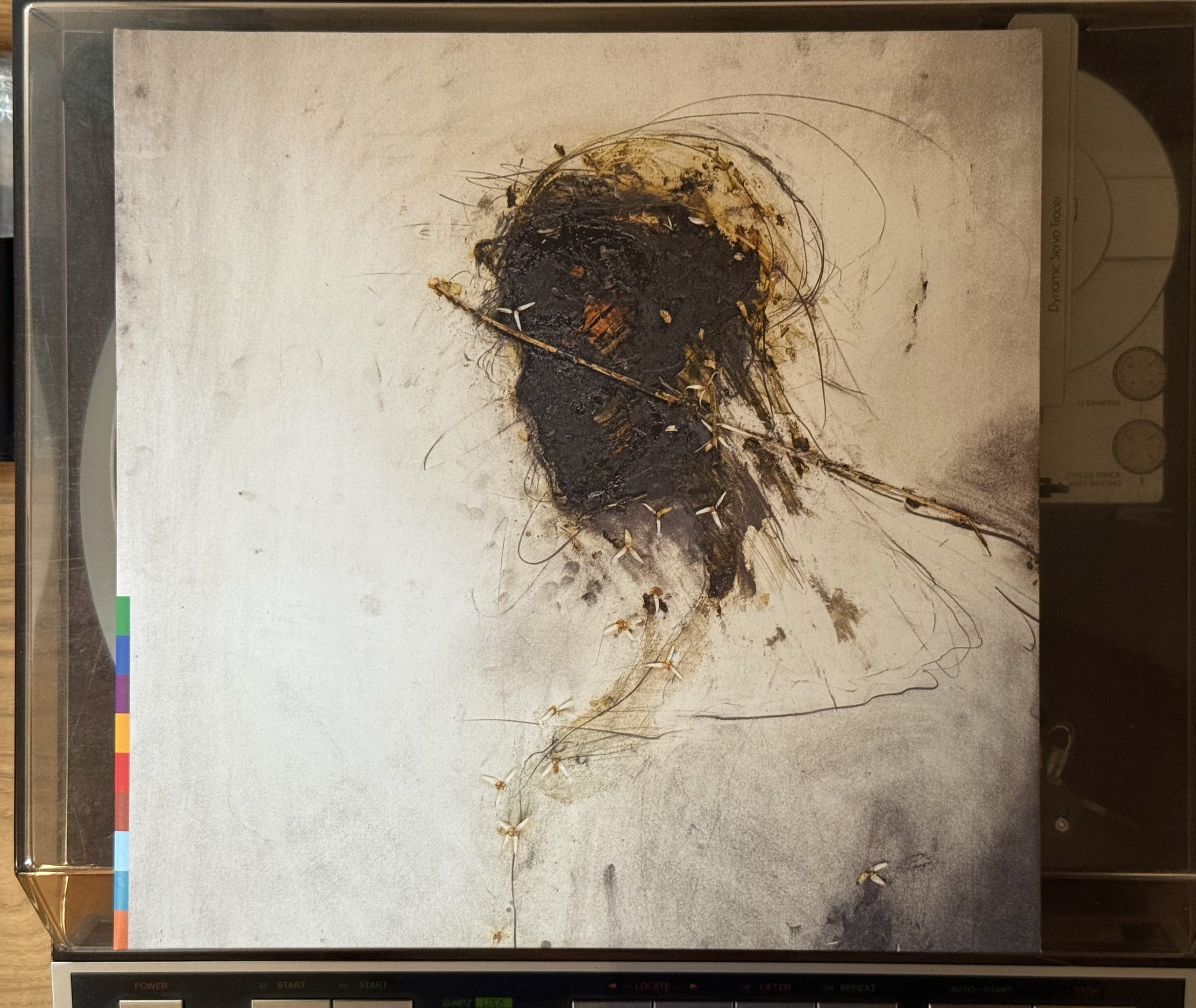
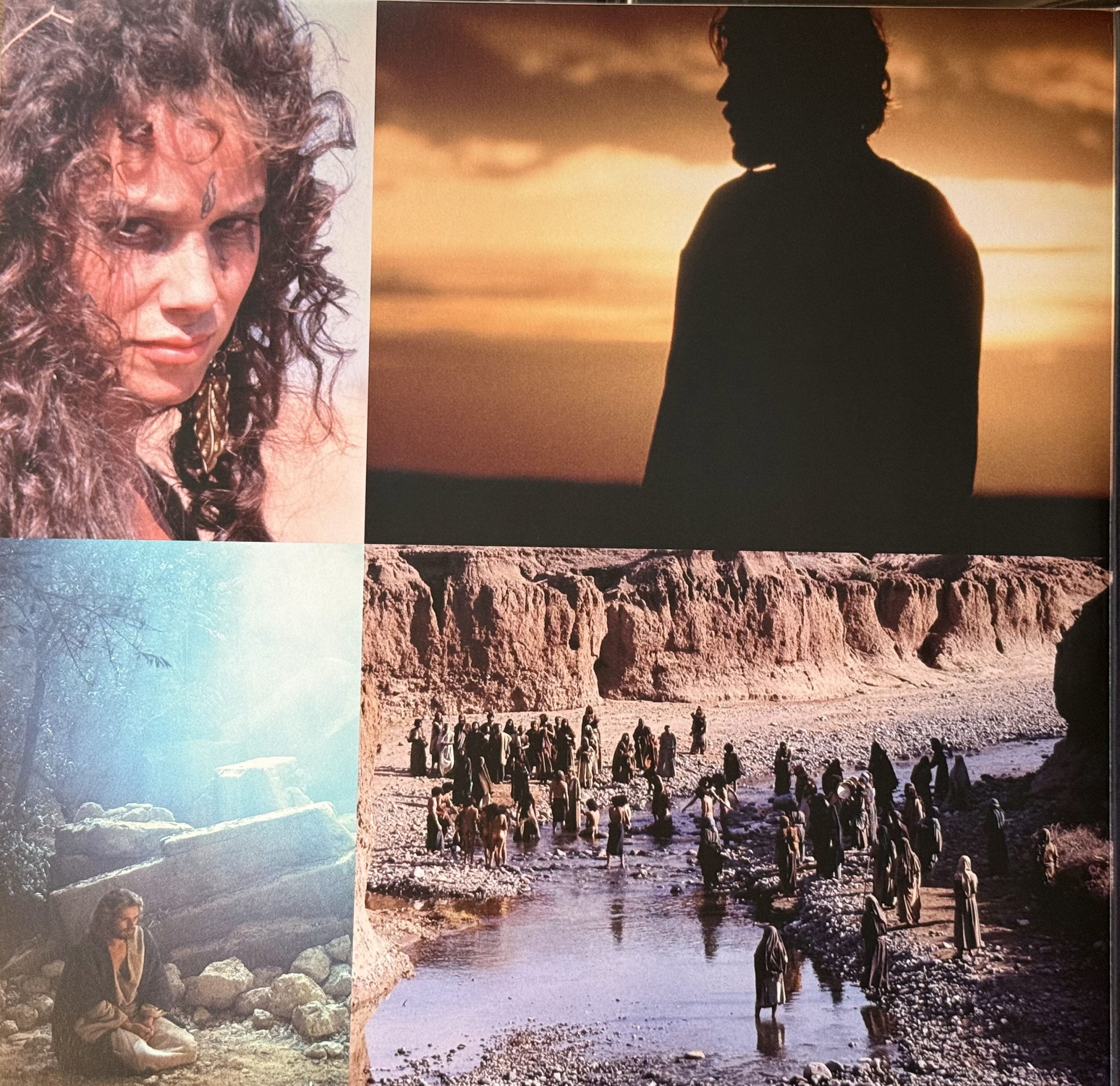
Peter Gabriel spent the months following So touring the world; the concert film Live in Athens gives a good idea of what that experience was like. But he was still writing music, and the next thing that came from him was a one-two punch: a soundtrack album to the most controversial film of the late 1980s, and a brand new record label to release it. And Peter being Peter, he released the album in June 1989, almost a full nine months after the theatrical release of the film that inspired it.
The energy that today animates reactionary groups like the Promise Keepers and Christian Nationalist groups was alive and well in the 1980s, in the form of groups like the Moral Majority, TV evangelist fans, and other similar gatherings of extremists. They weren’t happy with Martin Scorsese’s film (though few formed an opinion informed by actually having seen it), which dared to imagine that Jesus might have been human enough to have been tempted by the possibility of family life into abandoning his mission; the idea that Jesus might have in particular entertained sexual thoughts was particularly threatening.1 Some of those who felt so threatened lost the plot badly enough that they firebombed cinemas and made death threats against Scorsese. Plus ça change, plus c’est la même chose…
Gabriel seems to have escaped the threats, possibly because his album came out so much later than the movie’s release and the height of the controversy. Though a version of the music appears in the film, he kept working on it, trying to find the right sounds and textures, through March of 1989. And, thanks to his ongoing work with WOMAD and his previous collaborations, he had the right musicians to work with, many of whom would go on to release albums of their own on his new label, Real World Records. The list was long and included Egyptian percussionist Hossam Ramzy; Indian violinist L. Shankar; Senegalese vocalists Baaba Maal and Youssou N’Dour; Pakistani qawwali singer Nusrat Fateh Ali Khan; Senegalese drummer Doudou N’Daiye Rose; percussionists and string players Massamba Diop, Mahmoud Tabrizi Zadeh, and Fatala; Turkish ney flute master Kudsi Erguner; Brazilian percussionist Djalma Corrêa; Americans Jon Hassell, David Sancious, Billy Cobham, Nathan East and Manny Elias; and Peter’s long-term collaborators David Rhodes and David Bottrill.
All that said, the most notable music performance on the first track is a sample. “The Feeling Begins” opens with a traditional Armenian melody played on doudouks by Vatche Housepian and Antranik Askarian, from a collection of traditional Armenian music released on Ocora Records years before. The doudouk melody forms the backbone of the arrangement, but the massive percussion attack from Manny Elias with Hossam Ramzy is also fairly magnificent and provides our first clue that we’re in for a genre-bending ride throughout the album. As the doudouk melody comes to an end, the drums roar in a crescendo, using the same trick that Peter so memorably deployed in “The Rhythm of the Heat.”
One thing I discovered as a teenager listening to this album (I bought it the first summer I ever lived for myself, during a monthlong science Governor’s School experience at Virginia Tech, so I listened to it a lot) was that I was less engaged by the tracks that featured fewer live instruments. “Gethsemane” is one of those tracks, constructed by Gabriel from samples of flute and voices. But it’s appropriately ominous and ghostly, and does the job of foreshadowing that it’s meant to do.
It’s followed by one of the more spectacular sequences on the album. “Of These, Hope” opens with a fanfare of sorts on the arghul, an ancient reed instrument that here contributes a swirl of crowd noise over an insistent talking drum courtesy of Massamba Diop. Peter has said of So that the groove was the thing that made that album so special; “Of These, Hope” is a classical composition with groove. It also has strong textural interest thanks to the arghul, and from the combination of drone, flute whistle, talking drum, guitar and synths. This leads into “Lazarus Raised” without break via an anticipatory shiver of synths as another doudouk sample — this time an uncredited Kurdish player from a UNESCO collection — gives us a mysterious melody signifying the expression of power leading to the raising of Lazarus from the dead. Peter’s flute whistle leads us into “Of These, Hope (Reprise),” which plays like a further elaboration of the melody. It misses the shock and awe of the arghul chorus from the first repetition, but gains a different sort of shock and awe thanks to the presence of Baaba Maal, a Senegalese vocalist whose speciality was the traditional music of the Pulaar-speaking peoples of the Futa Tooro region of Senegal.
“In Doubt” is another synth-forward groove, given depth by the uncanny sound of the kementché, an Iranian bowed string instrument here played by Mahmoud Tabrizi Zadeh. Peter doesn’t let this groove build for very long before a bigger one takes over , a massive percussion onslaught from Doudou N’Daiye Rose and Fatala signals the arrival of “A Different Drum.” I can almost hear Peter telling Geffen Records, “This is the single.” Between the strong rhythmic intensity, the insistently repetitive melodic theme, the wordless chorus, and above all the presence of the spectacular voice of Youssou N’Dour, this is one of the most accessible and memorable tracks on the album. It has the feeling of one of Peter’s songs-in-progress that never received a proper lyric, but the feeling is there, a stirringly heroic track.
What did get life as an independent single, somewhat surprisingly, is the next track,“Zaar.” A complex track built around a slowed- and pitched-down drum sample, the band, here featuring Hossam Ramzy on percussion, Mahmoud Tabrizi Zadeh‘s kementché, wordless vocals, and an intense series of interjections from L. Shankar’s violin, constructs a striking mood piece whose free interchange of musical ideas and sounds seems to sum up the whole project. “Zaar” was the track Peter chose to represent this project on his first greatest hits album, which would be released two years later, and it feels like a universe of its own.
“Troubled” is built around a mean groove built out of layered drums and percussion, all played by the great Billy Cobham. After we heard him on Champions and on a whole slew of CTI albums, Cobham joined John McLaughlin’s legendary jazz-world-fusion project Mahavishnu Orchestra, and it’s that polyrhythmic intensity that he brings here over a backing of snarling synths and a wordless vocals chorus loop. “Open” breathes more freely, a duet between Peter on the Prophet and Akai S900 and vocals, and L. Shankar’s violin and vocals. It suspends time and, with the echoes of ragas in Shankar’s improvisation, lends an unexpected emotional resonance to the simple melody Concluding the trio of pieces, “Before Night Falls” is a three-way collaboration between Hossam Ramzy, Shankar, and the great Turkish Sufi ney flute legend Kudsi Erguner, with added depth courtesy of one of engineer David Bottrill’s legendary drones. The plaintive melody and fade-out lend the feeling of a sunset over the gates of a desert city.

We leave groove behind for more traditional composition with “With This Love,” a haunting melody played by Robin Canter on the cor Anglais. The melody is gorgeous but the layers of synths detract somewhat from the emotional power of the work. The theme bookends a trio of pieces dealing with the actual crucifixion of Christ, starting with “Sandstorm,” in which Hossam Ramzy, Mahmoud Tabrizi Zadeh, Manu Katché and Shankar build an atmospheric groove over a location recording of Moroccan percussion and vocals. The synths add a blurriness to the overall effect, so when the Moroccan musicians cut through it’s startling and intense.
“Stigmata” is a joint improvisation by Mahmoud Tabrizi Zadeh, Shankar and Gabriel. The instrumental texture is deep and mysterious, but ultimately the tension ebbs away into the fade-out before “Passion.” The redoubtable Shankar, Jon Hassel, and Peter’s Fairlight are the supporting players here for the astonishing vocal improvisations of Youssou N’Dour and Nusrat Fateh Ali Khan, here signifying the suffering of Christ on the cross. Here there is no ebbing of intensity; Nusrat masterfully builds suspense through his sangam improvisation, as Youssou’s interjections cut through to intensify the emotional impact. A devastatingly pure high melody from choirboy Julian Wilkins2 punctuates the rising emotional tide. At the end, everything cuts away but Youssou’s cries and Djalma Corrêa’s percussion.
The choral reprise of “With This Love” is introduced by the cor Anglais melody, but Gabriel wisely leaves the Wells Cathedral Boys Choir (recorded by Richard Evans) totally unaccompanied as they perform a heartwrenching four-part arrangement of the melody. The acoustic of the performance space can be heard—there’s an audible footfall or noise at one point that sounds a bit as though someone has stepped onto an echoing stone floor in one of the transepts and been hastily waved away—adding to the overall timeless resonance of the moment. It’s one of the most stunningly beautiful musical expressions on an album full of remarkable sounds. It’s also one of the most fraught; originally intended to accompany the scene where a devil in the form of a little girl tells Christ that he doesn’t have to suffer, removes the nails from his body, and leads him off the cross, it was nixed from the final film. Scorsese pointed out that the use of a Christian religious signifier like a boys’ choir would further underscore the blasphemy of the moment and pour fuel on the outrage that was already mounting even before the film was released.
“Wall of Breath” leads us into uncertain territory as Christ is tempted to abandon his destiny, with Kudsi Erguner, Shankar, and the Musicians du Nil building an atmosphere based around a shifting tonality. “The Promise of Shadows” takes us to a dark place with Billy Cobham’s drums and a rising chorus contributing to the feeling that something isn’t right. Despite the title, “Disturbed” seems to lead us into a brighter moment, as Shankar’s violin introduces an intense percussion groove built up from Hossam Ramzy’s tabla, African percussion from Fatala, and looped percussion from Mustafa Abdel Aziz and Said Mohammad Aly. Peter’s Prophet and Fairlight provide a simple melodic line to anchor the groove as the percussion fades out.
“It Is Accomplished” is signaled by a fanfare on the arghul followed by an uncanny shimmer of a vocal yell (uncredited on the album, the original location recording has surfaced which is amazing to listen to on its own. You can hear it in one of my Exfiltration Radio mixes). A triumphant melody built around a simple descending four-note pattern gains depth from Billy Cobham’s drumming, David Rhodes’ guitar, and David Sancious’s Hammond organ as the music celebrates Christ overcoming his last temptation and fulfilling his mission. “Bread and Wine” builds a new melody from the echoes of the old, creating something new in remembrance courtesy of a tin whistle performance by Richard Evans.

I cannot overstate the role this album played in furthering my personal musical development and encouraging me to listen to the world with open ears. And Passion marks a significant moment in Peter’s career, as a culmination of his work with WOMAD during the 1980s and a seamless blending of his explorations of synth textures with collaborative compositions from some of the finest non-Western musicians of the moment. It earned a Grammy Award for Best New Age Album3, and helped to further popularize “world music” as a genre in its own right.
It also helped create a vehicle to fuel the demand; as the first release on Gabriel’s new Real World label, it included advertisements for a series of individual recordings from many of the musicians on the record, plus more of Gabriel’s WOMAD collaborators. Real World is still going strong and has reissued many of those pivotal early recordings, some appearing on vinyl for the first time; we’ll check in on those, among other things, starting next week.
You can listen to this week’s album here:
BONUS: This 2021 performance by the Francesco Albano Open Ensemble of the Passion score is impressive. With all the layers in the original recording, it’s hard to imagine someone pulling off one of the songs live; to do the entire thing in a single concert is kind of mind-blowing.
BONUS BONUS: Speaking of live performances, Peter performed “Of These, Hope” live at the 1988 WOMAD Festival in St. Austell, with Nusrat Fateh Ali Khan and Youssou N’Dour. Sadly there’s no video but the audio in this bootleg clip isn’t half bad:
Footnotes