
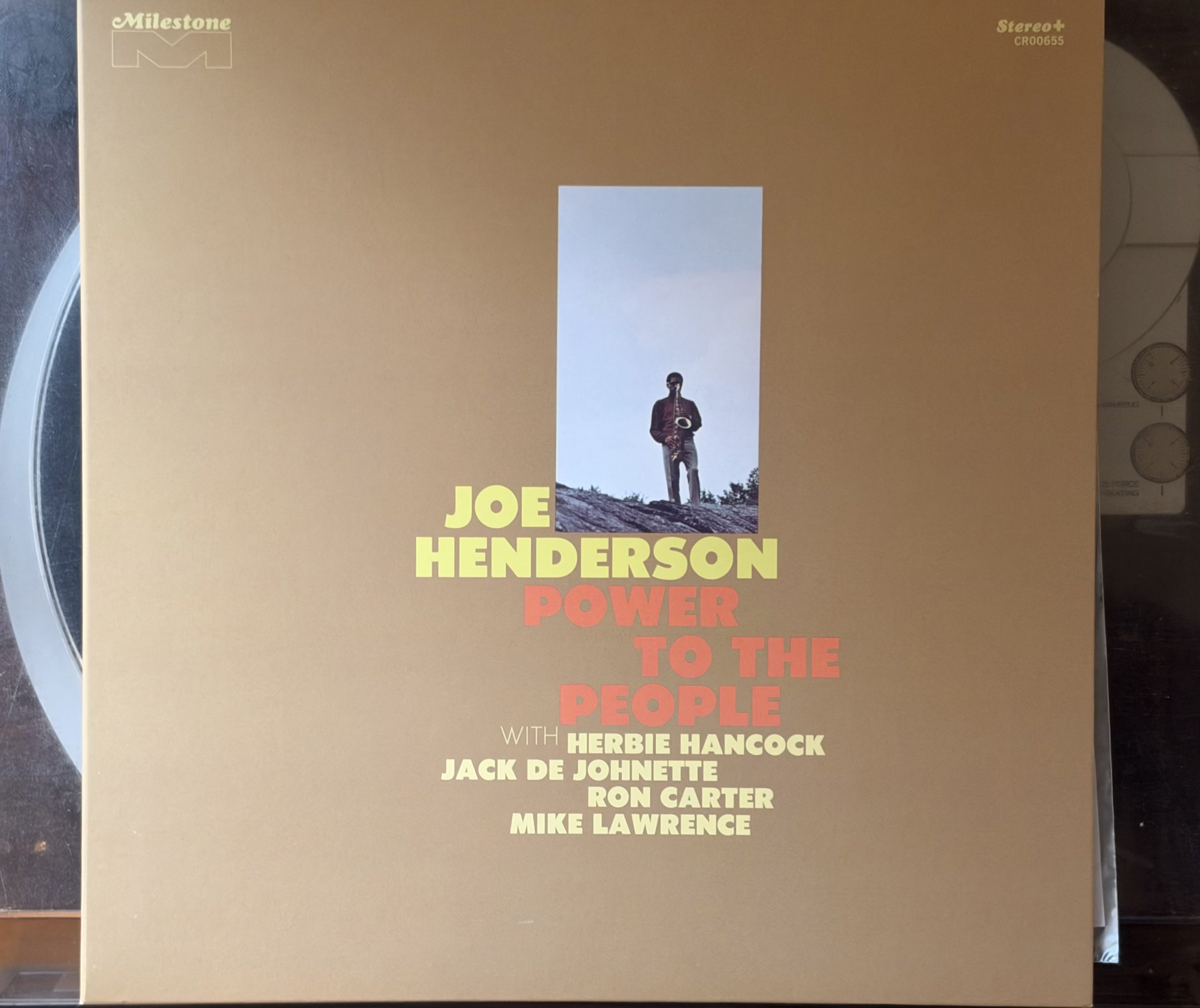
Album of the Week, November 28, 2026
It was 1969 and a lot had changed since Joe Henderson’s last recordings for Blue Note. Following those gigs with McCoy Tyner in 1966, he moved to Orrin Keepnews’s Milestone Records label, where he recorded two gems, The Kicker and Tetragon, that are very much of a piece with Mode for Joe and Inner Urge; that is to say, brainy, adventurous, eclectic post-bop and modal jazz, often with the same players that had been on his Blue Note records. But by the time May of 1969 rolled around, the world was changing.
In 1968, Miles Davis had recorded his first album that featured significant electric instrumentation, the great Filles de Kilimanjaro; it saw release in February of 1969, the same month he recorded his follow-up, In a Silent Way, which pushed his writing and instrumentation innovations even further. And there’s no doubt that Henderson was listening. Not only did his next Milestone album feature songs organized around similar melodic and harmonic concerns, but it was made with two key Miles sidemen, Herbie Hancock on Fender Rhodes and acoustic piano and Ron Carter on electric and acoustic bass, alongside returning collaborator Jack DeJohnette on drums. An up-and-coming trumpeter, Mike Lawrence, joined the group on two tracks; Lawrence would go on to play with Billy Cobham, Bob James, the Gil Evans Orchestra, Larry Coryell, Manu Dibango and others before his early death of cancer in 1983.
The album opens with what is likely its best known track, “Black Narcissus,” which entered Joe’s repertoire, appearing on two later albums. The composition is deceptively simple, in the manner of some of the second Miles quintet’s later numbers: a wistful melody over two modes that are elaborated in an ostinato pick-up by Ron Carter on acoustic bass and an evolving soundscape in Fender Rhodes (and ring modulator) by Hancock. As with Miles’ “Fall” or “Nefertiti,” the same melodic and chord structure repeats, but here both the rhythm section and saxophone explore the melody. It’s calm enough for a lullaby but rich enough for endlessly rewarding listening.1
“Afro-Centric” has us back in modal territory, with an opening that feels like a cross between “Nefertiti” and Freddie Hubbard’s Red Clay. Mike Lawrence’s trumpet is a strong presence in the head of the tune that rings here, blearily stretches there, and generally does what it’s supposed to, which is to invoke Miles without imitating him. Henderson’s solo spars and stretches out over the Fender and Ron Carter’s bass, which does its own probing exploration. (In Pitchfork, Andy Cush noted in a retrospective review of the album that Carter’s technique changes in fascinating ways between his electric and acoustic playing). There’s groove here as well as “out,” reflecting the ongoing dialogue between jazz and rock that Miles’s fascination with Jimi Hendrix had contributed to the musical language of these players.
“Opus One Point Five” is the sole Ron Carter original on this album, and though it’s all on acoustic instruments, it feels of a piece with the wistful melodic world of “Black Narcissus.” Much of this is due to the complexity of Herbie and Ron’s interplay beneath Henderson’s wistful melodic lines. Herbie’s solo has hints of “Circles” in its sensitively played and chorded runs, but even here there are flurries of exploration, small clusters of notes falling like petals, and Carter’s trademark portamentos add extra dimensions to the sound. Just as it seems to settle back into a ballad, there’s Herbie Hancock strumming the strings of the piano like a harp, a little blossom of dissonance emerging from the quiet.
The band ends the first side by revisiting an old friend. “Isotope” was well established in Henderson’s playbook by now, and this version, with both Carter and Hancock on acoustic instruments, adds their unique interplay and playfulness to the piece’s Monkian atmosphere. The trading-fours section between the two former Miles sidemen is itself worth the price of admission of this version.
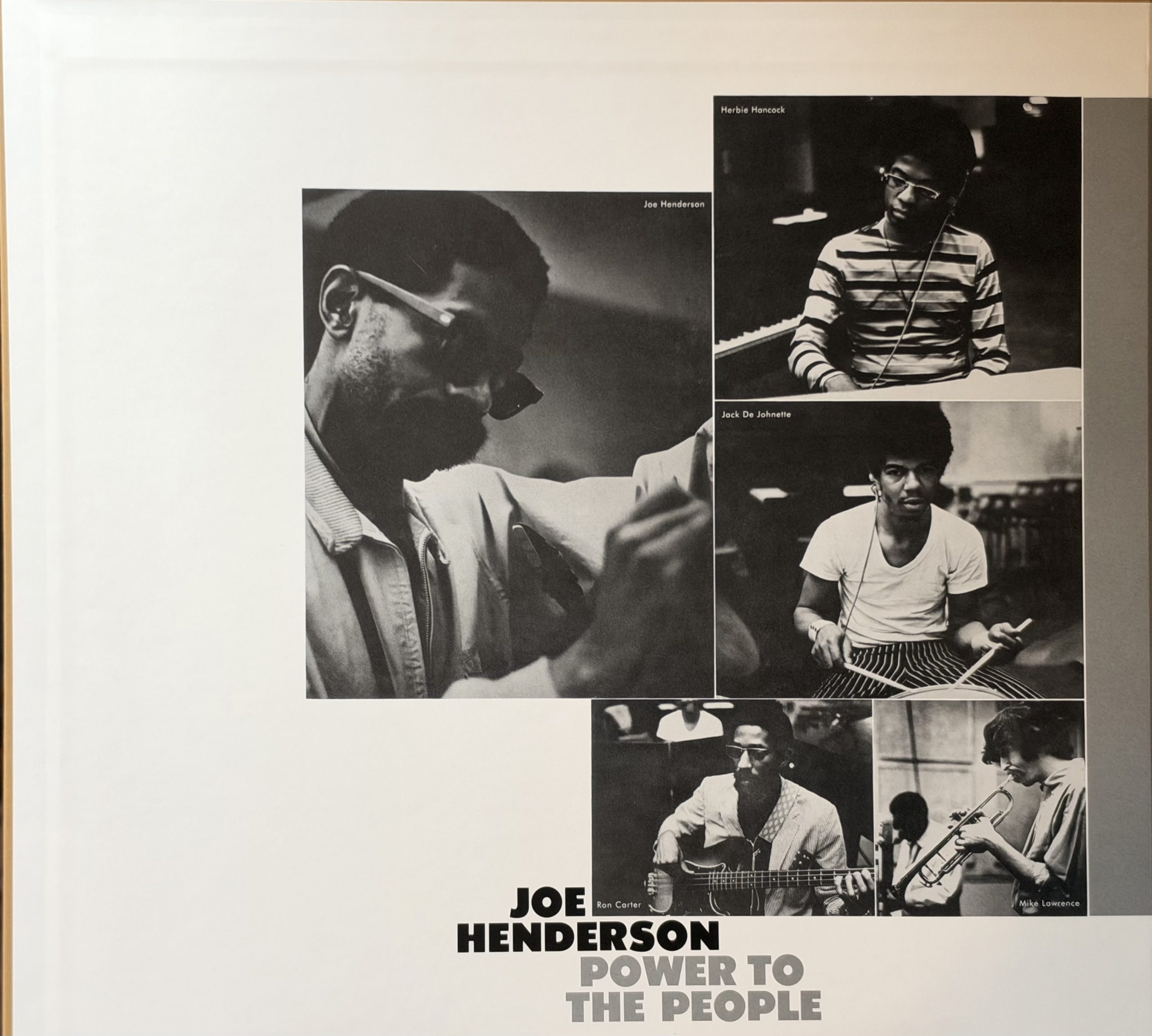

“Power to the People” is built on groove—an ascending arpeggio from Ron Carter and a brisk double-time cymbal riff from DeJohnette over a cloud of Fender Rhodes fairy magic. The horns play a modal melody in parallel fourths before they get to the turnaround and suddenly shift into 6/8 time. DeJohnette is in beast mode throughout, playing ever-more-elaborate breakdowns as Henderson and Hancock take turns covering the landscape in nimbuses of light during the early parts, but there are also pillars of fire to be had, notably on Hancock’s solo, in which DeJohnette seems to explode with intensity and Carter pulls harmonics from his strings to merge his sound with Hancock’s. At the end, Henderson finds a new counter-rhythm as the rest of the group seemingly dissolves into motes.
“Lazy Afternoon,” composed by Jerome Moross with John LaTouche, is the sole standard on the album, and if Carter’s groove is laid back it’s deceptive, with Hancock vamping on alternate rhythms and chords, prodding Henderson’s seemingly relaxed solo to different off-beat accents and places. DeJohnette displays the mastery of color and rhythm here, even in this quieter number, that would make him an invaluable contributor to Keith Jarrett’s trio for many years.
The album closes with “Foresight and Afterthought,” described as “an impromptu suite in three movements” and credited to Henderson, DeJohnette and Carter, a blaze of improvisatory masterwork that takes us from raging heights to a contemplative interlude, and then back into the fire. The track fades out on an extended bass line from Carter as the players appear to finally collectively exhale.
Henderson stayed with Milestone, even moving to San Francisco to be closer to the label, until 1977. (If you can find it, there’s a pretty spectacular CD box set that collects all his work on the label, including some incandescent live sets.) After Milestone’s demise, he recorded on several labels, including two albums called State of the Tenor for a revitalized Blue Note, and a superstar standards album, Echoes of an Era, with Chick Corea, Freddie Hubbard, Stanley Clarke, Lenny White, and the astonishing Chaka Khan. His career reignited with a series of brilliant albums on Verve which, sadly, have yet to receive vinyl reissues. He died of lung cancer in 2001, bringing a long and storied career to an end.
Next week starts a month of Christmas records, and we have some good stuff lined up. See you then.
You can listen to this week’s album here:
BONUS: “Black Narcissus” received the big-band treatment, along with much of Henderson’s great compositions, on the 1996 Verve release Joe Henderson Big Band…
BONUS BONUS: …along with a somewhat more transformative treatment, on Flora Purim’s 1977 album Encounter (with George Duke, Alphonso Johnson, and Henderson himself on tenor):
BONUS BONUS BONUS: This latter-day cover by pianist Emmet Cohen, saxophonist Patrick Bartley, drummer Kyle Poole, and bassist Larry Grenadier is notable for the interplay between Cohen’s probing piano and Grenadier’s adaptive, searching baseline that walks here, swings there, and encourages the other players to take the tune beyond.
Footnotes
- Hancock and Carter played on a lot of sessions that produced music like this over a short span of time following Filles de Kilimanjaro until Bitches Brew reset the sonic landscape. I’ve called it “jazz in inner space,” and you can listen to more examples on the Exfiltration Radio show of the same name. “Black Narcissus” itself was featured on one of the earliest Exfiltration Radio sets. ↩︎