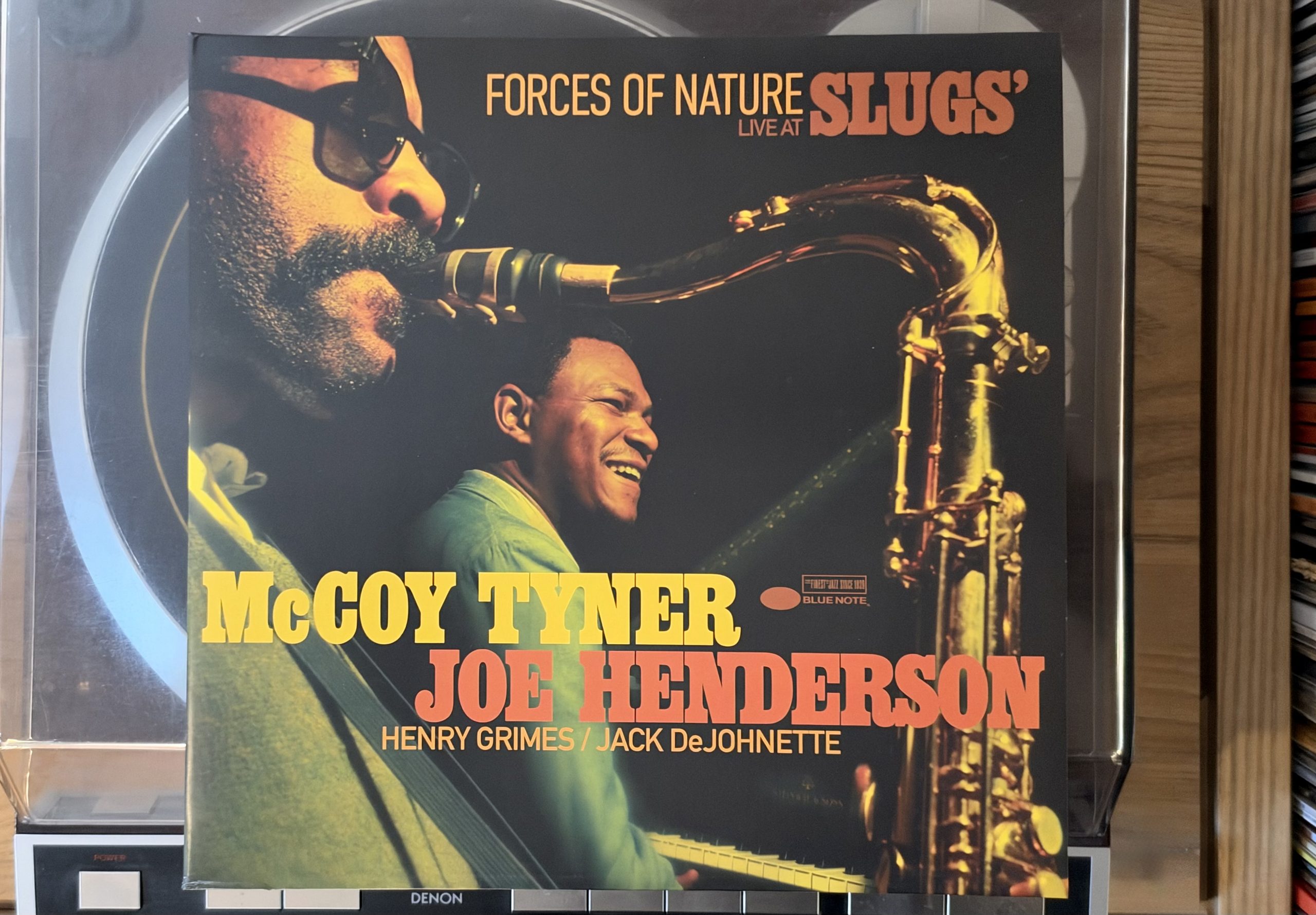
Album of the Week, November 21, 2026
Joe Henderson was in an interesting place in 1966. The follow-up to Inner Urge, Mode for Joe, was recorded at the end of January in Rudy Van Gelder’s studio. But if anything he was even busier as an in-demand sideman. Before the Mode for Joe session, he was on a session for Nat Adderley for Atlantic. In February, he did sessions with Joe Zawinul and live sessions with Horace Silver; March was Freddie Hubbard; May was Lee Morgan; and July was Bobby Hutcherson. Somewhere in the middle of all this, though, he found time to hit up Slugs’ with an old friend.
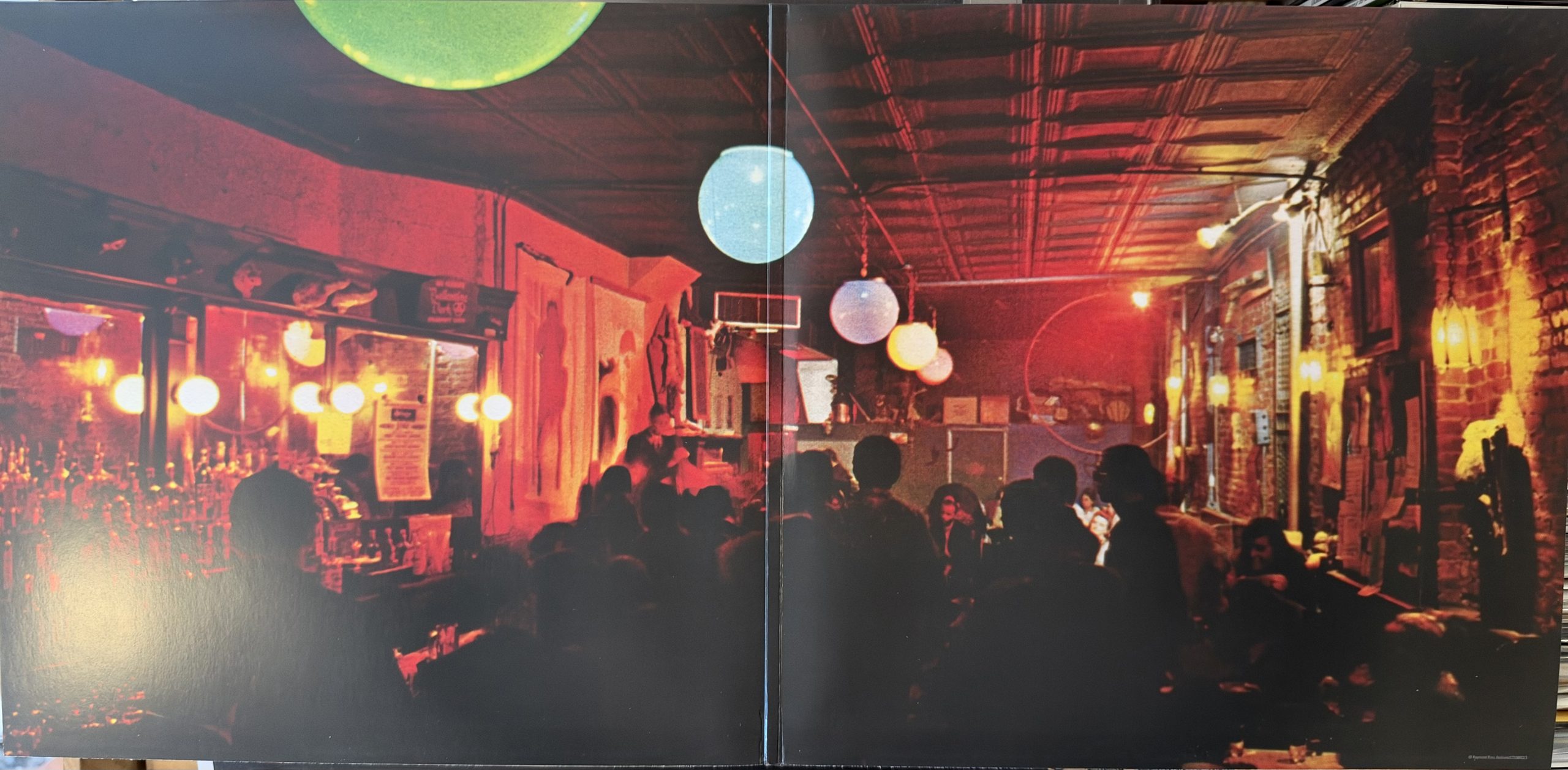
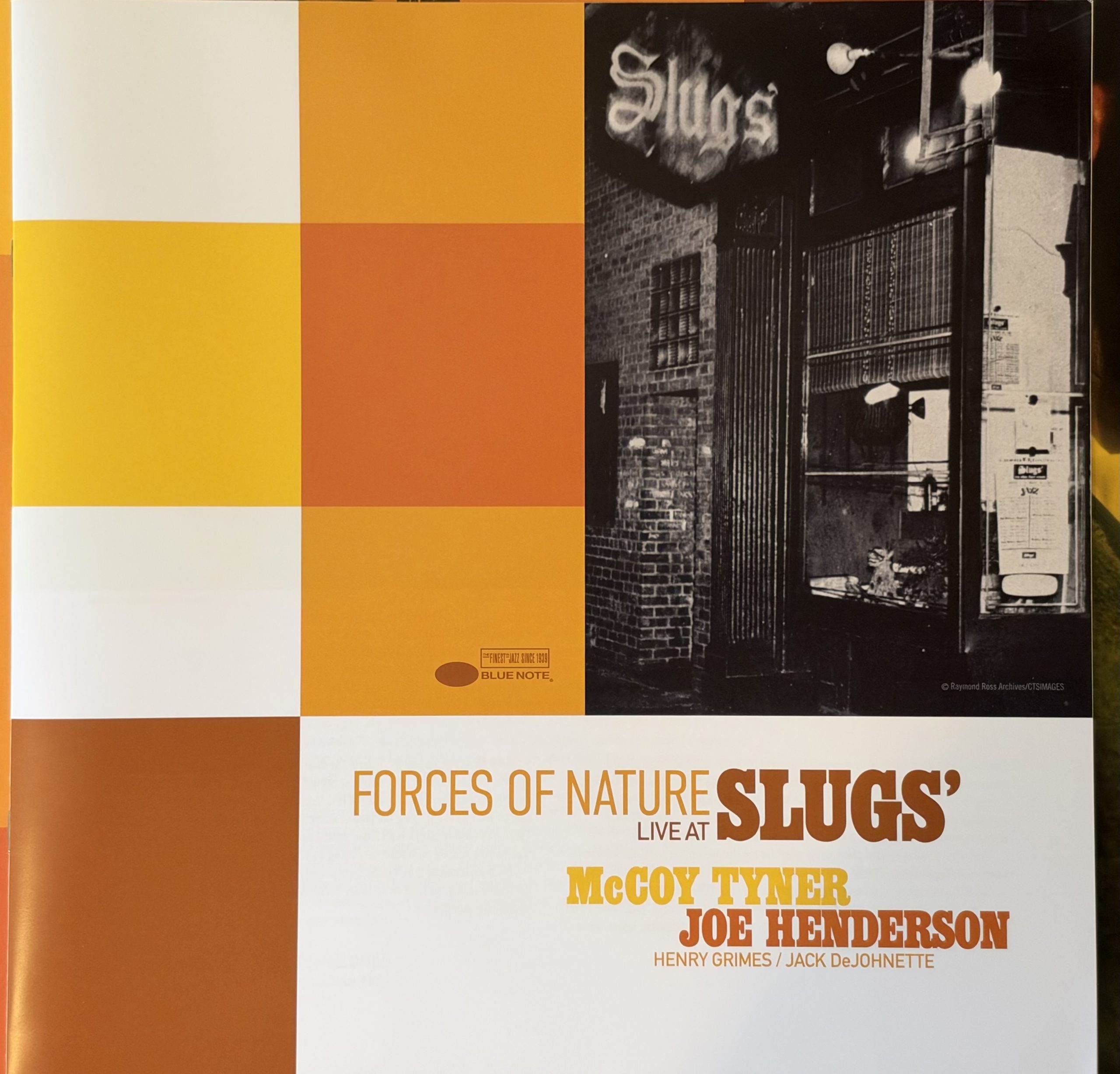
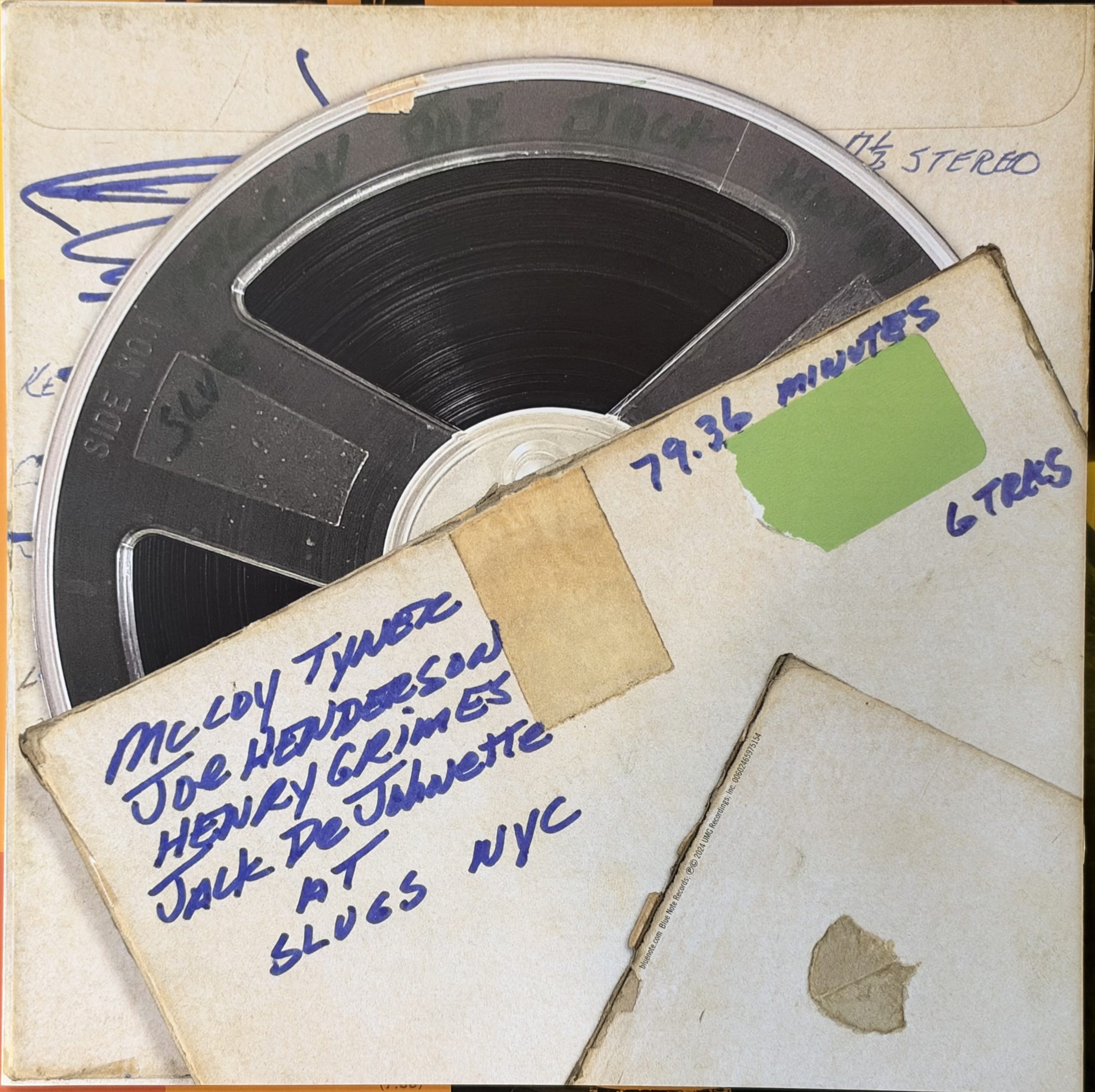
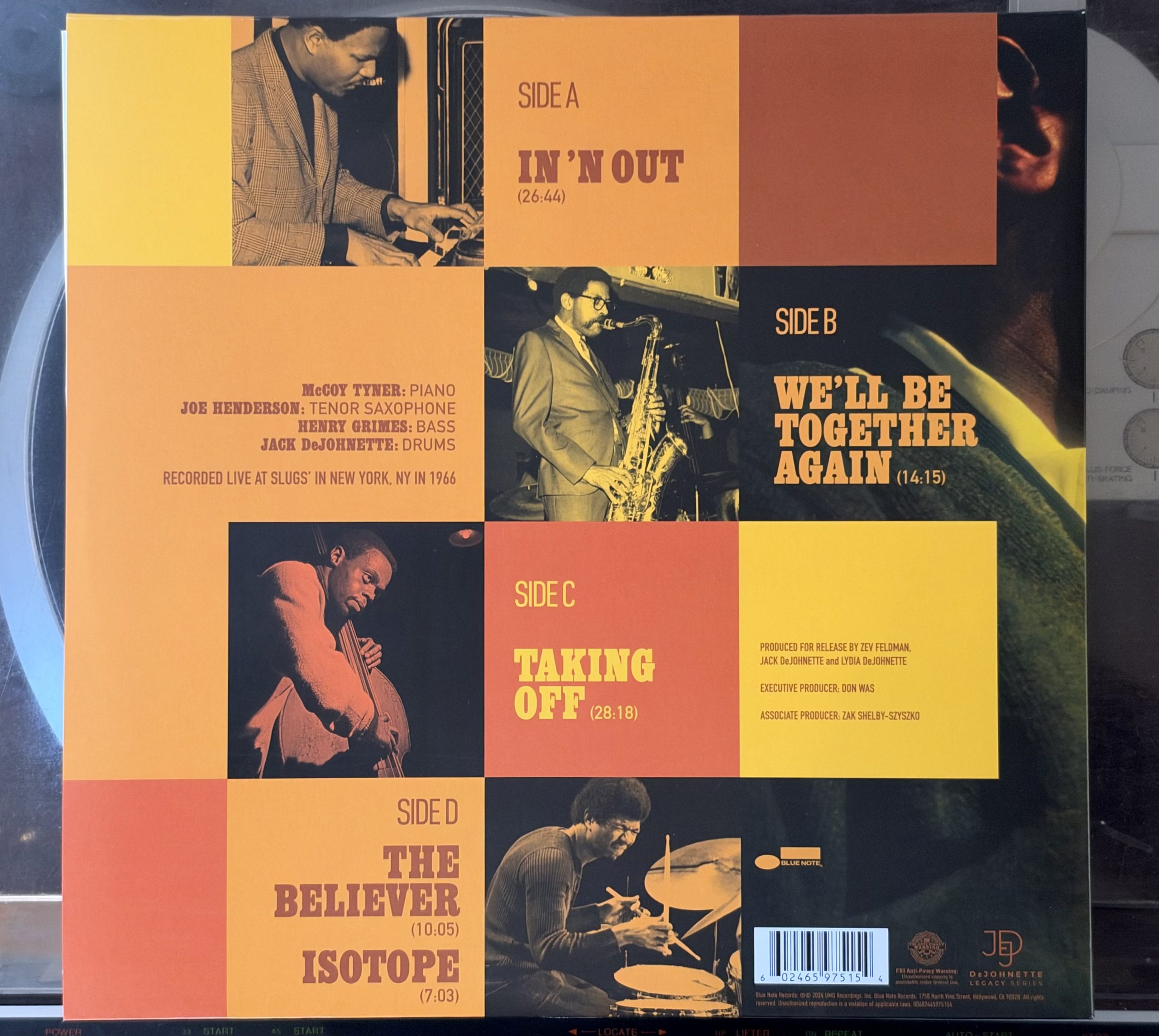
Slugs’ in the Far East was one of those places that could have only been in New York: a former Ukrainian restaurant and drug-dealer hangout in the East Village, it was bought by club owners Robert Schoenholt and Jerry Schultz in 1964 and named Slugs’ Saloon, after a reference to the three-brained beings in the writings of mystic George Gurdjieff. By 1966, it was becoming quite the jazz hangout for “out” musicians, including Sun Ra and his Arkestra, who had a regular gig there between March 1966 and late 1967; Ornette Coleman; Sonny Rollins; and Albert Ayler. And sometime in 1966, Henderson brought a quartet with bassist Henry Grimes, young drummer Jack DeJohnette, and his frequent collaborator McCoy Tyner on piano.
“In ’N Out” starts us out in blistering form, taken much faster than the album cut and quickly veering off into outer space. Henderson is soloing in every possible direction here for an extended twelve minutes, with everyone in the rhythm section providing him with sensitive, focused backup. Tyner’s persistent changes remind us that this is a blues, even if those twelve bars go by awfully quickly, and the young Jack DeJohnette (with just two recording sessions under his belt, including one with a young Charles Lloyd that we’ll hear later) alternates between suspended flights on the cymbals and crashing snare hits that roll like thunder across the astonished listener’s ear. Only Henry Grimes is ill-served by the otherwise spectacular live recording; his sound is covered by everything else happening on the bandstand. The bits where the bass appears, though, remind us that this was a player comfortable going toe to toe with Archie Shepp as well as with McCoy Tyner. Tyner himself, newly moved on from the John Coltrane Quartet, reminds you just how much he brought to that legendary group with his own solo, moving nimbly from modal exploration to tripping blues melodies and back again. After his own eleven-minute solo, Tyner leads the band back into the recap, trading passages with Henderson and DeJohnette until the tune comes to a crashing halt at the finale, after more than twenty-six minutes of music.
“We’ll Be Together Again” is a deep breath as the band plays the Frankie Laine standard, but Henderson’s brilliant technique reminds you that this isn’t going to be a sleepy ballad performance. Fluttering at the edge of a note here, sneaking in another quote of “The Irish Washer Woman” there, Henderson keeps us, and the band, on our toes. Tyner steps up, alternately caressing and slicing at the chords, and DeJohnette gives us moments of double-time peaking through the clouds. Tyner’s solo races around the changes even as he gives a deeply wistful turn of expression as the tune pivots into the chorus. And we finally get a good listen to Grimes, as he takes a melodic solo against Tyner’s chords and splashes of cymbal.
“Taking Off” is another fast blues, this one credited all the members of the quartet, and everyone swings for the fences here. Henderson’s playing goes out so far that Tyner drops out, leaving the bass and drums playing blisteringly fast alongside the saxophonist as he solos for thirteen incredible minutes. Tyner and Grimes seemingly triple the pace, accompanied by DeJohnette’s triple meter, then they give DeJohnette the stage as he briefly locks into a hemiola with Tyner. Jack gives us wave after wave of different rhythmic expressions, and Henderson responds when he enters, providing a lighter, more dancelike tone to close out the track.
“The Believer” is a nifty addition to the set. Written by Tyner when he was only nineteen and recorded by Coltrane in 1958, the tune is introduced by DeJohnette on a roll, followed by Tyner who gives the triplet-driven piece its rhythmic impetus. Henderson’s statement of the melody goes in some interesting harmonic directions, and he quickly yields the floor to Tyner, who can be heard vocalizing along with himself. The band proves they can work up a sweat in the listener even with this more melodic material as they intensely groove with the music, thanks in large part to Grimes, who is more audible on this track. DeJohnette and Henderson trade eights for a bit before the final recap, which comes after a relatively brisk nine minutes.
The set finishes with Henderson’s “Isotope,” here given a fairly faithful introduction—the tune having just been released earlier this year on Inner Urge. Henderson gives it an appropriately cockeyed solo, and Tyner follows suit with a solo that blends his own modal proclivities with a healthy dose of Thelonious Monk, both in chord progressions and off-kilter singing. The tune goes right back to the head after Tyner’s solo, and really there is nothing left unsaid on this virtuosically winking performance.
Henderson’s chemistry with Tyner would see the two of them continue to collaborate, including on Tyner’s 1967 Blue Note set The Real McCoy. But Henderson himself was not to stick around Blue Note as a bandleader. In 1966 the label changed hands, and Henderson left, joining forces with former Riverside producer Orrin Keepnews on the latter’s new label, Milestone. We’ll catch him there at the conclusion of our series on the saxophonist, next week.
You can listen to this week’s album here: