
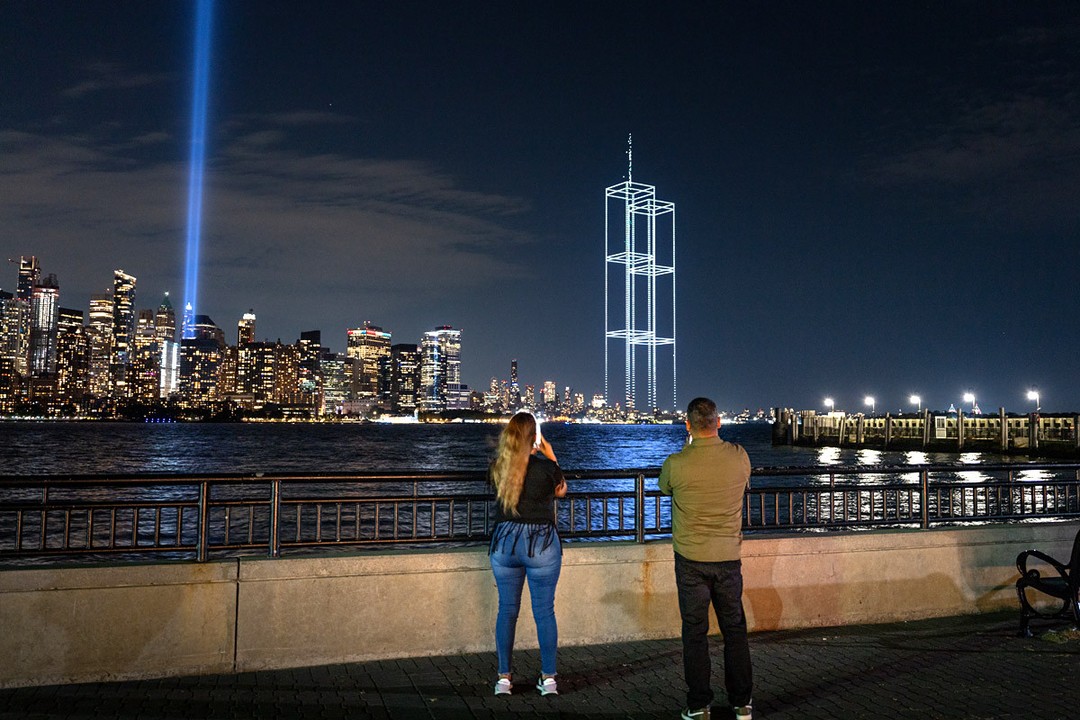
Twenty-five years ago was a long time, long enough for me to have written down my thoughts about the day several times before; long ago enough for the act of remembering to yield to the act of editing, redacting, and constructing a narrative thread of the day.
In September 2001 I was in the second year of business school. On a brilliant blue Tuesday morning, I had just finished writing a blog update and had gone into the library to study. Starting up my web browser to download some course notes, I hit the message on Yahoo (images weren’t loading) that a plane had crashed into the World Trade Center. I went looking for more information and found it at Dave Winer’s Scripting News blog.
Shellshocked, I left the library and walked into the lobby of E-52, MIT Sloan’s main building, where I joined a gathering crowd of students, faculty, administration staff, and others watching the coverage. I saw the videos, and I saw the second tower go down on live TV as I watched. After a while I walked next door to the E-51 lobby, worried about my friend Kate’s fiancé Oli who worked in the financial district. I ran into my finance professor, who was just coming out of class and had no idea what was happening. I told him that both towers had come down and the Pentagon had been hit. “Oh my God,” he said, as if he had been slapped. I found Kate. At the time she hadn’t heard from Oli (he was fine). We just sat and watched and listened.
Lisa had planned a trip to Italy with her parents that was due to leave that day and was with them in New Jersey. The worst part was the train ride back to Boston—there were no planes. She still won’t talk about that journey.
It wasn’t until much later that I learned that my UVA friend Doug Ketcham had been in the Cantor Fitzgerald offices that morning. I sat with the grief of what had happened to him for fifteen years, until I attempted to describe Doug Ketcham to one of my TFC colleagues during a rehearsal for John Adams’ “On the Transmigration of Souls.” And I could not speak. I was suddenly dumbstruck by the immense unfairness of what happened to him: twenty-seven years old, a rising star at Cantor Fitzgerald, who retained enough presence of mind to call his parents from underneath his desk after the first plane hit the towers to tell them that he loved them.
Later on 9/11, I heard that MIT wasn’t taking more blood donors because their infrastructure couldn’t process the mass rush of volunteers. That was before we learned that there was little need for blood, before the awful scope of the casualties in New York and Washington became clear.
That evening, I left my apartment building to make a run for some needed groceries. I saw a young muscular man in his mid-twenties wearing a t-shirt, obviously homemade. The t-shirt said on the front, “Die Raghead Scum.” And In the corner store, I heard a soft spoken talk show host explaining that this wasn’t really America against terrorism but the civilized world against terrorism, because you didn’t know who would be next. I agreed with this assessment, but then he went on to say, “There’s a surprisingly small number of countries in the world that are civilized. Outside of the US and Canada, Europe and Japan, most of the rest of the world are barbarians.”
A week later, with no air traffic and the world still eerily quiet, we started seeing monarch butterflies. One dogged our steps returning to our apartment along Richmond Street. Another one fluttered along beside the Longfellow Bridge, careered across the traffic, and over the other side of the bridge. When we saw it, it was winging lazily across the Charles. There were more of them. Practically every five minutes–on Massachusetts Ave, in the shadow of Calder’s Great Sail… I couldn’t decide, and it seemed very important at the time: had they been there all along and were just leaving? Or had they just arrived from another place, just when we most needed to see them?
Two years later we were in the midst of the 2003 Iraq War, a war fought with the pretext of a 9/11 connection that didn’t exist (the attackers were largely from Saudi Arabia and had no backing from Saddam Hussain). I wrote, “if we’re still in mourning even as we invade and remake nations, we are in danger of seeing the decisions we must face through eyes clouded with the smoke of the past. So I am going to let others remember the day, and I’m going to continue to do my part by asking questions about actions taken in the names of the fallen that I believe do them no honor.”
In 2008, I wrote about Steinski’s sound collage “Number Three on Flight Eleven.” A previously unreleased track collected that year on the veteran mix artist’s retrospective “What Does It All Mean?”, it takes the recorded phone call of American Airlines flight attendant Betty Ong from on board Flight 11 and sets it sparingly above an almost subliminally ominous drone and beat, and in counterpoint to another speaking voice reciting lyrics by Paul Opperman from the Silos’ “When the Telephone Rings” and poems by Basho. It’s an unsettling, frightening track and I can’t listen to it more than once in a blue moon. And yet, there’s something in the end that carries a note of redemption: a repeating coda, the voice of the American Airlines call center reassuring Betty Ong, who’s holding on the line communicating the last moments aboard the hijacked plane, repeating “Yes. We’re still here.”
We’re still here.
As John Irving, who as a novelist is one of our greatest living students of violence, put it in The Hotel New Hampshire, the real question in this violent crime is: did they get the us in us? Did the attack violate us so deeply that it touched our core and twisted who we were? Or are we still here?
There can be no one simple answer. But in the course of that 2016 performance of “On the Transmigration of Souls,” I decided that it is the souls of the living who need the transmigration. We must allow ourselves to be changed, to not continue to stand, breath held, on the edge of that dreadful day. We who must resolve upward.

Other remembrances: Dave Winer, Doc Searls, Universal Hub.