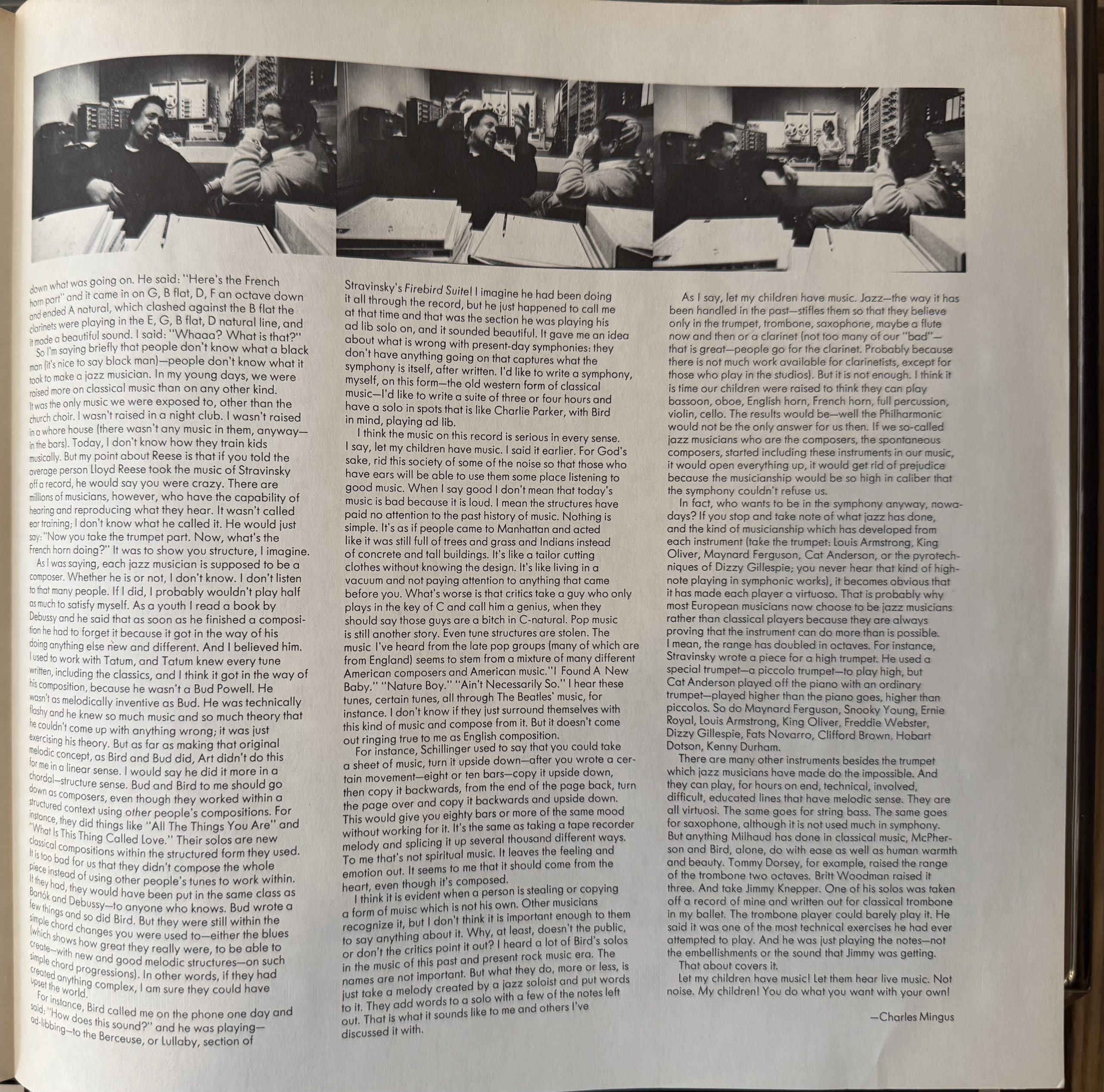
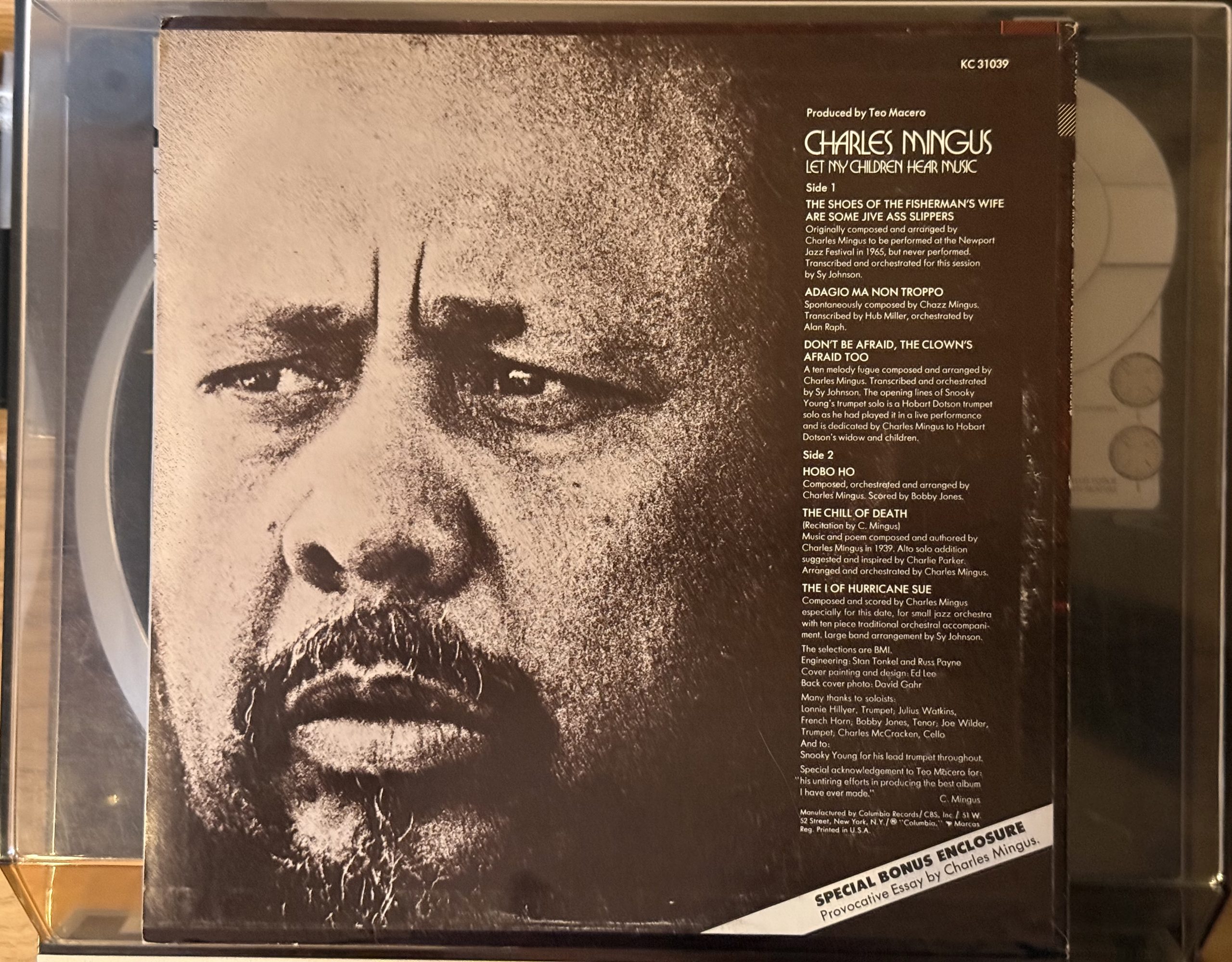
Charles Mingus, Let My Children Hear Music

The last great composition from Mingus sums up all his contradictions into a single masterpiece.

Album of the Week, February 14, 2026

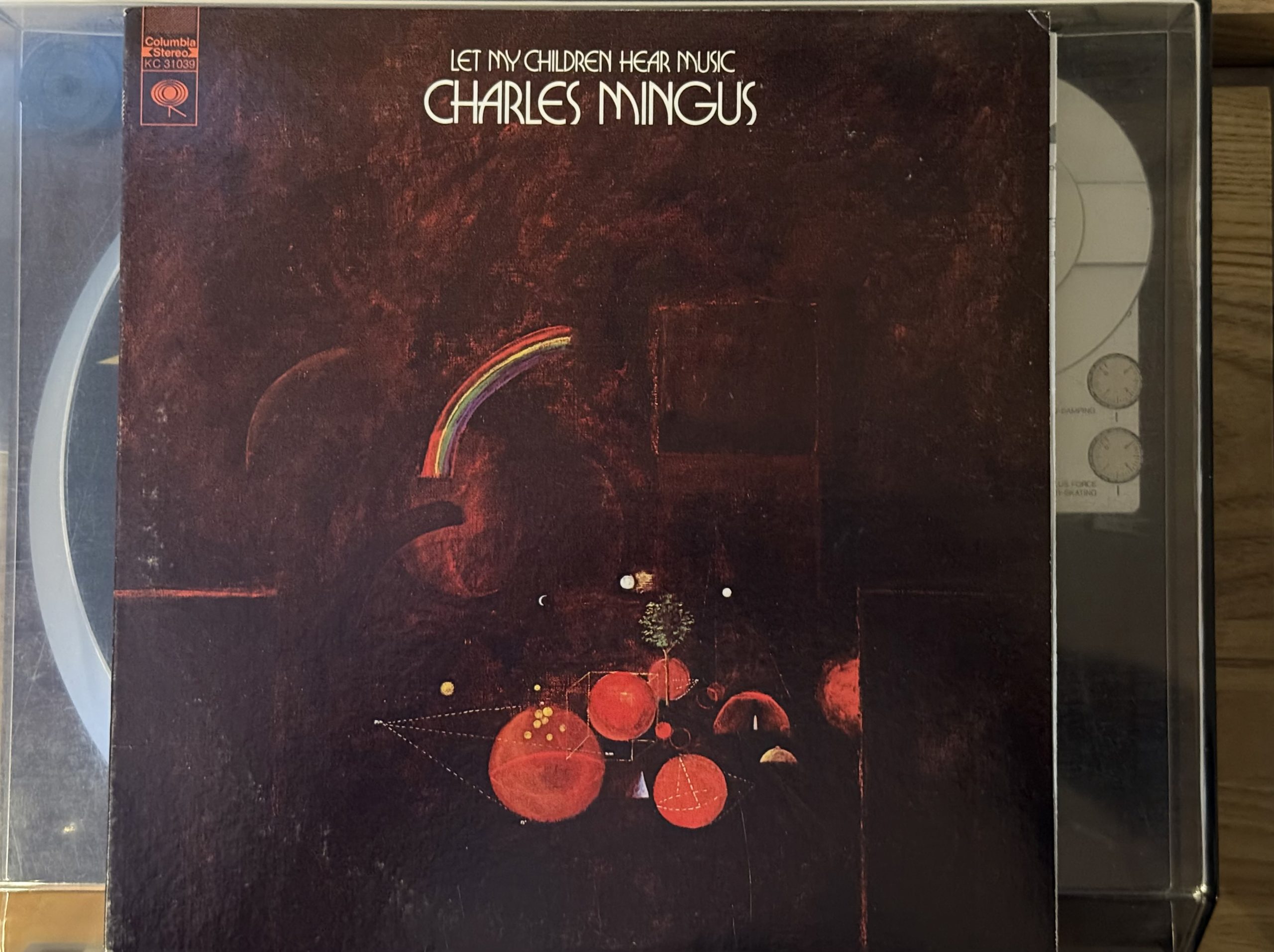
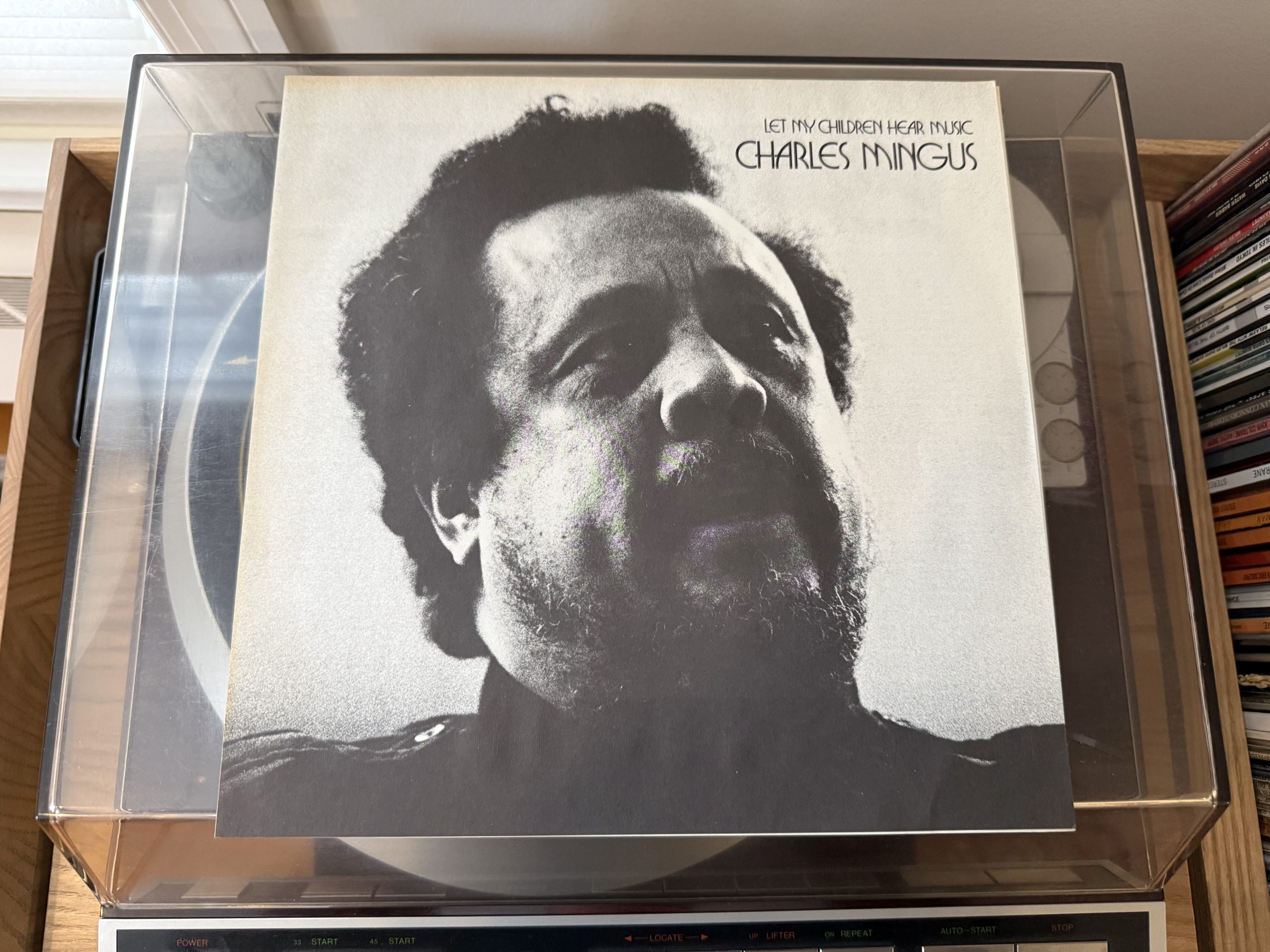
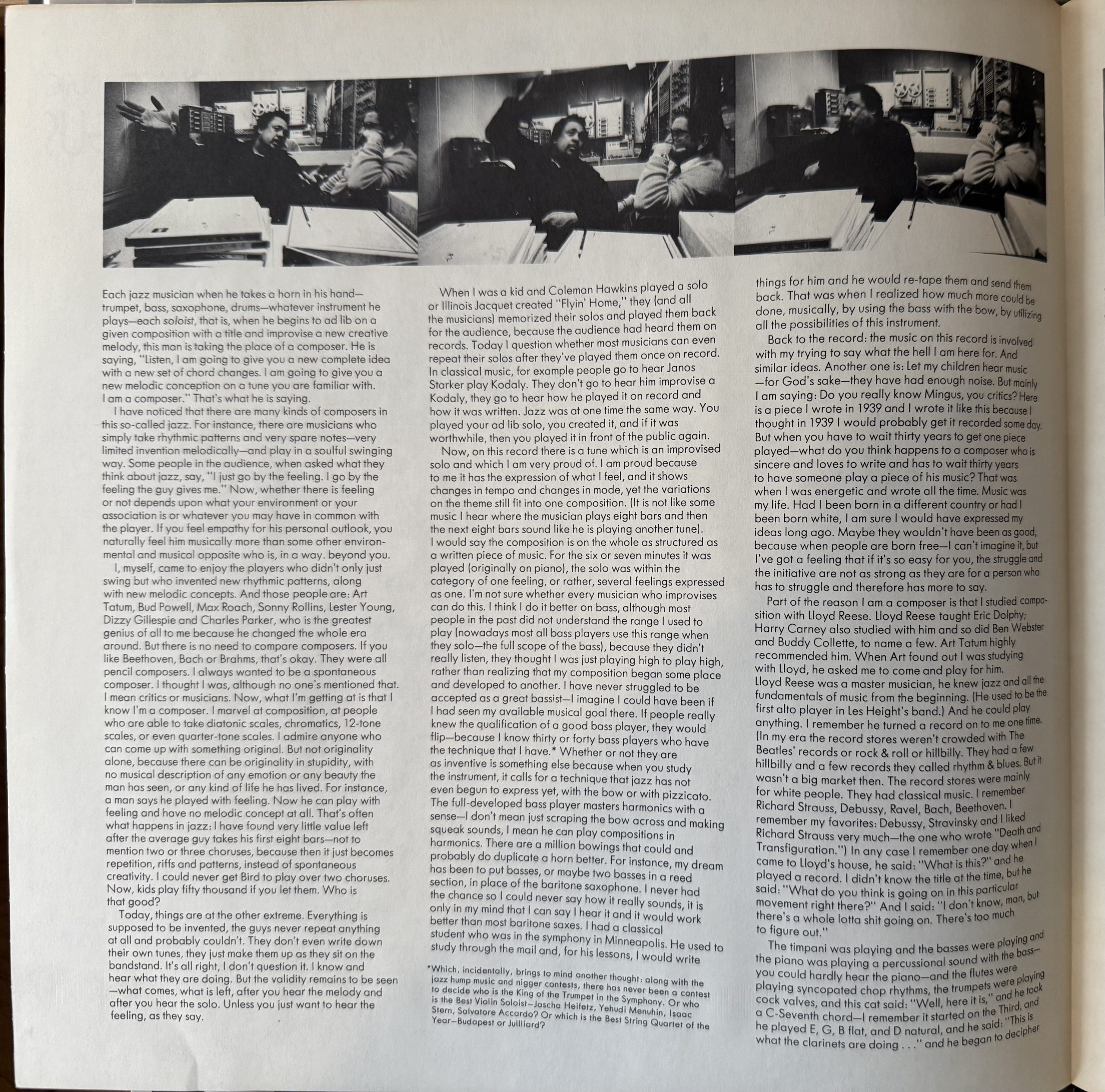
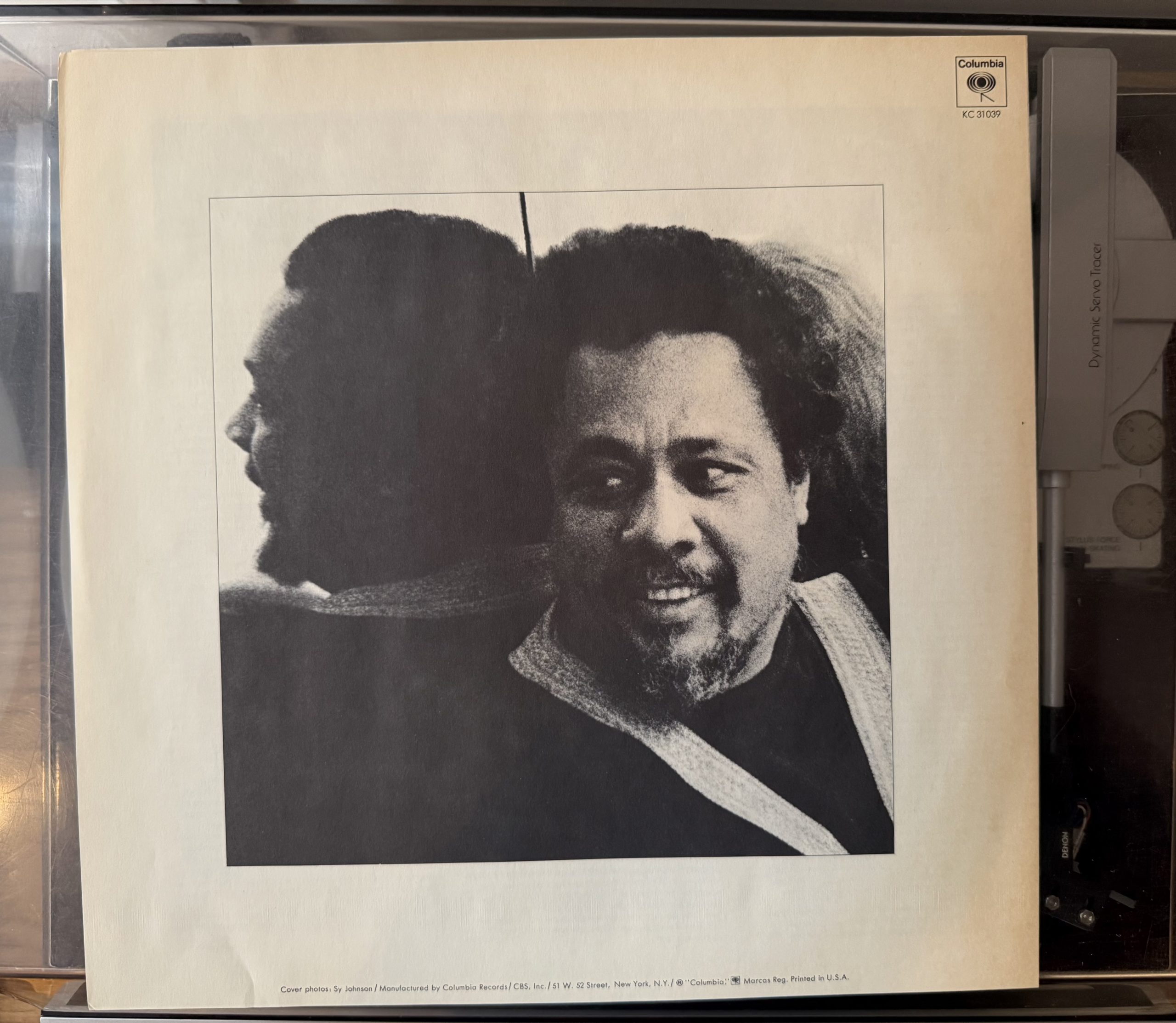
When we last checked in with composer and bassist Charles Mingus, he was on a career high that was about to enter a downturn. Following Mingus at Monterey, he toured heavily but was without a recording contract, and was evicted from his apartment for nonpayment of rent in 1966. But Mingus seems to have always had the ability to convince the labels to place a bet on him, and the fall of 1971 found him working again with Columbia’s Teo Macero on a big-band recording of all-new compositions.

And what a band! Across six recording sessions between September 23 and November 18, a small army of musicians worked on the recording that became Let My Children Hear Music, including Lonnie Hillyer, Jimmy Nottingham, Joe Wilder, and Snooky Young on trumpet, Jimmy Knepper on trombone, Julius Watkins on French horn, Charles McPherson on alto sax, Jerry Dodgion, Bobby Jones, Hal McKusick and James Moody on reeds; Charles McCracken on cello; Jaki Byard, John Foster, and Roland Hanna on piano; and Dannie Richmond on drums. Teo not only produced but also conducted the orchestra and played some alto sax. And alongside Mingus’s bass were three additional bass masters—no less than Ron Carter, Richard Davis, and Milt Hinton. And those are only the musicians we know about—some remain uncredited on the recording due to contractual issues. Collectively they gave Mingus’s music a sound that he had never gotten on record before, with a combination of power and polish.
The Shoes of the Fisherman’s Wife Are Some Jive-Ass Slippers” might be my favorite Mingus title of all time, even considering that this is the man who wrote “All the Things You Could Be By Now If Sigmund Freud’s Wife Was Your Mother.” From the very beginning of the track we get two impressions: this music is ambitious, and this band is tight. The horns and reeds play the opening melody slowly against a chromatic scale in the bass and low instruments; there’s a coda of sorts to this part signaled by an “Also Sprach Zarathustra” timpani roll, a series of chord changes, and then we’re into a brisk waltz that pauses, then shifts into 6/8 time. The horns and reeds introduce a descending motif that keeps interrupting the waltz until the piano signals another transition and a recapitulation of the top melody. This time the band picks up a new version of the slow theme in a fast 4/4 time, that builds in intensity up the chromatic scale until there’s a sudden swoon and lapse back into waltz time. We’re left to wonder how many of the sudden shifts were scored and how many were the product of Teo Macero’s genius editing skills. All throughout the chord progressions and gestures are wild and free (that timpani glissando against the descending motif at the end!) and the band swings as hard as anything Ellington ever did.

Adagio, Ma Non Troppo” begins with a lone reed followed by a lone flute, playing music that seems birthed from “Sketches of Spain.” There are interludes of piano and guitar, rafts of flutes and clarinets, and a fast dance with three arco basses all soloing at the same time. True to the title, some moments are downright symphonic here; this section is probably the least swinging on the record, but those bowed bass solos keep us grounded at the same time that they reach for the stars. When the saxophones take the theme it feels like a moment from a Keith Jarrett European quartet composition.1 The whole thing is breathtaking in both composition and performance.
Don’t Be Afraid, The Clown’s Afraid Too” starts in the circus, with recorded lion roars and elephantine trumpet blasts, before the band swings into a circus theme underscored by oompa bass and tuba and a brilliant walking bass line. The simultaneous solos between tenor sax (right channel) and alto sax (left) stretch the brain to hear all the passing harmonies as the players cross over and solo past each other. Another circus interlude and a brisk Mingus pizzicato solo sets up a chorus of twittering bird flutes, and the rest of the track tosses the theme from section to section before returning to the oompa theme once more before returning to the circus again to take us out of Side A.

Hobo Ho” opens with a gutsy, funky bass line that anchors us firmly in the tonic. The tenor sax sets up the first melody with almost subsonic support in the lowest instruments. There are horn bursts that wouldn’t have been out of place on The Cat. This is music for a rumble, standing alongside “II B.S.”/“Haitian Fight Song” as some of Mingus’s most groove-driven work.
The Chill of Death” begins with a Mahlerian moment, a tremolo from the basses over a timpani hit and the orchestra. Mingus recites a poem that dates from the beginning of his career; written in 1939, it captures the constant tension in his work between wild life and the fear of being forgotten in death. After the recitation there’s a sustained organ tone and a free alto sax solo by Charles McPherson over a shifting, uneven instrumental background—sometimes marching to the graveyard, sometimes joyfully dancing, sometimes anxiously peering around the corner. The piece ends with a rare audible splice as McPherson plays into a descending glissando and crescendo by the rest of the band; I wonder how much improvisation was left on the cutting room floor by Macero.

The I of Hurricane Sue” ends where we began, the second piece recorded in the very first session. There are wind effects and corrugaphones beneath a free intro before the band snaps into a tightly wound, swinging melody. The work ends with dueling pianos, Jaki Byard vs. Roland Hanna, as the whirly tube and winds blow us away. This characteristic of alternating chaos and gorgeously played symphonic jazz is what ultimately sets Let My Children Hear Music apart as a work of staggering genius and an apex of Mingus’s compositional career.
The brilliance and tragedy of Mingus’s life wasn’t yet done. He had a few epochal albums for Atlantic Records, Changes One and Two, ahead of him, but he also had a deeper challenge—ALS, which began to rob him of his mobility and his ability to perform. As a composer and bandleader, he still had some milestone records ahead and we’ll hear one last one next week.

You can listen to this week’s album here:

BONUS: There is an honest-to-goodness bonus track, in the original CD reissue sense, on Let My Children Hear Music. Recorded on the second recording date (September 30) following “Hobo Ho,” “Taurus in the Arena of Life” was first issued in 1992 on the first CD release of the album. It’s a nifty hybrid between a classical sonata in the piano and a blues in the horns, who take a trip to Mexico where things get marvelously strange.

BONUS BONUS: There are a few attempts to play this music live out there, but not many—which is why it came as a shock to find this sextet performance from a jazz ensemble in the University of Virginia’s Old Cabell Hall Auditorium, of all places! I don’t think that’s any of the main faculty up there, but I can’t see the bassist so it just might be Pete Spaar.

  1. Don’t worry, you didn’t miss a week. We’re not to Keith yet, but we’ll get there eventually. ↩︎
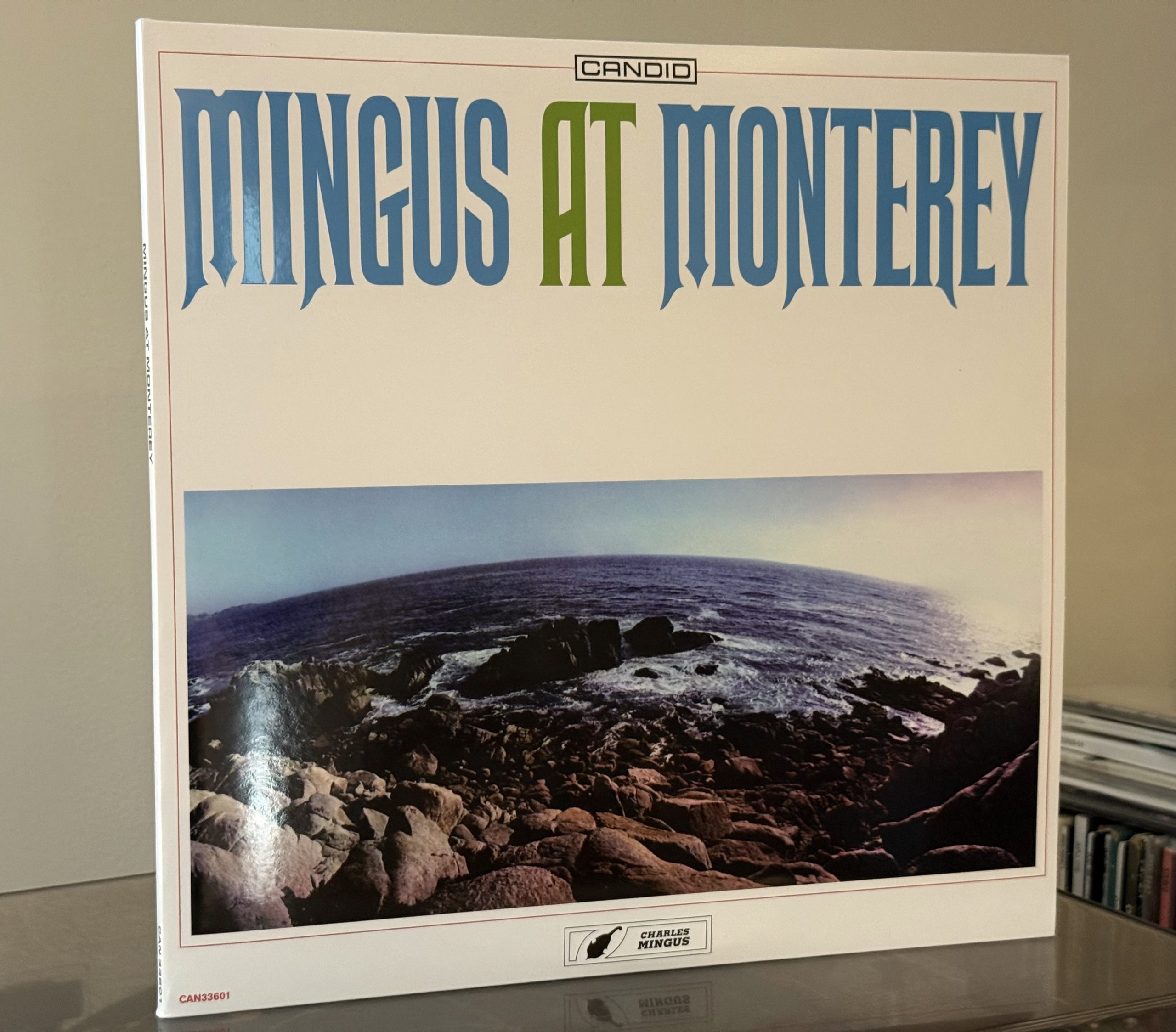
Charles Mingus, Mingus at Monterey

From Mingus’s golden year, a spectacular live set with something old, something new, something borrowed, and something blue.

Album of the Week, February 7, 2026

Last week we witnessed Charles Mingus solidifying his place in the pantheon with an album that realized some of his greatest compositions with definitive performances (and contractually required placeholder titles). As we noted, Mingus Mingus Mingus Mingus Mingus marked the reunion of the great bassist and his avant-garde compatriot Eric Dolphy. Mingus took the band on tour to Europe; Dolphy stayed there and died in a diabetic coma.

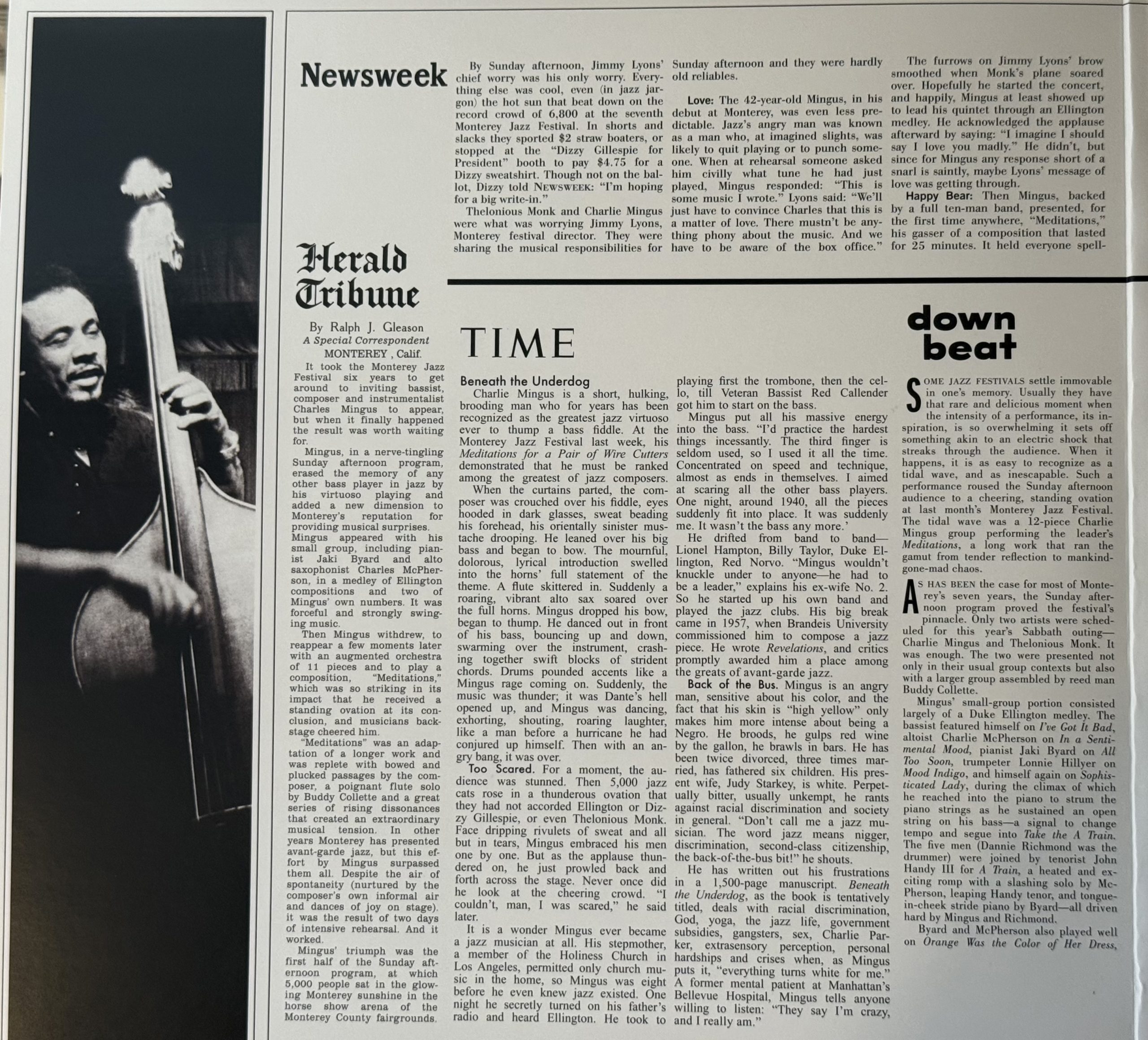
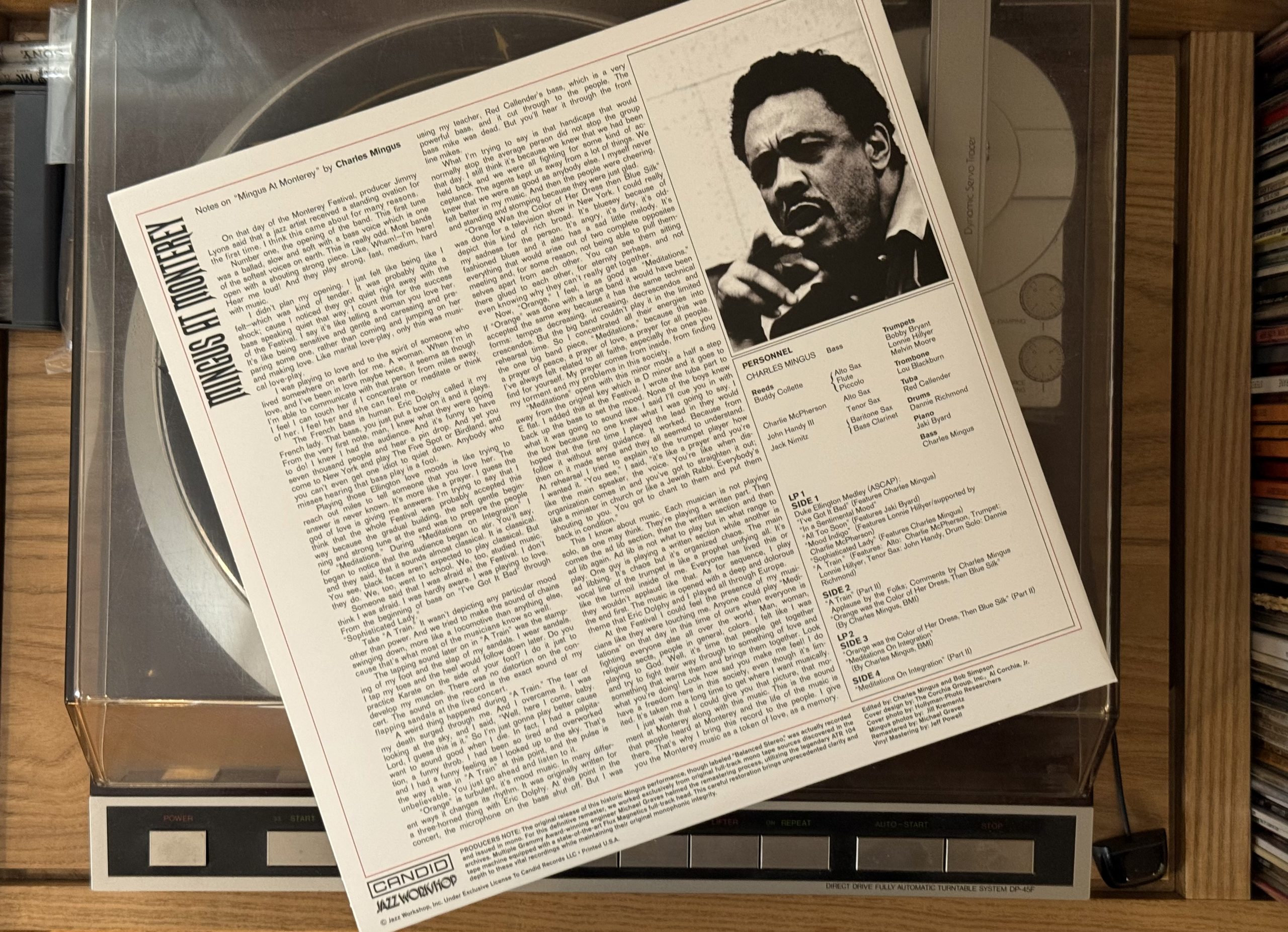
Given these facts, one could forgive Mingus for falling back to the familiar and focusing on that “greatest hits” repertoire, or from pulling back from touring and performing. Fortunately for us, the way Mingus dealt with challenges was to work and to create. His performance at the Monterey Jazz Festival on September 20, 1964 captured him doing both, with a band that had a rhythm section of Mingus stalwarts (Jaki Byard, Dannie Richmond) and a horn line consisting of Lonnie Hillyer on trumpet, Charles McPherson on alto and John Handy on tenor; Handy, an old Mingus band hand, rejoined at the last minute after Booker Ervin was hospitalized. For the last number, the band expanded into a big band formation, with Bobby Bryant and Melvin Moore on trumpet, Lou Blackburn on tuba, Red Callender on trombone, Buddy Collette on flute, piccolo and alto, and Jack Nimitz on bass clarinet and baritone sax. The performance gives us something old and borrowed, something new, and something blue (and orange).

The “Ellington Medley: I’ve Got It BadIn a Sentimental MoodAll Too SoonMood IndigoSophisticated LadyA Train” is our “old and borrowed” segment, continuing Mingus’s exploration of the compositions of his inspiration, one-time boss and sometime sparring partner Duke Ellington. The band is relaxed; there’s a little stage chatter before Mingus takes a solo intro to “I’ve Got It Bad” with sparse accompaniment from Jaki Byard, and sensitive solos from McPherson and Byard. One Ellington classic flows into the next, all commented on from Mingus’s bass.1 Until, with a sudden break, we are taking the A Train. The band is jubilant to the point of almost unhinging, particularly Lonnie Hillyer’s imaginative trumpet and Handy’s tenor (the only shortcoming in the live recordings: the tenor saxophone is somehow overpowered by Byard’s piano). At the end there’s an unaccustomed solo from Richmond, showing that not only was he frequently the glue that held the adventuresome band’s performances together, but he could also blast a mean drum solo. The end dissolves into almost-dissonance, the band gasping over the final diminished chord. To the enthusiastic applause of the crowd, Mingus notes, “I imagine I should say ‘I love you madly’ at this point… Because, ah, if there is a recording, all the money will go to Duke Ellington, which is about due him; I’ve stole enough.”

Mingus announces “Orange Was the Color Of Her Dress, Then Blue Silk”; it’s a blues introduced with a shivering run in the bass over a stride influenced piano line. The trumpet and alto state the tune (Handy, from Mingus’ announcement, sat this one out because he had only had one day to learn the material!). Then suddenly we’re leaving the blues behind, falling into a woozy delirium that improvises on the chords and promptly lands us right back into the blues. McPherson’s solo continues to explore the tune in free time, but always coming back to the blues at the end, stretching the twelve-bar form to untold lengths. Byard’s statement anchors firmly in stride and the gospel blues, with the band smearing glissandi and shouting behind him, until everyone drops out and he plays something closer to a sonata. The kaleidoscope shifts again; Hillyer is here with something halfway between New Orleans and the Village Vanguard, then the band returns to that stretched out blues once more, leaning into it until the penultimate bar stretches out the seconds, finally turning into an unresolved sigh. (On the two record set, the composition splits between the back half of Side B and into the first half of Side C.)

Mingus announces “We’ll be back with more musicians,” and with the full band on stage launches into the arco solo that opens the premiere of “Meditations on Integration.” Out of a brief tune-up moment comes Mingus’ opening arco solo, sounding like a combination of the Beethoven 9 basses and the hora. The band enters with a busy line that Buddy Collette’s flute flies and darts above; McPherson’s alto answers with an anguished cry above the ongoing Stravinskyan rhythm of Mingus, Richmond and Byard and the stabs of horns from the rest of the band. Things threaten to dissolve into formlessness as Byard thunders on the low tonic and the band plays the chords of the melody in sequence, almost as choral interjections. McPherson returns to the melody as the band recapitulates the opening, rising to a chaotic crescendo out of which a duet of flute and low piano emerges. The band continues in this vein for some time, with Collette’s flute signaling turns in the melody and changes in the solo.

At almost 14 minutes into the tune there is a breathtakingly high bowed bass solo that sounds for all the world like a cello has appeared on the stage. Mingus plays a low stretto on the tonic and diminished supertonic as Byard speaks once more with moments of Liszt and Bud Powell; the duet between the two is an elegy from which Collette’s flute emerges once more, Ravel-like. A tremolo from Byard and rapt applause from the audience seem to signal another shift, but the interplay between Byard, Mingus and Collette continue until Mingus’s high shout calls Hillyer forward. The liner notes report a rehearsal conversation between Mingus and Hillyer, in which the composer tells him, “It’s like a prayer and you’re like the main speaker… Everybody’s shouting to you. You got to chant to them and put them back in condition.” And so the final portion goes, with the whole band hollering and Hillyer’s voice conjuring order forward. When the final chord comes, the audience gives Mingus a thundering standing ovation, the first in the entire history of the festival.

1964 was a career peak for Mingus; unfortunately, tough times were ahead. In 1966 he was evicted from his New York home; the only recordings to appear for the rest of the decade were older session recordings (Tonight At Noon, from 1957 and 1961 sessions for Atlantic records, is a classic) and live recordings from tour dates in Europe and America. That long drought would end in the early 1970s with a recording we’ll listen to next time.

You can listen to this week’s album here:

BONUS: Mingus’s tour of Europe with Eric Dolphy yielded early performances of “Meditations on Integration” and “Orange Was The Color of Her Dress, Then Blue Silk,” including this audio recording from the Salle Wagram in Paris on April 17, 1964:

  1. I believe one of the inspirations for Mingus’s bass technique is the contrabass recitative at the beginning of the fourth movement of Beethoven’s 9th Symphony. Like Beethoven’s basses, he was always observing the performance and the melody closely, and always, always opining. ↩︎