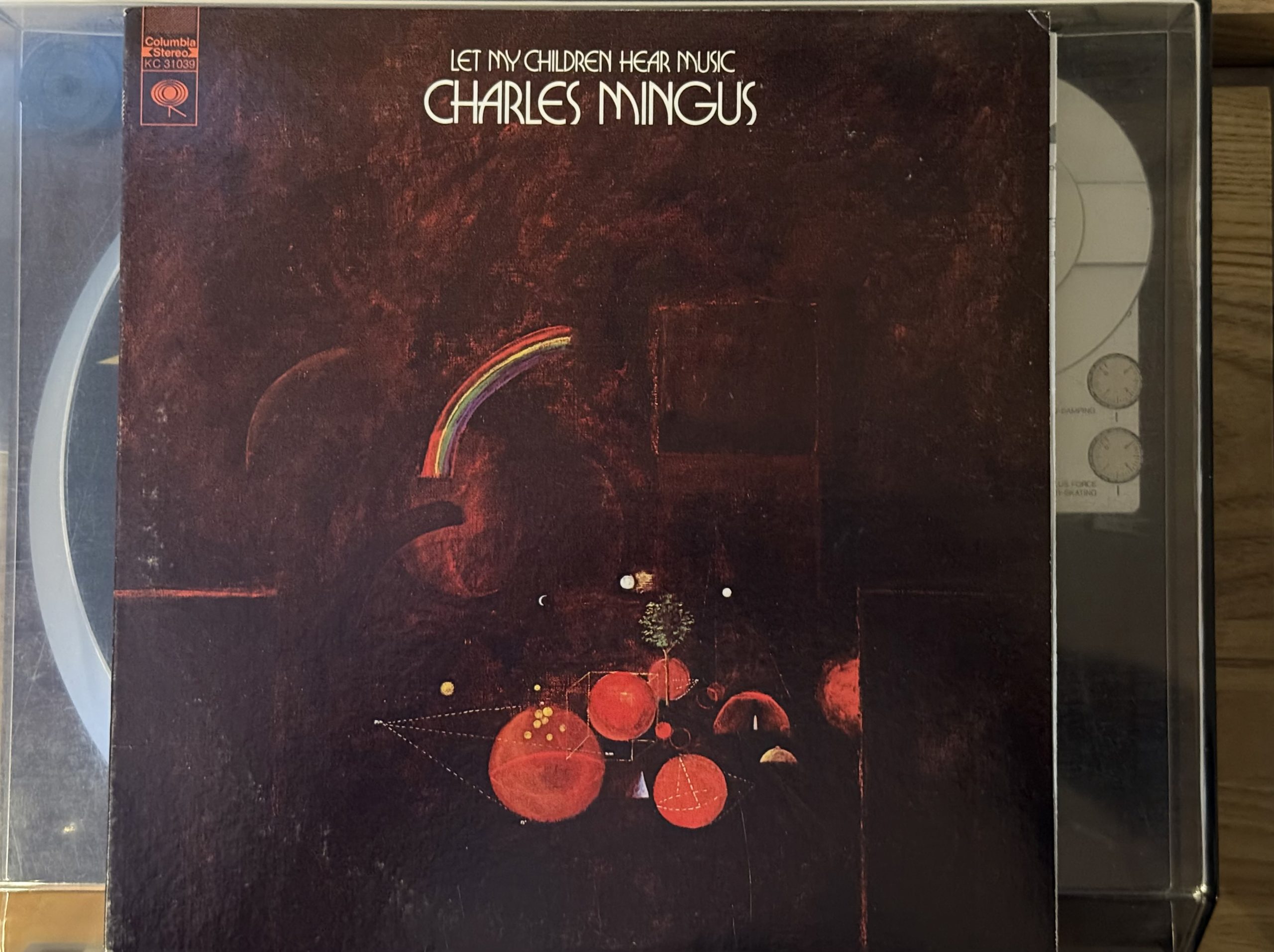
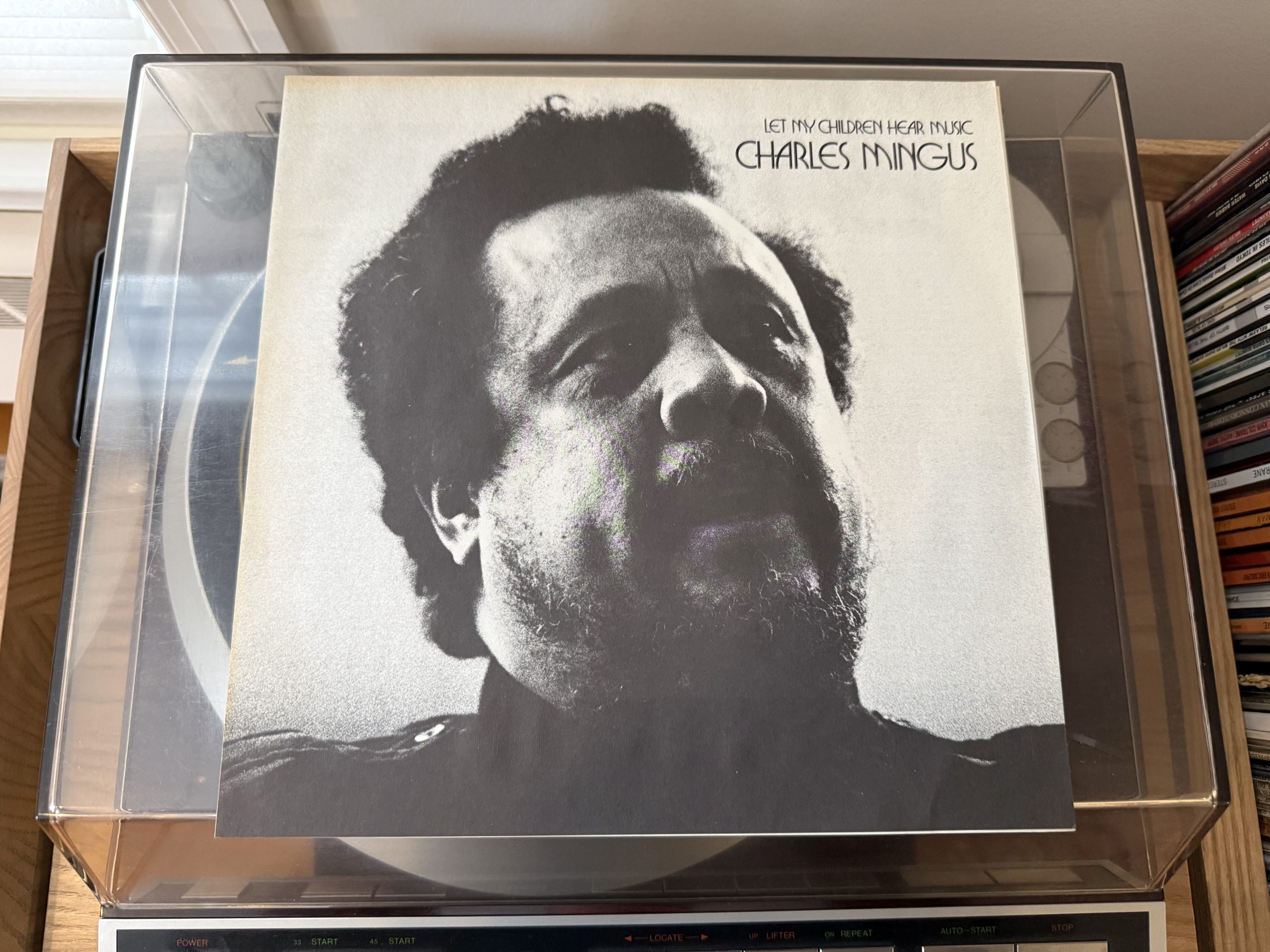
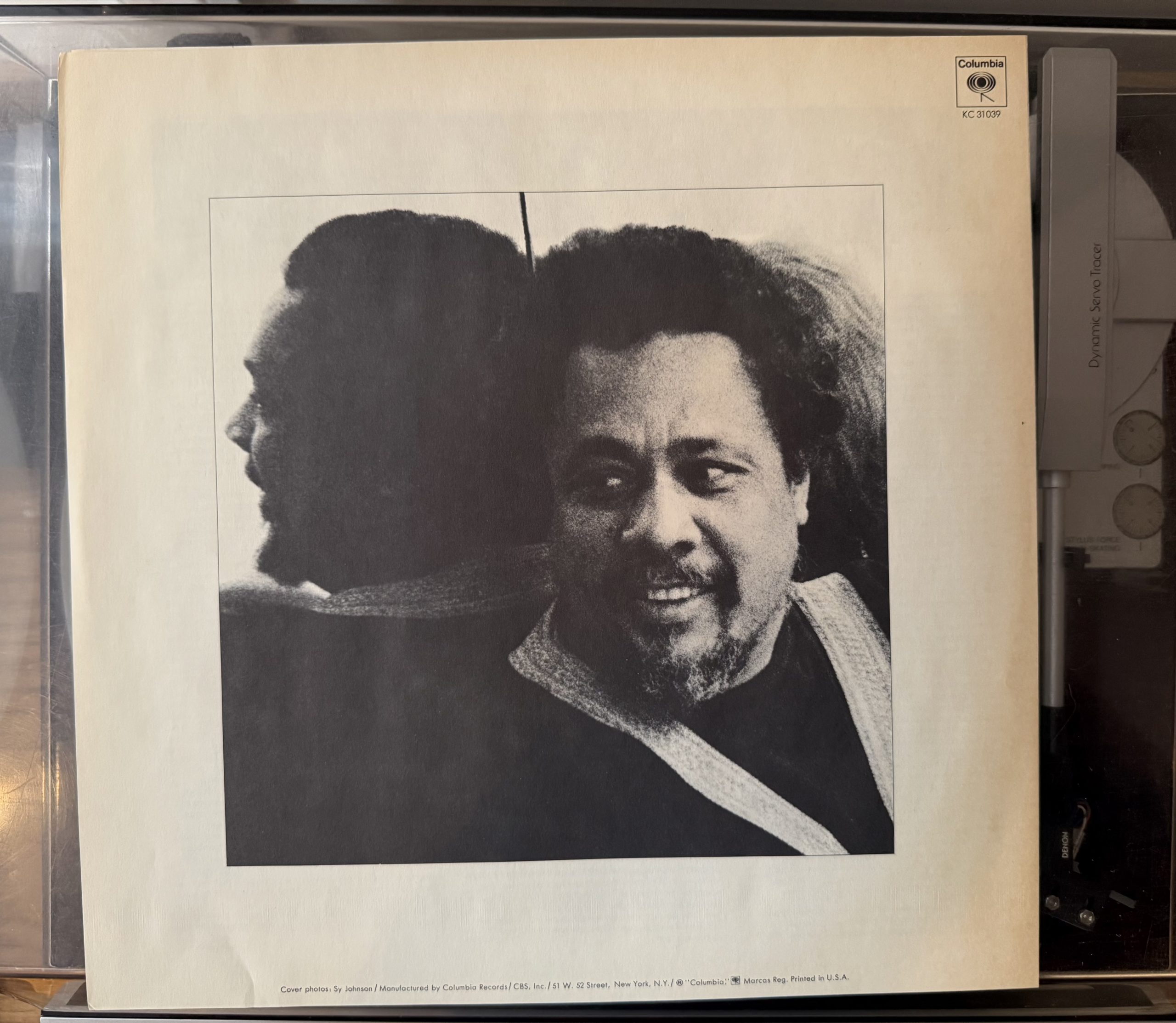
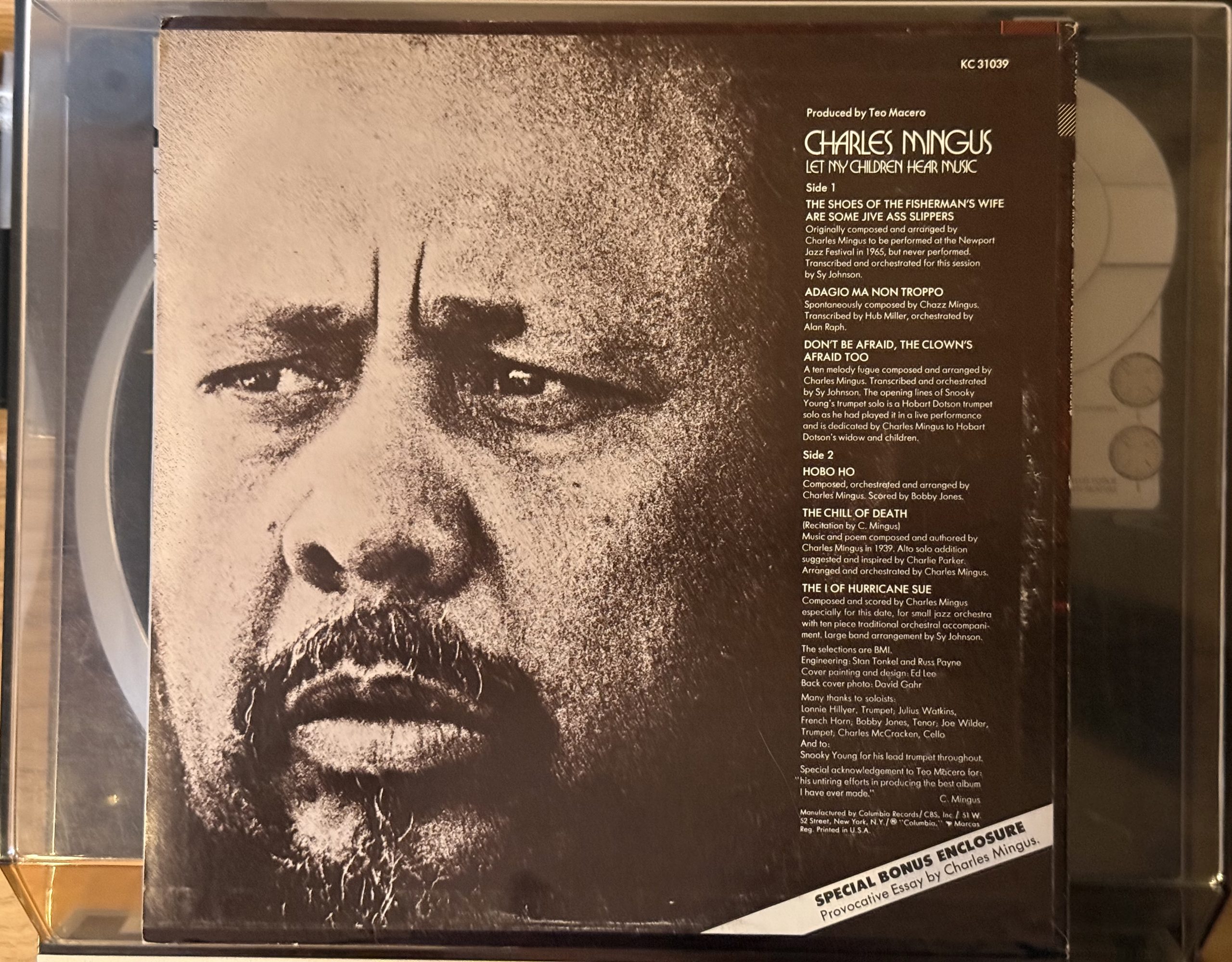
Charles Mingus, Let My Children Hear Music

The last great composition from Mingus sums up all his contradictions into a single masterpiece.

Album of the Week, February 14, 2026

When we last checked in with composer and bassist Charles Mingus, he was on a career high that was about to enter a downturn. Following Mingus at Monterey, he toured heavily but was without a recording contract, and was evicted from his apartment for nonpayment of rent in 1966. But Mingus seems to have always had the ability to convince the labels to place a bet on him, and the fall of 1971 found him working again with Columbia’s Teo Macero on a big-band recording of all-new compositions.

And what a band! Across six recording sessions between September 23 and November 18, a small army of musicians worked on the recording that became Let My Children Hear Music, including Lonnie Hillyer, Jimmy Nottingham, Joe Wilder, and Snooky Young on trumpet, Jimmy Knepper on trombone, Julius Watkins on French horn, Charles McPherson on alto sax, Jerry Dodgion, Bobby Jones, Hal McKusick and James Moody on reeds; Charles McCracken on cello; Jaki Byard, John Foster, and Roland Hanna on piano; and Dannie Richmond on drums. Teo not only produced but also conducted the orchestra and played some alto sax. And alongside Mingus’s bass were three additional bass masters—no less than Ron Carter, Richard Davis, and Milt Hinton. And those are only the musicians we know about—some remain uncredited on the recording due to contractual issues. Collectively they gave Mingus’s music a sound that he had never gotten on record before, with a combination of power and polish.
The Shoes of the Fisherman’s Wife Are Some Jive-Ass Slippers” might be my favorite Mingus title of all time, even considering that this is the man who wrote “All the Things You Could Be By Now If Sigmund Freud’s Wife Was Your Mother.” From the very beginning of the track we get two impressions: this music is ambitious, and this band is tight. The horns and reeds play the opening melody slowly against a chromatic scale in the bass and low instruments; there’s a coda of sorts to this part signaled by an “Also Sprach Zarathustra” timpani roll, a series of chord changes, and then we’re into a brisk waltz that pauses, then shifts into 6/8 time. The horns and reeds introduce a descending motif that keeps interrupting the waltz until the piano signals another transition and a recapitulation of the top melody. This time the band picks up a new version of the slow theme in a fast 4/4 time, that builds in intensity up the chromatic scale until there’s a sudden swoon and lapse back into waltz time. We’re left to wonder how many of the sudden shifts were scored and how many were the product of Teo Macero’s genius editing skills. All throughout the chord progressions and gestures are wild and free (that timpani glissando against the descending motif at the end!) and the band swings as hard as anything Ellington ever did.

Adagio, Ma Non Troppo” begins with a lone reed followed by a lone flute, playing music that seems birthed from “Sketches of Spain.” There are interludes of piano and guitar, rafts of flutes and clarinets, and a fast dance with three arco basses all soloing at the same time. True to the title, some moments are downright symphonic here; this section is probably the least swinging on the record, but those bowed bass solos keep us grounded at the same time that they reach for the stars. When the saxophones take the theme it feels like a moment from a Keith Jarrett European quartet composition.1 The whole thing is breathtaking in both composition and performance.
Don’t Be Afraid, The Clown’s Afraid Too” starts in the circus, with recorded lion roars and elephantine trumpet blasts, before the band swings into a circus theme underscored by oompa bass and tuba and a brilliant walking bass line. The simultaneous solos between tenor sax (right channel) and alto sax (left) stretch the brain to hear all the passing harmonies as the players cross over and solo past each other. Another circus interlude and a brisk Mingus pizzicato solo sets up a chorus of twittering bird flutes, and the rest of the track tosses the theme from section to section before returning to the oompa theme once more before returning to the circus again to take us out of Side A.

Hobo Ho” opens with a gutsy, funky bass line that anchors us firmly in the tonic. The tenor sax sets up the first melody with almost subsonic support in the lowest instruments. There are horn bursts that wouldn’t have been out of place on The Cat. This is music for a rumble, standing alongside “II B.S.”/“Haitian Fight Song” as some of Mingus’s most groove-driven work.
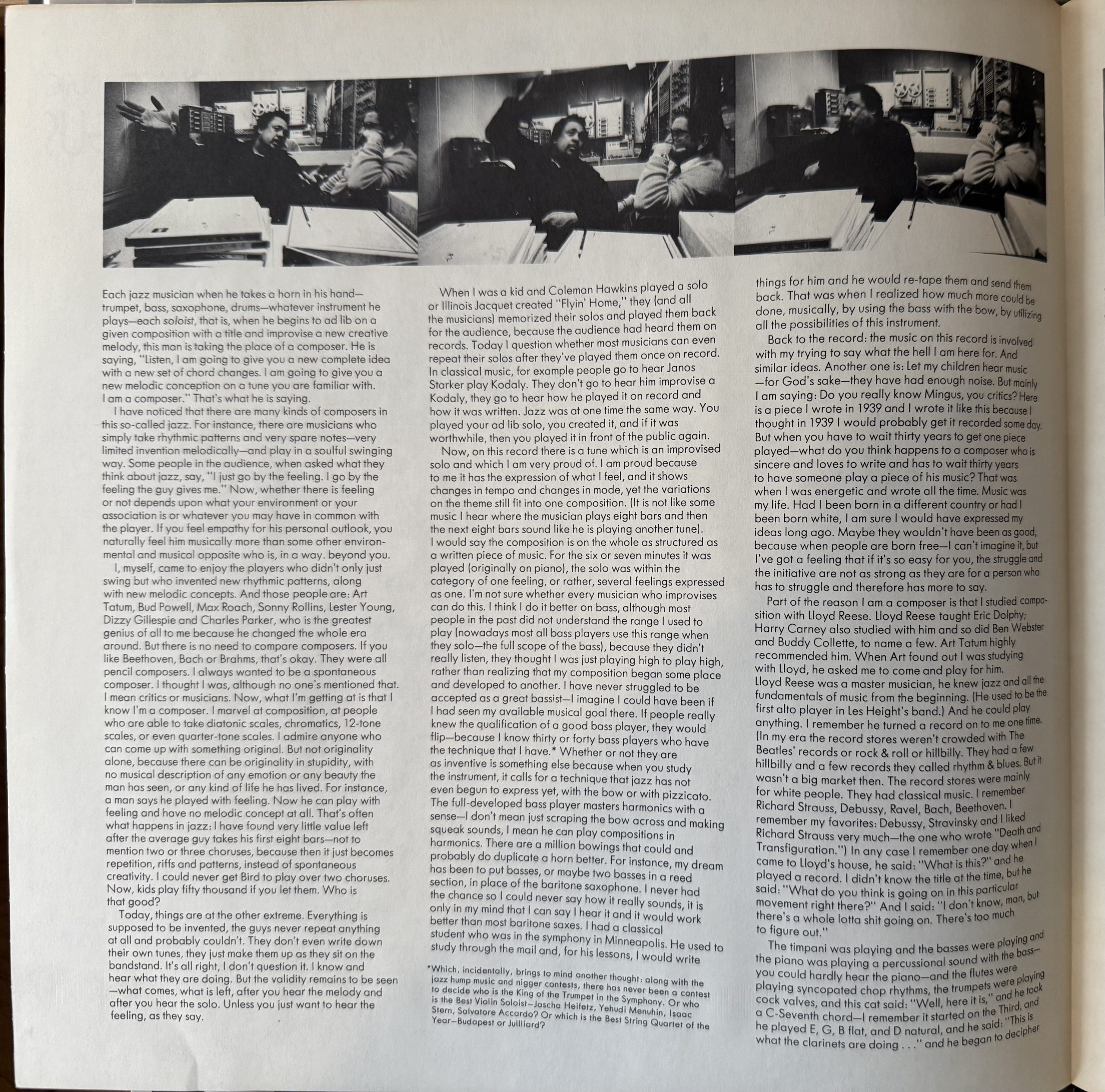
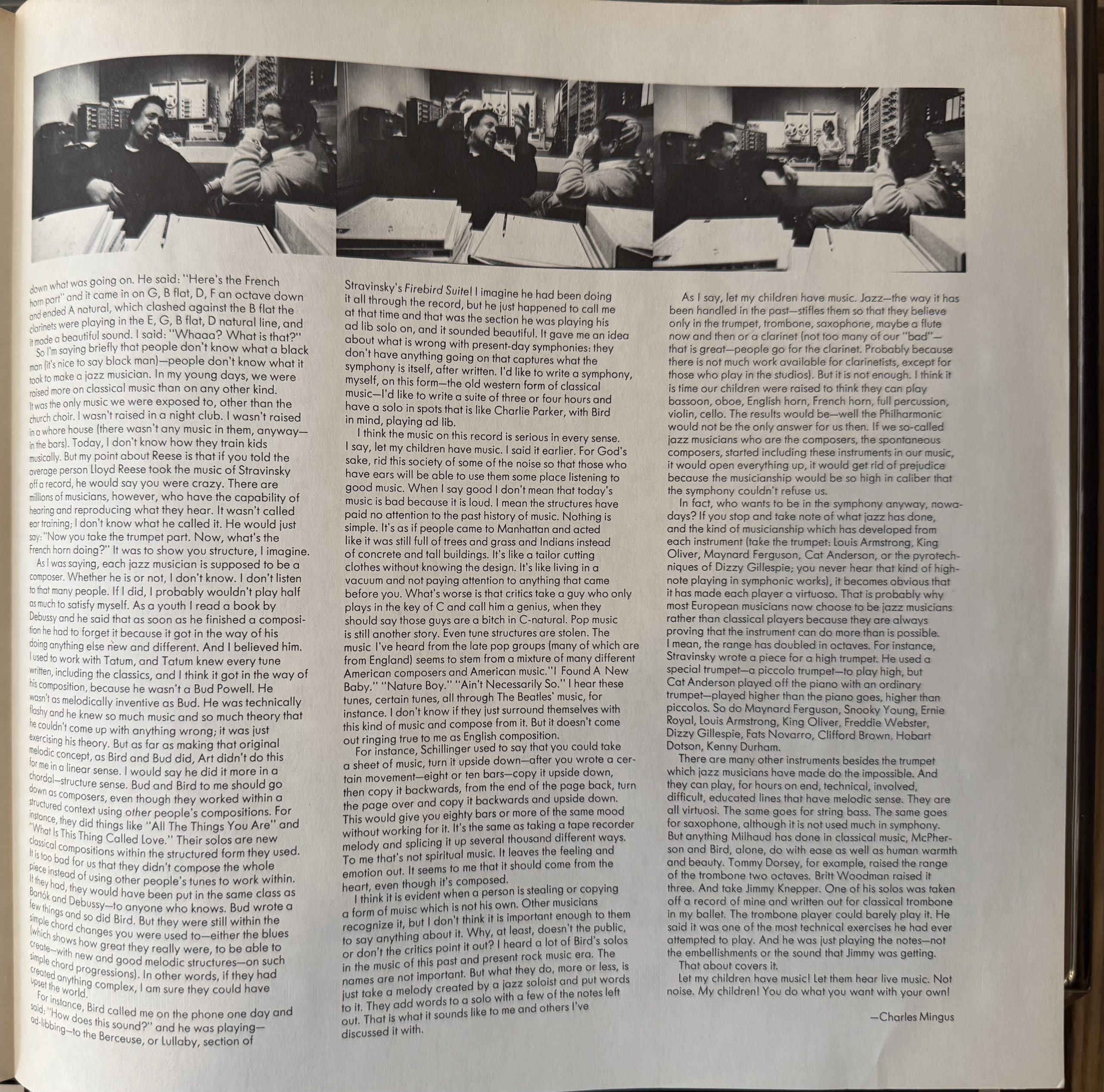
The Chill of Death” begins with a Mahlerian moment, a tremolo from the basses over a timpani hit and the orchestra. Mingus recites a poem that dates from the beginning of his career; written in 1939, it captures the constant tension in his work between wild life and the fear of being forgotten in death. After the recitation there’s a sustained organ tone and a free alto sax solo by Charles McPherson over a shifting, uneven instrumental background—sometimes marching to the graveyard, sometimes joyfully dancing, sometimes anxiously peering around the corner. The piece ends with a rare audible splice as McPherson plays into a descending glissando and crescendo by the rest of the band; I wonder how much improvisation was left on the cutting room floor by Macero.

The I of Hurricane Sue” ends where we began, the second piece recorded in the very first session. There are wind effects and corrugaphones beneath a free intro before the band snaps into a tightly wound, swinging melody. The work ends with dueling pianos, Jaki Byard vs. Roland Hanna, as the whirly tube and winds blow us away. This characteristic of alternating chaos and gorgeously played symphonic jazz is what ultimately sets Let My Children Hear Music apart as a work of staggering genius and an apex of Mingus’s compositional career.
The brilliance and tragedy of Mingus’s life wasn’t yet done. He had a few epochal albums for Atlantic Records, Changes One and Two, ahead of him, but he also had a deeper challenge—ALS, which began to rob him of his mobility and his ability to perform. As a composer and bandleader, he still had some milestone records ahead and we’ll hear one last one next week.

You can listen to this week’s album here:

BONUS: There is an honest-to-goodness bonus track, in the original CD reissue sense, on Let My Children Hear Music. Recorded on the second recording date (September 30) following “Hobo Ho,” “Taurus in the Arena of Life” was first issued in 1992 on the first CD release of the album. It’s a nifty hybrid between a classical sonata in the piano and a blues in the horns, who take a trip to Mexico where things get marvelously strange.

BONUS BONUS: There are a few attempts to play this music live out there, but not many—which is why it came as a shock to find this sextet performance from a jazz ensemble in the University of Virginia’s Old Cabell Hall Auditorium, of all places! I don’t think that’s any of the main faculty up there, but I can’t see the bassist so it just might be Pete Spaar.

  1. Don’t worry, you didn’t miss a week. We’re not to Keith yet, but we’ll get there eventually. ↩︎

Thelonious Monk, Solo Monk

Monk alone is Monk distilled to a deceptively simple sounding essence.

Album of the Week, July 19, 2025

The mid- to late-1950s were a good time, compositionally, for Thelonious Monk. Following the critical success of Brilliant Corners, he released a series of additional albums, including the 1957 Monk’s Music with John Coltrane and Coleman Hawkins, that documented his growing list of original compositions. At the same time, his works were being covered, and celebrated, by a growing list of jazz luminaries, including Miles Davis on his ‘Round About Midnight, the first Columbia recording of his first great quintet and made at the same time as Workin’, Cookin’, Steamin’, and Relaxin’.

But not everything was idyllic. In 1958, Monk and the Baroness Pannonica de Koenigswarter were detained by police in Delaware en route to a gig, who beat him with a blackjack when he refused to answer questions. And in 1960, his relationship with Riverside Records soured over royalties, which would ultimately declare bankruptcy in 1963 following cofounder Bill Grauer Jr’s sudden death. Monk ended up signing to Columbia Records in 1962. It was a great move commercially for Monk, as the larger label could devote more resources to promoting the genius. (He was to have appeared on the cover of Time Magazine in November 1963, but the story was delayed due to the assassination of John F. Kennedy; it ultimately ran in February 1964, at which point he became one of the only modern jazz musicians to ever be featured on the cover.) But his well of new compositions dried up, and many of the records featured re-recordings of earlier compositions with his new band, featuring Charlie Rouse on tenor, John Ore on bass, and Frankie Dunlop on drums.

So we come to Solo Monk, recorded in 1964 and 1965, in the middle of his eight-album run for Columbia, and featuring Monk on solo piano on a program of his own compositions and a set of unusual standards. The program kicks off with “Dinah,” a popular song from 1925 by Harry Akst with lyrics by Sam M. Lewis and Joe Young, and which was more associated with Louis Armstrong and Cab Calloway than with the bebop intelligentsia. The anonymous liner notes for Solo Monk sound a note of surprise at the stride flavor of Monk’s interpretation, which should be no surprise to us after our the last few weeks. The piece as a whole is a light-hearted romp that does prove that Monk has a sense of humor, but it’s more than just a joke. Though the first part of the work has the propulsive drive and left-hand block chords of the old stride piano style, giving the feel of a 1930s show tune, the end suddenly shifts to a freer style and we see through Monk’s eyes the title character, no longer a caricature but someone fully modern and distinctive—complete with a closing trill on the highest notes of the piano. As the liner notes say, Monk had a sense of humor, but that’s not all that’s shown here.

I Surrender, Dear” is familiar to us, having appeared on Brilliant Corners. This version has fewer of the outer eccentricities that appeared on that album. We don’t get anything like stride until Monk gets to the B section, and it isn’t until the second repetition that he starts to elaborate the melody, complete with some of the flat-finger seconds and clusters—and some brilliant tossed-off runs. He takes the last chorus with a good deal of rubato and an octave-long run down the keyboard.

Sweet and Lovely” (by Gus Arnheim, Charles N. Daniels and Harry Tobias) is one of those tunes that seems to lurk in the collective memory; I couldn’t have told you the tune from the name, but it’s instantly recognizable (probably from old “Tom and Jerry” cartoons). Monk’s rendition follows the same pattern as “I Surrender, Dear,” with the first verse played straight (albeit with stride left hand, a tremolo in the right hand, and the melody in octaves). The improvisation on the third chorus, however, turns the song into a new composition, with a single phrase repeated in rhythm across the whole verse. For the final run through, Monk returns to the tremolo effect, but again brings us into a deeper emotional moment in the final rubato section.

North of the Sunset,” only recorded on this album, is a Monk blues with a syncopated opening theme, full of pauses. The B section takes the melody and elaborates it into a fuller sound. Monk only gives us two repetitions of the whole thing; the track ends at 1:50 with the sound of the pedal dropping back into place. He saves his energy for a solo version of “Ruby, My Dear,” which immediately follows. Written in 1945, it’s one of his oldest compositions and one that he returned to often; we previously heard it on Monk’s Music. Here the improvisation is limited: some alternate rhythms in the B section, a few accelerated and double time sections in the final repetition, and a dip into a new key at the very end. Otherwise we are left to soak in the ballad.

I’m Confessin’ (That I Love You),” a jazz standard with origins in a tune recorded by Fats Waller, gets a similar treatment. Here Monk’s exuberance peeks through a bit more in the hard-swinging syncopation, the spontaneous arpeggios in the B section as it turns into the chord change, and the extended bridge linking the first and second repetitions. Monk’s improvisation on the second repetition seems to take flight with two voices, while still anchored by the steady chords of the left hand. Again, a brief pause and a rubato run down to a final chord, followed by a high, far-off twinkle.

Ray Noble’s “I Hadn’t Anyone Till You” takes a freer initial approach to the late 1930s popular song, at least until the B section when the steady stride chords make their return. The end, with a pause for effect before a final declaration that swoops up the entire keyboard, lands in a key of joyous wonder.

We’ve heard “Everything Happens to Me” before, on Wynton Marsalis’s Standard Time Vol. 3. This version is briskly unsentimental by comparison, but still retains the loveliness of Tom Adair and Matt Dennis’s melody, even as it swings into something a little more dancelike, if one can imagine Monk’s eccentric shuffle as a dance. And as he steps away from the strict rhythm into a free moment for a while, suddenly it is a dance that ends with that same high note of wonder.

Monk’s Point” is another Monk blues, this one featuring a repeated “bent note” (as bent as notes played on a keyboard can get). It’s a spirited tune that seamlessly flows from the theme into a sort of hybrid ragtime reel; as with “North of the Sunset,” it’s in and out in less than two minutes, but sees far more development in those two minutes.

I Should Care,” the standard from Axel Stordahl and Paul Weston with Sammy Cahn, has been covered by everyone from Bill Evans to Johnny Hartman to Frank Sinatra, and the interpretations usually skew to the sentimental or the jaunty. Monk steers away from both interpretations. His approach is less jaunty, more defiant; you can hear the determination to give the impression that the narrator is just sleeping fine, that he doesn’t go around weeping. But that twist ending—“And I do”—is present from the beginning of Monk’s interpretation, especially in the end as the moving parts fall away and we’re left with an aching suspended chord before the final resolution. All in two minutes.

Ask Me Now” is the last Monk composition on the album, and the only one to get more than two minutes’ running time. It keeps good company with “I Should Care,” sounding like a more conventional ballad than “Ruby, My Dear,” but the constantly shifting tonality reminds us that Monk’s simplicity is usually complex even as his complexity often is in the service of something very simple. In this case, the melody is eminently singable, even as the tonality seems to shift like the facets of a crystal in sunlight. Monk takes some rubato into the final verse, and a splash of a high cluster chord together with a Woody Woodpeckeresque final run let us know the narrator’s demands ultimately grow increasingly insistent.

We last heard “These Foolish Things (Remind Me of You)” performed by Johnny Hartman, but again Monk takes a different interpretive path, shedding Hartman’s overt emotion for a more abstract interpretation. You can hear his tonal imagination at work in the chord sequence that ends the first chorus, the run that takes us into the bridge, the progression that seems to take us off a chromatic cliff into the final verse. The final bridge is taken freely in not-quite-double time for a moment, until it settles down for the final chorus, and one last surprise: a lingering chromatic chord that never resolves, fading into silence and the runout groove.

Monk would record three more studio albums for Columbia, but only the last one, Underground, would feature a significant amount of new works. Arguably, the most rewarding recordings from this period are the live recordings that document the band with Rouse, of which one (Misterioso Live on Tour ) was released while Monk was signed to the label. But he toured extensively during this time, and there have been other live recordings from this period, surfacing as recently as the last few years, that have been exceptional. We’ll close this series with one of those next week.

You can listen to this week’s album here:

BONUS: “Monk’s Point” received new life on the 1968 album Monk’s Blues in a big band arrangement by the inimitable Oliver Nelson. Here’s that arrangement: