
I used to not appreciate jazz guitar; it too often reminded me of fusion and guitarists noodling on the boundary between jazz and rock. Obviously it’s a much broader landscape, and today we get only a small slice of it.
But what a slice! We have Jim Hall, Grant Green, Wes Montgomery, and some lesser known names. Barney Kessel was active from the 1940s to the 1980s, and in addition to a few albums of tasty West Coast jazz like this he also was a member of the Wrecking Crew, appearing as a session musician on hundreds of hit singles from the 1960s. Kenny Burrell has appeared in this blog before; this is from one of his many sessions from the 1950s and 1960s (and from a record credited to him and Coleman Hawkins, though the Hawk doesn’t appear on this track.)
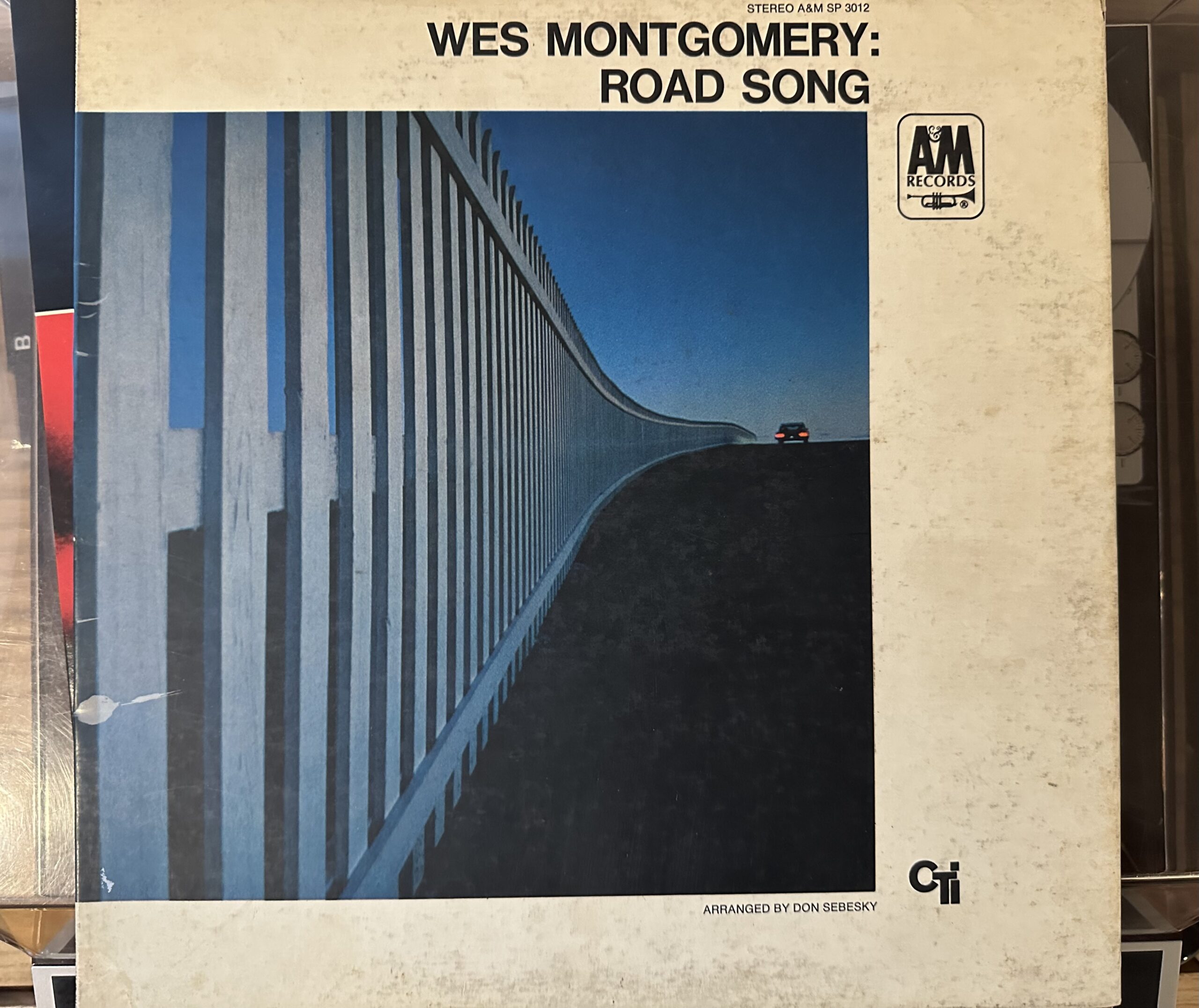
We’ve heard some of Wes Montgomery’s output on the blog before, but the cuts I’ve selected here come from two of the many latter-day live releases that have come out from radio shows and highlight how this man could play. One of the Grant Green cuts here comes from a similar recent release, but there’s a lot more to listen to in his back catalog. And I’ve highlighted a late Charles Mingus track from Three or Four Shades of Blues because the guitar playing from Philip Catherine and Larry Coryell is the definition of legendary.
A few more modern and soulful recordings follow. Parlor Greens is an organ trio, but the guitarist in it is the great Jimmy James, late of Delvon Lamarr’s band, and their cover of “Jolene” is here as a tribute to the late great Dolly Parton. And Grant Green’s “Afro Party” is a fat soul jazz number from the 1972 soundtrack to the film The Final Comedown, which apparently is the first soundtrack released on Blue Note.
There are, somewhat surprisingly, multiple jazz guitar covers of John Coltrane’s “Impressions” to choose from; I chose the one that was the shortest, bowing to the constraints of the hour-long radio show format, from another great Wes Montgomery live recording.
Finally, I ended the set with four acoustic numbers that felt right for a fall day. “Hüttengriffe” apparently means “hut grips,” and Wolfgang Muthspiel named it that because the chords that make up this original composition are the ones that you know by heart even as a budding guitarist, and can pick up a guitar from the wall of a rustic cabin anywhere and play them. (They also sound a lot like the opening to Lady Gaga’s “Shallow,” but I think that’s coincidence.) The great Jim Hall’s composition “Romaine” gets a gemlike solo treatment here, as does Wes Montgomery’s delicate original “Mi Cosa.” Last, we finish with an excerpt from Kenny Burrell’s gorgeous duet with John Coltrane, “Why Was I Born?”
Do not adjust your set. There is nothing wrong.
- On Green Dolphin Street – Barney Kessel, Ray Brown, Shelly Manne (The Poll Winners)
- Out Of This World – Kenny Burrell with Coleman Hawkins (Bluesy Burrell (Rudy Van Gelder Remaster))
- Four on Six (Live) – Wes Montgomery (The NDR Hamburg Studio Recordings (Live))
- I Wish You Love – Grant Green (Green: Funk in France – Paris to Antibes)
- Goodbye, Pork Pie Hat – Charles Mingus (Three Or Four Shades Of Blues)
- Jolene – Parlor Greens (Emeralds)
- Afro Party – Grant Green (The Final Comedown (Original Motion Picture Soundtrack))
- Impressions – Wes Montgomery (In Paris: The Definitive ORTF Recording)
- Hüttengriffe – Wolfgang Muthspiel (Angular Blues)
- Romaine – Jim Hall (It’s Nice To Be With You (Jim Hall in Berlin))
- Mi Cosa – Wes Montgomery (Maximum Swing: The Unissued 1965 Half Note Recordings)
- Why Was I Born? – Kenny Burrell And John Coltrane (Kenny Burrell With John Coltrane)