
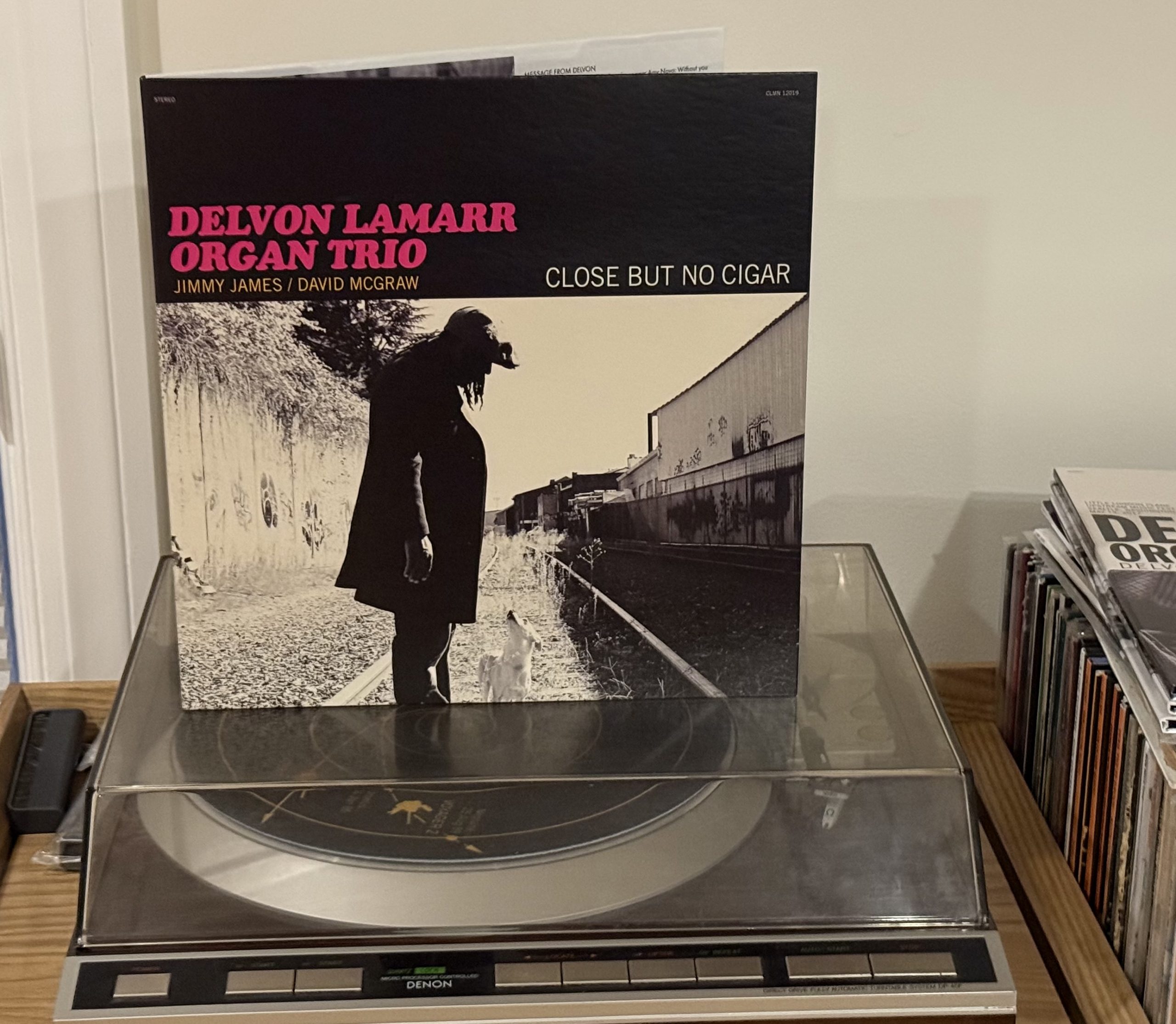
Album of the Week, November 1, 2025
After fusion and jazz-funk took some of the steam out of the organ combo market in the 1970s, the neo-trad movement spearheaded by Wynton Marsalis similarly had the jazz-record-buying public focused elsewhere in the 1980s and 1990s. But the organ combo never went away, and new players continued to emerge, including the late great Joey DeFrancesco in the late 1980s through the 2010s. New players continued to emerge, including today’s artist.
During this period, something else was happening: internet distribution of music. Music blogs and recommendation feeds helped formerly niche artists find audiences. And distribution platforms like Spotify and Bandcamp helped musicians get access to their music, whether streaming or via vinyl. Into this market (and onto Bandcamp) stepped Delvon Lamarr and his organ trio. Based in Seattle, Lamarr had played in a number of bands including the now-defunct jazz-funk combo Megatron before forming his organ trio in 2015 with guitarist Jimmy James and what would turn out (spoiler alert) to be a revolving door of drummers. For the first album, that was Seattle-based David McGraw.
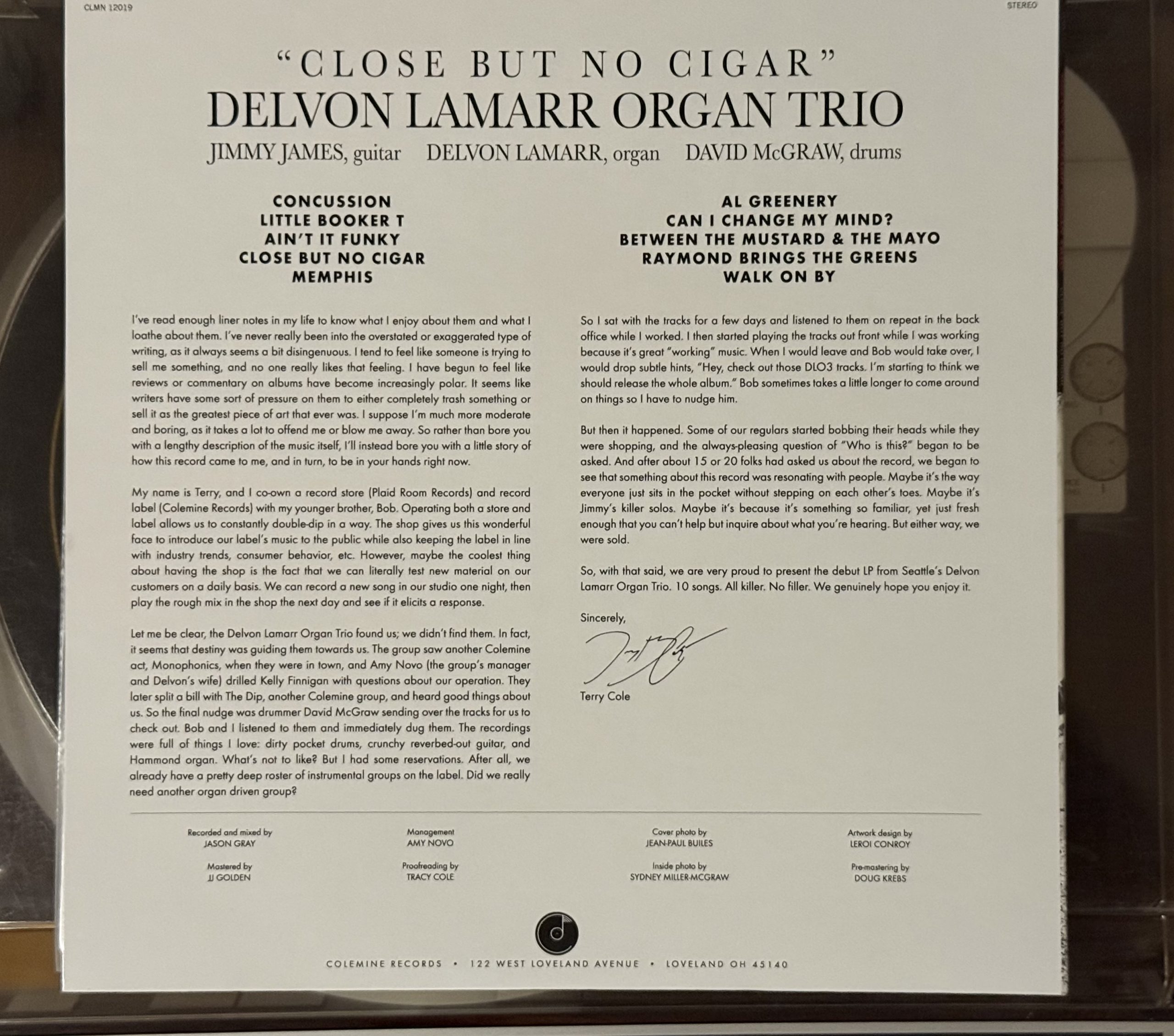
The band’s manager (and Lamarr’s wife) Amy Novo learned about Loveland, Ohio’s Colemine records and its founder Terry Cole from another Colemine act, and McGraw brought their tracks over. Cole tested the tracks in his record shop, and decided to release the album after seeing fifteen or twenty patrons bob their heads to the music and then ask “Who is this?”
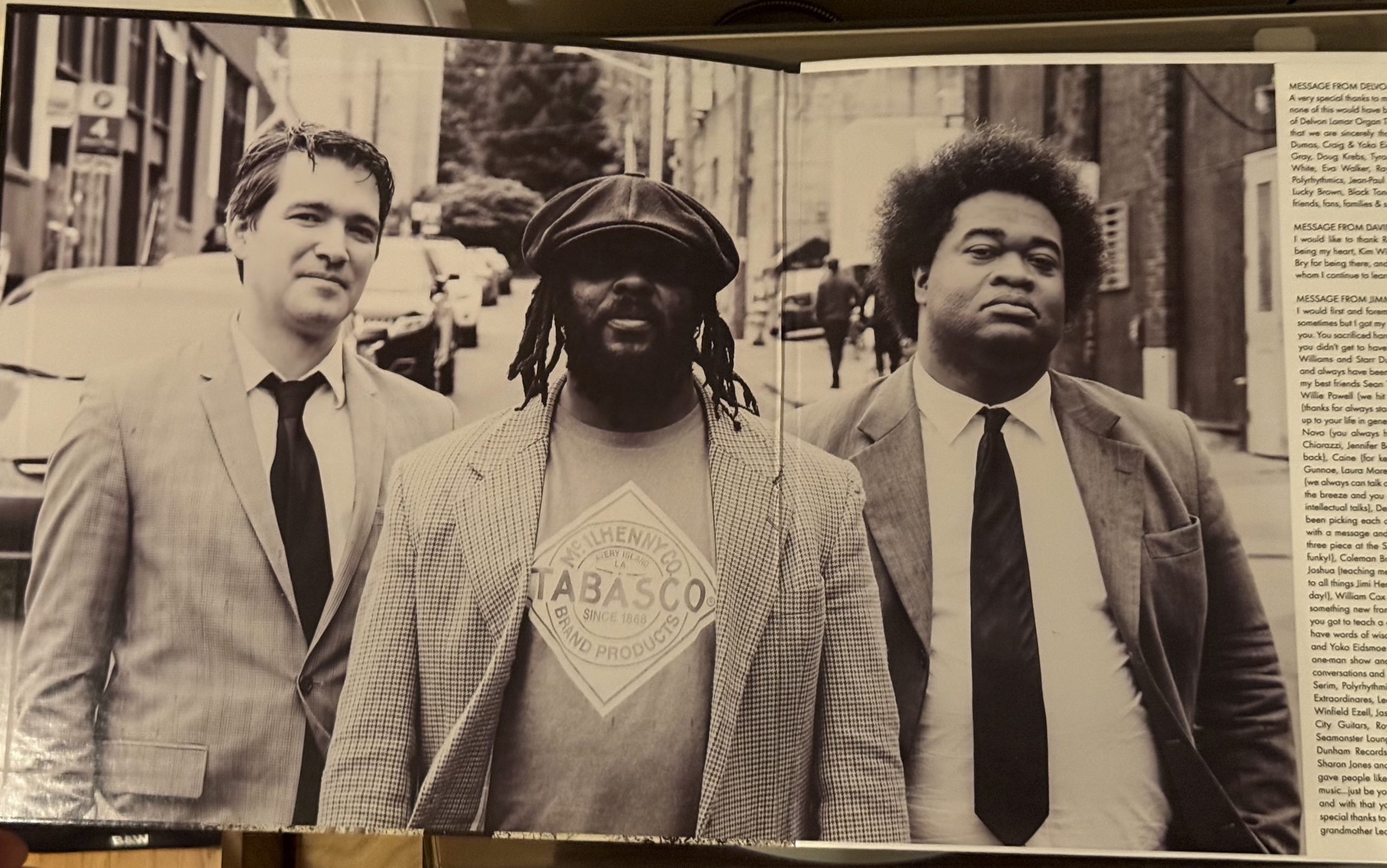
“Concussion” comes out of the gates swinging hard. Lamarr plays the melody in the mid to low range, as Jimmy Smith did, but unlike his predecessor gives a strong voice to guitarist Jimmy James in the arrangement. The two play in a tight combo, closing the head out with two single notes. Lamarr’s solo stays in the midrange, iterating over the bluesy chord changes and powering up on his second repetition to something more fiery but still very much in the pocket. Jimmy James’ guitar solo, on the other hand, takes off like the shuddering rotors of a helicopter, playing with time over the bursts of sound from the organ and McGraw’s drums.
“Little Booker T” is a nod to one of Lamarr’s major non-jazz influences, Booker T and the MGs. The combo gives a good impression of the laid-back vibes of the great Stax house band, complete with a pretty great bass line courtesy of Lamarr’s organ. The laid-back vibe continues with a completely different beat in “Ain’t It Funky,” a tribute to the great 1970 line-up of James Brown’s JBs. Jimmy James plays a great Catfish Collins impression, and Lamarr picks up the groove as James takes a ripping solo. The only minus is McGraw’s drumming—while in the pocket, it lacks some of the originality and bounce of a Bernard Purdie.
“Close But No Cigar” takes Stax as its inspiration, with a melody slightly reminiscent of Jean Knight’s “Mr. Big Stuff.” Lamarr slows the melody down in the chorus even as the groove continues. There’s a little melodic development here but that’s almost beside the point; this is grimy, funky good-time dance music, and the syncopated B melody that seems designed for whiplash-inducing head-nodding only reinforces the point. The John Patton classic “Memphis” (from a 1969-1970 album that went unreleased until 1996) is an opportunity for McGraw to show off his skills, and he rises to the occasion, with a funky, bouncy beat. We’re back in Stax territory again, as the name suggests, and the chorus, alternating between the tonic and supertonic chords, reinforces the funky energy.

“Al Greenery” tips the hat to the Reverend Al circa “Love and Happiness”—in fact, making a groove out of the first four measures of the song. This one definitely leans more pop; Jimmy James doesn’t get much of a chance to go off the reservation here. That’s reserved for Lamarr in “Can I Change My Mind,” a bright and sunny number written by Carl Wolfolk and Barry Despenza and debuted by Tyrone Davis in 1969 that allows both organist and guitarist to add a little sunny soul to the mix, with Lamarr giving by far the most joyous expression on the record.
“Between the Mustard and the Mayo” references both the infamous “sandwich cover” of Jimmy & Wes: The Dynamic Duo and a bit of the mid-1960s arrangements by both Oliver Nelson and Lalo Schifrin that we have heard in earlier columns. Lamarr is flat out here, improvising at maximum velocity as James and McGraw groove hard underneath him. “Raymond Brings the Greens” gets a fiercely greasy groove courtesy of James and a stumbling McGraw drum beat, but the band isn’t above a wink as James tosses in a riff from “The Man Who Sold the World” in his solo.
The Burt Bacharach/Hal David classic “Walk On By” closes us out with an end-of-the-evening vibe: no crazy solos, no Isaac Hayes psychedelic soul, just the band giving their best groove over a bashing drum part from McGraw. Lamarr is the best part of this album closer, leaning into the chords at the chorus with a weeping expressiveness. It’s time to go, he seems to say, but you’ll be back.
Delvon Lamarr and his band hit something just right with this debut album, proving that there was an audience for just plain fun jazz and soul played with heart. The trio would go on to record more; we’ll hear a live show from them next week.
You can listen to this week’s album here:
BONUS: Along with the aforementioned live show, the band hit the road to promote the album. You can skip the first 2:50, though the interview is interesting enough, to watch the band tear into “Close but No Cigar” live: