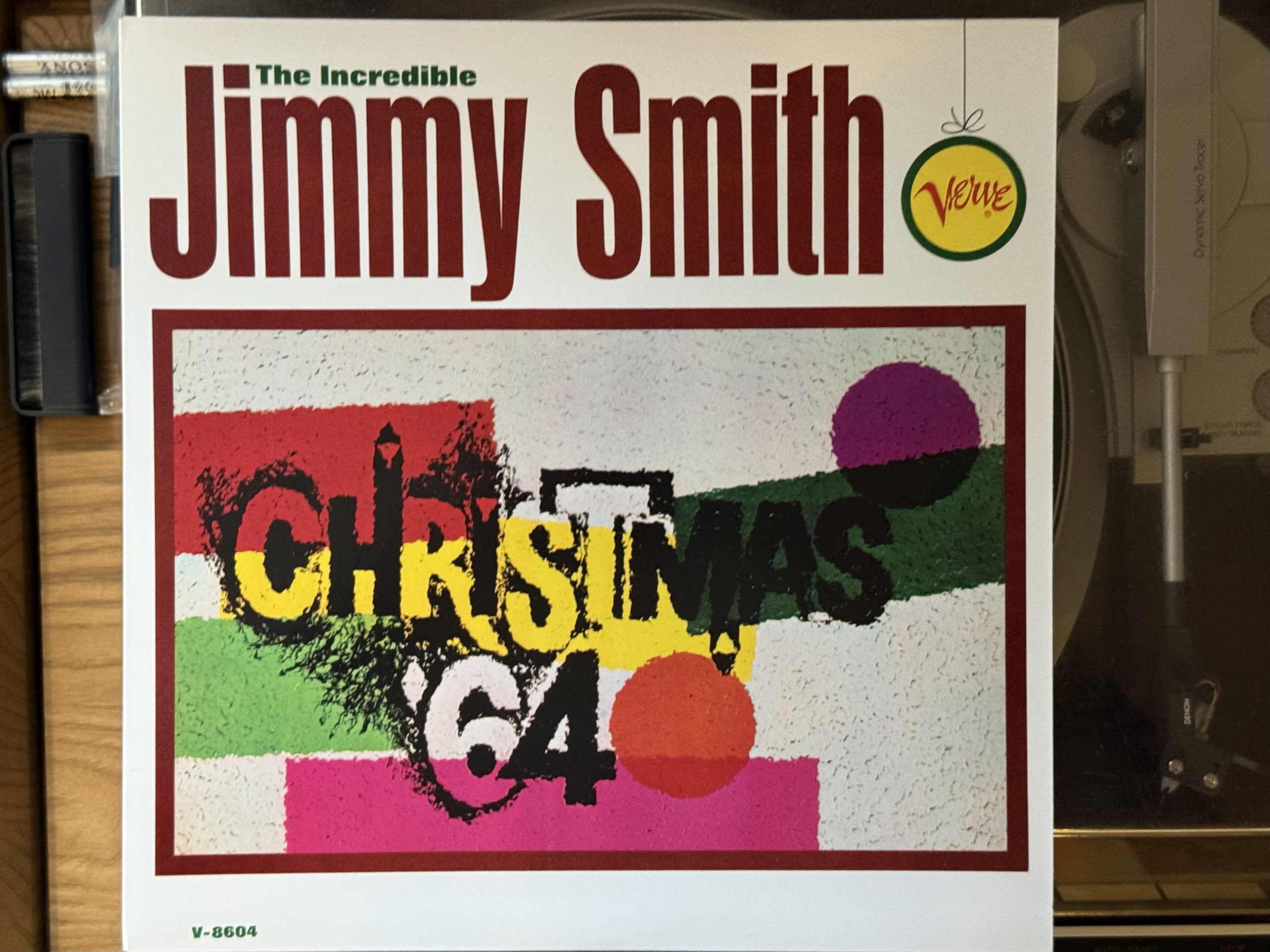
Jimmy Smith, Christmas ’64

One more organ record—maybe the best known of them all—brings us into this year’s holiday season.

November 29, 2025

Remember how I signed off last week saying we were going to “take a break for some seasonal music,” bringing this run of articles on the jazz organ to a close? Wanna know who our first purveyor of seasonal music is? (Squints) Oh yeah, Jimmy Smith. Had I planned better I could have set this up as a great segue from the organ combo articles into the holidays, but as it is you’ll have to settle for an absolutely spectacular album of both jazz organ and holiday music.

Jimmy Smith in 1964, on Verve, was at the height of both his musical powers and his bankability, and Creed Taylor was not the sort of producer who was above stretching the popularity of his artist for some additional revenue via the time-honored tradition of the Christmas album. Coming off his one-two punch of The Cat and Who’s Afraid of Virginia Woolf?, you’d be forgiven for expecting that Smith would take things easier on this holiday album. But with a band consisting of many of the musicians who made those great recordings, including Kenny Burrell (and Quentin Warren) on guitar, Art Davis on bass, Grady Tate (and Billy Hart) on drums—plus a whole orchestra that included Jimmy Cleveland on trombone and the elusive Margaret Ross on harp, among others—and charts by Billy Byers and Al Cohn, there was no room for slacking here. This is a seriously hot record, and a fantastic Christmas album to boot.

God Rest Ye Merry Gentlemen (Big Band version)” begins in big band fashion indeed, with a low-brass processional full of pomp and accompanied by the timpani, right up until “tidings of comfort and joy.” At which point the trumpets call a blue fanfare and Jimmy rolls in. The band continues with a “Slaughter on 10th Avenue” style take on the tune for one more verse, but then Jimmy takes the reins and plays a clean organ trio verse with Kenny Burrell and Grady Tate that is telepathically tight and funky. The horns rise up behind the trio like an incipient ambush until they take one more verse, but Jimmy gets the last word.

Jingle Bells” is a fine and mellow tune for the trio. Check Grady Tate’s subtle explosions behind the band as well as Jimmy’s understated organ part. The slow crescendos on the two held arpeggios are the only loud part of the arrangement, which fades out just as it gets going. It’s cool—something that can’t be said for the opening of “We Three Kings of Orient Are,” which sports a full symphonic brass arrangement that’s well-nigh Mahlerian, courtesy of saxophonist/arranger Al Cohn. But then it turns the corner into a gospel shouter and we’re really off and running. I would have been pleased to hear a side-long take on the middle bit of the arrangement, but here it’s bookended by an outro version of that opening.

The Christmas Song” is more swinging, with both Jimmy and the band in a laid back mood. The horns are swinging so hard they’re practically a beat behind, and Jimmy happily burbles bits of mood before playing a doggedly on-model melodic solo as the horns provide chromatically oracular pronouncements. A high chorus of trumpets brings us into a double-time solo wherein Jimmy stretches out over a frantic bit of Grady Tate drumming, then back to the chorus which slowly builds to a massive climax, punctuated by a chime before the final chorus.

The trumpets give us a “White Christmas” opening that could be played by the Boston Pops, key change and all, before Grady Tate takes us into bossa nova land. Jimmy’s solo is low key, in the baritone range, at least until the horns take it up a notch, at which point we get a little happy double time arpeggio, a final chorus, and a little “Jingle Bells” quote to wrap it up.

Santa Claus Is Coming to Town” is a trio number with Quentin Wells and Billy Hart, featuring Jimmy and Quentin trading off licks. The stereo separation (guitar in the left channel, organ in the right) is the only thing that helps to piece apart the players at the beginning, so close is the harmony, especially since Jimmy is soloing without much vibrato. Quentin Wells is a bluesier player than Kenny Burrell and he leans into that here, both in his solo and in the stabs of chords he plays under Jimmy’s solo. Jimmy starts out mellow but builds intensity through his usual tricks, particularly leaning on the tonic and playing bursts of arpeggios around the edges of his solo, all the way into the fade-out.

It’s another Pops-style arrangement for “Silent Night,” complete with bells and flugelhorn, then a handoff to Jimmy and the trio who do what they do best, a brisk, unsentimental swing through the tune. The horns make like “The Cat,” briefly, in the climax of their accompaniment to Jimmy’s solo—indeed, the only thing to criticize here is that they actually overwhelm the organ for the only time on record.

God Rest Ye Merry Gentlemen (Trio Version)” starts right in, sounding a bit like Jimmy’s version of “Greensleeves.” The trio with Quentin Warren and Billy Hart swings convincingly, with Billy’s snare work so powerful that it causes a secondary rattle somewhere between the snares and the ride cymbal. Jimmy spools off riff after riff in his solo, as Quentin Warren walks around the chords, keeping the rhythm going strong. At several points, it sounds as though the group will fade out, but the producers wisely keep rolling tape as the trio lands the hottest number on the whole record at the very end. Finally as the trio returns to the opening vamp, the engineers bring down the sliders and fade it out into the dark.
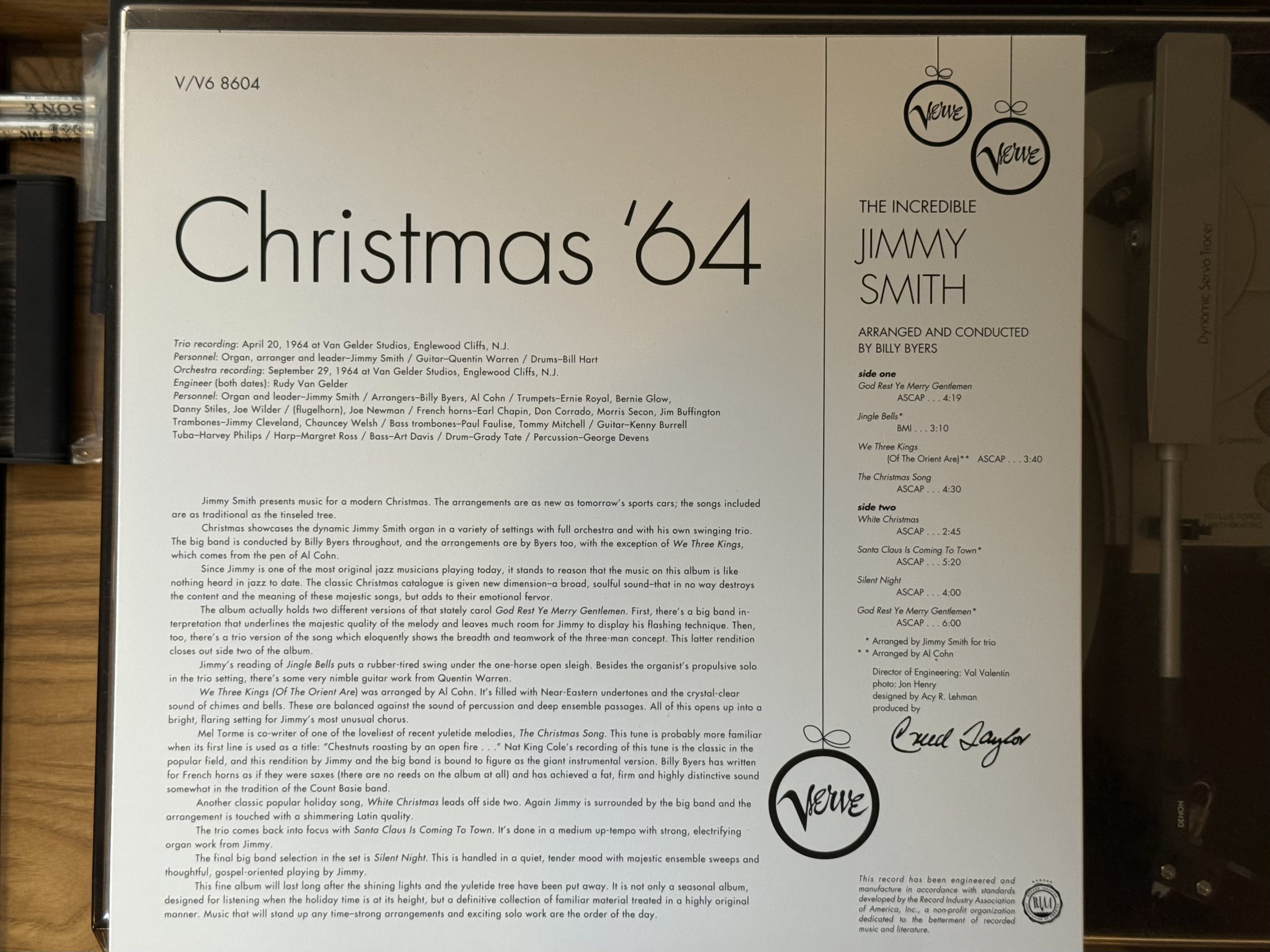
About the only thing wrong with Christmas ‘64 is the title; though it wasn’t the only Verve album to include the year in the title, it was clearly not a good choice for a title for a holiday album, which tend to sell between Thanksgiving and Christmas but can continue to rack up sales for many years. Retitled and with a new cover, the album had a long life under its new name, Christmas Cookin’, including in its CD reissue which included two other tracks, “Greensleeves” from Organ Grinder Swing and “Baby It’s Cold Outside” from Jimmy and Wes: The Dynamic Duo.

The better known cover and title for this week’s album as reissued in 1966, courtesy Discogs.

Next week we’ll stay in the jazz lane, with a holiday album by one of the players on this week’s set. You can listen to this week’s album here:

BONUS: This album and its related tracks cast a long shadow over holiday jazz records. The late great Joey DeFrancesco included a rearrangement of Jimmy’s “Greensleeves,” as “What Child is This,” on his superb 2014 album Home for the Holidays:

Delvon Lamarr Organ Trio, Cold as Weiss

A tight set of organ trio funk with some sunny spots of soul.

Album of the Week, November 22, 2025

Another DLO3 album, another drummer. But the band felt so good about the arrival of Seattle drummer Dan Weiss that they named the album after him. Weiss was young—he recorded his first session, with the soul group The Sextones, in 2017—but in demand, also recording with soul band Object Heavy and with reggae artist Clinton Fearon. The band cut another originals-heavy album with Weiss, releasing it in 2022 on Colemine Records.

Pull Your Pants Up” starts us off with that funk-soul hybrid that the group was getting so good at, and with a single crack of the snare from Weiss before he and the group launch into a stuttering strut of a tune. A screaming Hammond solo from Delvon Lamar over a Meters-style guitar line from Jimmy James: what more could you want? If your answer is “more Jimmy,” the next cut, “Don’t Worry ’Bout What I Do,” has you covered, with a crying guitar solo that manages to evoke Clapton, Hendrix, and Mick Ronson.

I Wanna Be Where You Are,” a cover of a 1972 Michael Jackson hit by Arthur “T Boy” Ross and Leon Ware, brings back some of the early 1970s soul sound, with an unusual arrangement in the head: melody on the organ, no chords, quiet pedal bass, over James and Weiss. It’s a great tune; pumping up the bass would balance out the sound a lot more, at the cost of losing some of the fragile beauty of the original arrangement. As it is, the room in the arrangement gives the band more space to play into, and the result is something a bit like an Al Green tune, which is never a bad thing. The side closes out with “Big TT’s Blues,” which is what it says on the tin: a guitar-forward blues with early-1960s Jimmy Smith style organ solo. The swampy guitar solo from Jimmy James is worth the price of admission.

Side two opens with “Get Da Steppin’,” a pure funk tune with a slippery key signature with lots of sustained organ notes and crunchy chords. Delvon’s solo takes off, with some triple meter and more suspensions heightening the tension over the boom-bap of the drums.

Uncertainty” is an original ballad in the early 1970s soul spirit, a gorgeous tune that stayed in the band’s live repertoire. They don’t try to blow this one out, keeping to the tune and even adding an unusual key change that takes it down a half step. The band segues to “Keep On Keepin’ On,” a solitary writing credit for Lamarr’s wife (and the band’s manager) Amy Novo and a funky tune with some stretched time in the chorus and an almost-out-of-time ascending line in the guitar in the verse.

Slip ‘N’ Slide” is a fun soul strutter, uncomplicated and easy, a cool little instrumental with a proper chorus. The closer “This is Who I Is” is way more ambitious, with a squelchy guitar line over a bouncy drum beat anchoring Lamarr’s solo. Jimmy James sounds as if someone let him out of a cage, and he takes a raging reverb-heavy solo that stretches against Lamarr’s chords, the two spurring each other on all the way to the end.

Alas, the plan that Weiss would be the permanent drummer for the DLO3 was not to be. After recording and touring behind Cold as Weiss, founding guitarist Jimmy James took off to focus on his other band The True Loves, and Weiss left some time later. The band currently features Brice Calvin on guitar and Ashley Ickes on drums, and they’re still out there touring. Here’s hoping for another album someday—or at least that some of the other tracks they recorded along the way see the light of day. (The band’s last release, 2022’s Live in Loveland, was an archival release of another concert done the same day as Live at KEXP!, and apparently the band banked another dozen or more tracks during the recording of I Told You So.)

But speaking of cold as things, it’s getting kind of chilly around here! Next week we take a break for some seasonal music, which will carry us through the new year before we shift gears once more.

You can listen to this week’s album here:

BONUS: Colemine Records released the title track as a 45; the b-side was this little gem, “Fried Soul”:

BONUS BONUS: This band might not have been around for long, but they left a mighty impact. Here’s the band in an hour-plus long live performance, recorded before the album’s release, at Relix Studios in New York:

Delvon Lamarr Organ Trio, I Told You So

This incarnation of the DLO3 gives us a different drummer and a funkier edge.

Album of the Week, November 15, 2025

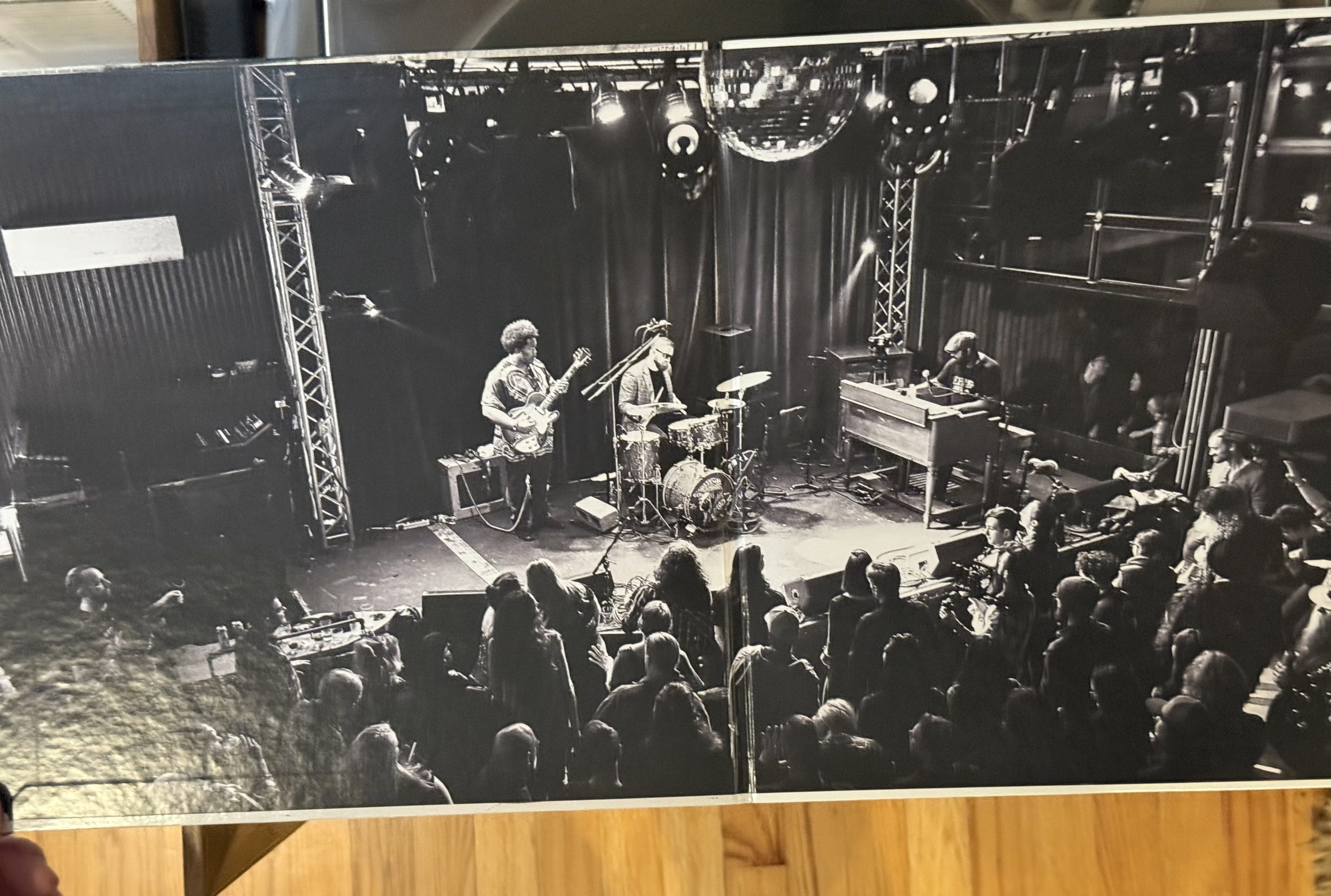
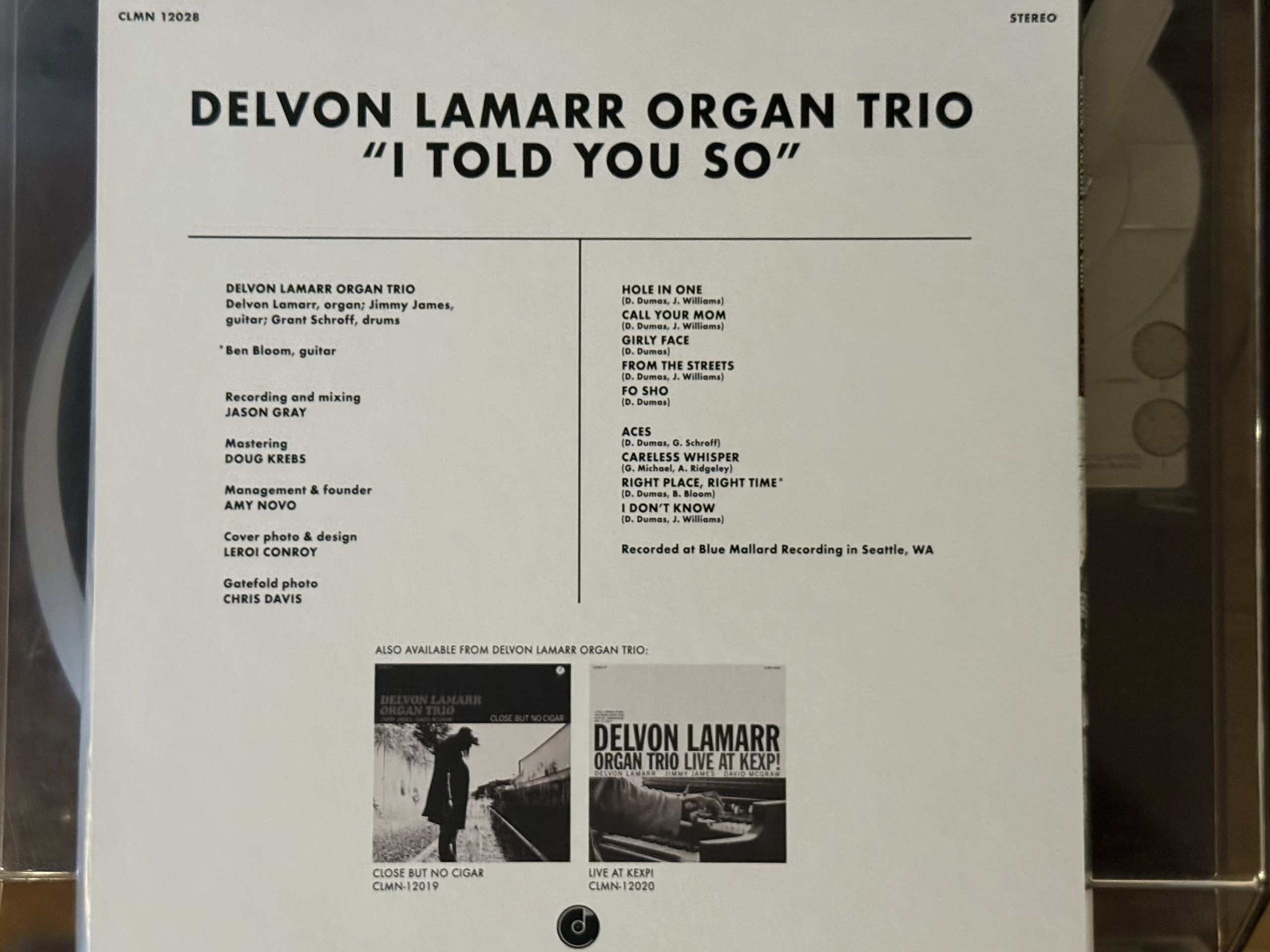
I hinted at it when we wrote about Delvon Lamarr’s first album, Close But No Cigar: the drummer seat in the Delvon Lamarr Organ Trio (or DLO3 for short) is rarely filled by the same musician for long. After recording the demos that became the first album and the game-changing Live at KEXP, founding DLO3 drummer David McGraw left the group to focus on his other soul-funk group, The True Loves. In his place: soul drummer Grant Schroff, who joined specifically as an interim drummer for a tour of Europe and recorded the second album with them. What’s remarkable is how little the change in one-third of the band ended up affecting the sound on their third official release, which remains a highly skillful blend of jazz and party-time soul even as the focus shifts to more originals and fewer covers.

Hole in One” starts off in a 1969-1970 James Brown mood thanks to James’ fierce rhythm guitar part and a virtuosic Bootsy-style bass line courtesy of Lamarr’s left foot. The band lets the groove steep for a few reps before Lamarr takes a high-octave solo, wailing over a sustained tonic note in the left hand all while keeping that bass line going. A sudden dip into the relative minor key through the bridge is brief but also reminiscent of the Godfather of Soul.

Call Your Mom,” co-written by Lamarr and guitarist Jimmy James, keeps the funk going. Here James’ guitar states the melody with an impeccable late-1960s—early–1970s soul vibe. “Girly Face” also has a sixties soul groove courtesy of Schroff and James and seamless transitions between organ and guitar solos. It feels like it could have been a sixties pop song; there’s moderate improvisation throughout but this one is mostly about the groove. Mind the chair dancing; it’s inevitable.

From the Streets” has a vaguely 1990s hip-hop sound to it, thanks to the beat and the repetitive bass line. We get to hear that boom-bap beat by itself as a completely in-the-pocket drum break. There’s not much organ to this one other than the bass line; it’s really more of a soul instrumental, but a head-nodding one. “Fo Sho” brings in the whole sound of the band to close the first half with a Booker T vibe. Jimmy James slips the leash for a bit with a psychedelic guitar solo that spurs Delvon to similar heights as the two trade eights. The band builds to a mighty mighty climax before cutting out in a moment of suspense.

Aces” keeps the funk party going, with another tune that gives us a drum break to soak in Schroff’s technique. There’s a little more bounce in Schroff’s style than McGraw’s; both men are tight on the drum kit and hold their corners down well, but there’s a touch more dynamic range in Schroff’s playing. Jimmy James takes a solo that comes in over the treetops, guns blazing, before the band comes back down into the groove.

At this point in the playback when I played this record for my family, it was my daughter who said, “Wait a minute! I know that song” at the same time my wife laughed with recognition. “Careless Whisper” is a true intergenerational classic even if you hear it without the iconic saxophone part (here played by James instead). It’s also another track that is more soul instrumental than jazz, but there’s some subtle improvisation on the verses that takes the melody to different places, keeping the fires hot underneath the simmering tune.

Right Place, Right Time” is co-written by Seattle guitarist Ben Bloom, who sits in for Jimmy James on this number. Starting off with a bit of studio chatter, this one wakes up with a more nimble, less psychedelic-soul sound and a rhythm complex enough that for a minute you wonder if they’re playing in six. In this combo and guitar-forward arrangement, you can hear the rock-solid bassline and soulful chords that Lamarr leverages to keep the groove moving forward even with a completely different set of musicians. “I Don’t Know” closes us out with a funky blues and a tight interplay between Lamarr and Jimmy James, who demonstrates the relaxed but psychically close connection between himself and the organist that is the hallmark of the band.

This record shows off the band’s ability to keep rolling even as personnel changes and the repertoire becomes more funk-forward. It also brings Lamarr and James’ writing to the front, giving a nice slate of modern organ jazz/funk/soul to add to our collection of classics. Next week we’ll hear one more from the DLO3, bringing a few more changes along the way.

You can listen to this week’s album here:

BONUS: Here’s this incarnation of the DLO3 doing a live version of “Fo Sho” on Adult Swim, of all places.

Delvon Lamarr Organ Trio: Live at KEXP!

Sometimes the best way to build an audience is just to show people what you do.

Album of the Week, November 8, 2025

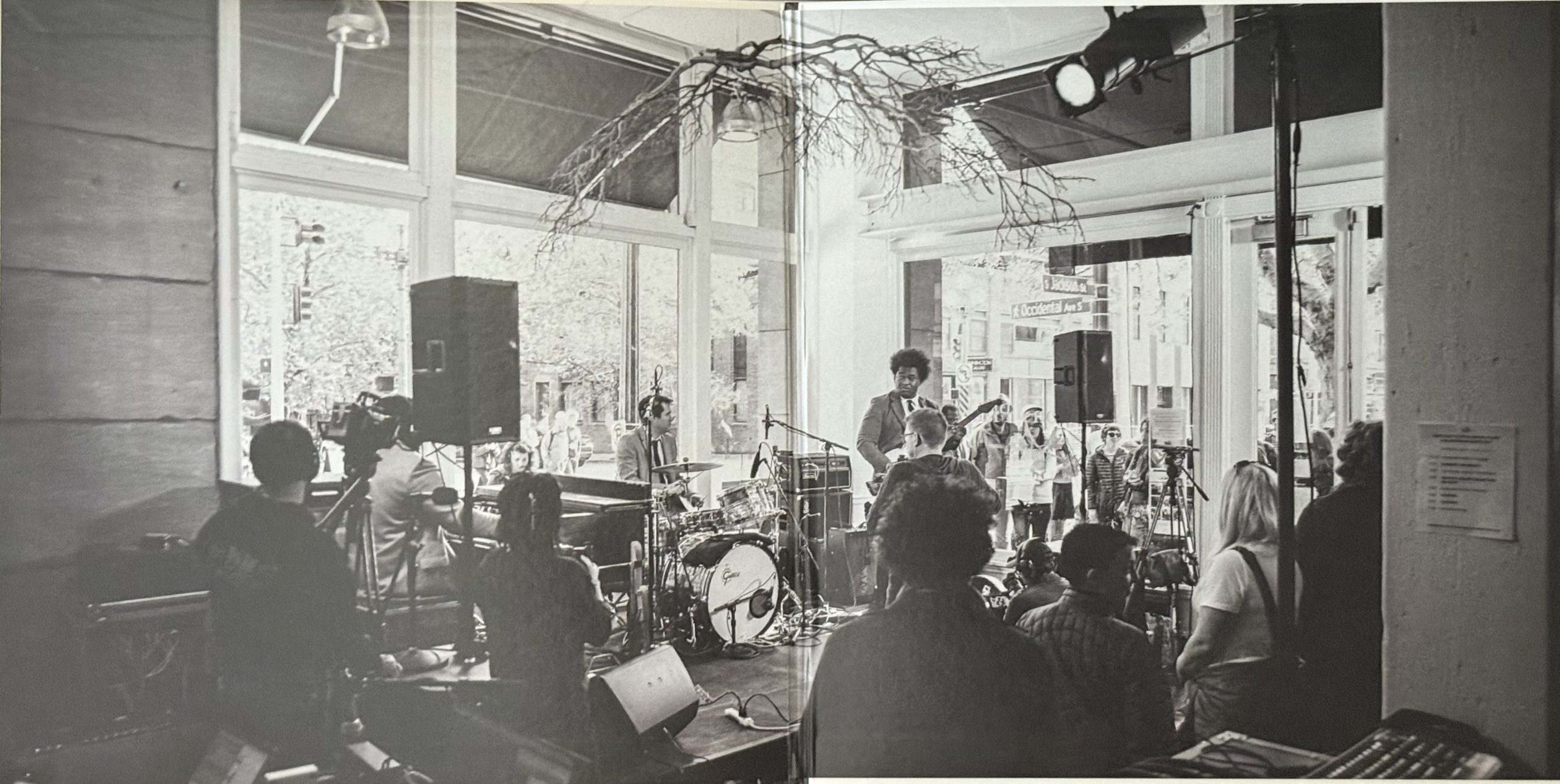
Delvon Lamarr is one of many artists who have benefited from exposure on KEXP (about which I’ve written many times before). In this particular case, though, his career was significantly boosted. The band had a set they were playing on KEXP’s Upstream Festival in May 2017, and they stopped by the studio to warm up. KEXP’s camera crew happened to catch the warm up session, and posted it to YouTube. Eleven million views later, the band’s trajectory was in a new orbit. Sometimes it happens like that.

KEXP came on board with Colemine Records to issue the record of the live performance, which debuted on Record Store Day in 2018. It features a few of the performances from that live video plus some more, and stands as a gripping testament of the power of R&B powered funk to “move… and remove, dig?”

Move On Up” is one of the tracks from the warm-up show; in the audio from YouTube, Lamarr notes “We’re going to start with a tune that should be familiar to most of you guys” before launching with the band into the Curtis Mayfield banger. The tune starts with just Jimmy James, sketching out the chords, before Lamarr enters on a crescendoing chord and David McGraw crashes out the beat. The playing is energetic and forthright; it’s impossible to hear and not dance.

Memphis” is a laid-back version of the original from Close But No Cigar. Where the original could occasionally feel formulaic, here the band is tight and relaxed, not giving the guitar lick on the chorus until the second repetition. Lamarr’s solo swerves up into the upper range of the instrument, embracing different tempi (at one point almost grinding to a stop even as the guitar and drums carry forward) and generally laying down the funk. And then there’s Jimmy James. The guitar solo on “Memphis” is probably worth four to six million of the 11 million YouTube views that this performance racked up. Starting out with a staccato riff, James runs through triplets and eighth note runs before taking off into outer space. At one point you can clearly hear what sounds for all the world like a power bass player; the YouTube video pans down from the keyboard to show Lamarr knocking that bass line out with his left stockinged foot on the pedals. The whole thing is a piece of casually funky brilliance.

South Leo St. Stomp,” called “Untitled” in the YouTube video, starts out immediately from “Memphis” with a steady four-four beat from McGraw, turning into a little cha-cha and syncopated funk as Lamarr and James enter. This is the video that prompted a YouTube commenter to post, “My watch just asked the drummer what the time is”—he’s so in the pocket, so flawlessly on, that it’s like hearing a funky, funky metronome. Jimmy James sounds more like Jimi Hendrix on this one, with the guitar threatening to take off at one point, but everything circles back to the relaxed beat once more to bring it to a close. The whole time, there have been more and more people coming up outside the windows of the performance space to listen, including a couple of very young listeners excitedly talking with their grown-ups about the sound.

The second half is devoted to the band’s actual Upstream Festival set, starting with “Concussion.” This version of the band’s debut single clocks in at a tight 4:27 but feels more laid back than the record version, between McGraw’s deeply in-the-pocket drumming and James’ mellow but focused guitar. Lamarr’s organ still has that perfect rhythm underneath, but he finds more melodic room in the solo. Jimmy James gives us a perfectly executed single-verse solo that comes in like a helicopter over the jungle to lay down bursts of funk. He’s in, freaky, and right back out. It feels like a well-worn pair of jeans.

Lamarr introduces “I Don’t Want to Play That” as “another new song, brand new… like Monday new.” The original is a deeply groovy ballad that feels like a tango in hip-huggers, thanks to the intersection between the band’s tight rhythm and the bluesy minor melodic solo from Lamarr. The band rolls right into “Tacoma Black Party,” an original named after a slip of the lip from Lamarr’s manager (and wife) Amy Novo. A feature for Jimmy James, the tune builds to a climax in the first chorus with his guitar climbing to the fifth and sixth of the scale, and then the whole band dropping out save for a few quiet notes in the organ, climbing up the scales. James melts the guitar, and our faces, with another Hendrix solo that crashes down octaves, briefly becomes polychordal, and slides all the way down to the bottom of his range until the band circles back around to the close.

The band closes with a properly funky version of Freddie Wilson’s “Top Going Down, Bottom Going Up,” originally made famous by Nathan Bartell. The band is totally locked in, with James giving a tight riff around the edges of the chorus but otherwise staying in support mode for this one. A monstrous solo from Lamarr has the crowd dancing all the way to the end, when James closes with a minor-key nod to “Jingle Bells.”

YouTube took the solidly soulful throwback sound of Lamarr and his band and made them minor stars. We’ll hear more from the band next week as things start to change.

You can listen to this week’s album here:

BONUS: There can’t be any bonus better than that 2017 warm-up session, so here it is! The first half of the record was recorded as one single video (the 11-million view one, now up above 15 million), but the second half performances are available as individual videos as well. Watch ’em in order for the whole show, minus a little of the linking chatter.

Exfiltration Radio: Byrne Unit

David Byrne—Talking Head, art pop auteur, Broadway star, prolific collaborator—arguably has more side quests in his career than anyone else. I’ve been collecting some of these for years, starting with a good friend hipping me to The Catherine Wheel and Forestry, and picking up a copy of the LP of Music from the Knee Plays many years ago.

This playlist has a bunch of odds and ends, obscure and not. There are no Talking Heads tracks here, but there’s a lot of everything else—classical compositions, collaborations with Brian Eno, De La Soul and St. Vincent, concert performances, remixes, and straight up weird stuff.

Balanescu Quartet, “High life for nine instruments” (Byrne, Moran, Lurie & Torke): David Byrne the classical composer is a hat he doesn’t wear often anymore, but his exercises in writing for traditional ensembles brought about this pretty great African-inspired string work, performed by the avant-garde quartet led by Alexander Bălănescu. I found this CD release on the Argo label when I was in college, which is how long I’ve been trying to figure out how to squeeze it into a mix.

Brian Eno & David Byrne, “America is Waiting” (My Life in the Bush of Ghosts): This track and “The Jezebel Spirit” (which I sourced as a remix from the 12″ EP release The Jezebel Spirit) come from the seminal electronic collaboration between Eno & Byrne, which we’ve talked about before and which has appeared on past Exfiltration Radio shows. Both tracks sample radio broadcasts which I haven’t seen identified, though other tracks on the album have turned out to have identifiable samples.

David Byrne, “Dinosaur”/“The Red House” (The Catherine Wheel): Byrne wrote and performed this score for the titular performance by Twyla Tharp; Bernie Worrell, Adrian Belew, Jerry Harrison, and Dolette McDonald all appear elsewhere on the album, but not in these songs (or “Big Blue Plymouth”; see below). Some mindbending sonic fun here.

David Byrne, “Things To Do (I’ve Tried)” (Music for the Knee Plays): I’ve written about this project before—a score for the plays that hang around the outside of Robert Wilson’s opera the CIVIL warS, the project was inspired by the sound of the Dirty Dozen Brass Band and features New Orleans jazz-inspired songs, together with incredibly strange spoken word work from Byrne. Also appears on a past Exfiltration Radio show and an old mix.

David Byrne, “Strange Overtones (live)” (Everything That Happens Will Happen On This Tour): Byrne and Eno reunited on Everything That Happens Will Happen Today, which was unexpectedly joyful, in 2008. This version of the lead-off single came from a live performance recording and is pretty great, subtracting synths and adding in other instrumentation. Great Byrne vocal on this song-about-writing-a-song, which also features Mark De Gli Antoni (of Soul Coughing fame) on keyboards.

David Byrne, “Great Intoxication (live)” (Live From Austin, TX): Another live track, this one from an Austin City Limits performance that backed Byrne with the Austin-based tango string quartet Tosca. A great full-throated performance of this track from Byrne’s Look Into the Eyeball.

David Byrne feat. Ghost Train Orchestra, “Everybody Laughs” (Who Is the Sky?): The lead off track from Byrne’s latest album finds him in familiar lyrical and musical territory, which is to say in fine form.

De La Soul, “Snoopies (with David Byrne)” (and the Anonymous Nobody…): Until I started catching up with later day De La Soul, I had no idea Byrne had collaborated with them. A great song with a fantastic Trugoy the Dove verse.

David Byrne, “The Jezebel Spirit (remix)” (The Jezebel Spirit): See notes regarding My Life in the Bush of Ghosts above.

David Byrne, “Ava (Nu Wage Remix)” (Forestry EP): So you’re going to write a full orchestra classical score for a Robert Wilson theatre piece. What’s the right way to do a single from such a project? Well, getting Jack Dangers of Meat Beat Manifesto to do this remix is a pretty good start. One I found in college and listened to a lot.

Otto, “Accident” (Little Pieces): An odd composition of Byrne’s on this 2008 release, that I found while digging for a different work of his. Otto is an interesting ensemble, featuring cello, vibraphone, reeds, and slide guitar, and this work of Byrne’s fits in with much of his soundtrack work from this period.

David Byrne, “Don’t Fence Me In” (Red Hot + Blue): One of the all-time great charity collections, Red Hot + Blue launched a whole series, but it all began with this one covering the compositions of Cole Porter. Byrne’s performance incorporates the Brazilian rhythms he was working with in the late 1980s and early 1990s and a lot of subtext about the human pain surrounding the AIDS crisis.

David Byrne, “Big Blue Plymouth (Eyes Wide Open)” (3 Big Songs): See notes about The Catherine Wheel above. This mix of the song came from a twelve-inch EP that was released from the original album, with the songs that ended up being included in Stop Making Sense.

David Byrne & St. Vincent, “Road to Nowhere (live)” (Brass Tactics EP): I love this EP, which pairs the two collaborators with a brass ensemble. This version of “Road to Nowhere” is about as joyous as anything on record.

David Byrne, “City of Steel” (Sounds from True Stories): The short true story about True Stories is that Byrne wanted to release a soundtrack to his film of the same name, and ended up having to release a Talking Heads album; Sounds from True Stories features all the stuff that ended on the cutting room floor. Recommended for all the performances, especially this steel guitar rendition of “City of Dreams.”

Do not attempt to adjust your set!

BONUS: Still love the video for “Don’t Fence Me In,” which was profoundly moving when I saw it for the first time many years ago:

Exfiltration Radio: can’t we smile?

An hour of bliss at the intersection of spiritual jazz and jazz-funk, circa 1969-1976.

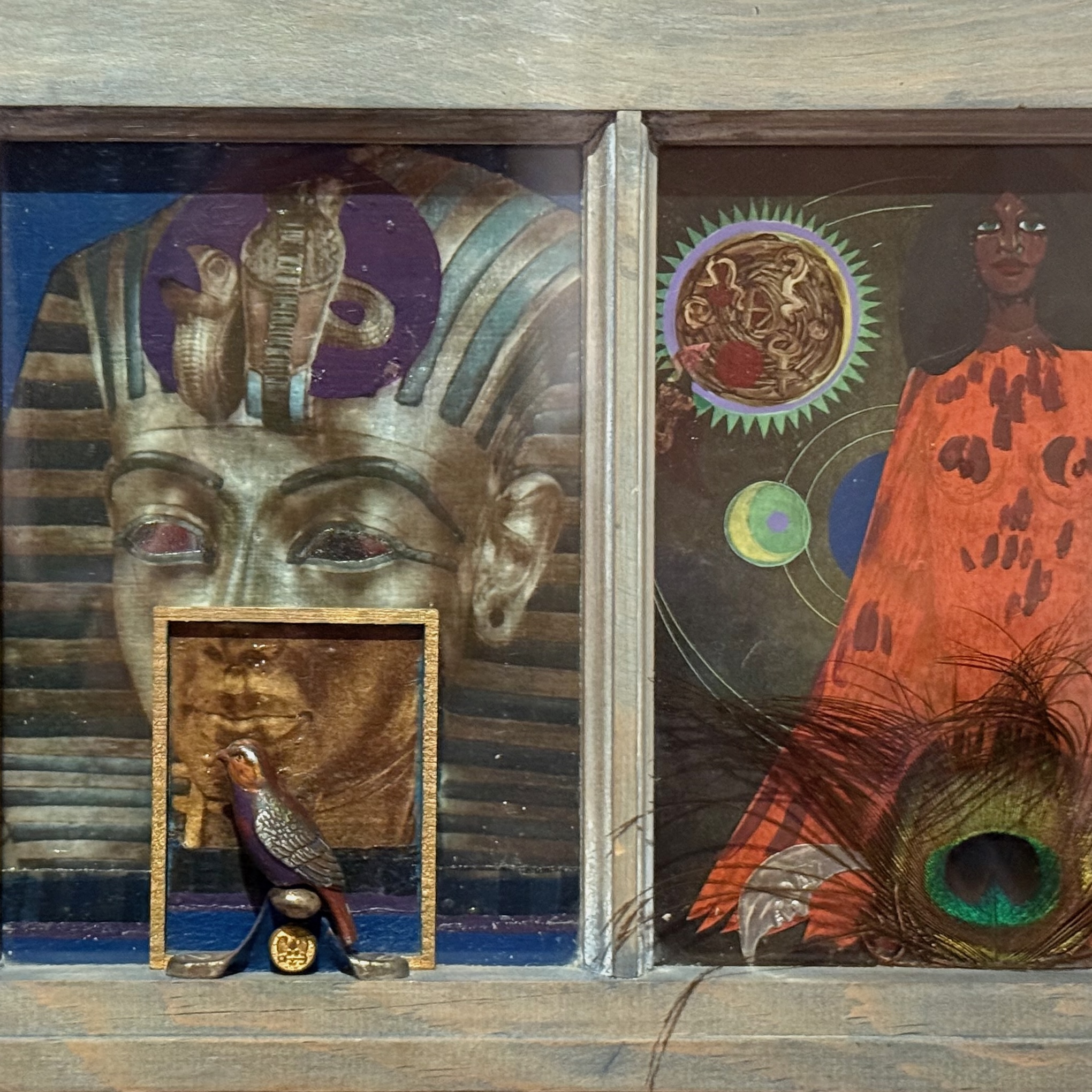
Detail from Betye Saar’s “Window of Ancient Sirens,” 1979

Not enough people talk about the through-line from spiritual jazz to smooth jazz.

That may seem like a strange, almost nonsensical thing to say, to compare Coltrane’s A Love Supreme to Grover Washington or Kenny G. Nevertheless, there’s a path there, and it runs through some artists that I’ve talked about on this blog many times before. Generally speaking, the sound I’m talking about, and that I explore in this hour of Exfiltration Radio, blends the soaring messages of hope of Pharoah Sanders’ Karma with the more cosmic sounds of the Fender Rhodes. Many of the works are more audibly optimistic, i.e. in a major key; many of them have lyrics; several have full-blown string arrangements. Some are more spiritual in focus, while others just enjoy the groove. And they almost all seem to come from the late 1960s to around the mid-1970s, with the sweet spot being from about 1969 to 1973.

That said, the overall driving force for this mix was definitely tunes that put a smile on the face and lower the blood pressure. So enjoy! The track listing:

Lonnie Liston Smith, “Expansions” (Expansions): The title cut from Smith’s 1975 album on the Flying Dutchman label, this is a darker groove than most of the songs on the show, but with that deep plea for peace at the heart of it: “Expand your mind to understand/we all must live in peace.” With a great band comprised of Cecil McBee on bass, brother Donald Smith on flute and vocals, Dave Hubbard on saxophones and Michael Carvin on drums.

Ramsey Lewis, “Bold and Black” (Another Voyage): This track from the perennially sunny improviser’s 1969 album points toward more smooth experiments, like 1974’s Sun Goddess, while providing a sunray of musical joy. Classic top-down, driving around music.

Norman Connors, “Carlos II” (Love From the Sun): Drummer, composer and arranger Connors spent most of his career in R&B and smooth jazz, but this, his third album as leader, is a fascinating, fantastic collection of straight ahead jazz with hints of spirituality poking through around the corners. A great line-up of players, including Herbie Hancock on Fender Rhodes, Gary Bartz on saxophones, Buster Williams on bass, Hubert Laws on flute, Kenneth Nash on percussion, Eddie Henderson on trumpet, and Carlos Garnett, who wrote this track, on tenor sax. Dee Dee Bridgewater guests on two tracks. The whole album is a great listen.

Azar Lawrence, “Theme for a New Day” (People Moving): Lawrence played on McCoy Tyner’s Enlightenment, Sama Layuca and Atlantis before recording his first album as leader. By 1976’s People Moving he was producing fully orchestrated sonic experiences that were full of spiritual energy and deep grooves.

Donald Byrd, “Places and Spaces” (Places and Spaces): By 1975, Donald Byrd was in a very different place than when he played on Herbie Hancock’s second album, or even his mid-1960s spiritual jazz outings for Blue Note. His 1973 album Black Byrd, produced by Larry and Fonce Mizell, was a jazz-funk fusion high point that for many years was Blue Note’s biggest selling album. Places and Spaces is the fourth of Byrd’s Mizell-produced albums, and cranks much of what made that album successful up to 11, including swooning strings and a guitar-driven hook that wouldn’t be out of place on an O’Jays record. The chant that drives the record isn’t quite P-Funk quality, but it gets the job done, and Byrd sneaks in a fully respectable trumpet solo amid the rest of the funk.

Bobbi Humphrey, “Harlem River Drive” (Blacks and Blues): Humphrey, a hugely talented flautist, also benefited from the Mizell brothers’ production on the 1973 Blue Note album Blacks and Blues, including their writing this ode to summertime cruising. The band here is mostly session players, including Jerry Peters on keyboards, Chuck Rainey on bass and the great Harvey Mason on drums, but Humphrey’s flute solo is the main thing here, a work of searing beauty in an otherwise light track.

Johnny Hammond, “Can’t We Smile?” (Gears): This work, by keyboardist and sometime jazz organist Johnny Hammond, née Johnny “Hammond” Smith, not only gave me the title for this hour but kicked off the process of putting it together, after Lisa asked me why I was listening to smooth jazz; defending the track made me realize how much I liked it and how much depth lurked beneath its smooth exterior. Released in 1975 on Milestone Records, it’s another Mizell Brothers joint with Mason, Rainey, Peters, and Nash, along with trombonist Julian Priester (from Herbie Hancock’s Mwandishi band) and avant-spiritual violinist Michael White.

Lonnie Liston Smith & the Cosmic Echoes, “Rejuvenation” (Astral Traveling): Before there was Expansions there was Astral Traveling. Smith’s first album with the Cosmic Echoes was recognizably straight-ahead jazz, with much the same crew as on Expansions, but again Smith’s composition leaned forward to the optimistic and hopeful, particularly in the ebullience of George Barron’s saxophone melody. Smith’s solo similarly feels extroverted in an almost soul-shouter kind of way.

Alphonse Mouzon, “Thank You Lord” (The Essence of Mystery): Mouzon’s first album, in 1973, has tinges of the same mystery that the drummer brought to the first incarnation of Weather Report, combined with a melodic and compositional sensibility that feels akin to with Smith was doing at the same time. It also feels like some of Keith Jarrett’s 1970s work, broadly anchored in major-key tonality with a swooping saxophone shining a light in the darkness.

Pharoah Sanders, “Astral Traveling” (Thembi): Before there was Astral Traveling, there was … “Astral Traveling.” The first track on Sanders’ 1971 album, his last with Smith, was legendarily composed by the band as Smith sat and played a Fender Rhodes for the first time ever in the studio. I like this version better than the one on Smith’s later album because I feel more wonder in the playing, as though the band is together exploring a new world. It’s also a welcome view of a side of Pharoah Sanders that we don’t often think of, but he could be as gentle as he was often fiery.

Leon Thomas, “The Creator Has a Master Plan” (Spirits Known and Unknown): This brings us to the last track. Vocalist and composer Leon Thomas collaborated with Sanders on the composition of “Creator,” and both Sanders and Smith are here on this recording. This version from Thomas’s debut album gives a good view of his approach: a wide-eyed spirituality, still with some of the ululating vocal flourishes of Sanders’s recording, but overall less cosmic brimstone and more bliss.

There is nothing wrong. We have taken control as to bring you this special show and we will return it to you as soon as you are exfiltrated.

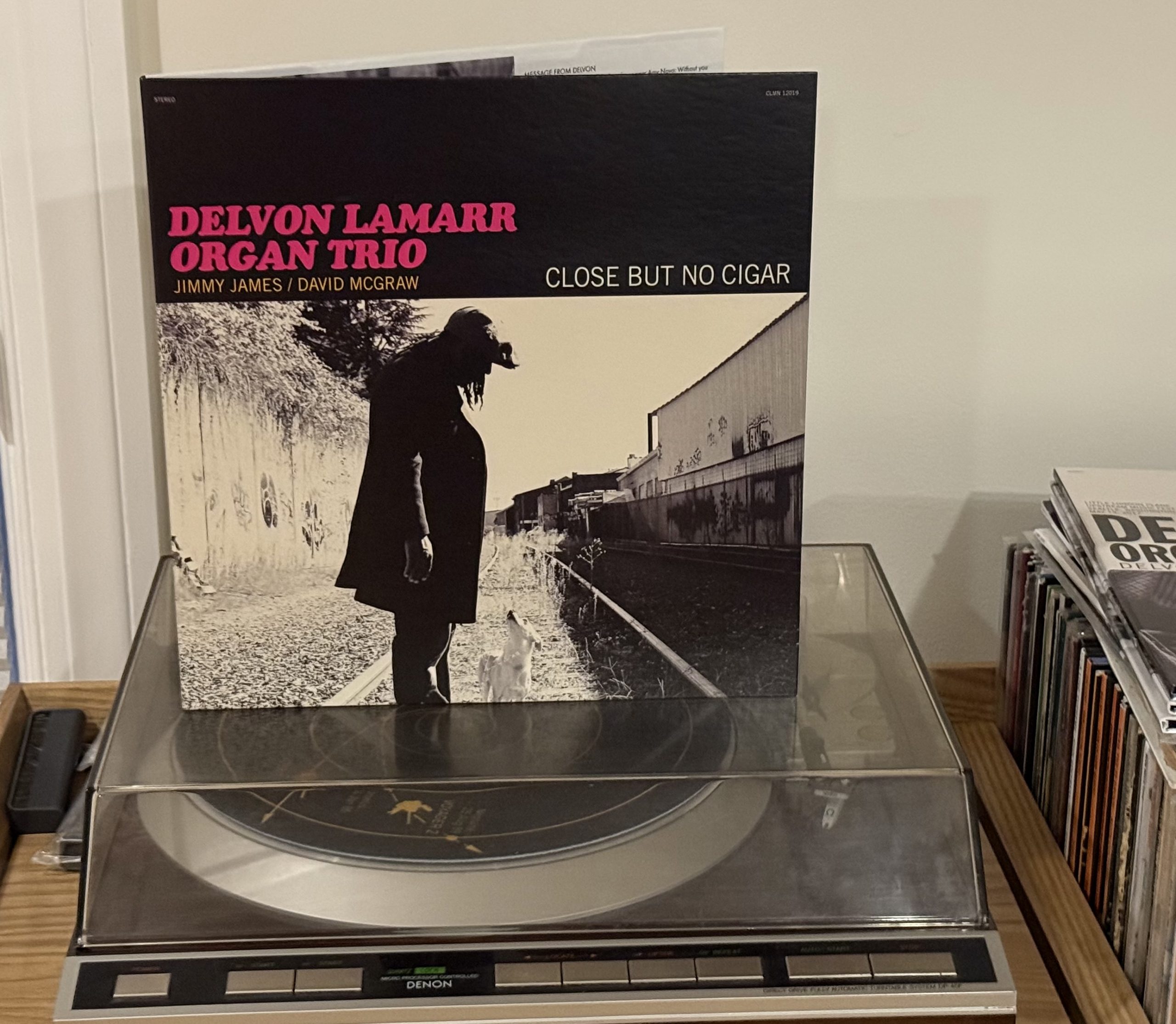
Delvon Lamarr Organ Trio, Close But No Cigar

A revival of the jazz organ combo draws on masters from that tradition, as well as soul and funk, and brings us a party.

Album of the Week, November 1, 2025

After fusion and jazz-funk took some of the steam out of the organ combo market in the 1970s, the neo-trad movement spearheaded by Wynton Marsalis similarly had the jazz-record-buying public focused elsewhere in the 1980s and 1990s. But the organ combo never went away, and new players continued to emerge, including the late great Joey DeFrancesco in the late 1980s through the 2010s. New players continued to emerge, including today’s artist.

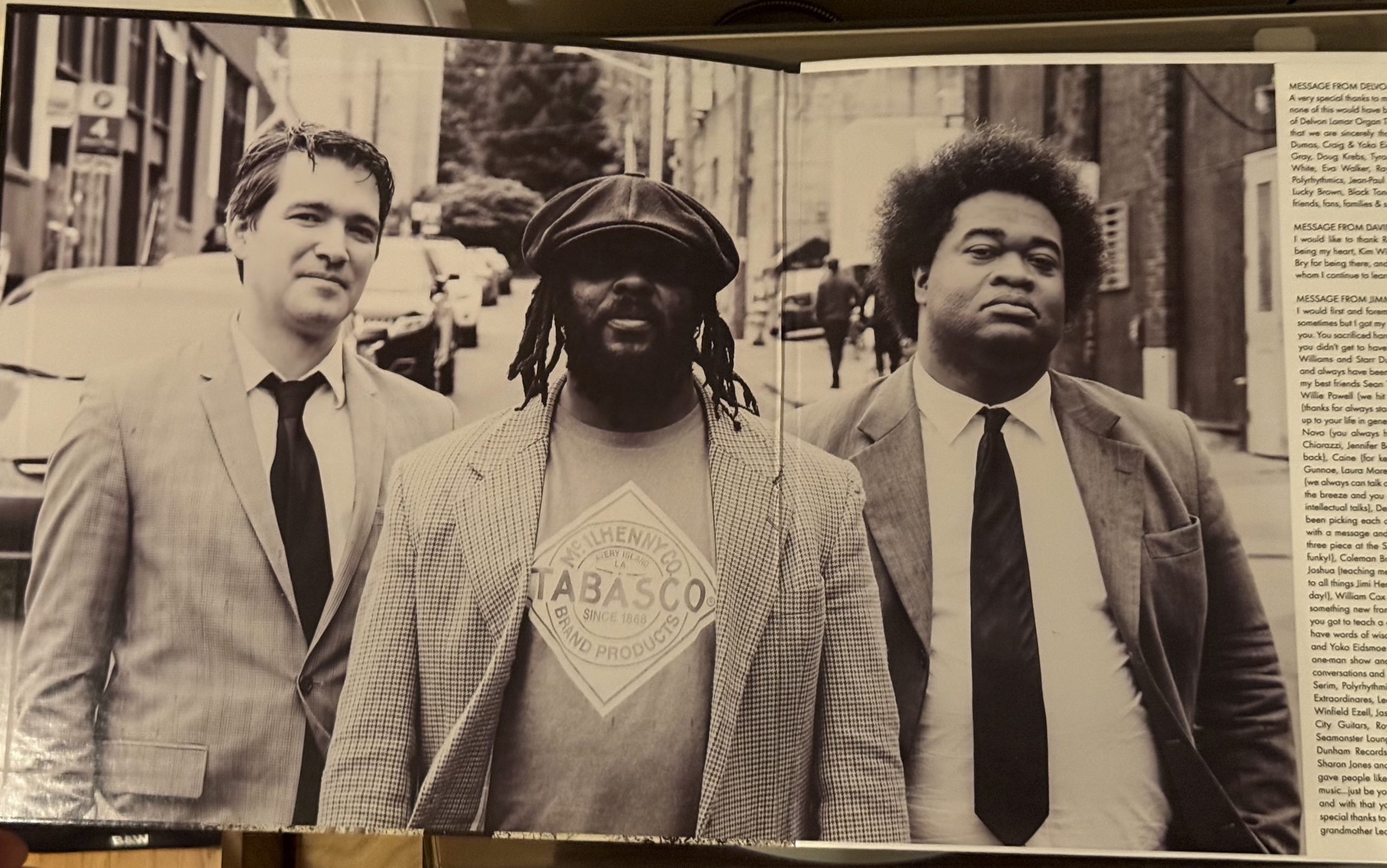
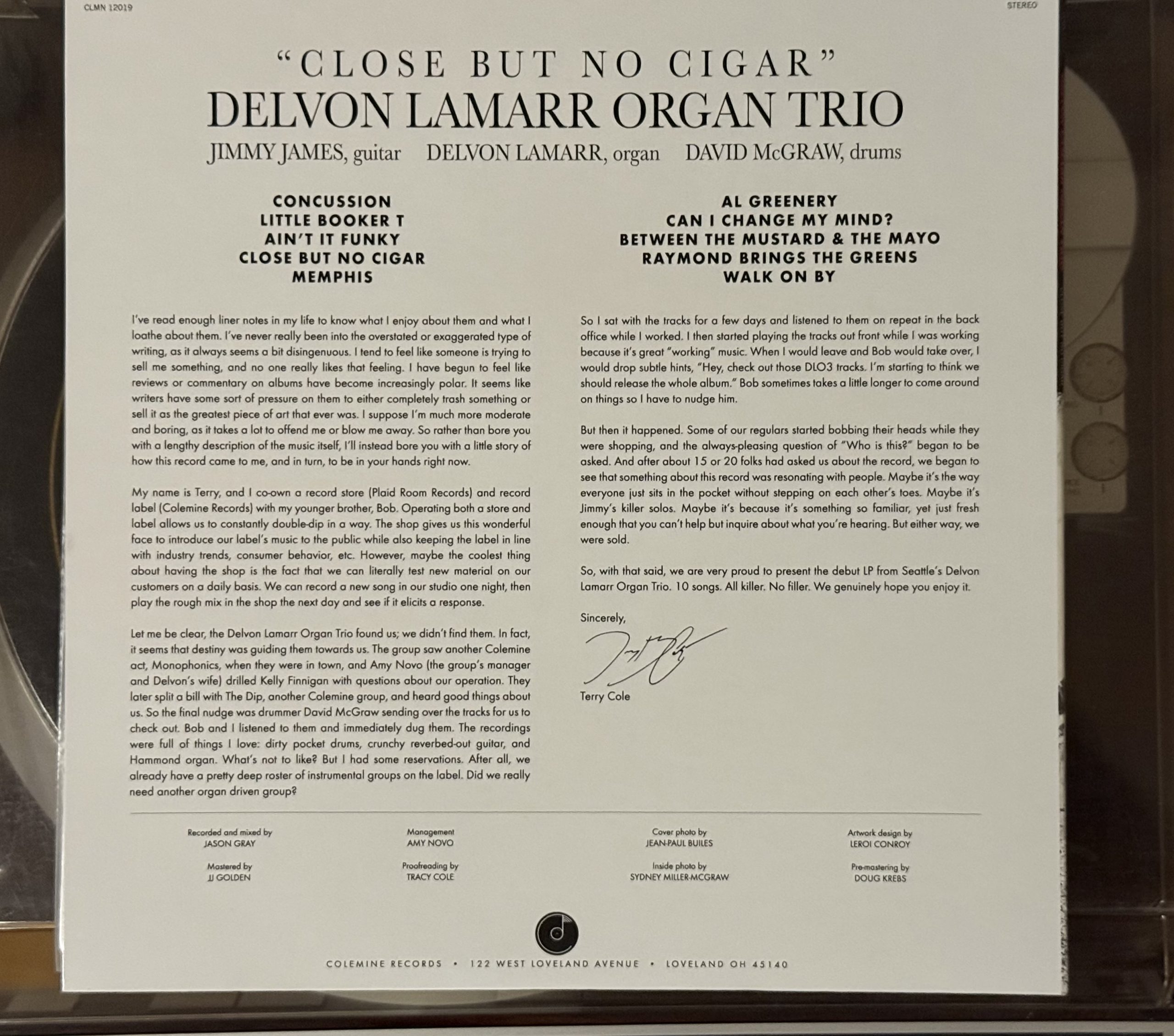
During this period, something else was happening: internet distribution of music. Music blogs and recommendation feeds helped formerly niche artists find audiences. And distribution platforms like Spotify and Bandcamp helped musicians get access to their music, whether streaming or via vinyl. Into this market (and onto Bandcamp) stepped Delvon Lamarr and his organ trio. Based in Seattle, Lamarr had played in a number of bands including the now-defunct jazz-funk combo Megatron before forming his organ trio in 2015 with guitarist Jimmy James and what would turn out (spoiler alert) to be a revolving door of drummers. For the first album, that was Seattle-based David McGraw.

The band’s manager (and Lamarr’s wife) Amy Novo learned about Loveland, Ohio’s Colemine records and its founder Terry Cole from another Colemine act, and McGraw brought their tracks over. Cole tested the tracks in his record shop, and decided to release the album after seeing fifteen or twenty patrons bob their heads to the music and then ask “Who is this?” 

Concussion” comes out of the gates swinging hard. Lamarr plays the melody in the mid to low range, as Jimmy Smith did, but unlike his predecessor gives a strong voice to guitarist Jimmy James in the arrangement. The two play in a tight combo, closing the head out with two single notes. Lamarr’s solo stays in the midrange, iterating over the bluesy chord changes and powering up on his second repetition to something more fiery but still very much in the pocket. Jimmy James’ guitar solo, on the other hand, takes off like the shuddering rotors of a helicopter, playing with time over the bursts of sound from the organ and McGraw’s drums. 

Little Booker T”  is a nod to one of Lamarr’s major non-jazz influences, Booker T and the MGs. The combo gives a good impression of the laid-back vibes of the great Stax house band, complete with a pretty great bass line courtesy of Lamarr’s organ.  The laid-back vibe continues with a completely different beat in “Ain’t It Funky,” a tribute to the great 1970 line-up of James Brown’s JBs. Jimmy James plays a great Catfish Collins impression, and Lamarr picks up the groove as James takes a ripping solo. The only minus is McGraw’s drumming—while in the pocket, it lacks some of the originality and bounce of a Bernard Purdie.

Close But No Cigar” takes Stax as its inspiration, with a melody slightly reminiscent of Jean Knight’s “Mr. Big Stuff.” Lamarr slows the melody down in the chorus even as the groove continues. There’s a little melodic development here but that’s almost beside the point; this is grimy, funky good-time dance music, and the syncopated B melody that seems designed for whiplash-inducing head-nodding only reinforces the point. The John Patton classic “Memphis” (from a 1969-1970 album that went unreleased until 1996) is an opportunity for McGraw to show off his skills, and he rises to the occasion, with a funky, bouncy beat. We’re back in Stax territory again, as the name suggests, and the chorus, alternating between the tonic and supertonic chords, reinforces the funky energy.

Al Greenery” tips the hat to the Reverend Al circa “Love and Happiness”—in fact, making a groove out of the first four measures of the song. This one definitely leans more pop; Jimmy James doesn’t get much of a chance to go off the reservation here. That’s reserved for Lamarr in “Can I Change My Mind,” a bright and sunny number written by Carl Wolfolk and Barry Despenza and debuted by Tyrone Davis in 1969 that allows both organist and guitarist to add a little sunny soul to the mix, with Lamarr giving by far the most joyous expression on the record.

Between the Mustard and the Mayo” references both the infamous “sandwich cover” of Jimmy & Wes: The Dynamic Duo and a bit of the mid-1960s arrangements by both Oliver Nelson and Lalo Schifrin that we have heard in earlier columns. Lamarr is flat out here, improvising at maximum velocity as James and McGraw groove hard underneath him. “Raymond Brings the Greens” gets a fiercely greasy groove courtesy of James and a stumbling McGraw drum beat, but the band isn’t above a wink as James tosses in a riff from “The Man Who Sold the World” in his solo.

The Burt Bacharach/Hal David classic “Walk On By” closes us out with an end-of-the-evening vibe: no crazy solos, no Isaac Hayes psychedelic soul, just the band giving their best groove over a bashing drum part from McGraw. Lamarr is the best part of this album closer, leaning into the chords at the chorus with a weeping expressiveness. It’s time to go, he seems to say, but you’ll be back.

Delvon Lamarr and his band hit something just right with this debut album, proving that there was an audience for just plain fun jazz and soul played with heart. The trio would go on to record more; we’ll hear a live show from them next week.

You can listen to this week’s album here:

BONUS: Along with the aforementioned live show, the band hit the road to promote the album. You can skip the first 2:50, though the interview is interesting enough, to watch the band tear into “Close but No Cigar” live: