Delvon Lamarr Organ Trio, Cold as Weiss

A tight set of organ trio funk with some sunny spots of soul.

Album of the Week, November 22, 2025

Another DLO3 album, another drummer. But the band felt so good about the arrival of Seattle drummer Dan Weiss that they named the album after him. Weiss was young—he recorded his first session, with the soul group The Sextones, in 2017—but in demand, also recording with soul band Object Heavy and with reggae artist Clinton Fearon. The band cut another originals-heavy album with Weiss, releasing it in 2022 on Colemine Records.

Pull Your Pants Up” starts us off with that funk-soul hybrid that the group was getting so good at, and with a single crack of the snare from Weiss before he and the group launch into a stuttering strut of a tune. A screaming Hammond solo from Delvon Lamar over a Meters-style guitar line from Jimmy James: what more could you want? If your answer is “more Jimmy,” the next cut, “Don’t Worry ’Bout What I Do,” has you covered, with a crying guitar solo that manages to evoke Clapton, Hendrix, and Mick Ronson.

I Wanna Be Where You Are,” a cover of a 1972 Michael Jackson hit by Arthur “T Boy” Ross and Leon Ware, brings back some of the early 1970s soul sound, with an unusual arrangement in the head: melody on the organ, no chords, quiet pedal bass, over James and Weiss. It’s a great tune; pumping up the bass would balance out the sound a lot more, at the cost of losing some of the fragile beauty of the original arrangement. As it is, the room in the arrangement gives the band more space to play into, and the result is something a bit like an Al Green tune, which is never a bad thing. The side closes out with “Big TT’s Blues,” which is what it says on the tin: a guitar-forward blues with early-1960s Jimmy Smith style organ solo. The swampy guitar solo from Jimmy James is worth the price of admission.

Side two opens with “Get Da Steppin’,” a pure funk tune with a slippery key signature with lots of sustained organ notes and crunchy chords. Delvon’s solo takes off, with some triple meter and more suspensions heightening the tension over the boom-bap of the drums.

Uncertainty” is an original ballad in the early 1970s soul spirit, a gorgeous tune that stayed in the band’s live repertoire. They don’t try to blow this one out, keeping to the tune and even adding an unusual key change that takes it down a half step. The band segues to “Keep On Keepin’ On,” a solitary writing credit for Lamarr’s wife (and the band’s manager) Amy Novo and a funky tune with some stretched time in the chorus and an almost-out-of-time ascending line in the guitar in the verse.

Slip ‘N’ Slide” is a fun soul strutter, uncomplicated and easy, a cool little instrumental with a proper chorus. The closer “This is Who I Is” is way more ambitious, with a squelchy guitar line over a bouncy drum beat anchoring Lamarr’s solo. Jimmy James sounds as if someone let him out of a cage, and he takes a raging reverb-heavy solo that stretches against Lamarr’s chords, the two spurring each other on all the way to the end.

Alas, the plan that Weiss would be the permanent drummer for the DLO3 was not to be. After recording and touring behind Cold as Weiss, founding guitarist Jimmy James took off to focus on his other band The True Loves, and Weiss left some time later. The band currently features Brice Calvin on guitar and Ashley Ickes on drums, and they’re still out there touring. Here’s hoping for another album someday—or at least that some of the other tracks they recorded along the way see the light of day. (The band’s last release, 2022’s Live in Loveland, was an archival release of another concert done the same day as Live at KEXP!, and apparently the band banked another dozen or more tracks during the recording of I Told You So.)

But speaking of cold as things, it’s getting kind of chilly around here! Next week we take a break for some seasonal music, which will carry us through the new year before we shift gears once more.

You can listen to this week’s album here:

BONUS: Colemine Records released the title track as a 45; the b-side was this little gem, “Fried Soul”:

BONUS BONUS: This band might not have been around for long, but they left a mighty impact. Here’s the band in an hour-plus long live performance, recorded before the album’s release, at Relix Studios in New York:

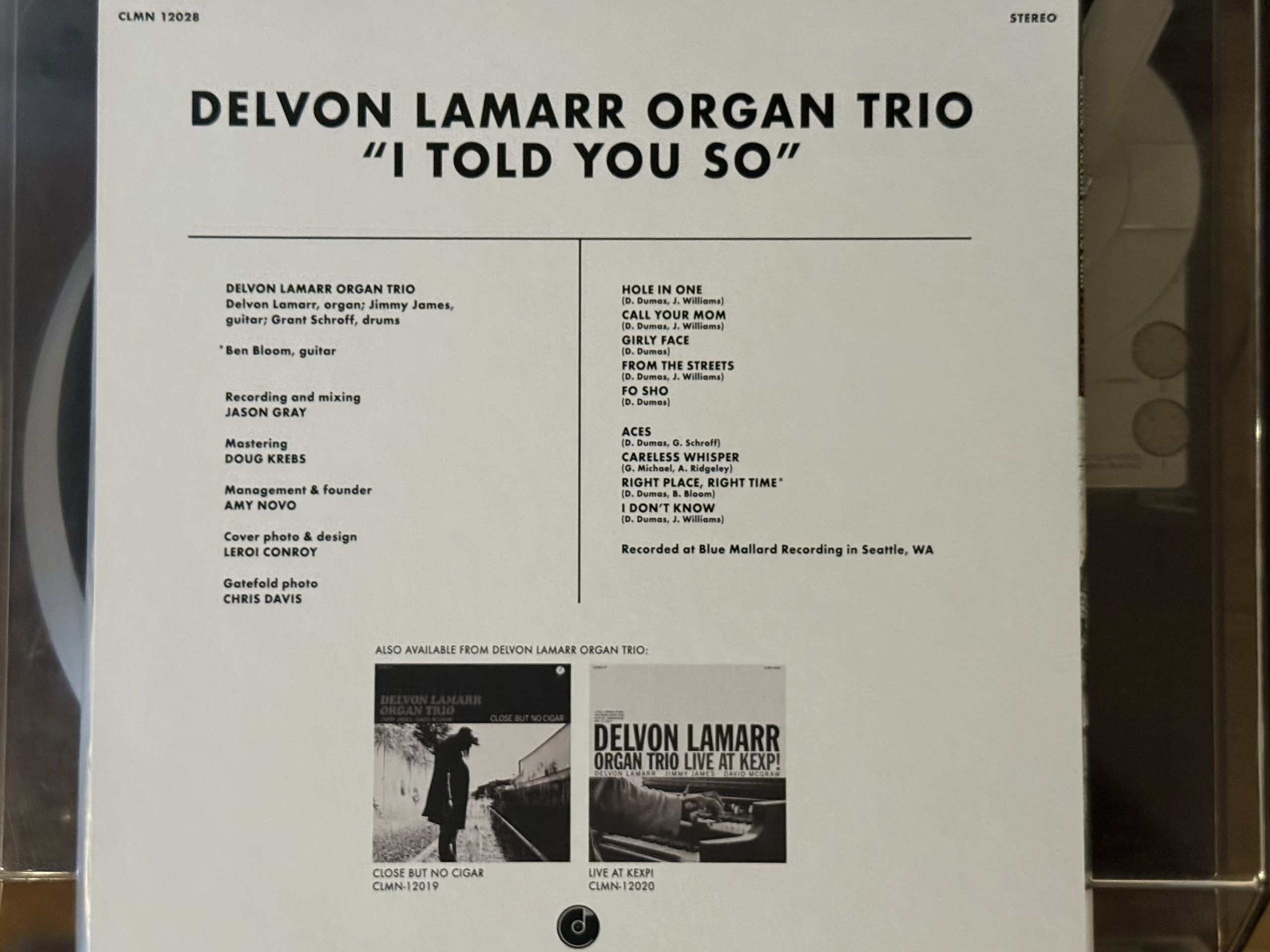
Delvon Lamarr Organ Trio, I Told You So

This incarnation of the DLO3 gives us a different drummer and a funkier edge.

Album of the Week, November 15, 2025

I hinted at it when we wrote about Delvon Lamarr’s first album, Close But No Cigar: the drummer seat in the Delvon Lamarr Organ Trio (or DLO3 for short) is rarely filled by the same musician for long. After recording the demos that became the first album and the game-changing Live at KEXP, founding DLO3 drummer David McGraw left the group to focus on his other soul-funk group, The True Loves. In his place: soul drummer Grant Schroff, who joined specifically as an interim drummer for a tour of Europe and recorded the second album with them. What’s remarkable is how little the change in one-third of the band ended up affecting the sound on their third official release, which remains a highly skillful blend of jazz and party-time soul even as the focus shifts to more originals and fewer covers.

Hole in One” starts off in a 1969-1970 James Brown mood thanks to James’ fierce rhythm guitar part and a virtuosic Bootsy-style bass line courtesy of Lamarr’s left foot. The band lets the groove steep for a few reps before Lamarr takes a high-octave solo, wailing over a sustained tonic note in the left hand all while keeping that bass line going. A sudden dip into the relative minor key through the bridge is brief but also reminiscent of the Godfather of Soul.

Call Your Mom,” co-written by Lamarr and guitarist Jimmy James, keeps the funk going. Here James’ guitar states the melody with an impeccable late-1960s—early–1970s soul vibe. “Girly Face” also has a sixties soul groove courtesy of Schroff and James and seamless transitions between organ and guitar solos. It feels like it could have been a sixties pop song; there’s moderate improvisation throughout but this one is mostly about the groove. Mind the chair dancing; it’s inevitable.

From the Streets” has a vaguely 1990s hip-hop sound to it, thanks to the beat and the repetitive bass line. We get to hear that boom-bap beat by itself as a completely in-the-pocket drum break. There’s not much organ to this one other than the bass line; it’s really more of a soul instrumental, but a head-nodding one. “Fo Sho” brings in the whole sound of the band to close the first half with a Booker T vibe. Jimmy James slips the leash for a bit with a psychedelic guitar solo that spurs Delvon to similar heights as the two trade eights. The band builds to a mighty mighty climax before cutting out in a moment of suspense.

Aces” keeps the funk party going, with another tune that gives us a drum break to soak in Schroff’s technique. There’s a little more bounce in Schroff’s style than McGraw’s; both men are tight on the drum kit and hold their corners down well, but there’s a touch more dynamic range in Schroff’s playing. Jimmy James takes a solo that comes in over the treetops, guns blazing, before the band comes back down into the groove.

At this point in the playback when I played this record for my family, it was my daughter who said, “Wait a minute! I know that song” at the same time my wife laughed with recognition. “Careless Whisper” is a true intergenerational classic even if you hear it without the iconic saxophone part (here played by James instead). It’s also another track that is more soul instrumental than jazz, but there’s some subtle improvisation on the verses that takes the melody to different places, keeping the fires hot underneath the simmering tune.

Right Place, Right Time” is co-written by Seattle guitarist Ben Bloom, who sits in for Jimmy James on this number. Starting off with a bit of studio chatter, this one wakes up with a more nimble, less psychedelic-soul sound and a rhythm complex enough that for a minute you wonder if they’re playing in six. In this combo and guitar-forward arrangement, you can hear the rock-solid bassline and soulful chords that Lamarr leverages to keep the groove moving forward even with a completely different set of musicians. “I Don’t Know” closes us out with a funky blues and a tight interplay between Lamarr and Jimmy James, who demonstrates the relaxed but psychically close connection between himself and the organist that is the hallmark of the band.

This record shows off the band’s ability to keep rolling even as personnel changes and the repertoire becomes more funk-forward. It also brings Lamarr and James’ writing to the front, giving a nice slate of modern organ jazz/funk/soul to add to our collection of classics. Next week we’ll hear one more from the DLO3, bringing a few more changes along the way.

You can listen to this week’s album here:

BONUS: Here’s this incarnation of the DLO3 doing a live version of “Fo Sho” on Adult Swim, of all places.

Delvon Lamarr Organ Trio: Live at KEXP!

Sometimes the best way to build an audience is just to show people what you do.

Album of the Week, November 8, 2025

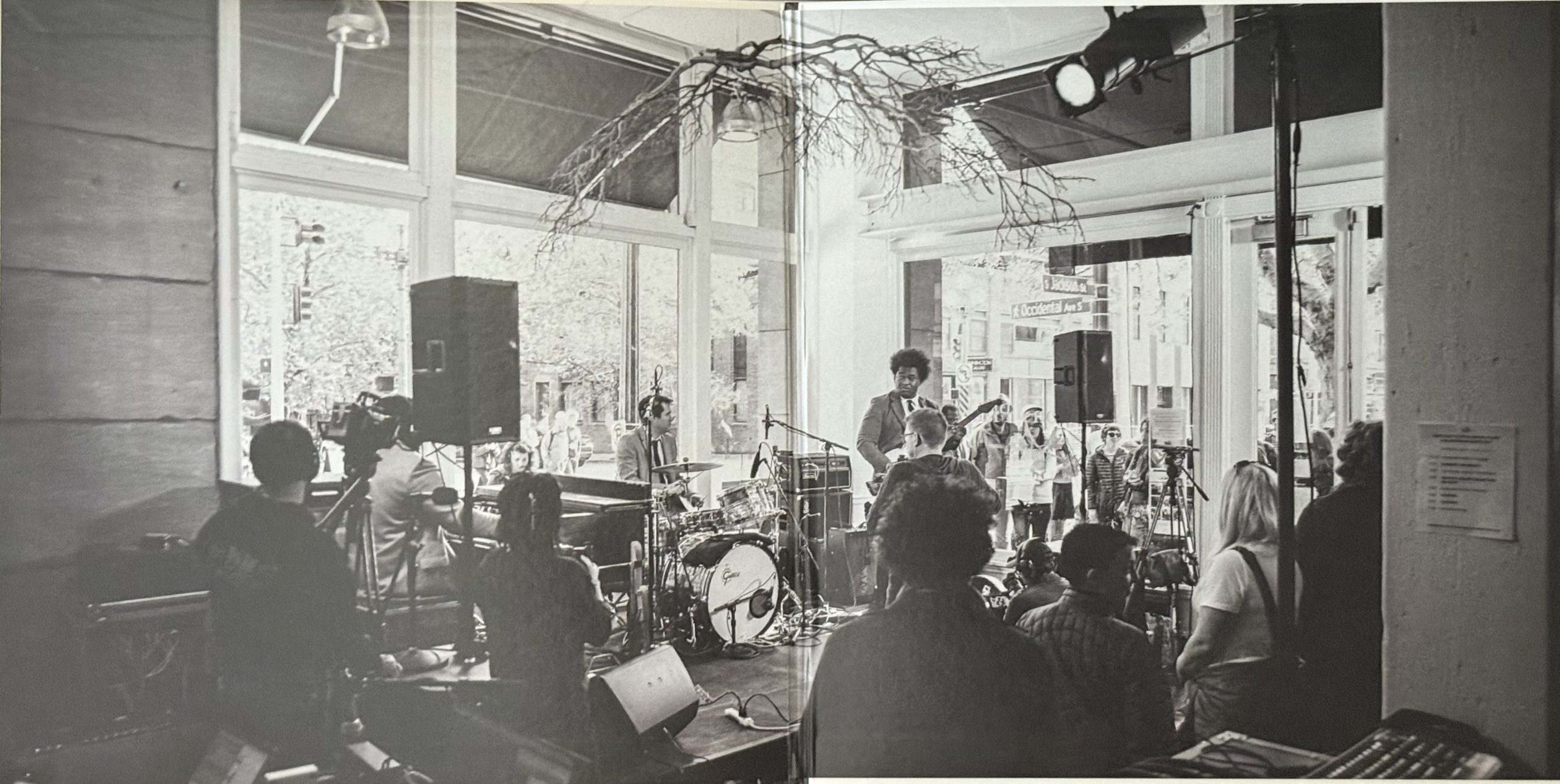
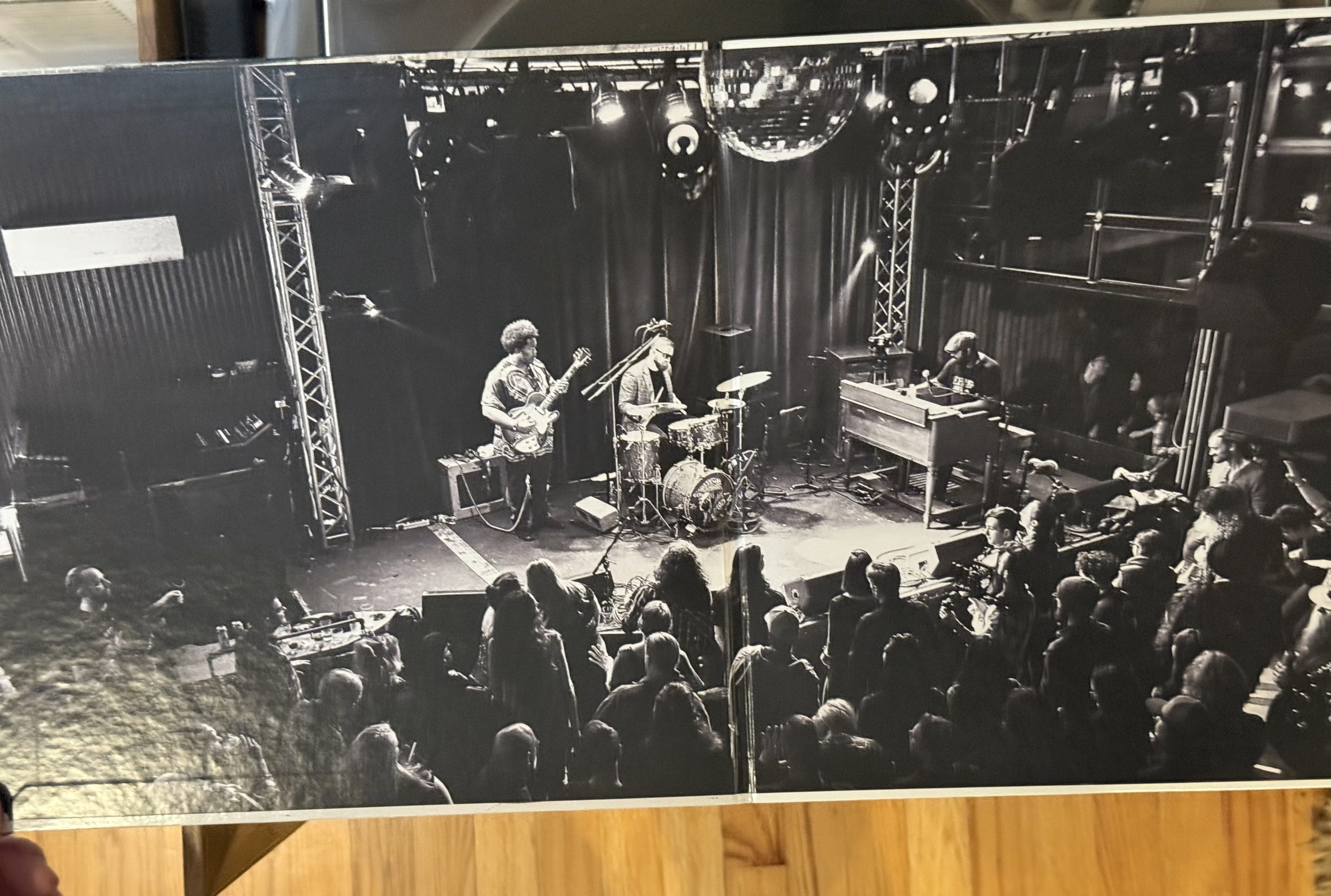
Delvon Lamarr is one of many artists who have benefited from exposure on KEXP (about which I’ve written many times before). In this particular case, though, his career was significantly boosted. The band had a set they were playing on KEXP’s Upstream Festival in May 2017, and they stopped by the studio to warm up. KEXP’s camera crew happened to catch the warm up session, and posted it to YouTube. Eleven million views later, the band’s trajectory was in a new orbit. Sometimes it happens like that.

KEXP came on board with Colemine Records to issue the record of the live performance, which debuted on Record Store Day in 2018. It features a few of the performances from that live video plus some more, and stands as a gripping testament of the power of R&B powered funk to “move… and remove, dig?”

Move On Up” is one of the tracks from the warm-up show; in the audio from YouTube, Lamarr notes “We’re going to start with a tune that should be familiar to most of you guys” before launching with the band into the Curtis Mayfield banger. The tune starts with just Jimmy James, sketching out the chords, before Lamarr enters on a crescendoing chord and David McGraw crashes out the beat. The playing is energetic and forthright; it’s impossible to hear and not dance.

Memphis” is a laid-back version of the original from Close But No Cigar. Where the original could occasionally feel formulaic, here the band is tight and relaxed, not giving the guitar lick on the chorus until the second repetition. Lamarr’s solo swerves up into the upper range of the instrument, embracing different tempi (at one point almost grinding to a stop even as the guitar and drums carry forward) and generally laying down the funk. And then there’s Jimmy James. The guitar solo on “Memphis” is probably worth four to six million of the 11 million YouTube views that this performance racked up. Starting out with a staccato riff, James runs through triplets and eighth note runs before taking off into outer space. At one point you can clearly hear what sounds for all the world like a power bass player; the YouTube video pans down from the keyboard to show Lamarr knocking that bass line out with his left stockinged foot on the pedals. The whole thing is a piece of casually funky brilliance.

South Leo St. Stomp,” called “Untitled” in the YouTube video, starts out immediately from “Memphis” with a steady four-four beat from McGraw, turning into a little cha-cha and syncopated funk as Lamarr and James enter. This is the video that prompted a YouTube commenter to post, “My watch just asked the drummer what the time is”—he’s so in the pocket, so flawlessly on, that it’s like hearing a funky, funky metronome. Jimmy James sounds more like Jimi Hendrix on this one, with the guitar threatening to take off at one point, but everything circles back to the relaxed beat once more to bring it to a close. The whole time, there have been more and more people coming up outside the windows of the performance space to listen, including a couple of very young listeners excitedly talking with their grown-ups about the sound.

The second half is devoted to the band’s actual Upstream Festival set, starting with “Concussion.” This version of the band’s debut single clocks in at a tight 4:27 but feels more laid back than the record version, between McGraw’s deeply in-the-pocket drumming and James’ mellow but focused guitar. Lamarr’s organ still has that perfect rhythm underneath, but he finds more melodic room in the solo. Jimmy James gives us a perfectly executed single-verse solo that comes in like a helicopter over the jungle to lay down bursts of funk. He’s in, freaky, and right back out. It feels like a well-worn pair of jeans.

Lamarr introduces “I Don’t Want to Play That” as “another new song, brand new… like Monday new.” The original is a deeply groovy ballad that feels like a tango in hip-huggers, thanks to the intersection between the band’s tight rhythm and the bluesy minor melodic solo from Lamarr. The band rolls right into “Tacoma Black Party,” an original named after a slip of the lip from Lamarr’s manager (and wife) Amy Novo. A feature for Jimmy James, the tune builds to a climax in the first chorus with his guitar climbing to the fifth and sixth of the scale, and then the whole band dropping out save for a few quiet notes in the organ, climbing up the scales. James melts the guitar, and our faces, with another Hendrix solo that crashes down octaves, briefly becomes polychordal, and slides all the way down to the bottom of his range until the band circles back around to the close.

The band closes with a properly funky version of Freddie Wilson’s “Top Going Down, Bottom Going Up,” originally made famous by Nathan Bartell. The band is totally locked in, with James giving a tight riff around the edges of the chorus but otherwise staying in support mode for this one. A monstrous solo from Lamarr has the crowd dancing all the way to the end, when James closes with a minor-key nod to “Jingle Bells.”

YouTube took the solidly soulful throwback sound of Lamarr and his band and made them minor stars. We’ll hear more from the band next week as things start to change.

You can listen to this week’s album here:

BONUS: There can’t be any bonus better than that 2017 warm-up session, so here it is! The first half of the record was recorded as one single video (the 11-million view one, now up above 15 million), but the second half performances are available as individual videos as well. Watch ’em in order for the whole show, minus a little of the linking chatter.

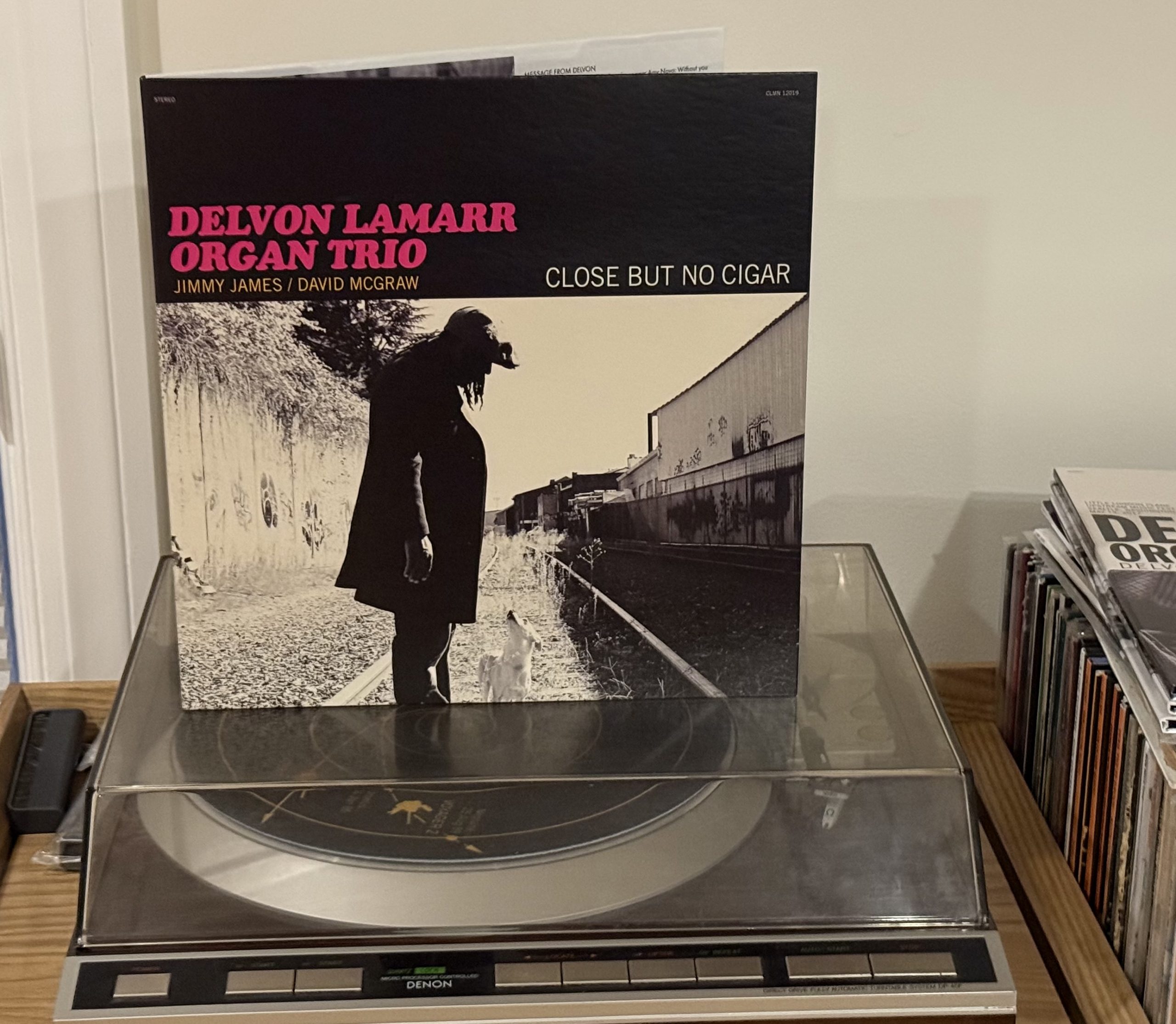
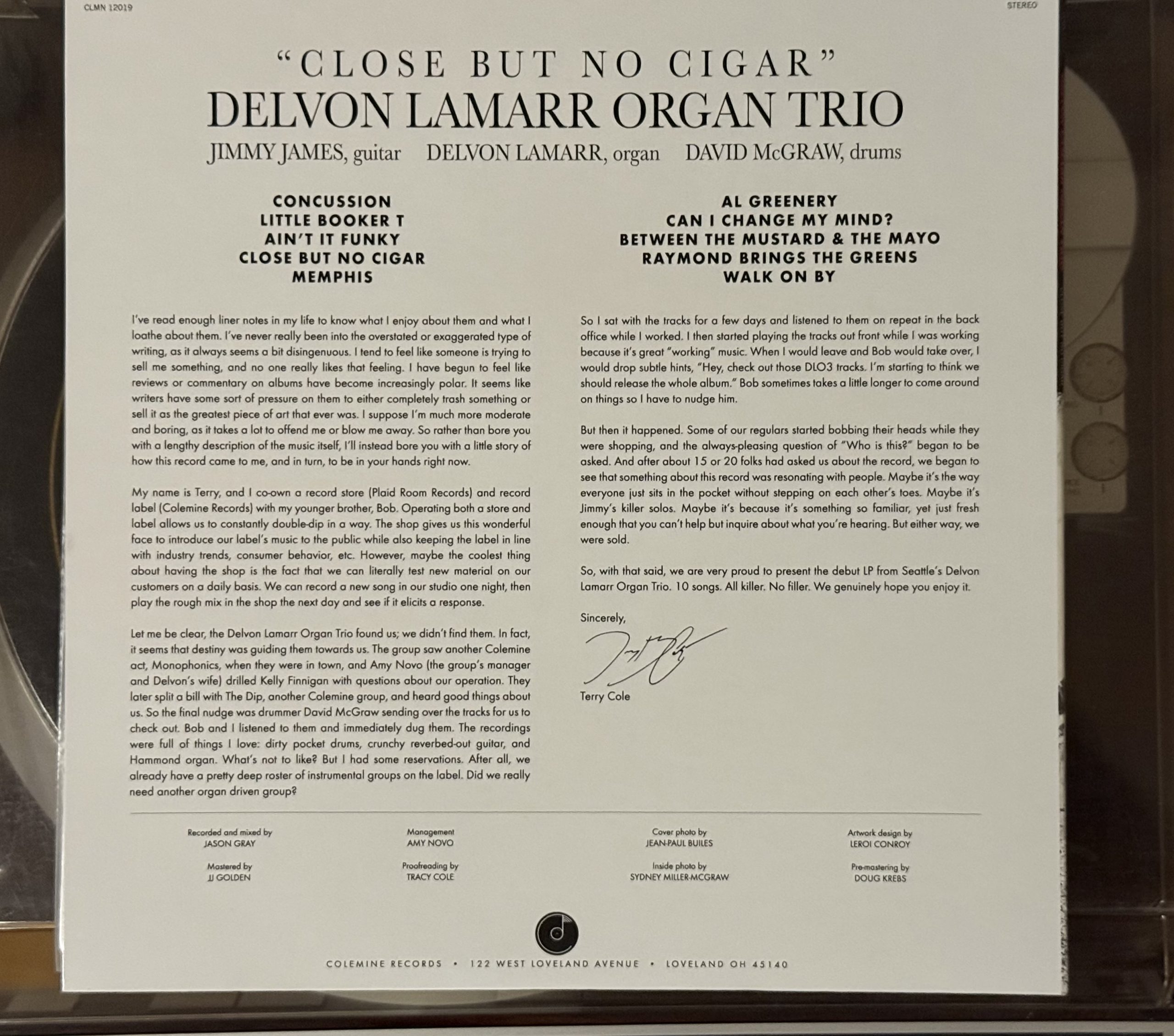
Delvon Lamarr Organ Trio, Close But No Cigar

A revival of the jazz organ combo draws on masters from that tradition, as well as soul and funk, and brings us a party.

Album of the Week, November 1, 2025

After fusion and jazz-funk took some of the steam out of the organ combo market in the 1970s, the neo-trad movement spearheaded by Wynton Marsalis similarly had the jazz-record-buying public focused elsewhere in the 1980s and 1990s. But the organ combo never went away, and new players continued to emerge, including the late great Joey DeFrancesco in the late 1980s through the 2010s. New players continued to emerge, including today’s artist.

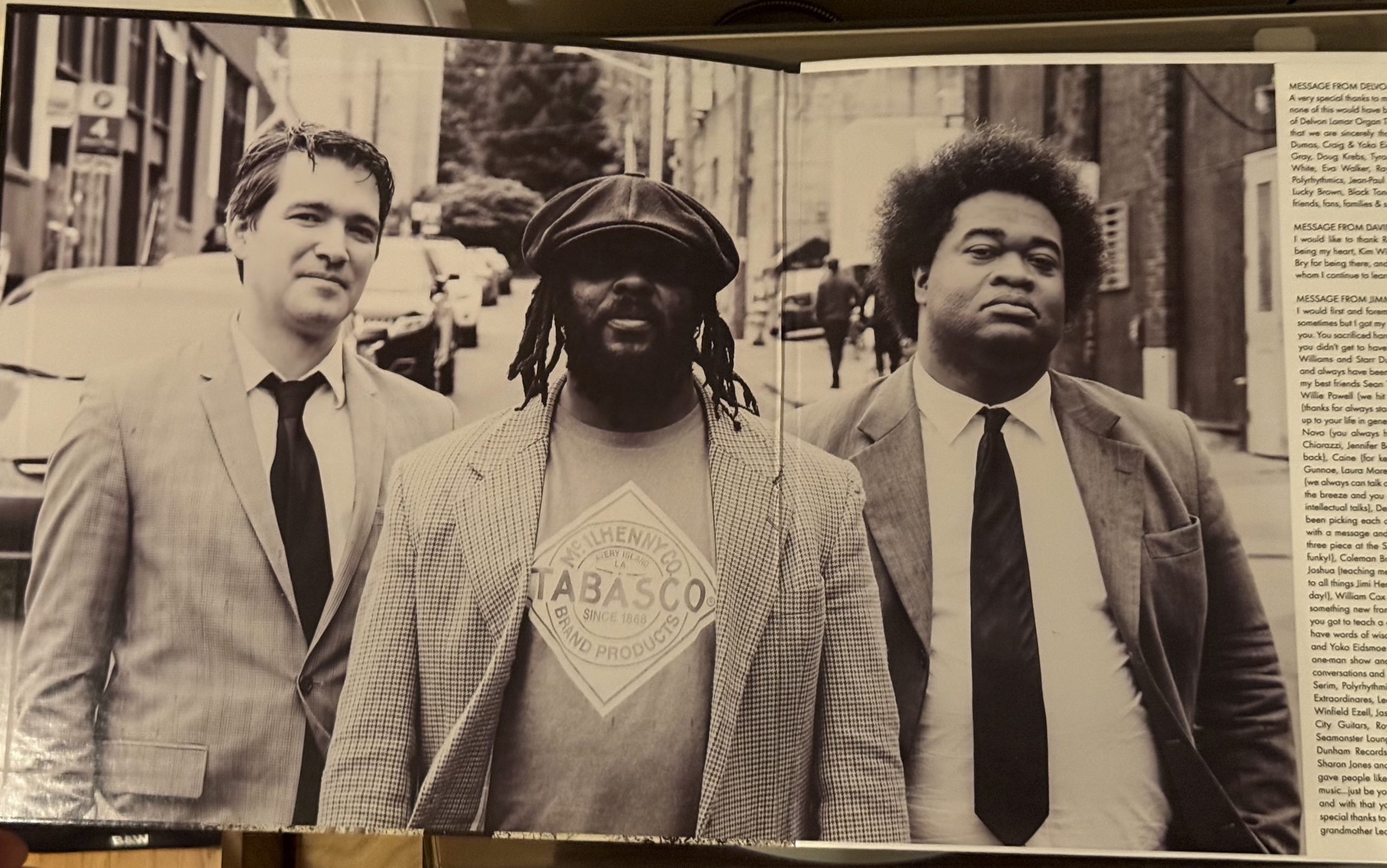
During this period, something else was happening: internet distribution of music. Music blogs and recommendation feeds helped formerly niche artists find audiences. And distribution platforms like Spotify and Bandcamp helped musicians get access to their music, whether streaming or via vinyl. Into this market (and onto Bandcamp) stepped Delvon Lamarr and his organ trio. Based in Seattle, Lamarr had played in a number of bands including the now-defunct jazz-funk combo Megatron before forming his organ trio in 2015 with guitarist Jimmy James and what would turn out (spoiler alert) to be a revolving door of drummers. For the first album, that was Seattle-based David McGraw.

The band’s manager (and Lamarr’s wife) Amy Novo learned about Loveland, Ohio’s Colemine records and its founder Terry Cole from another Colemine act, and McGraw brought their tracks over. Cole tested the tracks in his record shop, and decided to release the album after seeing fifteen or twenty patrons bob their heads to the music and then ask “Who is this?” 

Concussion” comes out of the gates swinging hard. Lamarr plays the melody in the mid to low range, as Jimmy Smith did, but unlike his predecessor gives a strong voice to guitarist Jimmy James in the arrangement. The two play in a tight combo, closing the head out with two single notes. Lamarr’s solo stays in the midrange, iterating over the bluesy chord changes and powering up on his second repetition to something more fiery but still very much in the pocket. Jimmy James’ guitar solo, on the other hand, takes off like the shuddering rotors of a helicopter, playing with time over the bursts of sound from the organ and McGraw’s drums. 

Little Booker T”  is a nod to one of Lamarr’s major non-jazz influences, Booker T and the MGs. The combo gives a good impression of the laid-back vibes of the great Stax house band, complete with a pretty great bass line courtesy of Lamarr’s organ.  The laid-back vibe continues with a completely different beat in “Ain’t It Funky,” a tribute to the great 1970 line-up of James Brown’s JBs. Jimmy James plays a great Catfish Collins impression, and Lamarr picks up the groove as James takes a ripping solo. The only minus is McGraw’s drumming—while in the pocket, it lacks some of the originality and bounce of a Bernard Purdie.

Close But No Cigar” takes Stax as its inspiration, with a melody slightly reminiscent of Jean Knight’s “Mr. Big Stuff.” Lamarr slows the melody down in the chorus even as the groove continues. There’s a little melodic development here but that’s almost beside the point; this is grimy, funky good-time dance music, and the syncopated B melody that seems designed for whiplash-inducing head-nodding only reinforces the point. The John Patton classic “Memphis” (from a 1969-1970 album that went unreleased until 1996) is an opportunity for McGraw to show off his skills, and he rises to the occasion, with a funky, bouncy beat. We’re back in Stax territory again, as the name suggests, and the chorus, alternating between the tonic and supertonic chords, reinforces the funky energy.

Al Greenery” tips the hat to the Reverend Al circa “Love and Happiness”—in fact, making a groove out of the first four measures of the song. This one definitely leans more pop; Jimmy James doesn’t get much of a chance to go off the reservation here. That’s reserved for Lamarr in “Can I Change My Mind,” a bright and sunny number written by Carl Wolfolk and Barry Despenza and debuted by Tyrone Davis in 1969 that allows both organist and guitarist to add a little sunny soul to the mix, with Lamarr giving by far the most joyous expression on the record.

Between the Mustard and the Mayo” references both the infamous “sandwich cover” of Jimmy & Wes: The Dynamic Duo and a bit of the mid-1960s arrangements by both Oliver Nelson and Lalo Schifrin that we have heard in earlier columns. Lamarr is flat out here, improvising at maximum velocity as James and McGraw groove hard underneath him. “Raymond Brings the Greens” gets a fiercely greasy groove courtesy of James and a stumbling McGraw drum beat, but the band isn’t above a wink as James tosses in a riff from “The Man Who Sold the World” in his solo.

The Burt Bacharach/Hal David classic “Walk On By” closes us out with an end-of-the-evening vibe: no crazy solos, no Isaac Hayes psychedelic soul, just the band giving their best groove over a bashing drum part from McGraw. Lamarr is the best part of this album closer, leaning into the chords at the chorus with a weeping expressiveness. It’s time to go, he seems to say, but you’ll be back.

Delvon Lamarr and his band hit something just right with this debut album, proving that there was an audience for just plain fun jazz and soul played with heart. The trio would go on to record more; we’ll hear a live show from them next week.

You can listen to this week’s album here:

BONUS: Along with the aforementioned live show, the band hit the road to promote the album. You can skip the first 2:50, though the interview is interesting enough, to watch the band tear into “Close but No Cigar” live: