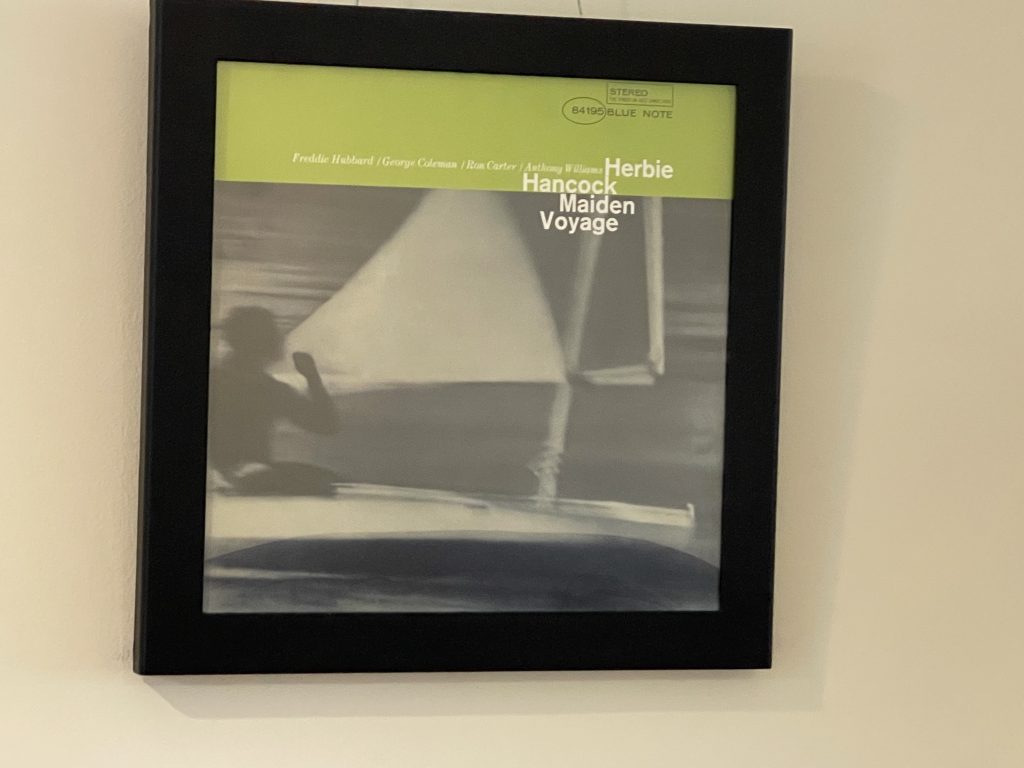
Herbie Hancock, Maiden Voyage

Album of the week, June 18, 2022

Listening to the opening of “Maiden Voyage,” it’s hard to believe that it was recorded just two months after E.S.P.—and with three of the same members. It’s also hard to believe that it opens Hancock’s fifth solo album in four years—to say nothing of his work with Miles.

The band that entered Van Gelder Studio in Englewood Cliffs on March 17, 1965 bore some strong resemblances to the one that had recorded with Miles at Columbia Studios in Hollywood on January 20-22. In addition to Hancock, Ron Carter and Tony Williams returned to the rhythm section; they had performed with Hancock on his preceding album, Empyrean Isles, as had Freddie Hubbard. George Coleman, who had played with Herbie on the live recordings of the Miles Davis Quintet from Carnegie Hall, My Funny Valentine and “Four” and More, rounded out the group on tenor sax. But though many of the players on the album had played with Miles, this album is distinctively Herbie Hancock’s work.

I write a lot about chordal structure, rhythmic interplay, and other facets of jazz improvisation in this series, but there is one essential element without which no jazz album can reach greatness: melody. One of the few weak points of E.S.P., to my ear, is the lack of distinct melodies on the second side, after the strong opening of the title track, “Eighty-One” and “Little One.” There’s no such weakness here, and “Maiden Voyage” opens the album with one of the all time great jazz melodies. It’s simple, persistent, and yearning, with a simple tune—up a fourth, then down a whole step and a four note run up a minor scale. But it’s slippery, with the same pattern repeated at a different part of the scale a few bars later, and the whole thing is set over suspended seventh chords, evoking a sense of mystery. It conveys everything about the sense of wonder of the beginning of a solo journey, combined with the mystery of the ocean. It is also unforgettable, and a substantial step forward from the Herbie Hancock who wrote the calculated hit tunes “Watermelon Man” and “Blind Man, Blind Man.

The whole track is a remarkable performance, but especially worth listening to is Tony Williams’ drum work under Hancock’s solo. Through a combination of cymbal work, snare rolls, and a bass drum heartbeat that slightly anticipates Ron Carter’s bass line. It’s an amazing evocation of the ocean, complete with creaking timbers and salt spray, and yet it’s utterly placid on the surface.

From the tranquility of the opening track we are immediately dropped into a storm. “The Eye of the Hurricane” provides an opportunity for Freddie Hubbard to demonstrate the combination of keen melodic sense, rhythmic complexity, and sheer technical acumen that would become his signature sound for the next fifteen years. His solo is astonishing. Coleman’s tenor solo following is less technically precise but is propulsive and carries the energy forward into Hancock’s solo, which is carried out almost entirely in the right hand as the chords drop way back, providing a feeling of calm at the center of the work. It’s a neat trick, but it makes me wonder what the piece would sound like in the hands of McCoy Tyner.

Hancock’s “Little One” follows, and he wisely rearranges the solos a little compared to the version on E.S.P. Here, both horns play the opening phrase, while Hubbard takes the following climb upward over Coleman’s lower accompaniment, and Hancock plays the yearning part that was Wayne Shorter’s on the earlier version. When the waltz comes in, George Coleman creates an entirely new melody over the opening, demonstrating the versatility of the tune and his own unique melodic gift. Freddie Hubbard follows the trail blazed by Coleman but quickly takes the melody to his own territory before passing it back to Herbie Hancock. His work on the solo finds him deep in impressionistic territory. Indeed, with his rhythmic chords alternating with melodic runs, he sounds like a livelier Bill Evans—a distinctively new voice from Hancock, who stretches out in several new directions on the record.

The furthest out direction he visits comes to the fore on “Survival of the Fittest.” What was I saying about melody? Here the hook is memorable but not hummable: slowly crescendoing chords, a saxophone line that sounds a lot like the opening to Wayne Shorter’s “Yes or No” (recorded seven months earlier), a scream in the trumpet, stabbing chords from the horns, a quick fragment of a melody, and then… burnout. Not in the pejorative sense, but in the sense that Branford Marsalis’s band has used it. Solos stretch past boundaries of bars and choruses and into different times and tonalities, anchored by Williams’ frantic drumming. Even here Hancock finds lyrical melody, but in a constantly shifting tonality and tempo. Finally the rest of the rhythm section falls away and it’s just Herbie playing a scherzo over chords that rock back and forth between two minor modes. It’s stunning and time stopping, and when Tony Williams comes back in he maintains the timeless feel with rolling drums in the deep. The horns come back in six bursts, restating the opening melody before abruptly halting.

And then: a surprise. “Dolphin Dance” swings gently and offers us the second most memorable melody of the record, an ascending run from the third to the fifth of the scale then down to the second, an easygoing pattern that continues with the same intervals but then starts from the tonic, the sixth and the third. It’s a vivid image, suggesting dolphins breaching out of the water one after another. And the soloists follow. Freddie Hubbard breaks out of the second repetition of the melody, taking flight for a moment, swimming along with the melody, then kicking it into a new key before passing it to George Coleman. The saxophonist swings his solo hard before going into double-time and eventually employing something like Coltrane’s “sheets of sound.” Hancock brings it back to the circling pattern, touching the other points of the scale before generating a new melody that reaches upwards, pauses, then climbs once more. The final recapitulation underscores the serenity of the melody, drifting into the distance.

It’s a fitting sendoff for the album, which stands as one of the high points of Hancock’s work—and of Blue Note Records in general. Next time we’ll hear a very different work from another member of Miles’ quintet.

You can listen to the album here.
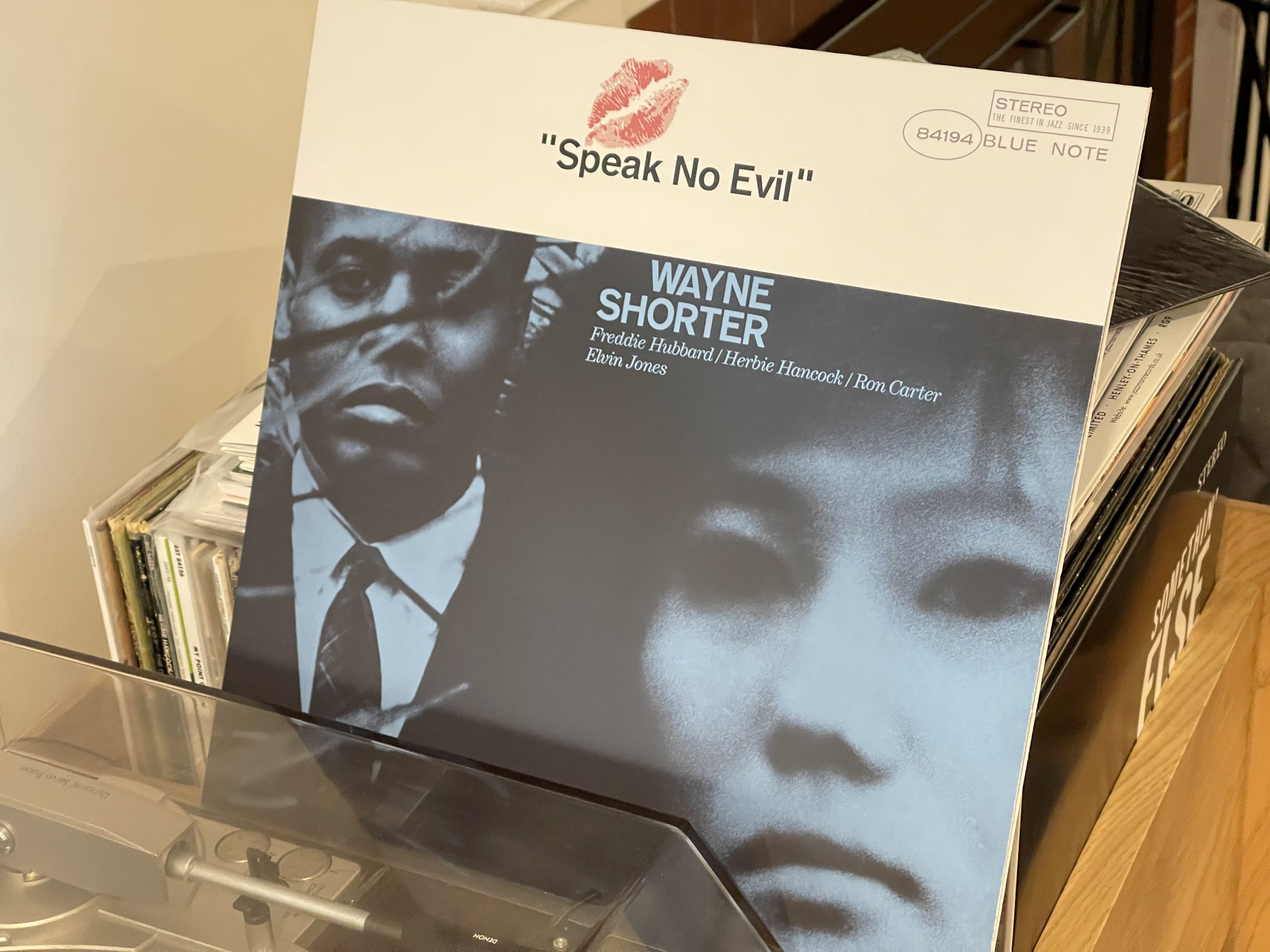
Wayne Shorter, Speak No Evil

Album of the week, June 4, 2022.

Many of the musicians in this series must be described in the past tense, but Wayne Shorter is still with us. We heard his tenor voice last time as a member of Miles Davis’ band. Today we’re going to look at an album he recorded after that run of dates on the road—an album that still stands among the greatest small group jazz recordings ever.

Wayne Shorter started his career in the Army, serving for two years after graduating from New York University, and playing in a combo with Horace Silver. He was subsequently hired by Art Blakey, who made a career out of finding promising young players and giving them opportunities to shine. During the time when Shorter was in the Jazz Messengers, Blakey’s band, he played alongside trumpeter Lee Morgan, pianist Bobby Timmons, trombonist Curtis Fuller, bassist Reggie Workman, Freddie Hubbard, and pianist Cedar Walton at various times. (We’ll hear from many of these artists later.) Even among this group of young giants, Shorter stood out, eventually becoming the band’s musical director.

Shorter played a few gigs with Miles in 1962 but stayed committed to Blakey’s group, finally giving in and joining Miles for good in the summer of 1964. The group toured extensively through Europe that summer and fall; in addition to the Berlin date we wrote about last time, there are also radio sessions documenting concerts in Paris, Sindelfingen (West Germany), and Copenhagen. When the band returned, with no Davis recording sessions imminent, he hit Rudy Van Gelder’s studio in Englewood Cliffs, New Jersey. The first session, in November, yielded three takes that were rejected by Blue Note. The second session, on Christmas Eve, 1964, yielded a masterpiece.

Shorter had already recorded two albums for Blue Note in 1964, with a group consisting of Coltrane sidemen (McCoy Tyner, Reggie Workman, and Elvin Jones) that established his abilities as a leader and a composer, but cast him as a Coltrane disciple. This time around the compositional voice was more assured and also beginning to speak a different language, with modal influences from Miles. That’s not all the record borrows from his work with the Miles Davis Quintet; his bandmates Herbie Hancock and Ron Carter joined him for the recording, alongside trumpeter Freddie Hubbard and John Coltrane Quartet drummer Elvin Jones. (We’ll hear more about all these musicians.)

Shorter starts off the album with “Witch Hunt,” a modal, bluesy track that features strong playing from Hubbard over a relaxed groove courtesy of Hancock and Carter. Hancock’s time in Miles’ group is apparent in his accompaniment, which drops chords into the spaces left by the horns as he brings the band along on the changes. Elvin Jones keeps the time with a relaxed swing, but turns up the heat as the group shifts gears into the chorus and as Shorter’s solo gets hotter, finding a new rhythmic pattern. Carter keeps an implacable heartbeat below all the players. And Shorter and Hubbard trade solos over the rhythm section, finding different approaches to the loping melody that opens the track.

“Fee Fi Fo Fum” is in nearly the same tempo, but relaxes further into the groove and drops a minor third down the chord that “Witch Hunt” explores, lending the impression of continuing the thought that the opening track started. Here Hubbard opens with a brief solo before yielding the floor to Shorter, who brings several different tonalities around the melody before passing the ball back to Hancock.

“Dance Cadaverous” continues the groove in waltz time. The first side of the album, in fact, feels like a slowly unfolding exploration of the same musical idea, with different melodic ideas continuing in the same mode. The sound continues to swirl around the same tonality in a series of hypnotic melodies, but you’d be forgiven for thinking of the songs as slightly interchangeable.

That changes in a big way with the title track, which opens the second side of the album. Here the melody is both simpler, reliant on just three notes to express the statement of the core idea, and more developed, as it moves in and out of the opening tonality, then climbs chromatically up the octave topping out a ninth above, with Hancock closing the pattern with a cluster of chords that descends back to the tonic. The tune is memorable and insistent and sticks around as Jones and Carter dig into the swing underneath while Hancock sketches out the scale, exploring both the chordal patterns and different rhythms. As with other songs in this session, Hubbard’s solo goes high, but Shorter stays in the same range as the melody, persistently circling round the melodic idea.

Things get stripped back even further on “Infant Eyes,” a slow ballad where Shorter and Hancock both strip out all but the most essential notes. Carter’s bass heartbeat is the pulse that moves the ballad forward, functioning in much the same way that Paul Chambers’ bass work did on Coltrane’s “Naima.” Shorter’s solo seems suspended in mid-air above the bed of Hancock’s delicate chord work throughout (Freddie Hubbard sits this one out). It’s stunning and points the way toward a path that Shorter would walk throughout his career.

The album closes with another statement in three. “Wild Flower” is, even more than “Dance Cadaverous,” a waltz, with the two horns playing in close harmony on the opening statement, only to come into unison on the second part of the theme as though two flowers twined around each other and grew toward the sky. The soloists follow the melody into and out of minor keys, exploring around the theme above the ground held by Elvin Jones and Ron Carter, with Herbie Hancock’s slightly off-beat chords giving the impression of someone wandering onto the dance floor with one leg slightly shorter than the other. Like the entire album, it’s mysterious, moody, and more than a little joyous.

Shorter would record more albums for Blue Note (and we’ll hear some of them), but this is undeniably his best known outing for the label. A statement of his compositional and soloistic gifts, it’s a performance that’s rarely been equalled on record. Next week we’ll see what happens when three of these players return to the context of the Miles Davis Quintet not quite a month later.

My copy of the album is the Blue Note 75th Anniversary re-pressing. I’ve picked up a few Blue Note reissues in various lines and have always been pleased, perhaps no more so than with this one, which has the sound of the musicians completely present and lifelike. You can listen to the album here.

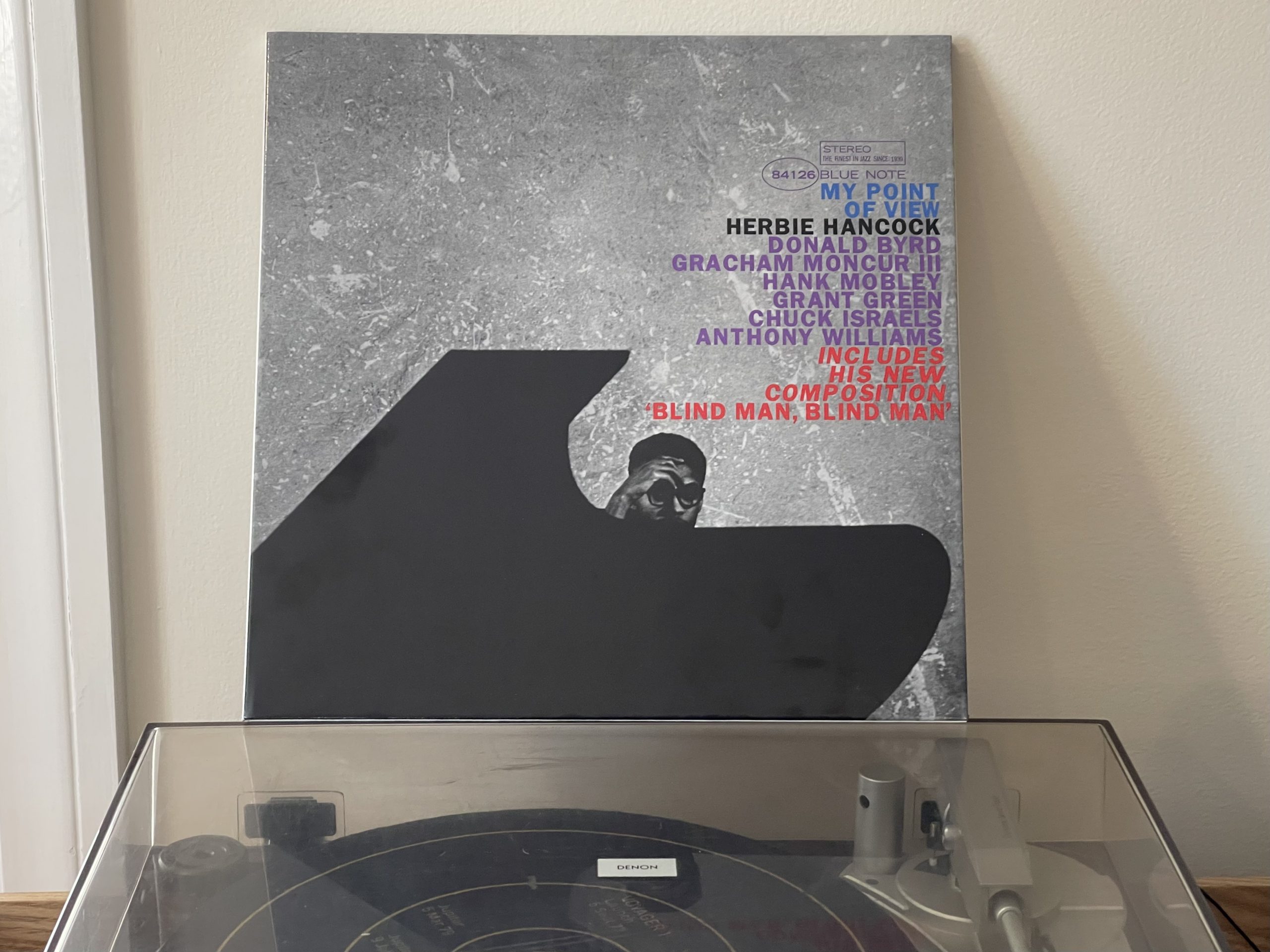
Herbie Hancock, My Point of View

Album of the Week, May 21, 2022

Say you’re Herbie Hancock. You have, at the age of 22, released your first album for Blue Note Records, and it’s a hit. The single cracks the Top 100, and your friend Mongo Santamaria’s re-recording of it cracks the Top 10. You’ve demonstrated that you can compose soul jazz, modal jazz, and ballads. What do you do for an encore? Well, if you’re Herbie Hancock, almost a year to the day you get back in the studio, and you do it again, with a bigger band.

To call My Point of View similar to Takin’ Off is a little unfair. The writing is more assured and distinctive, for one thing. Where you could be forgiven for mixing up “Three Bags Full” and “Empty Pockets” on the first album, each tune on My Point of View is distinctive. And the orchestration is fuller. In fact, the band on this date reads like a Who’s Who of early 1960s Blue Note, with Donald Byrd stepping in for Freddie Hubbard on trumpet, Hank Mobley (fresh off his stint with Miles’ band) replacing Dexter Gordon, and Chuck Israels, who did not release albums for Blue Note as a leader but who would later anchor one of Bill Evans’ most essential trios, on bass. Two other Blue Note luminaries, the brilliant guitarist Grant Green and the cerebral composer and trombonist Grachan Moncur III, appear on half the tracks.

And on the drums: Tony Williams. Aged seventeen years and three months when he went into the studio, Williams was already demonstrating his genius behind the kit, keeping things boiling even on tracks that might have been sleepier ballads like “A Tribute to Someone,” and positively lighting up the stage on the modal burner “King Cobra.”

So where’s the similarity? Mostly it is in the consistency of Herbie’s compositional voice. When he writes a soul jazz number like “Blind Man, Blind Man”—written, as he says in the liner notes, as a conscious evocation of his Black childhood—or “And What If I Don’t”—you can immediately hear the kinship to “Watermelon Man” from his first record. They are still catchy tunes, but there’s not a lot of compositional development from one to the next.

I mean, yes, Herbie’s arranging prowess leaps ahead substantially. The guitar lick that Grant Green drops at the turn in the chorus of “Blind Man, Blind Man” is a note of genius, as are the thick blocks of chords that open “King Cobra.” But in the end, you’d be forgiven for thinking that both albums were recorded in the same delicious session.

The album was revolutionary in one way, though, at least for Herbie’s career; it introduced him to Tony Williams. By June of 1963, they would both be playing with Miles, whose next great quintet was beginning to take shape. We’ll hear the first recorded (but not first released!) album from that group next time.

You can listen to My Point of View here.

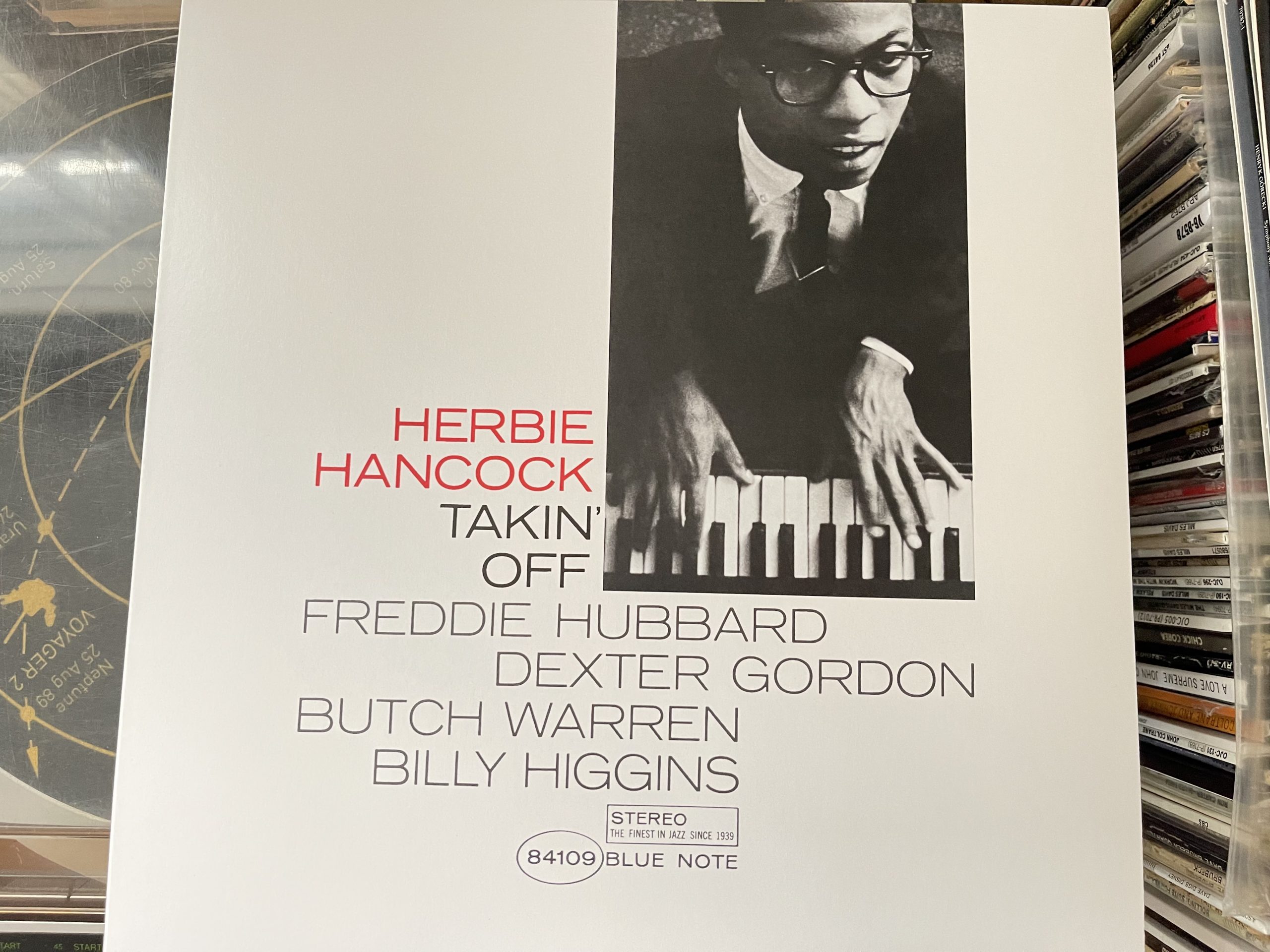
Herbie Hancock, Takin’ Off

Album of the Week, May 14, 2022.

There aren’t too many jazz players who start a career the way Herbie Hancock did. A Chicago kid who went to Grinnell College and graduated with degrees in electrical engineering and music, he was already an accomplished performer, having made his public debut at the age of 11 performing a movement of a Mozart piano concerto with the Chicago Symphony. He learned harmony from jazz musician Chris Anderson, and from the Hi-Los. He signed a contract with Blue Note Records fresh out of college and released his first album at the age of 22. And the very first song on his first album for the label became a top 100 single, then was re-recorded by Mongo Santamaria and reached number 10.

The band on that first album, Takin’ Off, had something to do with his early success. Dexter Gordon was a well-known player who had been an early bebop standout, but had some troubles (with heroin) in the 1950s. At the same time, he absorbed some lessons from both John Coltrane and West Coast jazz, broadening his style with modal influences, and when he signed to Blue Note in the early 1960s he experienced a Renaissance of his career. Butch Warren was a reliable house bassist for Blue Note, and Billy Higgins brought a deep well of innovation on the drums. And at the trumpet was another star of the Blue Note roster of the early 1960s, Freddie Hubbard.

Hubbard had gotten his start in New York in 1958, and had already recorded with both Ornette Coleman (on Free Jazz), John Coltrane (Olé Coltrane and Africa Brass), and Art Blakey, as well as two albums under his own name, by the time he entered the studio in May 1962 with Hancock’s group. He brought with him a burnished tone and solid technique, as well as a clear comfort with the modal-influenced post-bop tunes that Hancock brought to the session.

It’s Hancock’s compositions that ultimately stand out from this session. The opener, “Watermelon Man,” was a hit, which was a calculation by Hancock; he wanted something to start his career off strong, and he found it in the modified twelve-bar blues, which combined with a strong soul influence and a highly rhythmic approach was enough to loft it onto the pop charts in 1962. That’s when Mongo Santamaria, a Cuban percussionist and bandleader who heard something wilder in Hancock’s tune. Santamaria’s recording paid Herbie’s bills for several years. Hancock returned to the easygoing soul-jazz vein for “Driftin’,” the penultimate track on the album.

In between, though, are several more challenging works. “Three Bags Full” opens with a modal figure that would have been at home on Coltrane’s Atlantic records, but played with a swinging rhythm. “Empty Pockets” is in a similar mood, with a modal theme that is fiercely swung by the rhythm section and jauntily soloed by both Gordon and Hubbard. And “The Maze,” which opens the second side, is a deceptively straight-ahead sounding workout that twists and turns through a circle of chords, returning again and again to the same progression. This piece is ultimately a showcase not just for the soloists, but also HIggins, who explores more complex rhythms and timbres against each soloist in turn.

The last track on the album, “Alone and I,” is the farthest step on the album, a tender ballad that showcases not only Gordon’s romantic side but also Herbie’s sensitive, tender voice, with a solo that carries echoes of 19th century Romantic composers but that is also steeped in jazz. It’s a distinctive voice, and following the soul jazz and modal workouts of the rest of the album is something wholly new. Takin’ Off was aptly named: Hancock was definitely going places. We’ll hear the next stop on his journey next time.

You can listen to the album here.

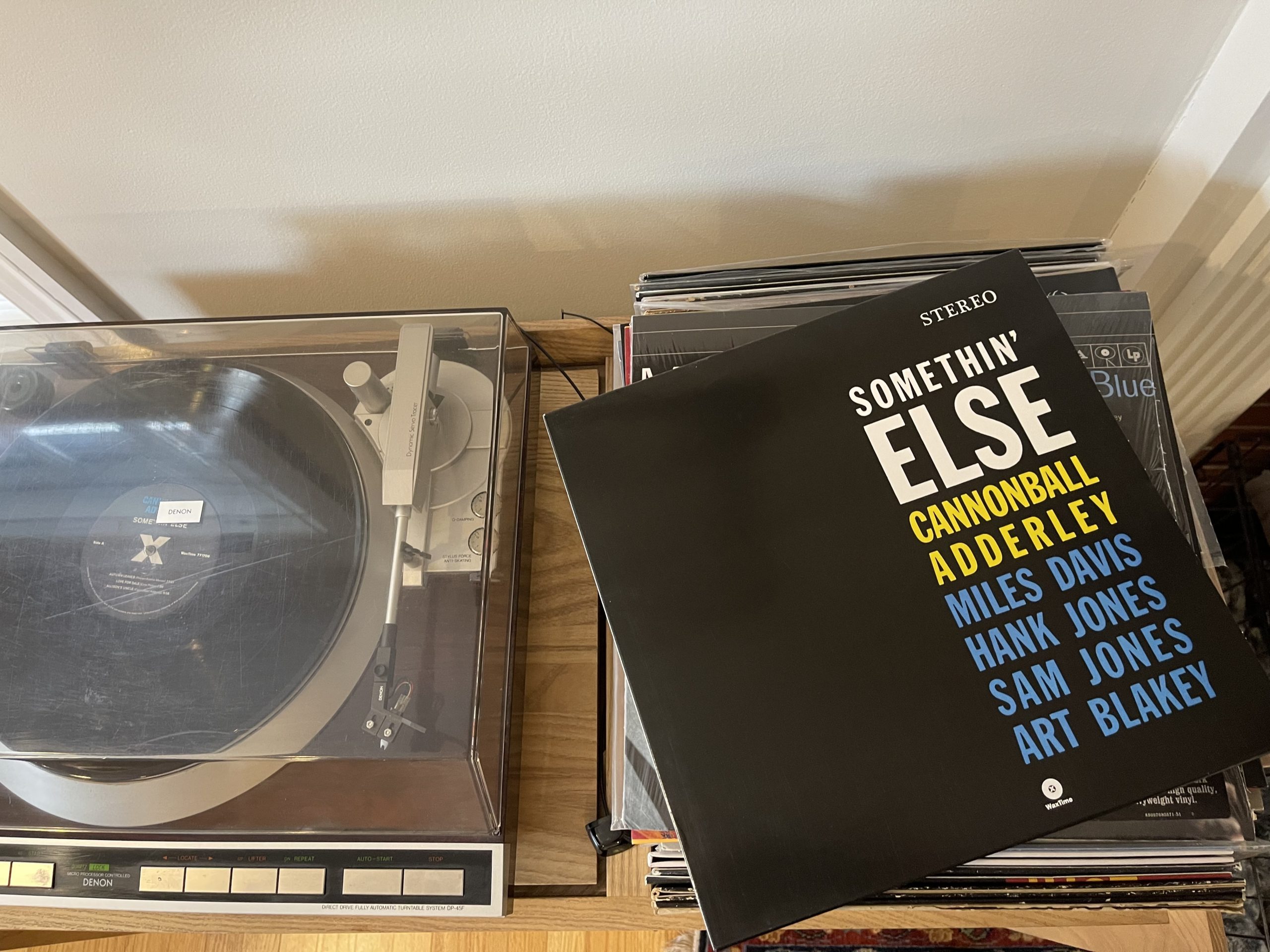
Cannonball Adderley: Somethin’ Else

Album of the Week, April 9, 2022.

Miles, being Miles, was never one to stay locked into a format for long—and for a musician who wanted to continue to play and record, a small group was surely a more attractive—and affordable—option than the 19-piece orchestra he had recorded Miles Ahead with. So he spent the rest of 1957 in various small group formats, including a brief version of his quintet with Sonny Rollins and several groups in France. But in late February and early March 1958, he rejoined with Coltrane, fresh from his work with Thelonious Monk, alongside a new face: at the alto sax, Cannonball Adderley. The record they recorded as a sextet, Milestones, more than lived up to its name, with several original songs that signaled that Miles was not done upending the jazz cosmos.

And five days after the group finished recording Milestones at Columbia’s 30th Street Studios, Cannonball and Miles were across the river in Hackensack, New Jersey, recording at Rudy Van Gelder’s with the Jones brothers on piano and bass and Art Blakey on drums. The session was for Blue Note Records, and so had to be issued under Adderley’s name. It was the only recording of this lineup, and featured a single original composition, Miles’ title track. But that track is not the one that Somethin’ Else is remembered for. That honor goes to “Autumn Leaves.”

Miles had fully embraced the modal approach, based on scales rather than chords, by this time, as evidenced by his band’s arrangement of “Milestones,” “Autumn Leaves” takes the modal approach further, blending the chords of the standard with a modal intro and outro in a Doric minor scale. Miles is muted throughout, playing with an intimate closeness that is at once deeply felt and reserved. The contrast with Adderley’s solo is striking, with Cannonball bringing both heat and a certain volubility. Unlike Coltrane, though, the alto sax line is not cried so much as shouted, and you can hear the seeds of Adderley’s later successful embrace of “soul jazz” in the way he brings the melody around in the high reaching line of his improvisation. Italian pianist Leo Ravera points out that the track becomes more intimate as it proceeds, with each soloist bringing the dynamic down until Miles and Hank Jones close it out in another modal passage. The whole thing is a stunning performance, and the first sixteen bars give me chills every time I listen.

The rest of the album is a striking blend of styles. It is interesting to hear “Love for Sale” rendered here, with Davis’s cool approach surrounded by a rumba-inspired approach, completely different from the version he would record just a few months later with his own sextet. “Allison’s Uncle” is more straightforward bop, celebrating the birth of Nat Adderley’s daughter. “Somethin’ Else” continues in this vein with a theme that alternates statements from the trumpet and the sax, in a form that is more than slightly reminiscent of Miles’s “The Theme.” “One for Daddy-O” is a straightforward blues with a less than straightforward theme, veering from major into minor and leading into a wailing solo from Cannonball. And “Dancing in the Dark” is played as a straight ballad, in which the alto reveals a strong stylistic debt to Coleman Hawkins.

This group would never play in this configuration again. But Cannonball would remain a fixture of Miles’ sextet for some time to come. They would play together at Newport and, in between Miles’ next sessions with Gil Evans, perform on radio broadcasts and at the Plaza Hotel. And, almost a year to the day after they traveled to Hackensack, they would enter the studio to begin recording their next studio album, an undisputed masterpiece.

In this light, it’s worthwhile hearing this date two ways: once as the high point of Miles’ stylistic development to date that it represented, and once as the prelude to Kind of Blue.

Listen…